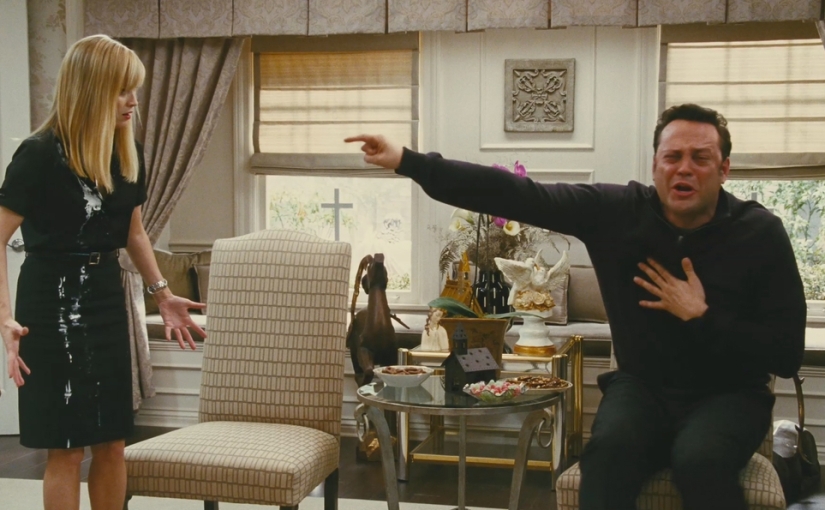
MIGUEL’S FAVORITE MOVIES/TV SHOWS OF 2022

by Miguel E. Rodriguez

Another challenger arrives! This challenge comes from Anthony Casale who asked us (me, Marc Sanders, and the estimable Mr. Thomas Pahl) what our 10 favorite movies and/or TV shows were from the 2022 calendar year.

Below are my answers, along with a few cherished honorable mentions. Let me know how I did in the comments. And thanks for reading!


10. BABYLON – Recipe for making the movie Babylon: Take three parts Singin’ in the Rain, three parts Boogie Nights, two parts Moulin Rouge!, two parts The Artist, and a dash of Goodfellas.  Throw everything into a Cuisinart and mix it all together into a frenetically-edited dough.  Smooth it out into a bread pan, being careful to leave a VERY few uneven spots.  Throw it into an oven that’s hotter than a poor guy locked in a sound booth.  Bake until everything is a golden brown with a tinge of debauchery, insanity, and highly questionable morals.  Serve while sizzling.  (Wait…is this a good review or a bad review?  The answer is: yes.)

9. CLERKS IIIAs a fan of all things Kevin Smith…well, MOST things Kevin Smith…this was one of my most highly-anticipated films of 2022.  I was not disappointed.  Clerks III retains all the irreverent humor from the first two installments, wrapped in a surprisingly touching screenplay that goes so meta it becomes almost impossible to identify what’s fiction and what’s autobiography.  Mr. Smith has sometimes said he CAN make “good” movies when he wants to.  It would seem this good movie escaped the editing room without him realizing it.

8. LIGHTYEAR – Okay, I’m not going to change anyone’s mind about this movie, so just move along if you didn’t like it.  As for me, I didn’t just like it, I loved it.  I thought it was an intriguing thought experiment that fits extremely well into the Toy Story-verse.  (If that’s not a word, it should be.)  Not only was the story compelling on its own, but the filmmakers also threw in multiple throwbacks and Easter eggs referencing specific moments and shots from the first two Toy Story films.  I will acknowledge the negative opinions of this film, but I cannot say I understand them.  This was a treat.

7. HOUSE OF THE DRAGON, Season 1 – Due to the trash fire that was the final season of Game of Thrones, my hopes were very, very low for House of the Dragon.  Rumors abounded: it’s been axed, it’s been delayed, it’s been transferred to Netflix, etcetera.  So, I was very pleasantly surprised when I found myself drawn back into the Thrones-iverse (patent pending) with this prequel series set nearly 200 years before the original.  Like the original, the very first episode reaches out and grabs you, then settles in for palace intrigue, bloodshed, betrayal, and boobs.  (It’s not porn…it’s HBO.)  I couldn’t tell you any of the names of the main characters if pressed right at this moment, but while it plays, it’s compelling television.  I hope the remaining seasons can live up to the promise of this first one.

6. TURNING RED – One of Pixar’s best, funniest movies since Inside Out.  Most of the negative reviews of the movie that I read had one thing in common: they all called the lead character “irritating.”  Well…the lead character is a rebellious, hormone-stricken 13-year-old girl.  Of COURSE, she’s irritating.  That just makes her character feel more real and grounded.  Some folks also had problems with a kid’s movie addressing feminine hygiene, however briefly.  Well, gee whiz, heaven forbid we introduce a daily – monthly? – fact of life into a film.  That element of the movie made it feel like an animated film written by John Hughes.  This is not a bad thing.  (Read my full review here: TURNING RED (2022) – 2 UNPAID MOVIE CRITICS!!!! )

5. SUCCESSION, Season 3Succession is basically Game of Thrones without the dragons, incest, nudity, and gory violence.  All the other elements are there: power struggles, betrayals, conspiracies, double-crosses, family loyalty, explosive secrets, etc.  Season Three was just as entertaining as the first two seasons, with more twists and turns than the Monaco Grand Prix.  Brian Cox’s performance as the family patriarch, Logan Roy, stands with the best work he’s ever done.  His brood of conniving children are every bit his equal…but they just can’t seem to get him out the door.  Every time they think he’s cornered, he pulls a Houdini by being even more lowdown than they would ever suspect.  It’s a breathtaking feat of writing, acting, and direction.  My favorite HBO series since, you guessed it, Game of Thrones.

4. TOP GUN: MAVERICK – The sequel NOBODY wanted…but when it finally arrived, miracle of miracles, it was actually good.  No…not just good.  It was GREAT.  The film’s creators wisely realized they needed to inject this sequel with a healthy dose of nostalgia for fans of the original 1986 film.  (Thirty-six years previous!)  As one of those fans, let me tell you: when the first notes of the “Top Gun Anthem” started playing over the opening credits, a ridiculous grin was plastered on my face, and it stayed there for almost the whole movie.  Attention must be paid to the fact that virtually all the cockpit scenes in the film are 100% real, filmed with the real actors in the real cockpits of real Navy jet fighters.  The effect of this method cannot be overstated.  The aerial combat scenes felt absolutely authentic, creating a vibe that green/blue-screen trickery simply cannot duplicate.  True, the story/screenplay isn’t exactly Oscar material…but who cares?  What a ride!  (Trivia note: this is one of the most financially successful sequels of all time, if not THE most successful.  Total global box office take from May thru December 2022: nearly $1.5 billion.  I think this Tom Cruise guy may have a future in movies…)

3. ANDOR, Season 1 – It’s finally here: the Star Wars series for people who hate Star Wars.  Purists have been heard to lament the fact that Andor has very little in it to identify it as part of the Star Wars universe.  No Jedi.  No lightsabers.  Very little mention, if any at all, of the Force.  Only one space “battle”, if you’d even call it that.  As for me, I thought all those absences worked in Andor’s favor.  Created by Hollywood veteran Tony Gilroy (screenwriter of, among many others, the Jason Bourne franchise, Michael Clayton, and wouldn’t you know it, Rogue One), Andor presents us with a more realistic version of the Star Wars universe.  Did you know there are desk jobs in the Imperial bureaucracy?  Well, why wouldn’t there be?  Fighting a rebellion costs money – where does that money come from?  Who funds it?  A highly placed senator has a plan, but she must find a way to keep it a secret, not just from Imperial oversight, but also from her husband and daughter.  These people couldn’t give two figs about the Force; they’re just trying to stay one step ahead of the bad guys.  There are so many brilliant details, I could literally go on and on.  Andor is the most compelling new series I watched all year.

2. THE BATMAN – Wow…and I thought Joker was dark.  A serial killer goes on a spree, leaving behind notes and riddles for the Batman.  Putting his considerable deductive skills to work, Bruce Wayne follows the clues, but the killer manages to stay one step ahead.  Do these seemingly random murders have a connection?  Does the killer have a master plan?  Is water wet?  What made this new version so thrilling was the fresh screenplay, yes, but also the visual style.  This new version of Gotham City seems to inhabit the same universe as Blade Runner, where the rain is more or less perpetual, and the nights are lit like an early episode of Miami Vice.  Robert Pattinson’s take as a younger, but equally tortured, Bruce Wayne felt even more “organic” than Christian Bale’s Batman.  Pattinson pulls off a younger, even angrier vibe, and it’s interesting to see that part of the Batman’s evolution.  The serial killer’s methods and personality felt like something right out of Se7en.  Colin Farrell’s Penguin is a master class in knowing just how far is too far to go with a big character.  Zoë Kravitz as Selina Kyle is every bit as dangerous as her predecessors.  And holy crap, that Batmobile…?  DAYAM.  Nolan’s The Dark Knight is still my favorite Batman film overall, but The Batman stands as an impressive example of the right way to reboot.

  1. EVERYTHING EVERYWHERE ALL AT ONCEFar and away the single best movie I saw from 2022.  I’ll keep it short by saying, read my full review here: EVERYTHING EVERYWHERE ALL AT ONCE (2022) – 2 UNPAID MOVIE CRITICS!!!!


    HONORABLE MENTIONS, in no particular order:
    The Bob’s Burgers Movie
    Doctor Strange and the Multiverse of Madness
    Stranger Things, Season 4
    The Fabelmans
    She-Hulk, Season 1
    The Menu
    Strange World
    Avatar: The Way of Water
    Solar Opposites, Season 3
    Moon Knight, Season 1

MARY AND MAX (Australia, 2009)

by Miguel E. Rodriguez

Director: Adam Elliot
Cast: Toni Collette, Philip Seymour Hoffman, Barry Humphries, Eric Bana
My Rating: 10/10
Rotten Tomatometer: 95% Certified Fresh
Everyone’s a Critic Category: “Watch a Stop Motion Film”

PLOT: A tale of friendship between two unlikely pen pals: Mary, a lonely eight-year-old girl living in the suburbs of Melbourne, Australia, and Max, a forty-four-year-old severely obese man living in New York.


“Mary Dinkle’s eyes were the color of muddy puddles. Her birthmark, the color of poo.”

Thus begins the narration of one of the most poignant movies I’ve ever seen, Mary and Max, a 2009 stop-motion animated film made in Australia.  It never got a wide release in America; were it not for the fact it appeared on the IMDb list of the top 250 favorite films worldwide, I might never have heard of it.  Thank goodness I found a copy online and bought it…one my best “blind-buy” purchases ever.

At this point in an earlier draft of this review, I launched into a plot description which veered into a discussion about the movie’s color palette, its tone, its agenda, etcetera.  But that somehow didn’t feel right, and I got bogged down.  What I really want to impart upon you, the reader, is how it made me feel.

It’s a drama about mental illness wrapped in the trappings of a Tim Burton-esque dark comedy.  What this means is, some of the visuals are right out of The Nightmare Before Christmas: oversized flies with googly eyes, suicidal goldfish, main characters whose body shapes resemble vegetables more than people.  But the story and emotional beats rival any Merchant Ivory film or James L. Brooks weepie.

Eight-year-old Mary Dinkle, who lives in Australia, starts up a pen-pal correspondence with Max Horovitz, a 44-year-old obese single man with undiagnosed (at least initially) Asperger syndrome.  After his initial panic attack at receiving a letter from a complete stranger, which throws his carefully controlled equilibrium out of whack, he writes her back, and they wind up having a decades-long correspondence.  She has no friends due to her prominent forehead birthmark.  He has no friends because he can’t relate to people.

The movie is mostly an unseen narrator bridging gaps between their letters, while the letters are read as they’re being written/typed by Mary and Max.  The relationship between the two is as touching as anything I’ve ever seen on film.  She sends him a hand-drawn picture of herself, which he keeps in his mirror to remind himself how people are supposed to look when they’re happy.  He sends her his recipe for chocolate hot dogs (a chocolate bar in a hot dog bun).  She asks him all the important questions, like: if a taxi drives backwards, does the driver owe YOU money?  He explains a long gap in their correspondence: “I was hospitalized, won the lottery, and my next-door neighbor died.”

These two lonely souls reaching out to each other just made me feel sunny inside, even amid the small tragedies they each faced.  Mary’s father dies.  Max keeps having to buy goldfish.  Mary falls in love with the Greek boy across the street, a boy who stutters, wants to be an actor, and, when they become engaged, makes her wedding dress for her.  Uh, huh.

The way in which the stories of these two people were written to complement each other without being identical is a delicate balancing act that threatens to veer into farce, then rights itself at the last second.  As I say, it’s hard to describe.

A turning point occurs when Mary gets a bit older, goes to school, studies mental disorders, and writes a book about her American pen-friend with Asperger’s.  She sends him the very first copy…but Max’s reaction is not what she anticipated.  She falls into a depression…

And here the movie takes a brilliantly dark turn.  I remember watching it for the very first time thinking, “Are they really telling THIS kind of story in a stop-motion film?”  Yep, they are.  There is a key scene where Mary has a kind of fever-dream hallucination choreographed to a haunting version of “Que Sera, Sera”, and my jaw dropped.  I cannot claim to have intimate knowledge of mental illnesses, but this scene just feels right.  This is a great representation of what someone’s mind might look and sound like on the brink of a terrible decision.

I realize I’m not making this movie sound like a lot of fun.  I can assure you that it is entertaining and fun, with a nasty (in a good way) habit of getting a chuckle while juxtaposing it against a scene of subtle awfulness.  The way Mary’s mother dies gets a laugh…but only as you’re listening to her death throes in the background.  The way Max’s various goldfish die is alternately funny and gruesome, or both at the same time.

And the REAL kicker is the final sequence, where Mary finally discovers where Max has kept all her letters through the years.  This moment is one of the greatest revelations I’ve ever seen, and I nearly shed a tear when she did.

Portrayals of mental illness in films have had varying degrees of success.  For every Rain Man, there’s an I Am Sam.  With Mary and Max, the filmmakers used the stop-motion medium to present hard-hitting material without totally getting bogged down in the inherent trauma or pathos of the illness being portrayed.  It’s an ingenious combination, but I’ll be damned if I can explain exactly WHY it works.  It just does.  Mary and Max remains one of the most unique animated films I’ve ever seen.  Seek this one out if you can.


QUESTIONS FROM EVERYONE’S A CRITIC

Were you surprised by the ending? What would you do differently?
I was bamboozled by the ending. I do sort of wish we had some idea of what happened to Mary after her trip, but I guess that’s okay. I wish her well in her future endeavors, wherever she may be.

Why do you think stop-motion was chosen for this film rather than animation?
As I mentioned, I believe it was to leaven the deep, potentially dreary material with the inherent oddness of the medium. Even a man in a wheelchair with no legs looks undeniably goofy…but it’s tragic. But he looks kinda funny.

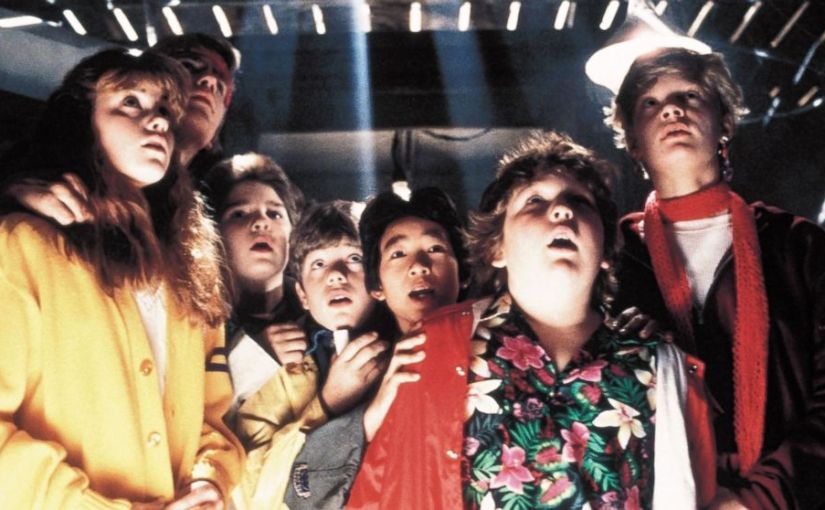
THE GOONIES

By Marc S. Sanders

You know how there are some movies designed for that unexpected thunderous rainy, Saturday afternoon?  Maybe a Star Wars flick or an Indiana Jones.  James Bond or Marvel?  For me the best candidate is probably The Goonies, where the rascally kid in all of us comes alive, yearning for adventure like riding our bikes through the paths of the sleepy town we live in over to a hiding spot on the other side of the woods where a once long lost treasure map begins an unknown journey.  Quick on our tales though are the bad guys with the humped back, crooked nose and clicking revolver.

Richard Donner did more for The Goonies than I think a lot of people realize.  It’s no wonder to me that the film is officially inducted into the National Film Preservation Archives since 2017, the same year that pictures like Guess Who’s Coming To Dinner, Ace In The Hole and Titanic also received their recognition.  Maybe Donner had help from producer Steven Spielberg and screenwriter Chris Columbus.  Granted, ahead of the age of cell phone addiction, these guys knew how twelve and thirteen year old kids ticked.  The Goonies bond over insulting each other, shoving one another, telling each other to shut up and freely dropping the s-word.  It’s a rite of passage.  It’s how I bonded with my buddies at that age.  Heck, I still maintain contact with my best friend at the time, Scott, and we still trade barbs like that even if we live over a dozen states away from each other.

Sean Astin plays the asthmatic leader of the gang, named Mikey.  A son of actors Patty Duke and John Astin, he made his film debut with The Goonies, and I think it holds as one of the best child performances to grace a screen.  He’s such a genuine little guy, who is passionate about making any last ditch effort to save his house and home town from being bulldozed by greedy golf course developers.  On a rainy Saturday afternoon, Mikey’s buddies ritually come over to the house and with his older brother Brand (Josh Brolin, another celebrity son making his film debut) make their way into the attic and uncover a treasure map written by the infamous pirate from the 16th century, One Eyed Willie.  Soon after, Mikey along with Mouth, Data and Chunk (Corey Feldman, Ke Huy Quan and Jeff Cohen) embark on adventure that leads them to the underground caverns of an old restaurant off the Pacific coast.  Two high school girls, Andy and Stef (Kerri Green, Martha Plimpton) join the gang.  Andy and Brand have adorable puppy love crushes on each other. 

One Eyed Willie’s map supposedly leads to a treasure of enormous wealth that Mikey and the gang believe can save their small town of Astoria from being razed.  However, there are inventive booby traps along the way, and the nasty Fratelli brothers with their cranky old mother (Robert Davi, Joe Pantoliano and Anne Ramsey) are hot on their trail.  The Fratellis are straight out of those old Hardy Boys and Nancy Drew mysteries.  They are hilarious with their bickering, and scary at the same time. Anne Ramsey was a special kind of character actor with her ugly appearance and craggily voice. It eventually even got her an Oscar nomination (Throw Momma From The Train).  

We may know how the story will end up, but Donner, Spielberg and Columbus advance with one unpredictable scene after another.  Reader, when I feel the height of suspense in a film, I actually tear up and I get a very nervous laugh.  The shootout scenes in Heat (1995) and Lethal Weapon will do that to me every time.  The lightsaber dual in The Empire Strikes Back and the snake pit scene in Raiders Of The Lost Ark!!!!  I’ve been watching The Goonies since I was the age of most of these characters.  I still get this natural reaction when Andy has to play the correct notes on a skeletal piano to open a passageway.  Each time she plays the wrong note though, a tease of impending doom appears.  It works so well in the ensemble performance of the cast bellowing “Oh no!” and “Oh shit!” and “My God!” and “Hurry up!”  Edited with the quickly advancing villains getting closer, and the pulse beat music accompanied by composer Dave Grusin, and you are so caught up in their escapades now, that it feels like you are there.

All these kids become your best friend quickly.  Data is the inventor with the tripped out gadgets, inspired by James Bond, ready to set his own booby traps.  Mouth is the Spanish interpreter who gleefully causes trouble and mischief, but Feldman the actor is allowed some tender moments as well.  Jeff Cohen is like the Curly of The Three Stooges who gets sidetracked on his own adventure with a monstrous but loving, and sadly rejected son of the Fratellis.  A chained-up ghoul named Sloth (John Matuszak).  Cohen might have the best comedic moments in the film.  When I moonlight in Community Theater, I still must remind myself that just once I’d like to audition with his hysterical crying monologue where he confesses to stealing his uncle’s toupee to use as a beard to dress up as Abraham Lincoln, while another time he used fake vomit to sicken an entire movie house.  Hilarious stuff! 

There are dropping boulders, rattling pipes, a waterfall wishing well, scary skeletons, that creepy piano, and fun water slides to circumvent around One Eyed Willie’s maze onward to his legendary treasure aboard the most spectacular pirate ship ever seen.  Rarely are kid’s adventures constructed like this anymore.  I dunno.  Maybe it’s the script.  More likely, maybe it is the cast of kid actors doing one of the best ensemble performances together on screen.  Their timing could not be more perfect among the seven Goonies. 

The Goonies is a much more honest and transparent look at how kids behave with one another than you might find in a bleached-out Disney flick.  These kids get dirty and unsophisticated, yet thoughtful.  They are not age 21 playing age 14.  They don’t have fashionable haircuts and designer clothing. They are not pop singers trying to be actors.  Most importantly, the conversations among the gang are more natural in pal around rudeness.  You’re not really a friend unless you are telling the kid next to you to shut up and exclaiming “Oh shit!” when another encounter with danger lurks ahead. 

The Goonies is just a fun ride to watch over and over again. It succeeds with its own interpretation of The Little Rascals, and it’ll give you all the feels as you watch Mikey plead with One Eyed Willie for the next clue, or when he stops to remind his Goonies that there’s more at stake than just a play date on a Saturday afternoon. 

My advice is to keep the rose colored glasses off your children’s eyes.  Let them know it’s okay to get in trouble and make mischief.  Make sure your kids know they should be the best Goonies they can be.

BABYLON

By Marc S. Sanders

Director Damien Chazelle has come a long way since his first major motion picture, Whiplash, a small film about a young, tortured drummer.  Since that accomplishment, he seems to get more and more elaborate with each project.  Babylon certainly exceeds ambition in any select 3–5-minute scene it offers within its grand opus.  The main title card doesn’t appear on screen until after the first thirty minutes and by then you are exhausted, yet completely awakened.

Babylon begins in the mid-1920s, during the pioneering times of Hollywood filmmaking where silent films were fresh and were regarded outlets for escapism and entertainment.  Big studios like MGM were not quite on the scene just yet and movie makers experimented with their films having no regard for rule and caution while constructing them.  On a busy day of shooting at around 3:15pm, an open field sword and sandal battle might turn up an extra in an accidental death with an impaled spear.  No matter.  Must keep shooting before daylight is lost and everything runs off schedule. 

It was at this time that a star like Jack Conrad (Brad Pitt), rugged with a square jaw and dashing with a pencil thin mustache, offered greatness in movie houses that showed silent pictures.  A new discovery like Nellie LaRoy (Margot Robbie) who seemingly came in off the street captured producers and patrons alike with her wide-eyed expressions and lanky, yet appealing posture.  These were the first celebrities of the advancing twentieth century.  They were starlets that brought people back and back again to the cinemas to witness battles of roman conquest or dancing on top of a bar while batting their long eyelashes for a mug at the camera.  The filmmakers loved to work with them. 

These performers ruled Hollywood until the Talkies appeared on the scene.  Movies with sound revolutionized the industry, but these famed individuals couldn’t keep up with the evolution.  Audiences and filmmakers couldn’t accept a compatibility.  Try to imagine a Jack Conrad listen to a packed movie house chuckle at one of his romantic speaking scenes.  It’s heartbreaking to watch.  He was admired, but now he’s a joke.

When the sun would set, the parties soaked–make that drenched–in orgy and debauchery would begin and nothing was off limits.  Naked women would happily get high and drunk and tossed over a large crowd.  Prop penises would be inserted into one partygoer and then another and then another.  Fat ugly men would happily accept getting urinated on.  Endless amounts of liquor and especially cocaine would be gulped and snorted and the greatest dares imaginable would always try to top themselves.  Have you ever heard of a party getting so out of control that someone would go so far as to wrestle a rattlesnake in the middle of the desert?  Jack happily watched all this decadence go down.  Nellie joyfully became the outrageously intoxicated and fearless ringleader. 

I have offered only a sliver of description for Chazelle’s over three-hour film.  To sum up, Babylon offers a hard-edged response to the family friendly interpretation found in Singin’ In The Rain.  Both films delve heavily into the transition of silent filmmaking to talking pictures and those who were left behind.  Gene Kelly and Stanley Donen’s G rated picture will have you giggle at their Lina Lamont with the squeaky voice and pratfalls who’s all wrong for the next phase.  The heavy R rated dramatic interpretation is offered in Chazelle’s script with Margot Robbie’s Nellie LaRoy and her Jersey accent, accompanied by unrefined posture and behavior.  Her drug binges are no help either.  Margot Robbie is fearless in her performance.  She is messy, sloppy, harsh and frenzied with her character.  One thing that came to mind as she is snorting line after line of coke is that at that time, there was no such thing as a means for rehabilitation like today.  No one was even looking out for the harm that drugs and alcoholic binging could have on people.  People were left to their vices to just drown in their poison of choice.  For silent pictures, you could plaster them in makeup and costume and let them mug and bat their eyes for the camera.  It didn’t matter if their speech was slurred.  Talkies required much more concentration of their performers.

The main player of the film is newcomer, Diego Calva, as Manny Torres.  A Mexican who inadvertently finds himself in the Hollywood nightlife while pushing an elephant up a steep hill only to get shit on.  (The elephant serves no purpose except to make an appearance at one of these crazy parties.)  Manny has an instinct for what’s to come in the movies and builds himself up into a studio executive.  While he’s dangerously falling in love with Nellie, he’s also discovering next big things like a Negro entertainer who’s magnificent with a trumpet, Sidney Palmer (Jovan Adepo).  Manny is a good man who swims above the dangerous life of Hollywood partying and decadence.  He’s an innovator that’ll never receive credit for what he uncovers.  That’s for the white executives to profit from.

A minor but welcoming story is Sidney’s.  He’s soon hung on posters outside movie houses, and performing with big bands.  Hollywood awards him with riches he could never imagine and never asked for.  However, ironically, his complexion comes off too white against some of his other band players and the idea of caking himself in charcoal makeup is insisted.  How will Sidney respond to this humiliating request? The wealthy also have a particular regard for him.  His status as an entertainer.  Do they see him as a showboat clown or the artist he values himself to be?  How does Sidney want to be considered?

With all of the parties and drinking and drug use to go around, Babylon goes off in a hundred different directions before it finds an even keel outline that switches storylines from Jack to Nellie to Manny and Sidney.  Chazelle strives to one up what other filmmakers before have attempted.  I could not help but think about Paul Thomas Anderson’s Boogie Nights which follows the porn industry in the late 70s and early 80s.  Happiness abounds until time and technology and constant self-abuse cause everything to unravel.  Babylon follows a very similar trajectory.

A friend of mine found Babylon too be overly gratuitous.  She’s not wrong, but while she took it as a complaint with the film.  I take how superfluous the movie is as a major compliment.  There are long scenes where Chazelle will not surrender for the audience.  He shows how drug raged Nellie is when no one will fight that rattlesnake by having her violently pick it up, swing it around and thus it will eventually latch on to her neck while she’s running around amid a gang of naked partygoers.  Then we get to see another starlet cut the snake off below it’s head, rip its fangs out of Nelly’s skin and proceed to suck the venom out.  Oh, you’ll squint and squirm through the whole scene.  What do we learn from this?  Drugs are bad.  Really bad, and they will delude you into acting with no vices or boundaries.  So, let’s be completely honest about it.

When Nellie is recruited for a talking film, we see take after take after take of her trying to make her mark while it is shouted over and over again to the crew to shut the fuck up.  There can be absolutely no noise from anywhere that the mikes can pick up and it doesn’t matter if a crewman is getting dangerously overheated in a soundbox.  (No air conditioning could be allowed because the hum would be picked up by the microphones.)  It’s a brilliantly, well edited, long and tortuous scene of flaring tempers, sweat, heavy light and stress.

I remember reading an interview with Henry Hill, the mobster who was the focus of Martin Scorsese’s Goodfellas.  Hill said with no uncertainty that the characters portrayed by Joe Pesci and Robert DeNiro were not even close to how frightening and violent their real-life counterparts were.  So maybe even Scorsese glossed over how harsh that world ever was.  Damien Chazelle is a relentless filmmaker with Babylon.  Nothing is whitewashed.  Most of what you see is shock value, but that’s the message he’s conveying and per his research he must be convinced the life of this era was actually this outrageous and way over the top. He’s certainly not forgiving with how manic these people lived, particularly with Margot Robbie’s character.

At the same time, he calms the film down to offer a harsh truth to a quickly becoming has been like Jack Conrad, Brad Pitt’s character, no longer in his prime.  Jean Smart portrays a gossip columnist reminding Jack that the height of his career is long gone, but fifty years from now, new generations will be rediscovering his achievements.  He will be a legend for all eternity.  Chazelle is speaking to us, those that appreciate what Turner Classic Films and other formats like videotape and DVD offer to see the first of these kinds of pictures where it all began with legends like Jack and maybe Nellie and especially Chaplin. Chazelle was an important student of this later generation.  This is the best scene of the picture with a magnificently written monologue, and I won’t be surprised if Jean Smart gets an Oscar nomination that no one ever saw coming.  I’m inclined to declare she should just get the award.  It’s such a telling moment for all kinds of movies.

Chazelle loves to make films.  The epilogue to Babylon demonstrates his affection as his story jumps to twenty years later, and an older Manny watches Singin’ In The Rain in a theatre. From what he inadvertently brought to the fold all those years ago, movies have evolved and continue to develop into bigger scales of what we could never have thought possible.  Chazzelle edits in a sequence where it started with silent films like A Trip To The Moon and Keystone Kops over to grand musical ensembles and adventures like Ben-Hur and then on to special effects with quick cuts of Raiders Of The Lost Ark, Terminator 2, and Avatar.  Flashes of color appear on the screen and then quickly cut back to these captions in celebrated films and film stock.  I don’t believe any of this spoils anything of the film, but I like to recognize how Chazzelle takes inspiration from Stanley Kubrick’s bewildering conclusion to 2001: A Space Odyssey.  Movies are going on and on and on.  Whoever is hot now and presently significant will have to adjust to an ever-changing industry.  Once celebrated puppeteers working for guys like George Lucas have no value in an age of computer graphic engineering.  Big box office stars might not be able to uphold their careers during a time of streaming films that come to us by means of our flat screen TVs we can affordably buy at Walmart.  Kardashian girls are more widely recognized than maybe a Jack Nicholson or a Meryl Streep.  (Someone I know had no idea who Carol Burnette is.)

It’s hard to sum up everything captured in a film this big and ambitious and yes, gratuitous.  Perhaps, the best I can tell you is simply that a hard truth to accept is that casualties come from discovery in a film like Babylon

MIGUEL’S 100 FAVORITE MOVIES OF ALL TIME: #10-1

by Miguel E. Rodriguez

At last. The acme. The zenith. The tippest of the top. The ne plus ultra.

As part of a challenge from Jim Johnson, I created a ranked list of 100 of my favorite movies. To reiterate, this is not necessarily “definitive” by any stretch of the imagination. I mean, please…can I switch numbers 35 and 88? Absolutely. But lists are lists, and here we are.

Per the rules, here are my top 10 most favorite movies of all time, followed by a complete list of all 100 for the curious. Feel free to argue/tell me how wrong I am in the comments.


10. THE TRUMAN SHOW (1998) – Another Peter Weir film that is hypnotic and compelling, especially during the final sequence when I thought I would levitate from my seat in the theater out of pure joy. I’m not exaggerating. As someone who had a strict religious upbringing, I identified strongly with Truman, someone who experiences life, love, and the world only as far as the people pulling the strings will allow. I felt his wonder and curiosity and slow realization that there just might be life outside of Seahaven, the island home he has never left since he was born. When the true nature of Truman’s world was revealed, I wasn’t exactly shocked (the trailers did an uncommonly good job of spoiling that surprise), but I felt a kinship to his situation. And when he finally overcomes his fears and heads into the unknown…I all but cheered. This movie was an acutely personal experience that I will never forget. Others may not have felt the same thing, and that’s fine. But for me, The Truman Show is absolutely in my top-ten.

9. CASABLANCA (1942) – One of the greatest movie-going experiences of my life was seeing the 50th-anniversary screening of a new print of Casablanca at Tampa Theatre in 1992. I had still not seen this so-called classic, so I figured, why not now? I went with a friend of mine who HAD seen the movie, and we sat in the balcony. Surprisingly, I do not remember the acoustics interfering with the movie’s dialogue as much as it normally does. I heard every line crystal clear…and I also heard the full house cheering with every famous line. “I was misinformed.” “Round up the usual suspects.” “Play it, Sam.” At first, I was annoyed, but as the movie went on, I was amazed at how caught up in the story I was getting, despite how clichéd a lot of it was. By the end, as Rick and Renault walked off together, I was sold on Casablanca’s place in Hollywood history, and it has been a favorite of mine ever since. I have heard and read numerous arguments against Casablanca, and those good folks are entitled to their clear, concise, and well-stated opinions…no matter how wrong they are.

8. DR. STRANGELOVE or: HOW I LEARNED TO STOP WORRYING AND LOVE THE BOMB (1964) – George Carlin once said that you can make a joke out of literally any subject, no matter how dark or taboo. Stanley Kubrick’s satirical take on nuclear holocaust is a case in point. What started out at the screenplay level as a straight-up thriller morphed into a Python-esque comedy where statistics about warheads and megadeaths rub shoulders with an American President named Merkin Muffley and an eccentric German scientist whose right hand seems to have a life of its own. Peter Sellers pulls off a hat-trick by playing three vastly different characters, some of whom share screen time, and making each one so unique that, when I first watched it, I had a hard time believing they were all played by the same actor. Kubrick shoots some thrilling combat footage, foreshadowing what he would later accomplish with Full Metal Jacket 24 years later, then contrasts it with scenes like the one where George C. Scott’s character gets so keyed up while describing the capabilities of his long-range bombers that he forgets he’s describing how the apocalypse might literally begin. (Dr. Strangelove was so effective at combining humor with the unthinkable that, when Fail Safe was released 10 months later, it was not quite as successful as it could have been because audiences could not take it seriously.) This movie reaches my top 10 for its sheer audacity and wit in the face of material that seems incapable of supporting a comic premise.

7. IT’S A WONDERFUL LIFE (1946) – Breathes there the man with soul so dead they have not yet seen It’s a Wonderful Life? If so, I pity that man. Frank Capra’s ultimate Christmas movie has turned many people off, it seems, by the thoroughly depressing plotline during the first 80% of the film (approximately). George Bailey, an everyman with dreams of traveling the world, is forced to put those dreams on hold to save the family business. In the process, he meets and marries the love of his life, has four kids, and flirts with bankruptcy every fiscal year. When a crucial bank deposit is misplaced, putting his entire livelihood in jeopardy, George contemplates suicide – on Christmas Eve, no less. So, yeah, this ain’t exactly the Marx Brothers. What turns It’s a Wonderful Life into a true classic and a perennial favorite is the last 20% of the movie, where George’s guardian angel appears and offers him a gift: the chance to see what the world would be like without him. In a lesser film, that plot point would provide the engine for at least half of its running time. Capra wisely realizes that George’s “redemption” only means anything if we see just how far and fast he falls, and what’s at stake, and so his redemption scenes function more like punctuation marks at the end of a sentence. The rapturous finale is, let’s face it, corny as hell…but by God, it works. Best. Christmas. Movie. EVER.

6. SCHINDLER’S LIST (1993) – I will never forget a moment when watching Schindler’s List for the first time, when Schindler is observing the evacuation/extermination of a Jewish community from a nearby hill. As Schindler keys in on a little girl in a red coat, German soldiers line up several Jews single file, then fire their pistols at one end just to see how many Jews the bullets will kill before losing power. I distinctly remember thinking, “Wow, how horrible,” but I also remember a faint smile on my face, because I was also thinking, “Wow, here’s a movie that isn’t going to pull any punches.” …and then I had a sobering moment when I reminded myself, wait, this isn’t just a director lining up a shot to make a point about the horrors of war…someone probably witnessed this exact moment, which made it into a book, which made it onto film. That realization opened my eyes and brought a whole new clarity to everything that had come before and would come after. What makes Spielberg’s film even more astonishing is that he and screenwriter Steven Zaillian, sorcerers that they are, managed to somehow bring just the right level of entertainment to the screen without feeling they were downplaying the seriousness of the subject matter. Perfect example: when the little boy points out who killed the chicken – it’s an awful, awful scene, but the punchline gets a laugh, and it doesn’t feel out of place. Schindler’s List is some kind of miracle and should be required viewing for…well, everyone.

5. AMADEUS (1984) – When I was just hitting my teenage years, I wasn’t listening to a lot of pop radio, so my dad got me into classical music by buying a box set (on cassette!) of Beethoven’s nine symphonies. I got familiar with the style and flow of classical music, and started slowly realizing the connection between movie scores and classical music, etc. And then Amadeus started airing on cable. The first thing I remember is coming across it towards the end, during the scene where Mozart is dictating his music to Salieri. I had no idea what I was watching, but the way that scene represented classical music being broken down into its component parts, and how a composer must know each little section inside and out to make sure everything works when it all comes together…that scene blew me away. Then I watched Amadeus from the beginning, and I was mesmerized from start to finish. I identified with Salieri’s frustration: “God, I am your true servant, yet you allow this vulgar man to flourish while I toil in obscurity.” Sure, I was only 13, but that captured one of my eternal questions when it came to religion in general. But even aside from the movie’s grand themes, Amadeus embodies the word “sumptuous.” Not until Sofia Coppola’s Marie Antoinette had I ever seen a movie with such exquisite sets and costumes. And I had to wait until I saw a “making-of” documentary to be convinced that old Salieri and younger Salieri were played by the same person. Amadeus uses some of the greatest music ever written to support a story with which anyone can identify: Am I destined to only recognize greatness without ever achieving it myself? A stone-cold classic.

4. PINOCCHIO (1940) – Animation has held a special place in my movie-loving psyche ever since I discovered how laborious the animation process is, particularly when it comes to hand-drawn animation. The idea that every single frame was painstakingly drawn, painted, and photographed was mindboggling to me, especially when animated movies seemed so free in movement and the characters looked convincingly heavy and real. What sorcery is this? The high-water mark of hand-drawn, or ANY, animation is and shall remain Walt Disney’s second feature film, Pinocchio. I’ve seen this movie dozens of times, if not scores, and it never ceases to amaze me. Look at Pinocchio’s facial expressions in any given scene. Look at how Monstro the whale evokes immense size and weight. Look at that fantastic underwater section as sea creatures of all shapes populate every corner of the frame. And especially consider the story that pulls no punches when it comes to dramatic impact. Nowadays, many films aimed at kids are all sugar and sweet and give mere lip service to danger and/or peril. Compare them to Pinocchio, a movie that puts the hero in creepy danger (Stromboli), then creepier danger (Pleasure Island and those donkeys), then in utter mortal danger (Monstro’s pursuit). This may be an animated film, but it refuses to talk down to its audience, children or otherwise. Pinocchio is a classic that has rarely been equaled (opinions vary), but which will never be surpassed. Change my mind. [Spoiler alert: you won’t.]

3. CITIZEN KANE (1941)The Bridge on the River Kwai [1957] was one of the first movies that convinced me that “old” movies could be as thrilling as modern films. But the first movie that convinced me that older films could be BETTER than modern films was Citizen Kane. After years of hearing about it by reputation, I rented a copy from Blockbuster and was thunderstruck at how engrossed I was after the first five minutes…and that’s just the newsreel. From there on, the mystery of Kane’s life and his cryptic dying word just got better and better, visually and story-wise. Especially visually. Volumes have been written about Welles’s vision and his close collaboration with cinematographer Gregg Toland to accomplish some of the most iconic and virtuoso shots in the history of cinema, so I won’t go into details here. The visual aspect of this film is as closely related to its success as any other element. Certainly, it’s filled with brilliant performances and breathtaking rapid-fire dialogue that feels lifted from an Aaron Sorkin screenplay. But it’s the camerawork that caught my attention more than anything else the first time around, and it still amazes me today. I have yet to see a black-and-white movie that demonstrates more visual virtuosity than Citizen Kane. (And to those who claim it’s “boring”…um…I literally have no response to that…)

2. HAROLD AND MAUDE (1971) – When I was performing in a show in my mid-20s, I had fallen into a kind of depression, or at least a deep funk. Due to a variety of factors in my life at the time, I felt redundant, powerless, talentless, and terribly cynical about the world in general. A fellow cast member noticed my pain and brought in a VHS copy of Hal Ashby’s Harold and Maude for me to borrow and watch. He told me, “I recognize myself in you from 20 years ago. So, trust me when I tell you that this movie will change your life.” I was naturally skeptical, but I took it home and watched it…and I am not exaggerating when I say, Harold and Maude literally changed my life. Maybe not overnight, but it absolutely changed my perspective on a great many things. The story is quirky, to say the least: a depressed young man from a very rich family stages fake suicides and attends funerals for strangers to pass the time. At one of these funerals, he meets a lively 79-year-old woman who shares his fondness for funerals, but who has a very different outlook on life. She takes him under her wing, encourages him to not to take life so seriously, teaches him to appreciate the little things, and so on. He falls in love with her unshakeable positivity…and with her, romantically. What happens next, I shall not reveal, but when I reached the film’s final sequence, I was transported. When it was over, I felt I was seeing the world around me with blinders off. It is no exaggeration to say that, without Harold and Maude, I would not be where I am today: in a stable relationship with the woman I love for over 20 years, in a job that I – well, “love” is a strong word – a job that I ENJOY as opposed to one that I don’t, a sturdy support structure composed of my closest friends and family, and making enough money to pay the bills while still being able to travel and indulge in my passion (acting) on the side. “Harold, EVERYONE has the right to make an ass out of themselves. You just can’t let the world judge you too much.” Words to live by.

1. LAWRENCE OF ARABIA (Great Britain, 1962) – This has been my favorite film of all time since seeing it on TNT over 30 years ago. Even in a non-letterboxed format (sacrilege!), the majesty of David Lean’s magnum opus was undeniable. Then I saw it on a 2-volume letterboxed VHS, and I got to see even more of the desert scenery and carefully planned details in the corners that I missed on network TV. On DVD, things got even better. But THEN…the Blu-ray came out…and I was blown away. Now I could see the Bedouin through Lawrence’s binoculars. I could see the tiny speck on the horizon before it resolved itself into the figure of a man on camelback. The sand and dust and smoke and blood all reached a level of detail that made me fall in love with it all over again. (And I don’t think I can talk about seeing it on the big screen in 70mm for its 50th anniversary without making this a novella.) This movie hits all the bases. Visually, it’s simply magnificent. This was the early 1960s, so Lean took the gigantic movie cameras of the day to the real Jordanian deserts and shot virtually everything in the film on location…IN THE DESERT. The widescreen compositions and movement are unparalleled. Story-wise, this is, of course, the story of a man’s life against an epic backdrop, so right away you’ve got me. The details of Lawrence’s life during the Arabian campaign during World War I are provided with just enough information to let the audience know exactly what’s going on without overwhelming you with a deluge of minutiae. But the real engines driving the film (aside from David Lean, of course) are the powerhouse performances from the cast: Omar Sharif, a fiery Anthony Quinn (regrettably in “brownface”, but fiery nevertheless), and of course Peter O’Toole as Lawrence. With his piercing stare, lanky frame, and soft-spoken presence, Lawrence comes across as just slightly north of mad, but his conviction and tactical brilliance in the field make him an invaluable asset for the British…until he decides Arabia should be free from ALL rule, not just Turkish, and sets out to LIBERATE Arabia. The feeling I’m left with after watching all 227 minutes of Lawrence of Arabia is the same one I get after finishing a long, extremely entertaining novel. I can’t imagine a scenario in which I will ever get tired of watching this film. Lawrence of Arabia is as close to cinematic perfection as anyone is likely to get, and it is my absolute favorite film of all time.


TOP 100 FAVORITE FILMS OF ALL TIME:

  1. Lawrence of Arabia
  2. Harold and Maude
  3. Citizen Kane
  4. Pinocchio
  5. Amadeus
  6. Schindler’s List
  7. It’s a Wonderful Life
  8. Dr. Strangelove or: How I Learned to Stop Worrying and Love the Bomb
  9. Casablanca
  10. The Truman Show
  11. The Red Shoes
  12. Pan’s Labyrinth
  13. Cloud Atlas
  14. Master and Commander: The Far Side of the World
  15. Raiders of the Lost Ark
  16. The Godfather
  17. The Godfather: Part II
  18. Parasite
  19. Close Encounters of the Third Kind
  20. Blade Runner 2049
  21. The Last Emperor
  22. Prometheus
  23. The Exorcist
  24. Wall*E
  25. Children of Men
  26. Requiem for a Dream
  27. United 93
  28. Spirited Away
  29. The Deer Hunter
  30. The Bridge on the River Kwai
  31. Saving Private Ryan
  32. Pulp Fiction
  33. Baraka
  34. Nostalgia for the Light
  35. Sunrise: A Song of Two Humans
  36. Network
  37. Chinatown
  38. Midnight in Paris
  39. The Remains of the Day
  40. Being John Malkovich
  41. Notorious
  42. Psycho
  43. Breaking the Waves
  44. To Be or Not to Be [1942]
  45. Match Point
  46. The Iron Giant
  47. Up
  48. Once Upon a Time… in Hollywood
  49. Look Who’s Back
  50. Inglourious Basterds
  51. Double Indemnity
  52. One Flew Over the Cuckoo’s Nest
  53. Crouching Tiger, Hidden Dragon
  54. The Apartment
  55. The Piano
  56. The Sting
  57. Fight Club
  58. Magnolia
  59. Jaws
  60. Aliens
  61. Roma
  62. Ready Player One
  63. Everything Everywhere All at Once
  64. Inside Out
  65. Rogue One: A Star Wars Story
  66. The Social Network
  67. Stranger Than Fiction
  68. Life Is Beautiful
  69. Incendies
  70. Who Framed Roger Rabbit
  71. Toy Story
  72. Lost in Translation
  73. Bound
  74. Skyfall
  75. The Lord of the Rings: The Return of the King
  76. Whiplash
  77. Get Out
  78. The Babadook
  79. Hotel Rwanda
  80. Promising Young Woman
  81. The Dark Knight
  82. Hearts of Darkness: A Filmmaker’s Apocalypse
  83. Dark Days
  84. A Separation
  85. Monterey Pop
  86. Run Lola Run
  87. There Will Be Blood
  88. Dark City
  89. Hoop Dreams
  90. Finding Nemo
  91. Little Miss Sunshine
  92. Hereditary
  93. Scott Pilgrim vs. the World
  94. Logan
  95. Love Actually
  96. Atonement
  97. Joker
  98. Star Trek [2009]
  99. Avatar
  100. I, Daniel Blake

THE WHALE

By Marc S. Sanders

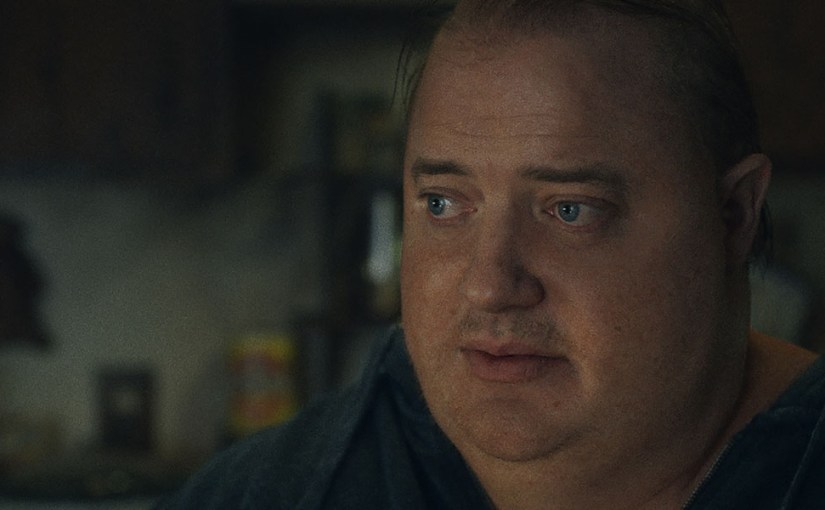
I still have a lot of catching up to do, but arguably the best performance by any actor in 2022 comes from Brendan Fraser in Darren Aronofsky’s The Whale, an adaptation of the stage play written by Samuel D. Hunter.

Fraser plays Charlie, an intelligent online writing professor.  His course is done online as he has become an enormously overweight recluse, following the loss of his boyfriend, circumstances to be revealed over the course of the film.  Charlie is so obese that he can barely walk, and he confines himself to the left side of his sofa with the television in front of him and his laptop nearby to conduct his courses or to pleasure himself with gay pornography.  He has a walker to get himself on to his feet and carry his bulk, but showering is not easy.  Even picking a key up off the floor is an impossibility.

He receives visits from his only friend, a nurse named Liz (Hong Chau).  When she arrives on Monday, she discovers that his blood pressure is indicative of congestive heart failure and urges him to go to the hospital.  He insists he can not afford the bills and has no insurance.  He also receives unwelcome visits from a young man named Thomas (Ty Simpkins) spreading the word of God with brochures from the local church.  Lastly, the visits Charlie treasures the most are from his cruel and mean-spirited daughter Ellie (Sadie Sink) who takes no reservations with berating Charlie as a deadbeat dad and only comes to him because she practically demands he write her essays to avoid dropping out of school.  She also rudely takes pictures of Charlie at any given moment.  Each time she raises her cell phone for a click, it feels like she is giving her father the harshest middle finger imaginable.

Much like an earlier film, known as The Wrestler, Darren Aronofsky explores what comes after the main character has tormented himself into a destiny difficult to escape or be rescued from.  Aronofsky is frank about offering up helpless souls only now living with everyday ongoing pain both physically and, as we discover, more importantly, mentally.  Highlights of Charlie’s day are when the pizza is delivered and he shouts through the door that the money is in mailbox.  The delivery guy knows the routine all too well by now and the best he can offer is to ask if Charlie is okay while never seeing his grotesque appearance.

Aronofsky doesn’t offer much variety on the surface.  The film takes place entirely in Charlie’s apartment.  Sometimes we go down the hallway and see another room or we get a conversation between Liz and Thomas on the front porch.  The cast only boasts seven actors.  Yet, Hunter’s screenplay is not limited to what Charlie is having to endure.  There is also an unexpected backstory to Thomas and there’s more to uncover with Liz and Ellie. The pizza delivery guy, who we never see, even discovers something.  One particular essay about Moby Dick that Charlie desperately urges Thomas to read out loud early on has a surprising significance that I didn’t see coming. 

Still, the film belongs almost entirely to Brendan Fraser and how he enhances the performances of his cast mates, particularly Sadie Sink.  Their scenes are so well performed.  She is an outstanding young actor working on a manic level.  I imagine Sadie Sink had to come down from the hyper activeness of her scenes.  She is uncompromisingly mean. When the director yells, there is no way she could just turn that characterization off.  I bet she walked away from the set to catch her breath.  Opposite her, Fraser’s character has no choice but to be more restrained.  Physically, it is hard for him to breathe and therefore speak at times at a high octave.  He cannot stand up very well and rush to embrace his daughter even if he wanted to try.  She is mean enough to challenge him though.  The outcome of that moment will have you hate her character for sure.  Yet, you don’t forget she’s a kid and her current state is a product of something else, perhaps from Charlie’s past misgivings.

Timewise, they are also on uneven playing fields.  Hunter’s script counts down the days as the top of some scenes depict it as Monday and then Tuesday and so on.  Charlie is running out of time and has a lot of hanging threads to tie off.  Ellie has an entire life ahead of her to name call and scream at him and hurt him, but Charlie cannot afford to upset someone and work on apologies later.  The best he can take advantage of right now is to appeal for all the wrongs he’s committed or been accused of.  Most importantly, can he fix his relationship with his daughter?

Liz is a health care professional by trade and knows what is best for Charlie, but likely also knows it’s too late and rather hopeless, considering his current condition.  So, it only makes sense to surrender to his needs by bringing him meatball subs and barbecue ribs.  What she is determined to do is to keep his daughter and ex-wife away from him.  It’s a conflict that Charlie has no choice but to allow.

Thomas is that last new person to ever enter Charlie’s life.  Yet, what is his gospel of God and salvation going to do for Charlie now?  Charlie can’t keep this kid from coming over, but is he really going to listen and take any of it seriously? 

Brendan Fraser’s performance is so limited to the setting of the film and the physical restraint of being a large man with no flexibility.  However, he provides so much in the pain his character has suffered long before the current week captured on screen.  It’s an astonishing achievement in acting.  Within the bulbous head depicted in so many closeups are tired eyes that have gone through so much like toiling with leaving a marriage in exchange for a homosexual relationship, and weakening a connection with his child.

Beyond the enormous weight he lives with, Charlie also lives with an unhealthy food addiction.  Just ahead of the last act of the film, Aronofsky is relentless in showing how Charlie responds to personal suffering, not physical, by drowning himself in enormous amounts of sloppy and messy food as Fraser guzzles everything into his mouth.  Charlie suffers from so much more than just being morbidly obese.  He could live with that.  It’s other moments and people and losses in his life that are hard to continue to live with.  The difficulty of those things is cursed upon by Charlie with uncontrollable amounts of food.  Some people who suffer with difficult matters might hide in bed all day or binge watch television for an entire week.  Some turn to drugs and alcohol.  Charlie binges on food.  He doesn’t love his food.  He only uses it to drown out his pains.

I imagine it’s hard to learn about people like Charlie who are held down by the challenge of extreme obesity.  They have become so physically large that they literally can not get up from their sofa without help and therefore never leave their homes.  Because they never go outside, we are unaware of people like this.  I once had a neighbor that I never, ever saw.  I could hear their TV in the apartment next door but I never saw them.  How is that possible?  Why is it that they never revealed themselves?  There’s a story there.  Maybe a terrible or uncontrollable dilemma.  Darren Aronofsky, Samuel D. Hunter and Brendan Fraser offer a glimpse into what goes on behind this closed door.  It’s heartbreaking. 

Maybe it is so tragic because of why Charlie is shown within his confines by Aronofsky, written within the circumstances that Hunter offers and most importantly demonstrated by Fraser as a man ready for his life to end.  If only he can resolve a final digression with his teenage daughter suffering from a pain of anger likely instigated by him. 

Again, Brendan Fraser’s performance is the best one I have seen this year, and with no doubt in my mind, he should absolutely win the Oscar.  This could go down as the best accomplishment is his colorful career. 

PARENTHOOD

By Marc S. Sanders

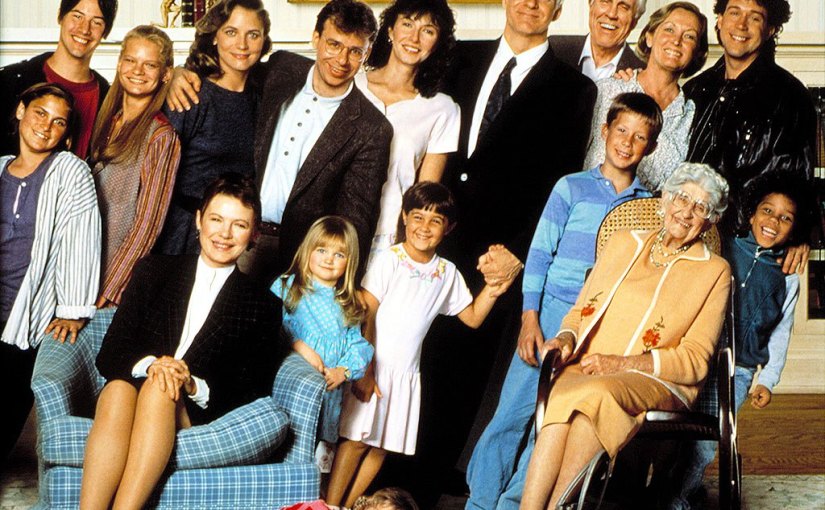
Once you’re a parent, you’re always a parent.  You’re also always a child to someone.  No matter if you are close with your mom and dad, or estranged and not on speaking terms, or your parents have passed on, you are always a child to someone.  Parenthood from 1989 demonstrates that you never clock out from being a parent or a child.

The Buckmans consist of four adult children portrayed by Steve Martin, Dianne Weist, Harley Kozak and Tom Hulce. They all got little ones to tend to with respective partners (Martin with Mary Steenburgen, Kozak with Rick Moranis and the other two are currently on the single status).  Their parents are portrayed by Jason Robards and Eileen Ryan and even the generation before them is represented by Helen Shaw.

With a cast of characters this large, there are various storylines and dynamics of raising and supporting children to go around.  Each child, or in other words, each parent has daily struggles to deal with.  The nuclear family of Steve Martin and Mary Steenburgen’s is given the most attention when it is uncovered that their eldest child of three is struggling with anxiety.  Elsewhere, Robards finds himself trying to rescue his immature, lying twenty-seven-year-old son, Hulce, from gambling addiction and debt.  Weist is doing her best to survive a sexless life after her letch of an ex-husband has left her to deal with a daughter (Martha Plimpton) pregnant and married to a stock-car racing airhead (Keanu Reeves) and a quiet, distant teenage son (Leaf, later known as Joaquin, Phoenix).  Kozak’s storyline really belongs to Rick Moranis as her genius, nerdy husband determined to raise their three-year-old daughter as a virtuoso prodigy.  Kafka is a bedtime story.

Wow, that’s a lot of baggage to unload in two hours’ time.  Yet, it works so efficiently in a film directed by Ron Howard.  I’ve used this compliment before, but it bears repeating.  You can write a full-length screenplay about any one of these characters.  I guess that is the goal you strive for when you produce a film featuring an all star cast filling the slots of a large collection of characters.  A film like Boogie Nights and Love, Actually accomplishes this feat so well.  Parenthood just the same.

Favorite moments for me occur with Jason Robards’ character.  It is evident that he was not the best father, particularly to Martin’s character, and his admiration is likely misdirected towards the kid who hasn’t made the best choices in life, played by an aloof Tom Hulce.  I really like the story arc of Robards and Hulce’s relationship when the truth rests like an ugly slime on the surface that just can’t be filtered away.  Suddenly, a man prepared for retirement and rest, has to acknowledge that his adult son needs help but is he worthy of support and love any longer?  This movie is arguably not even the highlight of Jason Robards career, but you can not deny what a gifted actor he was.  His timing and delivery are so recognizable as a hard-edged retiree parent.

Dianne Weist, the only cast member to be nominated for an Oscar for this film, has a couple of good storylines as well.  Much of her performance stems from all too common drama where a spouse leaves her and abandons any relationship he had with their children.  It’s so unfair for the child.  It’s hard on the mother who has to maintain a career while raising teenagers who are entering a new phase with regards to love and sex.  Plimpton gets into an argument with Reeves, her boyfriend, and Weist starts to swat him away.  Then Plimpton unexpectedly announces they just  got married and Weist turns to swatting Plimpton.  Weist is funny while the material holds dramatically.  It’s a real nice balance.  

Steve Martin has a good storyline as well.  He’s a hard working white collar executive who wants to prioritize attention for his son though it kills him to lose out on a promotion he knows he’s entitled to.  At the same time, he battles with how his own father (Robards) treated him at a young age.  He makes sure that his son’s birthday party is the best.  He encourages the boy to play second base on the little league team.  He attempts to do everything denied of his own childhood for his son, now.  Still, it’s not enough.  Parenthood can often feel like a winless battle. 

Martin also has good scenes with Steenburgen, and they remind me of my relationship with my wife.  She’s the sensible one.  I’m the one who gets trapped in insecurity and anxiety and low self esteem as a worker, a friend, a husband, and especially as a parent to our teenage daughter.  I excel at taking care of the bills though. 

Why am I making this personal all of the sudden?  Well, perhaps it is to call out the true nature of family and marriage that exists within the script for Parenthood, written by Babaloo Mandell, Lowell Ganz and Ron Howard.  There are some moments where Martin’s character daydreams of scenarios for his son.  One time the boy becomes a valedictorian with a speech offering complete recognition towards his father.  In another moment, he’s a rooftop sniper blaming dad for making him play second base and missing the game winning out.  When I get trapped listening to the thoughts in my head, I envision what could be.  More often than not I’m predicting dread, which almost never arrives.  Yet, I believe parents yearn to raise the perfect child that they never were.  It’s an impossible stretch.  I write that here and now, and still, I’ll try and try.  So what, though! While I’m working for perfection and absolute happiness for my daughter, I must remind myself that my efforts are contributing towards a successful path for her full of fulfillment and happiness.  More importantly, while at least half of my efforts could lead in failure on my part, my intentions are always done with absolute love and care for her.  That’s what I see in the here and now.  I’m blessed. My whole family is blessed.  So many families have it so much worse and I wish them well.  I have to remind myself not to take what I have for granted.

Ron Howard’s film is not entirely perfect.  I could have done without some of Steve Martin’s recognizable schtick from his stand-up routines.  I always like his material.  I just think some of it doesn’t belong here, the same way Robin Williams would let his known antics creep into some of his films.  Some scenes are also spliced into the film jarringly, like when a dentist’s office is suddenly vandalized.  Thematically, these break away moments should have remained on the editing floor.  Fortunately, the movie isn’t anchored by these plot points for too long.

There’s much to relate to with Parenthood.  Kids who gleefully sing about diarrhea, to parents mired in regret and doubt.  Teenagers who think they have found love to the absence of father figures.  Grown-ups who just haven’t grown up and parents who are just getting a little too ambitious in their child’s upbringing.  This is not a film, necessarily about the love a parent has for a son or daughter.  Rather, I appreciate how it questions the role these characters serve towards their fathers, mothers and children. 

Love is only one dynamic in fatherhood, motherhood, and childhood.  Parenthood focuses on everything else.

MIGUEL’S 100 FAVORITE MOVIES OF ALL TIME: #50-26

by Miguel E. Rodriguez

Counting down my favorite 100 films of all time in answer to a challenge from Jim Johnson. Here’s part 3, numbers 50-26.


50. INGLOURIOUS BASTERDS (2009) – Quentin Tarantino’s gleefully revisionist World War II revenge fantasy/thriller makes no claims at historical accuracy, except when it comes to popular German films in the 1940s. If you can accept that fact, then just sit back and bask in the non-stop pyrotechnics, both visual and verbal. ESPECIALLY verbal. The dialogue in this film rivals Pulp Fiction as some of the best QT has ever written. Christoph Waltz is a revelation as the main villain. And the finale will keep you laughing when you’re not gasping at the rampant violence. You know. Typical Tarantino stuff.

49. LOOK WHO’S BACK (Germany, 2015) – There are dark comedies and there are DARK comedies. Look Who’s Back is a DARK comedy about the completely unexplained materialization of Adolf Hitler in modern-day Germany. Think of the Sacha Baron Cohen comedies that film the main character interacting with real people, then imagine that the main character isn’t somebody who THINKS he’s Hitler, he IS Hitler. The comedy takes a dark turn as he suddenly becomes a media darling all over again and when the real people being filmed start agreeing with some of his policies. It’s been said that satire is impossible to define. Look Who’s Back comes pretty damn close.

48. ONCE UPON A TIME… IN HOLLYWOOD (2019) – Tarantino’s ninth film is a lot like Beethoven’s Ninth Symphony: It’s big, bombastic, and goes the long way around the barn to get to the finale, but in the end it all comes together and becomes a transcendent experience. What had been reported in the trades as a movie about the Manson murders starts out as a Goodfellas-esque travelogue of late-sixties Hollywood, with Sharon Tate merely a bit player on the sidelines. The beauty of the film is how it involves you in the story of a fading star and his long-suffering stuntman while the terrible fact of what’s about to happen lurks in the background. Taken as a whole, it’s a love letter to “old” Hollywood with a middle finger to Manson and his cronies thrown in for good measure.

47. UP (2009) – A widowed senior citizen keeps a promise to his dead wife (shown in a heartbreaking prologue) by literally flying his house to South America using thousands and thousands of helium-filled balloons. Ridiculous, right? Did I mention the stowaway? And the dogs who can speak English through an electronic translator? And the mountain lair of a madman? How did this material work? I can’t explain it. I can only report that it’s one of the best animated films I’ve seen, with several emotional beats that rival anything in Terms of Endearment or any other classic “weepie.” Yet another triumph from Pixar.

46. THE IRON GIANT (1999) – Due to a horrible ad campaign that dumbed the material down to the level of an MTV video, this modern classic sank at the box office and vanished from memory except from the minds of its creators and the critics who praised it to no avail. Thankfully, it’s been rediscovered by a new generation of animation fans who recognize greatness when they see it. Brad Bird’s story of a giant metal robot stranded on Earth and befriended by a little boy has unavoidable similarities to Spielberg’s E.T., but it still feels brand new. And that ending still has the power to choke me up a little bit. “Superman…”

45. MATCH POINT (2005) – Call this the Woody Allen movie for people who hate Woody Allen movies. (Or just Woody Allen, for that matter.) In this loose adaptation of 1951’s A Place in the Sun, a struggling tennis pro falls in love with and marries the daughter of a wealthy family, but when his lust is triggered by an absurdly sexy Scarlett Johansson, he finds himself willing to do anything to be with her…as long as he doesn’t lose the affluence of his wife’s family. This starts out as a soapy drama, but it undergoes an astonishing makeover into an examination of how much our lives are governed, whether we like it or not, by pure chance or luck. If you can guess the twists in this film before they happen, you should be playing the lottery.

44. TO BE OR NOT TO BE (1942) – Taken on its own merits, To Be or Not to Be is one of the funniest comedies ever made. But also consider that, while it takes potshots at Nazi Germany and Hitler himself, the characters and the movie never let you forget there is real danger afoot. And also consider that this film was made and released just after America had entered World War 2. It would be akin to making and releasing a screwball comedy about Osama Bin Laden in January 2002. That extra level of subtext makes this original version of To Be or Not to Be one of my favorites of all time. (Don’t get me started on the Mel Brooks remake…God love Mel, but ugh.)

43. BREAKING THE WAVES (Denmark, 1996) – Lars von Trier is celebrated for his eclectic, taboo-breaking films, but I feel those attention-grabbing films tend to distract from what may be his greatest film, Breaking the Waves. The story focuses on a naïve young woman who marries a rough oil-rig worker. When the worker is paralyzed in an accident, he tells her to go out and have sex with other men and come back and tell him stories about her various trysts. Other reviews of this film seem to forget that he has a very good reason for doing this…but watch the movie and see what I mean. This is one of the most spiritual films I’ve ever seen. Not religious…SPIRITUAL. It’s transcendent.

42. PSYCHO (1960) – Every slasher movie from Halloween to the upcoming Scream VI can trace its point of origin back to Alfred Hitchcock’s most frightening film. By smashing traditional norms of Hollywood storytelling (wait – she’s DEAD??!!), Hitchcock not only breathed life (ironically) into the horror genre, but also put audience members on alert: even the stars can get killed, so check your expectations at the door. I still remember myself literally holding my breath as Lila walked down into that corn cellar… And if that final exposition-laden monologue at the end spells things out a little too clearly…well, when you consider the audience at the time, I give it a pass.

41. NOTORIOUS (1946) – Now THIS is Hitchcock’s true masterpiece. In a story generously “borrowed” from by John Woo’s Mission Impossible: II, a suave spy coerces the beautiful daughter of a jailed Nazi sympathizer to get chummy with one of her father’s friends in hopes of uncovering a plot involving…well, it’s one of Hitch’s famous MacGuffins, ‘nuff said. The clockwork script is one of the masterworks of the screenwriting form. And don’t forget that wowie-zowie tracking shot soaring from the top of a chandelier and ending on a close-up of a crucial key. If I say any more, I’ll give something away. Notorious is far and away my absolute favorite Hitchcock movie.

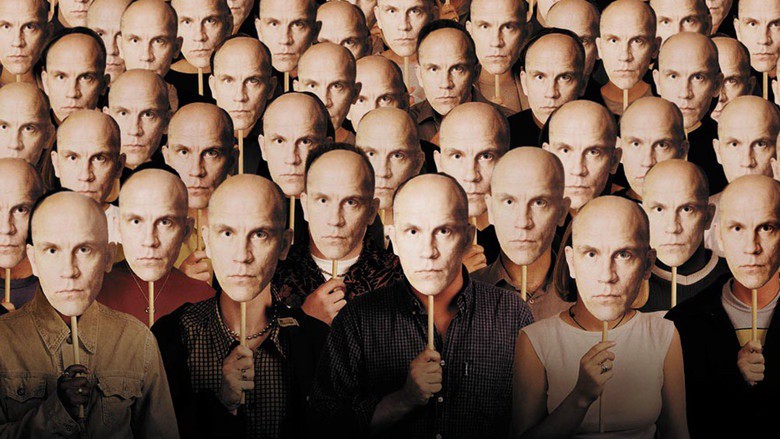
40. BEING JOHN MALKOVICH (1999) – Remember what I said earlier about 1999 having a bumper crop? Here’s another case in point. Spike Jonze’s surreal serio-comic masterpiece has all the trappings of a rejected Twilight Zone episode, but somehow it manages to transcend its slapstick tendencies and becomes something incredibly insightful, asking unanswerable questions about what it truly means to be human. Or alive. I’m not doing it justice. Look, so this guy finds a portal on the 7th-and-a-half floor of a building, a portal that mysteriously carries you into the head of John Malkovich. You know, that guy who played a jewel thief in that one movie…?

39. THE REMAINS OF THE DAY (1993) – In the annals of tragic romances, this one takes the cake for me. A no-nonsense butler and a slightly more impulsive head of housekeeping on a stately British manor, sometime before World War II, slowly bond, all appearances to the contrary. But the butler’s sense of duty to his master forces him to keep any ideas of romance at arm’s length. (There’s also a subplot about his boss being a Nazi sympathizer, necessary but sometimes distracting.) The emotional dance between Anthony Hopkins and Emma Thompson is powerful to behold; it reminds me of Lost in Translation in terms of paying attention, not to what is being said, but to what is being withheld. When that bus pulls away at the end, with someone weeping…I didn’t cry, but my heart broke all the same. The fact it won zero Oscars is astonishing.

38. MIDNIGHT IN PARIS (2011) – Hands down my favorite Woody Allen movie of all time. In classic fantasy fashion, Gil, a disaffected novelist in Paris with his fiancé, wanders the streets alone at night and inexplicably finds himself in the 1920s, rubbing shoulders with the likes of Hemingway, the Fitzgeralds, Cole Porter, Gertrude Stein, Picasso, and Salvador Dalí, to name a few. As a fan of all things nostalgic, this is heaven for Gil…but when morning comes, he’s back in the present. The message of the film resonates with me: it’s easy to look back and say, “Those were the days.” But back then, those folks looked back even farther and said the same thing. Bottom line: our glory days weren’t 20 or 30 years ago. We’re in our glory days right now. (You know what, just click here to read my review: https://2unpaidmoviecritics.com/…/midnight-in-paris-2011/ )

37. CHINATOWN (1974) – One of the darkest film noirs ever made. I’m not talking about the scenery, which is mostly drenched in the stark sunlight of the California desert, but the material. A cut-rate private eye in 1937 Los Angeles stumbles backwards into a labyrinthine plot involving orange groves, water reservoirs, and “apple cores.” At the heart of the mystery is Evelyn, a cool-as-ice femme fatale with more than enough secrets of her own to power TWO movies. To describe the film’s ending as “fatalistic” does disservice to the word: it’s a f*****g DOWNER. But I wouldn’t have it any other way. A happy ending for this movie would have felt incredibly phony. (It’s been said the screenplay by Robert Towne is still used as an object lesson for screenwriting classes.)

36. NETWORK (1976) – Screenwriter Paddy Chayefsky’s prescient satire about the lengths to which a TV network will go to maintain a ratings hit doesn’t feel as satirical as it did 46 years ago. In a time when some evening news programs are little more than talk shows without the live audience, the “Howard Beale News Hour”, featuring psychics, gossip, and endless op-eds, feels less like satire and more like a documentary. But even if Network didn’t have that clairvoyant vibe, it would still be one of the funniest, most literate movies about the entertainment business since Sunset Blvd. Not to mention it’s only one of two films to win three of the four acting categories at the Oscars. Talk about a powerhouse.

35. SUNRISE: A SONG OF TWO HUMANS (1927) – If you’ve never seen a classic silent drama before, this is the place to start. (I’d recommend Buster Keaton and/or Harold Lloyd for total rookies, but I digress…) F.W. Murnau’s powerful melodrama stirred my emotions like no other silent film has, before or since. I could cite the camera’s freedom of movement at a time when movie cameras weighed as much as a medium-sized horse. Or the liberal use of visual effects to convey the state of mind of the characters in ways that rendered dialogue pointless. Or the emotional power of the story about a married man driven to madness by a city woman of questionable morals, but who comes to his senses on the brink of murdering his wife. There’s more to it than that, of course, but the combination of story, technique, and direction makes for an unforgettable experience.

34. NOSTALGIA FOR THE LIGHT (France/Chile, 2010) – This one is going to be hard for me to pin down in a short paragraph. The subject matter and storytelling method combined to create one of the most sobering, most thought-provoking documentaries I’ve ever seen. One half of the storyline involves Chilean women combing the Atacama Desert for the remains of loved ones who were “vanished” by Pinochet’s regime during the 1970s. The other half presents astronomers using powerful observatories in the same desert to probe the night sky for answers to the origins of our universe. How the two stories are linked, I leave for you to discover. This movie was made to inspire long talks around the water cooler.

33. BARAKA (1992) – This movie is the single best argument ever made for purchasing and owning a big-screen TV with a powerful sound system. A five-person crew shot footage on 70mm cameras in 24 countries across 6 continents for 14 months. The result is one of the most transcendent film experiences I’ve ever seen. With no dialogue and an ethereal musical score, the viewer is treated to some of the most fantastic images ever captured on film. The overall effect of the movie is one of overwhelming realization that we are all traveling together through space and time on a chunk of uniquely life-giving space rock. I’m not making sense. Just read my review: https://2unpaidmoviecritics.com/2021/11/26/baraka-1992/

32. PULP FICTION (1994) – Watching Pulp Fiction for the first time was like riding a brand-new rollercoaster at night wearing a blindfold. I had absolutely no idea where it was going, but I was having a blast getting there. Its influence on future generations and filmmakers is undeniable. Its non-linear structure confounded some viewers (including me) the first time around, but like taking a second look at a painting, everything comes together upon repeated viewings. The shocking violence, the salty language, the tracking shots, the faultless dialogue, the Gimp, the gold watch, the twist contest…I could go on and on. If Once Upon a Time in Hollywood is QT’s equivalent of Beethoven’s Ninth, Pulp Fiction is Beethoven’s Fifth. (If you’re not a fan of classical music, Wikipedia is your friend.)

31. SAVING PRIVATE RYAN (1998) – Followers of the Oscars (me included) have yet to forgive the Academy for not awarding Best Picture to this gritty, ultra-violent tribute to the soldiers of the “Greatest Generation” who landed at Normandy on D-Day. It’s yet another showcase of Spielberg’s mastery of the cinematic form, presenting stomach-churning tension and blood-soaked battle scenes in a way that still manages to entertain without cheapening the message. Saving Private Ryan can lay legitimate claim to being the best World War II movie ever made.

30. THE BRIDGE ON THE RIVER KWAI (1957) – Now, having SAID that…David Lean’s epic World War II adventure tale NARROWLY edges out Saving Private Ryan in my rankings for the same reason Jaws edges out Aliens: the earlier film accomplishes the same objectives as the newer film, but with fewer resources in the visual effects and technology department. In my eyes, they’re equals, but I must play by the rules, so…there you have it. Anyway, The Bridge on the River Kwai was one of the first epic “old” films I ever saw, along with Ben-Hur and West Side Story. I was stunned by the finale, which was edited so well it felt like a modern film, not a film from the classic era. (And yes, that was a real train on a real bridge over a real river.)

29. THE DEER HUNTER (1978) – The best movie about the Vietnam War I’ve ever seen. That’s right. I said it. Go ahead and list all the other greats in this sub-genre, but none of them cover all the emotional bases we see on display in The Deer Hunter. Director Michael Cimino’s masterwork gives us the home life of the soldier, the soldier in combat, and the soldier trying to assimilate back home, all in unsparing detail. History buffs deride the infamous Russian Roulette sequence, but I see it as a metaphor for the chances any combat soldier took on any given mission in that jungle. I could go on, but I won’t. Click here instead: https://2unpaidmoviecritics.com/…/18/the-deer-hunter-1978/

28. SPIRITED AWAY (2001) – Picking my favorite Miyazaki film was no chore at all. This was the first one of his films I had the opportunity to see on the big screen, and it was stunning. Still is. The story is basically Alice in Wonderland by way of Terry Gilliam: a young girl must figure out a way to restore her parents to human form (long story) by working for a powerful witch who runs a bathhouse for creatures from the spirit world. The various spirits and creatures who visit and inhabit this bathhouse run the gamut from little soot sprites to giant walking turnips to talking frogs to three disembodied heads. The whole movie is a riot of color and imagination…and about 99% hand-drawn, at a time when CGI had established itself as the new box-office king of animation. Miyazaki has created some amazing films, but Spirited Away set a bar that he has since approached, but never surpassed.

27. UNITED 93 (2006) – I can count on two or three fingers, depending on my mood, that can bring me to the verge of tears (or past it) every time I watch them. United 93 is at the top of that list. I was skeptical when I first heard about it, thinking it was still too soon for Hollywood to cash in on the story of that tragic day. But United 93 is not just a film. It’s a genuine tribute, starring a handful of people who were involved in the background, including Ben Sliney, the newly-hired Ops Manager of the FAA…September 11, 2001, was literally his first day on the job. The decision to shoot the movie in a semi-documentary style was inspired and is one of the reasons it’s able to pull me into the story every time. It feels immediate in a way that other films on the same subject have never been able to capture, and that’s why that final sequence brings me to tears every time. Any movie that can do that deserves a place on this list.

26. REQUIEM FOR A DREAM (2000) – Darren Aronofsky’s tour de force. Requiem for a Dream reaches a point where you want to look away, but you just can’t. There have been many movies about addiction, but I can’t think of any I’ve seen that put all the consequences on display like this movie does. Three connected storylines show the spiral from those initial highs down to the deepest lows…and then below that…and then below THAT. It’s wrenching and the ending is a downer, but it’s a visual feast. Aronofsky uses flawless editing to convey every character’s state of mind, especially when it comes to the mother and that refrigerator. Friends have asked me, “What’s the POINT of this depressing movie, and why do you love it so much???” The point of the movie, I guess, is to serve as a warning: anyone who has ever even considered doing hard drugs should be forced to watch this movie first. Why do I love it? Because it’s electrifying filmmaking, even considering the subject matter. But…maybe don’t watch it on an empty stomach.

…to be continued…

IT’S A WONDERFUL LIFE

By Marc S. Sanders

I have finally righted a serious wrong and watched Frank Capra’s It’s A Wonderful Life, and what a pleasurable experience it has been.  Reader, if this movie lover who gets hopped up on science fiction gobbley gook with laser swords and spaceships can watch an old black and white movie feeling sorrow for its main characters, and elation when the film finishes, then it’s easy to understand how timeless and impressionable Capra’s classic film truly is.

I recall when I had finally seen It Happened One Night, originally released in 1934 and arguably the pioneer of the romantic comedy genre.  I could not help but connect certain moments and pieces of dialogue to the films released while I was growing up, like When Harry Met Sally… and Bull Durham.  Those films took inspiration from Capra’s comedy with Clark Gable and Claudette Colbert.  Capra pioneered storytelling once again with It’s A Wonderful Life.  As my wife and I watched the movie late last night until nearly two in the morning, I said to her this is like Back To The Future.  My wife said A Christmas Carol.  Both true statements.  So perhaps while Capra was revolutionary with his own storytelling, he might have been adopting some inspiration from what came before as well.  Regardless, I applaud his approach.  Frank Capra is a tremendous gift to the cinematic medium.  If there was a Mount Rushmore for filmmakers, Capra would most certainly be sculpted alongside the likes of Hitchcock, Chaplin and Disney.

George Bailey (James Stewart) has big dreams of leaving his sleepy little town of Bedford Falls and building grand designs of skyscrapers while also exploring the world, beginning with Europe and Alaska and whatever else needs discovering.  Like any of us, our yearning for adventure and the destinies we wish for get interrupted. Before you know it, we ask ourselves if life has passed us by.  It takes a guardian angel named Clarence (Henry Travers) to remind George that life has been with him all along; maybe not the life he envisaged, but certainly a life of purpose and significance beyond just himself.

George watches as his high school chums go on to grand accomplishments that pay off in enormous amounts of wealth.  His younger brother Harry (Todd Karns) goes to college, gets married and becomes a celebrated war hero.  However, George remains in Bedford Falls offering loans to his fellow townsfolk that he can’t afford to honor with a business he inherited from his father.  To lend and support comes involuntary to George.  He’s just a good man. 

On the other end of the spectrum is the mean, wealthy miser Mr. Potter (Lionel Barrymore).  Barrymore plays Potter like one of the worst villains in the history of cinema.  An unforgiving, jealous wretch of a man.  His cruelty is long and unmatched, even if he is relegated to a wheelchair.  He knows how destitute George is, despite his unending generosity, but Potter won’t tolerate the admiration George receives.  To squash George’s stature, he’ll buy out his business.  He’ll make every effort to silence George Bailey’s influence.  Potter will even try to take George under his wing where he can maintain complete authority as a big fish in the small pond of Bedford Falls.  Yet, Potter’s never-ending wealth cannot crush the love for George’s humbleness and giving nature.

A favorite device of mine in movies is when the filmmaker can turn the story’s setting into a character all its own.  Examples of this are shown in pieces like Spielberg’s Schindler’s List where the use of thousands of extras and piles of rubble bring testimony to the atrocities of the Holocaust.  In James Cameron’s Avatar (which I just watched as a refresher for the just released sequel), an imaginary neon glowing planet awakens our senses, and we learn that its inhabitants form a symbiont circle with the plant life and animals that dwell there.  In many films, the time and place speak to the viewer.  Bedford Falls is a main character to the story.  Capra makes wonderful use of the Main Street where each business building quickly becomes very familiar as if we have walked into these small town structures a hundred times.  It hearkened me back to my time in Fair Lawn, New Jersey where I would accompany my grandmother on her daily errands to the bank, the kosher deli and the Woolworth’s.  Wherever she went, everyone knew Helen.  In Bedford Falls, the pharmacy with the soda jerk doesn’t look new to me.  It appears like I’d seen it a hundred times before.  Martini’s, the bar, felt like I knew every hob knobber in the joint.  I could smell the ink and feel the creak of the wooden floors in Bailey Building and Loan. 

The townsfolk are also assembled wisely by Capra.  An old man sitting on his porch at night takes in the flirtations that George and soon to be wife Mary (Donna Reed) exchange with one another.  This man represents Bedford Falls taking stock in what’s to come next for our protagonist.  The people in this town have a rhythm to their gatherings.  Capra offers a magnificent shot where the camera is overhead behind George, wearing his overcoat and hat, and the townspeople are facing him at the other end of the sidewalk.  They expect of George, but does George have anything left to give?  I can only see the back of Jimmy Stewart, but I know all too well the expression he’s sending to the people opposite him.  Look at the scene where they march over to George Bailey’s business demanding their monies back.  How one delivers a line followed by another is perfectly timed to James Stewart’s despair.  The ending is beautifully cut as these same folks come into George’s home to offer their sense of giving during a desperate hour of need for George. 

I always knew the story of It’s A Wonderful Life.   Years ago, I saw a stage production where Miguel portrayed George opposite his girlfriend in the role of Mary.  Yet, I was not familiar enough with the surprises that Capra’s film offers.  I just didn’t realize how much fantasy is embedded in the movie as Clarence is meant to be a naïve angel who has yet to earn his wings.  Seems a little too childlike for me on the surface.  I’ll admit I didn’t take to the angels represented as blinking stars early in the picture.  That’s hokey!  However, when Clarence is personified in the latter half of the film, Henry Travers brings a sense of clarity to the purpose of life when he forces George and maybe anyone watching the movie to imagine what things would be like had they never been born.  Reader, I think I’ve seen story adaptations like this on episodes of Family Ties and The Golden Girls.  In this movie, it becomes frightening as we realize the actions we take carry impacts with them.  Had George not rescued his brother Harry from a skating accident, what would have happened to a squadron of soldiers during the war?  Had George not had the nerve to dance with Mary at his high school dance, what would have happened to her?  Had George not existed, then he wouldn’t be available to lend monies to people and what would have happened to a beautiful collection of new homes that would never be erected?  These questions are incorporated into roughly a thirty-minute last act that remind you to appreciate all that you saw earlier in the film.  I want to say its cheesy, but Travers and Stewart really don’t make it that way.  The sequence comes through with forthright honesty from Travers, never going big or outlandish, and genuine anguish from Stewart who convincingly appears like he’s lost everything when earlier he felt like he had nothing. 

I read that Jimmy Stewart did this film shortly after returning from serving in World War II.  He was suffering from PTSD and much of the torment and agony that George exhibits was coming through naturally on film.  This has to be one of the all-time greatest performances on screen.  Jimmy Stewart’s timing in practically every scene of the picture is perfection.  He’s a wide eyed optimist with big enthusiasm to get his life going.  Then he transcends into a teasing flirt with the girl he was not expected to hook up with.  When George tells Mary he wants to throw a lasso around the moon and give it to her, I really believe he could do it.  We have Jimmy Stewart to thank for that.  Later, he’s unexpectedly frightening as he is on the verge of being charged with fraud and penniless.  Stewart is uncompromising in front of Donna Reed and the young actors playing his children.  When he kicks over the table with the train set and gifts, on Christmas Eve, it’s terribly shocking.  Sadly, it’s relatable.  A film from 1946 presents personal problems and struggles that exist today.  That is why It’s A Wonderful Life is such an important piece.  We struggle to live with our struggles.

Frank Capra’s film is necessary to remind each of us to never give up, no matter how hard it gets.  We have value.  We have importance to ourselves and to others.  We are loved.  Yes, it’s only a movie and it conveniently solves itself in its made-up fantasy.  However, those that enrich and occupy space in our daily lives are real and they are folks who depend on us for their fulfillment and happiness.  We are necessary to making their lives better and sustainable.  Reciprocally speaking, they are just as important to mine and your satisfactions.  It might be drippy to claim that Frank Capra’s film is a “feel good movie,” but I prefer to believe that the writer/director, along with Stewart, Reed, Travers and the rest of the company served a higher purpose. They demonstrate that we have all been blessed with an enormous gift filled with the riches of love and friendship that life absorbs and treasures. 

Happy Holidays!!

FOUR CHRISTMASES

By Marc S. Sanders

I love Christmas cookies.  Those Santa, snowman and tree shaped sugar cookies with the frosting and sprinkles.  They are my weakness come every December.  Cookie cutter, however, is not necessarily a compliment when talking about a movie.  Four Christmases is as cookie cutter as they come.

Reese Witherspoon and Vince Vaughn are Kate and Brad, an unmarried couple happily going on three years and ready to celebrate the holidays alone in Fiji while lying to their divorced parents, on both sides, about doing charitable service within poorly developed countries.  However, when they arrive at the airport and learn that their flight is cancelled, wouldn’t you know it?!?!  A news reporter is there to capture them on live television revealing their ruse.  Now Brad and Kate have no choice but to visit each parent’s home on Christmas.  With less than an hour and a half running time, let’s chop this up evenly, shall we?  Figure there will be about 15-20 minutes devoted to each parent.  Hence the title… (say it with me now) …Four Christmases.

Let’s go see Brad’s dad first, Robert Duvall, who lives with Brad’s aspiring MMA fighting brothers played by Jon Favreau and Tim McGraw.  They live a simple life with a Zenith television set and Christmas presents that are purchased with a ten dollar or less limit. A gift of a satellite dish is not gonna go over well, and will likely mean a fall off the roof.  Side note: doesn’t falling off a roof seem to happen a lot in Christmas movies?  Also, if the bros are into MMA fighting, well you know that Brad is going to have to endure body slams galore while Kate simply gasps in shock at her boyfriend’s demise.

Transition time in this film happens in the car while going to the next Christmas celebration.  Brad and Kate take these opportunities to question the purpose of their relationship.  They think they have relationship troubles licked by NOT getting married and not devoting themselves to time with family, but are they kidding themselves? 

Next stop is at Mary Steenburgen’s house, Kate’s mom.  Kate’s older sister played by Kristin Chenoweth is here too.  Kate’s agonizing childhood is brought up for laughs like attending a fat camp and reminiscing about her being the one with the cooties and fearful of bounce houses.  Oh, look what’s in the backyard!  A bounce house!  How ironic!  Know where this is going?  A visit to the church of an overzealous evangelist (Dwight Yoakum), where Kate and Brad are quickly recruited to participate in the Nativity play, happens. 

This is about midway through the film and I gotta say I can’t blame Brad and Kate for always lying about going somewhere else for the holidays.  Who wants to live with this kind of torment?  There’s some truth to the adage “You can pick your friends but you can’t pick your family.”  The movie wants me to recognize the oversight of Brad and Kate and their disregard for family time, but I don’t see it.  These are cruel people that they are confronted with.

Next up, let’s go see Sissy Spacek, Brad’s mom, who is sharing coitus with Brad’s high school best friend.  Enough said there. 

There’s more transitional driving to happen where the question of if Brad wants to get more serious about their relationship is discussed following Kate’s reveal that she took a pregnancy test.  Often in films, it’s the baby factor that tests the relationships.  I wish Hollywood would think outside that box a little.  Having children is not the end all be all, all the time, in building a loving relationship.  Components involving work, religion, and money also come into play.  Mustn’t forget about love too.  Just once, I’d like to see something else.  So many couples live happily without children.  We are even reminded how it’s rude and intrusive to ask “when are you going to have a baby?”  In fact, it is rude to ask that question because it’s too standard and presumptuous.  Hollywood should account for that.  I digress though.

The fourth and final Christmas visit occurs at Jon Voight’s house, Kate’s dad.  Not much wrong here, as we are in the final act of the movie where it’s more about a will they or won’t they conundrum for Brad and Kate.  So, cue the insightful commentary from Voight dressed in a comfy blue sweater.

Look, I can’t deny it.  I laughed at several moments in Four Christmases.  Favreau is hilarious in his tattooed, buzz cut, intimidating presence.  The Nativity play with Brad dressed as Joseph and getting caught up in the hallelujah enthusiasm is funny too.  Duvall is doing his old man redneck routine like he does in Days Of Thunder, and well…c’mon it’s ROBERT DUVALL!!!!

I just wish I didn’t know what was coming from one scene to the next.  In a film this structured, you don’t even have to try to predict what will happen.  You have an involuntary instinct to just know. 

As well, I don’t get a kick out of seeing how uncomfortable characters are made out to be when they are doing nothing but paying a visit.  Poor Brad gets outnumbered by his fighting brothers and suffers the Home Alone slapstick body blows.  Later, a baby spits up all over Kate’s dress, and Brad starts to dry heave at the sight of the mess. That’s not funny.  That’s a shame.  In life that happens.  Babies spit up, but we should feel awful for the victim.  How uncomfortable that must be.  Kate is not Joe Pesci trying to rob a house and getting a deserving paint can to the face.  Kate isn’t laughing at her misfortune.  She’s in shock.  Steenburgen and Chenoworth cackle hysterically, though.  I can’t bring myself to do that.    I feel bad for these two, and all I’m thinking is that it really sucks that they couldn’t make it to Fiji.  I wish they made it to Fiji.  What a shame they never got to Fiji.

Like Home Alone or Planes, Trains and Automobiles, Four Christmases wants to deliver the message that there is nothing better than to spend the holidays with the family, or get married and start a family of your own.  Yet the campaign seems to defeat itself in its demonstration.  I love my family and I love being married, but if I saw this film ahead of what I have now in life, twenty years going strong, I might have thought otherwise. 

Quick reminder: THEIR FAMILIES ARE FRACTURED IN DIVORCE ALREADY!!!!  So, all that Four Christmases tells me is TO HELL WITH FAMILY.  I JUST WANNA GO TO FIJI!!!!!