GLADIATOR

By Marc S. Sanders

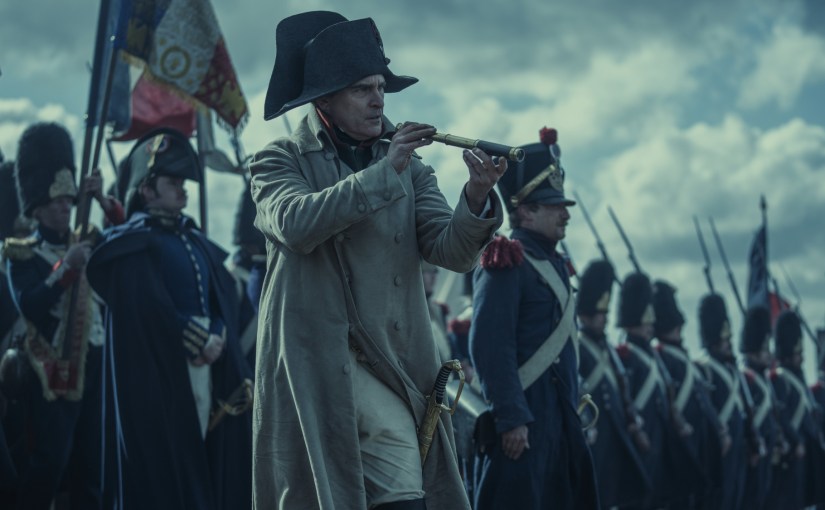
Ridley Scott’s Gladiator is a terrifically sweeping sword and sandal epic adventure.  It contains well drawn characterizations of its heroes and its one tyrannical villain, along with superbly bloody hack n chop violence and action that live up to its title. 

Rome has finally finished its campaign of conquer throughout at least one quarter of the world.  General Maximus (Russell Crowe) is ready to return to his wife and son to live out the rest of his days as a farmer and family man.  However, the dying Emperor Marcus Aurelius (Richard Harris) begs him to take over his position so the Roman Empire may carry forth with prosperity.  If Maximus does not take over, the empire is at risk of being inherited by Marcus’ spoiled son Commodus (Joaquin Phoenix).  While Maximus ponders the request, Marcus dies and Commodus quickly takes over, and orders the immediate deaths of the celebrated General and his family.  Maximus and Commodus will eventually circle back with one another, however.

Gladiator feels like an epic film in the vein of a David Lean picture that would require time and work to follow through its various developments.  Maximus certainly goes through a widespread arc.  One of the advertising bylines described it as the man who was General, who became a slave, who became a gladiator. Russell Crowe is right for this role.  Not only is he lean and built for the part, but he brings a empathetic approach to the character.  Maximus is loyal to his country, but he also carries pain and longing for his family and when he is wronged, Crowe does very well at displaying his character’s plot of  vengeance against Commodus with strategy and skill.

Joaquin Phoenix rightly earned his first Oscar nomination as a wonderful villain.  The screenplay from David Franzoni, John Logan and William Nicholson offer memorable pieces of dialogue for the bratty son.  “I feel vexed. I am very vexed.”  – a line that sounds so minimal and yet when Phoenix delivers it, it’s only more terrifying.  This little monster captured in an adult body can respond to anything that slightly irks him.

The battle between Commodus and Maximus is hardly physical.  Maximus realizes through his companions that a better and wiser form of revenge is to win Rome’s admiration away from its ruler.  Commodus lives off his ego.  So, when Maximus is encouraged by his slave owner to “win the crowd” amid the games performed in the famed coliseum, it not only lends to the gladiator’s ongoing survival, but it tears away at Commodus’ rule.  A great subplot is included focusing on the ruler’s nephew, Lucius (Spencer Treat Clark).  The expression on Joaquin Phoenix’ face when young Lucius role plays as the great Maximus works like a frozen moment in time.  Imagine a famed quarterback’s child cheering for the defensemen who performs an unforgivable sack during the final ten seconds of a game.  It’s terribly bruising.

When Gladiator was first released in theaters, I found the CGI to lack texture and it appeared very dark like a bad 3D film.  It looked too animated.  This most recent viewing was on a restored 4K transfer and the picture quality is astounding.  Every element of the broad landscapes within the battlefields and especially in the gold sheen photography of the coliseum battles blend perfectly.  If you still don’t understand the importance of 4K, turn to this film to uphold the argument. 

Ridley Scott does not waste a shot in this picture.  Reactionary sequences are just as effective as the cuts to the action.  Blades and barbaric weapons shed gorgeous splashes of blood. Every thrust and parry are easy to see. I’ve never forgotten when a chariot rider is cut in half at the torso from an oncoming blade attached to rolling wheel.  The choreography and editing of the battles are thrilling with sound editing that compliments the moments. 

Beyond Russell Crowe and Joaquin Phoenix, the cast is wonderful.  I’ve always admired Richard Harris’ quiet approach in the twilight years of his career.  He never had to do much to offer a presence.  Connie Nielsen portrays Lucilla, Commodus’ sister who he has affections for.  Her subtle resistance allows Joaquin Phoenix more opportunities to feel “vexed.”  Oliver Reed passed away during the making of this film. Fortunately, Ridley Scott and company did not opt to cut out his role as the gladiator/slave trader, Proximo.  He works well as a kind of mentor to Maximus and the band of other warriors, coaching them on how to stay alive and rise above Commodus’ monarchy.  “Win the crowd and you win your freedom.”  Djimon Hounsou is a loyal sidekick to Crowe’s character. Derek Jacobi is once again that guy you have seen before allowing his expert craft in Shakespearean performance to flesh out the political angle of the story among the Senators.  Every actor serves a valuable purpose in the film.  None of these performances feel like walk on roles.  So, the overall casting of the picture must be commended.

Gladiator is a crowd-pleasing film. Though it is based in ancient history, there remains a fantasy element to the movie when you look at grand designs of the settings, costumes, and dialogue.  Storylines of politics and tyranny hold relatable to modern current events.  What can occur when one man takes over everything for his selfish purposes?  Pointless displays of theatrics can occur at the behest of others who were once heroes, instrumental in placing a despot atop a throne.  I presume Ridley Scott’s film is just one more example of the inherent nature found in humans.  Some of us are destined to rule and control.  That alone is cruel and selfish.  It is even worse when this totalitarian mindset is unleased upon those that put these rulers in their place.  History and especially modern times demonstrate that loyalty is only fleeting.  The ability to possess totalitarian control, however, is hopefully even more short-lived.

THE MEAN SEASON

By Marc S. Sanders

I get caught up in movies focused on serial killers.  As an actor, I imagine it must be fun to portray a deranged psychopath like Norman Bates or Hannibal Lector, or maybe even John Doe from Seven.  On the other hand, maybe not because an effective screenplay needs to be nearby.

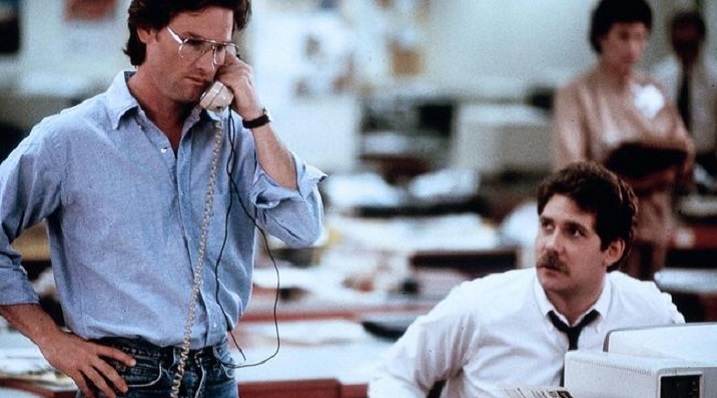
The Mean Season from 1985 has an effective premise but that’s where the positives of the picture stop.  Kurt Russell portrays Malcolm Anderson, a burnt-out reporter for the The Miami Journal.  He is the paper’s most reputable writer but just as he is ready to resign and move to Colorado with his loving girlfriend, Christine (Mariel Hemingway), he’s tasked with writing an article about the murder of a teenage girl on the beach.  Soon after, he’s getting phone calls from the killer himself, played by Richard Jordan whose face is concealed through most of the film by his hand holding a telephone.  The killer insists on only maintaining communication with Malcolm and no one else, especially not the cops.  He relays that the city of Miami can expect four more murders.

The title of the film stems from south Florida’s well known weather variations that occur at the start of hurricane season, primarily in July.  That does nothing for me, but the title alone sounds marketable enough for a thriller.  Almost sounds like a Stephen King novel.  The Mean Season!!!!!  Unfortunately, that’s all that this movie has to rely on, even if Kurt Russell is doing his best like he always does in better suspense movies like Unlawful Entry and Breakdown.

The fault with The Mean Season resides with the director’s amateurish approaches.  Fifteen minutes into the film, with the story hardly in motion, a nude Christine is taking a shower.  The haunting music begins and suddenly the shower curtain is pulled for Malcolm to deliberately startle his girlfriend.  So, we have the Psycho salute.  Check!  Later, following an argument between the two lovers, Malcolm gets in his car and is startled by Christine coming up from behind in the backseat. Ha!!!! Okay and there’s the Halloween nod.  Another check!  I bet these cheap tactics were not even written in the script.  Director Phillip Borsos (never heard of this guy before; doesn’t surprise me) must be so insecure in his skills behind a camera that he just goes for duplicative tripe.

Threats to the couple elevate as the film moves on and when Malcolm gets wind of Christine being in danger, he’s in his Mustang racing to her.  The cops (Andy Garcia, Richard Bradford) are right behind him, and no one thinks of summoning a squad car to where Christine is expected to be?  Of course not.  If they did, then we wouldn’t be treated to a clumsy sequence where an elevated bridge gets in Kurt Russell’s way forcing him to make a leap across the gap and come down on the steep other side and continue his foot race.  Kurt Russell really looks stupid in this moment, and I’m sure he was thinking I can not believe I agreed to this.

As with any of these movies, there is a just when you think the bad guy is dead, there he is again.  No wonder we didn’t get a long enough closeup on the corpse found in the dense Everglades.  However, we get treated to seeing a long, meaningless sequence of Kurt Russell being a passenger on a swamp buggy.  Big deal.  Does this enhance any kind of suspense?  Does it move the story along?  The director got access to a couple of swamp buggies and a day of shooting in the Everglades and said we gotta get this in here.

The final fight is as moronic as the rest of the picture.  Richard Jordan and Kurt Russell are going at it in the living room while a hurricane rages outside.  Mariel Hemingway just sits on the sofa and watches.  She just watches.  She doesn’t reach for a kitchen knife or a vase to smash on the bad guy’s head and help her poor boyfriend.  We just get a sad excuse of a damsel who is not in distress. 

Thankfully, Kurt Russell’s career survived this junk of standard jump scares and shortness on intellect. 

As I’ve said before in other columns, there was a better movie here.  There could have been a movie that explored the endless hours that an investigative reporter must endure.  His editor and photographer (Richard Masur, Joe Pantoliano) could have shared the heightened fear and suspense.  The cops on the case could have applied more pressure and/or assistance to the reporter.  They don’t even tap his phone to trace where the calls are coming from.  In 1985, I think they already had the technology to do that.  A tape recorder was used though, and the audience not only gets to listen to the conversations once as they are happening but then again as the characters listen to the tape.  Why?  Is there something I missed the first time I heard Kurt Russell say hello?  This is filler crap. 

A better movie would have pursued what motivates this killer we hardly get to know.  We should have learned more about this guy because he’s the one making the phone calls.  So, it is obvious he wants to be heard.  However, the guy has nothing to say of any significance.  Even a psychologist who’s recruited for one scene doesn’t make any observation that gives me, or the characters in the film, pause. 

The Mean Season is an “I got it!” film.  It’s where the director gets his big break and declares “I’ve got it!!!!  We’ll do Psycho and then we’ll do Halloween.  Gotta make sure we see Marial Hemingway topless.  That’s definitely at the top of the list. Oh yeah, and then we’ll get swamp buggies and can we get some wind and rain machines for a really, really, really mean—I mean very mean—season!”

THE LEGEND OF BILLIE JEAN

By Marc S. Sanders

Growing up as a teenager, in the dog days of summer, and living in a new town with few friends at the time allowed a lot of binge watching of movies on Showtime.  Top Gun must have been shown twelve times a day.  So was Back To School.  The other movie on constant repeat was The Legend Of Billie Jean – a movie of few merits and yet the heroic sweep of the fugitive rebel on the run with her trailer park gal pals and her little brother was addicting.  It’s a brisk ninety-minute film, but each time I’d watch the movie it felt like the title character raised even more awareness and support for her cause than the last time I watched, which was likely four hours earlier in the day, during breakfast.

Helen Slater is Billie Jean.  Her younger brother is Binx played by Christian Slater, in his first film.  NO RELATION!!!! 

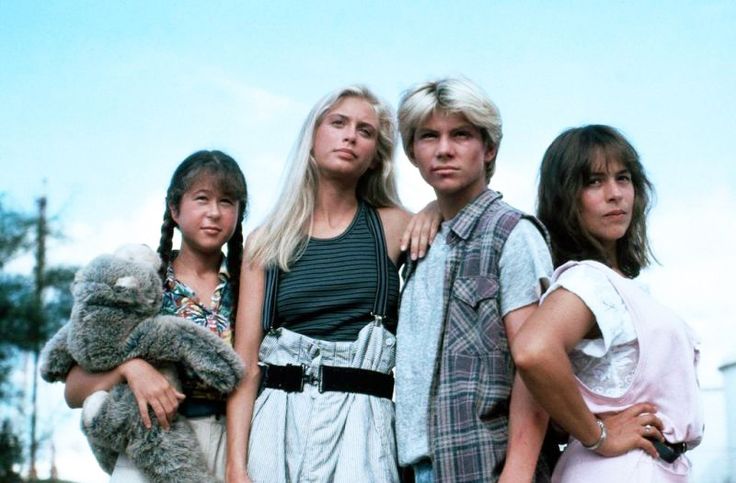
Under a hot sun-drenched setting in Corpus Christie, Texas, the siblings are bullied by Hubie (Barry Tubb).  Binx gets beat up.  Even worse, his shiny maroon motor scooter is stolen and trashed.  When Billie Jean approaches the bully’s father, Mr. Pyatt (Richard Bradford), to collect the six hundred dollars for the cost of the bike, she narrowly escapes a rape after Binx shoots the scumbag in the shoulder.  Now the kids are on the run with Ophelia and Putter (Martha Gehman and Yeardley Smith – eventual voice of Lisa Simpson).

A firestorm starts to spread with a loyal underground following for Billie Jean and her band, and they receive assistance from the District Attorney’s (Dean Stockwell) son Lloyd, played by Keith Gordon.  The cop on their trail is played by Peter Coyote.  Wait!  I’m not being fair.  This cop is never on their trail.  Somehow every kid in the state of Texas can find and help Billie Jean, except the cops.  Even with the DA’s son in tow, these fugitives cannot be located by one single, solitary police cruiser.  Yet, the kids on the playgrounds make no effort to find Billie Jean, Binx and the others.  Yes.  You shake your head at the whole thing.  When you are age fourteen though, you get caught up with Helen Slater, one of your first celebrity crushes, and the accompanying soundtrack of Pat Benatar’s rebellious anthem “Invincible.”

The Legend Of Billie Jean is a stupid movie.  I don’t think anyone can argue with me.  I mean think about this for a second.  Peter Coyote’s cop finds their getaway car with Putter and Ophelia.  Still, he doesn’t choose to search the vehicle for a significant clue to the hero’s whereabouts until the next day.  Isn’t this sloppy investigative fieldwork?  As well, during the climax a brushfire is started by Billie Jean and no one runs or calls for a firetruck.  The DA, the cops, the kids – they all just stand there watching in deep thought like they were directed.  I can only imagine the director with his megaphone yelling out the command to stare straight ahead at the growing flames.  Mind you, this isn’t a control burn firepit.  This is a BRUSH FIRE with hay and wood and clothes as accelerants.

Nevertheless, the movie is an only slightly embarrassing guilty pleasure.  It’s not as hokey as it looks on the surface.  The acting isn’t terrible because the young cast is embracing the absurdity of the whole situation.  It stands, albeit wobbly, on the same plotline of an eventual and exceedingly better film called Thelma & Louise.  More importantly, Helen Slater makes for a good lead role and heroine.  When she tells Mr. Pyatt “No,” and cries her anthem of “Fair is fair” you root for her.  Slater’s performance is far grander than the script she is working with. 

The Legend Of Billie Jean performs like an afterschool special without dubbing out the cursing. The cause of these kids’ plight enhances as the film progresses.  What starts out as a simple bullying story and a demand for monetary damages of only six hundred dollars turns into a fight for respect and honor from the adult males within a small, southern local community.  However, there is little to feel inspired by, and I’m afraid Billie Jean’s supposed legend unfolds into only a slightly miniscule smidgen of Legendary

MISHIMA: A LIFE IN FOUR CHAPTERS (1985)

by Miguel E. Rodriguez

DIRECTOR: Paul Schrader
CAST: Ken Ogata, and a host of Japanese actors unknown to me
MY RATING: 8/10
ROTTEN TOMATOMETER: 79% Fresh

PLOT: Director Paul Schrader and executive producers George Lucas and Francis Ford Coppola present a fictionalized account of the life and shocking death of celebrated Japanese writer Yukio Mishima.


It’s hard for me to know where to start with this review.  I had heard of Mishima: A Life in Four Chapters by reputation for years, mostly because of Roger Ebert’s rave review and also the film’s inclusion in the Criterion Collection AND in the invaluable compendium 1,001 Movies You Must See Before You Die (ed. Steven Jay Schneider).  I finally got a chance to watch Mishima recently, and in my opinion, if it does not quite succeed as Entertainment, I believe it is worthy of consideration as a genuinely artistic achievement.  Mishima is an elegant rebuttal to anyone who doesn’t believe cinema can be Art.

The lives of artists are notoriously difficult to translate to film, especially when it comes to the life of a writer.  Who wants to watch two hours of an author typing, in a fit of inspiration?  Paul Schrader came up with a rather brilliant method of getting over that hurdle by breaking up Mishima’s life story into four distinct acts, with each act featuring three separate storylines that coil around each other: the last day of Mishima’s life, flashbacks to Mishima’s earlier years, and scenes from his semi-autobiographical books that parallel events from those flashbacks.

If that sounds confusing, it’s not.  Each story thread has its own easily distinguishable color scheme.  If it’s black-and-white, it’s a flashback to Mishima’s real life.  If there is muted color and a mostly hand-held camera, we’re watching the events of his last day on earth.  If the colors are brilliant and saturated, we’re watching a scene from one his books.

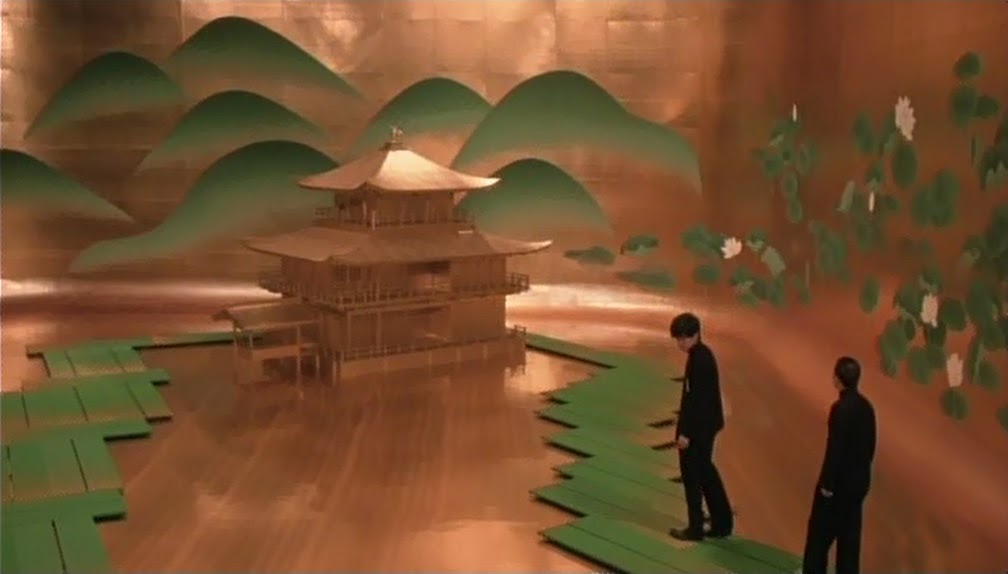
What sets Mishima apart are those sequences featuring scenes from his books…and right about here is where my powers of description may fail me, but I’ll try anyway.)  It would be easy to just call them dreamlike, but that’s both true and reductive.  To me, they look like a cross-between highly stylized opera and a David Lynch film.  In the first segment, based on Mishima’s Temple of the Golden Pavilion, the set was built with lavish golden walls and accented with green lily pads, while the temple itself is a detailed miniature that at one point splits down the middle.  The second segment, based on Kyoko’s House, is awash in garish pink lights and walls (production designer and Oscar winner Eiko Ishioka describes the scene as being highly informed by American “bad taste”…trust me, she means it in a good way).  The third segment is only slightly more realistic than the first two, with breakaway walls, representational jail cells, and a ritual act that is echoed in Mishima’s real life.

Each segment is not just visually cool to look at; they are also extremely theatrical.  In one scene, we watch a wall get pulled away from a character lying on the ground, and we can clearly see the tracks on which the wall is rolling.  In another scene, a conversation at a roadside noodle stand is staged – literally on a stage – with the restaurant on a turntable turning clockwise, while groups of actors walk in a circle around the restaurant counter-clockwise.  The effect is both simple and convincing, despite its obvious theatricality. (In fact, the visual aspects of the film are solely responsible for taking this movie up from a “7” to an “8.”)

Those scenes by themselves are reason enough for me to recommend the film to viewers.  I am an unabashed fan of superhero films (the GOOD ones), but it seems as if we’re living in an age where, instead of finding different ways to tell the same story (which is bad enough), filmmakers are telling different stories, but doing it all the same way.  For example, I know, intellectually, that Black Widow and Shang-Chi were made by different directors, but is there anything in either movie that bears the imprint of their respective directors?  Nothing springs immediately to mind.  However, here is Mishima, a film that is nearly 40 years old, which may not feature countless CGI battles, but which gave me more visual surprises than any two Iron Man movies combined.  I don’t mean to pick on the MCU (which I do love, full disclosure), but you see what I’m saying.  It’s refreshing to come across a truly original work of art.

The film also asks some serious philosophical questions.  Throughout his life, Mishima believed in and advocated the bushido, which literally translates as “the way of the warrior.”  He was unashamedly right-wing, advocating the restoration of the Japanese Emperor to power, as opposed to Japan’s governmental policies of democracy and globalism.  In the film, he several times mentions “Harmony of Pen and Sword,” a philosophy in which one’s writings are nothing unless they are backed up by action.  Mishima espouses this belief so fiercely that he ruthlessly follows it to its logical conclusion in the closing passages of the film.

What is director Paul Schrader trying to tell us here?  Should we consider Mishima as a hero?  He is certainly one of Japan’s most famous and celebrated writers, but he remains controversial for his right-wing views.  (If you’re wondering how right-wing he was, in 1968 he wrote a play called “My Friend Hitler,” an event omitted from the film.)  Does Schrader consider him heroic for following through on his beliefs, even when it became, shall we say, EXTREMELY inconvenient for him to do so?

That could be one interpretation, but I don’t see it that way.  I came away from Mishima with the knowledge that, once, there lived a man who lived and died by a code.  I did not agree with his beliefs, but they were defiantly his, and no one could take that away from him.  I was reminded of one of my favorite lines from A Man for All Seasons: “But what matters to me is not whether it’s true or not, but that I believe it to be true, or rather not that I believe it, but that I believe it.”

At the end of the day, while I think Mishima’s moral stance was questionable, and while Mishima itself is less entertainment and more museum piece, the experience of watching Mishima was nevertheless time well spent, especially when considering the astonishing visuals.

(Oh, crap, I’ve gotten to the end of the review and just realized I never mentioned the phenomenal score by Philip Glass, parts of which are quoted at the finale of The Truman Show…if you’re a fan of the movie, you’ll know which parts I’m talking about.)

BEETLEJUICE

By Marc S. Sanders

On Friday night, we watched Beetlejuice the movie.  On Saturday afternoon, we watched Beetlejuice the musical, and as soon as the curtain was pulled on the stage and the performance began, I knew exactly what the movie did wrong and what the play did so right.

I saw Tim Burton’s much beloved spooky comedy for the first time just last year with my Cinemaniac pals, which includes the other Unpaid Movie Critic.  The guys were laughing and laughing until it hurt.  I was off to the side thinking how I remember seeing that scene while flipping channels on occasion.  Cute, but ultimately boring.  That’s how I feel about Burton’s second film, following a hilarious debut with Pee Wee’s Big Adventure and just ahead of his blockbuster accomplishments with the first two Batman films.  Beetlejuice is full of big ideas but devoid of content, and I mean that literally, because the title character brilliantly played by Michael Keaton is scarcely in the film.  When he is not on screen, the remaining cast are quite bland or unwelcomingly weird.

Adam and Barbara (Alec Baldwin, Geena Davis) happily reside in a three-story Connecticut home.  Adam indulges in making a scaled model of their picturesque hometown and Barbara…well I can’t recall what she does.  On an errand trip, they haphazardly die and suddenly return to the house.  Yet, they realize quickly that they have expired and what is even less convenient is that they cannot leave the house lest they end up in a kind of limbo threatened by a monstrous sand worm and other unusual experiences. 

Shortly after, Charles and Delia (Jeffrey Jones, Catherine O’Hara), appearing with the typical Tim Burton flavor, move into the house along with his suicidal daughter Lydia (Winona Ryder) and their quirky interior decorator Otho (Glenn Shadix).  They plan to refurbish the house in their own way with Delia’s ugly art sculptures and Charles looking for a reading room.  Adam and Barbara want them out so they can roam free and avoid being contained within the attic. 

Upon discovering that Lydia can speak with them and following an entrance to the Netherworld, they get an idea to scare the new owners away.  Only whatever efforts they set out to make fails miserably and they consider reciting the name of the “ghost with the most” three times to carry him over to their side to do their bidding.

Great storyline.  Sounds great on paper.  So why didn’t it work for me?  Well, Lydia is resigned to her mostly miserable suicidal self and that is neither funny nor empathetic to me.  More importantly, conflict works best when different worlds clash and what I find lacking in several Tim Burton films is that the characters on both sides of the coin are not different enough from one another.  The ghosts or souls or comforts of the Netherworld do not look far enough apart from how Charles, Delia, Lydia and especially Otho behave.  Everyone is weird.  Where is the normalcy to ruin or undo or disagree with? 

Beetlejuice himself is a character to behold though.  Keaton is doing Jim Carrey better than Jim Carrey does and long before that guy was ever discovered.  The actor is working in the area of Robin Williams material, particularly as the Genie from Alaadin.  The issue I have is that Michael Keaton is seldom in the film.  It is a long first act with Baldwin and Davis not doing much of anything before they finally encounter Beetlejuice to have a couple of funny exchanges.  Then they leave him to have mundane conversations with everyone else in the film, particularly Winona Ryder who has nothing to do except dress in her signature, depressing black.  When Keaton finally is summoned, he takes possession of a dinner party with the beloved Calypso tune “Dayo.”  However, we don’t see Keaton in this popular sequence.  Instead, we get Jones and O’Hara with David Niven doing odd contortions to the music with some butt shaking and grotesque facial and body expressions.  I would rather have seen Keaton doing his funny best in a lip sync routine.  What’s in the final cut is just not funny enough for me. Kooky, yes.  Funny, no.

Eventually, the black and white striped suited ghost with green hair is called back for the final act and we get to see him pull all the tricks out of his hat.  However, it’s not enough.  Just as the routine is getting started, it’s over, and then the movie is over. 

There are some inventive sight gags.  Not enough though.  I particularly loved the shrunken headed ghoul with the googly eyes and the pink skinned prostitute whose legs are separated from her torso.  I love when Beetlejuice’s head gets shrunk, and I like when Adam and Barbara’s faces are contorted into odd shapes of gigantic beaks or zany skulls beneath their facial skin.  These are the highlights of this film’s Netherworld and the distance I travel to see it all is smaller than Rhode Island.  In the original Star Wars, I experienced what felt like thousands of alien races.  In Ghostbusters, New York is haunted by one different kind of afterlife from another and another.  In any episode of The Muppet Show, I get to see one breed of silliness before another ridiculous set up is put into play.  The Netherworld setting of Beetlejuice is simply not vast enough.

The stage musical makes up for the shortcomings I have with the film.  The spine of the story is what the two pieces have in common.  After that, the stage play takes more risks.  The musical numbers are absolutely winning.  More significantly though, all the characters are granted more depth and dimension.  The root cause of Lydia’s anguish is explored.  We see the snobbery of Charles just like in the film, but he is also a loving father who recognizes Lydia’s suffering following the loss of his wife/her mother.  Delia also has a desire to connect with her stepdaughter Lydia.  All the elements are given enough attention amidst the craziness offered by Beetlejuice himself who occupies the story from beginning to end.  The character works like a great two-hour stand-up routine with his unlimited imagination of ghoulish trickery and fun.

Burton’s film was released in the late-1980s when updated stop motion effects of the puppet kind were new to the medium of film.  The imagination was there, though it does not hold up as it is very outdated.  Still, Tim Burton was showing his gift for macabre creativity that he has become known for ever since.  Nevertheless, he did not go far enough with the vision of his film, and he did not award any of his characters enough ingredients to let them be unique.  It is not enough that they all speak weird and look strange.  It is better if we can know why they are so uncompromisingly odd.  Beetlejuice the film lacks its variety. More specifically, it lacks its Beetlejuice.

KILLERS OF THE FLOWER MOON

By Marc S. Sanders

Killers Of The Flower Moon reflects on a period in Oklahoma history that I imagine has hardly been told.  In the early 1920s, the Native American residents, consisting of four tribes, came into a blessing of wealth when oil was discovered on the land they occupied in Osage County.  Almost immediately, white folk from all over the country migrated to this area and built up an infrastructure of capitalism that included private practices, pool halls, movie houses, law enforcement, pharmaceuticals, and even cab drivers.  However, they didn’t want to just stop at developing the area.  They wanted to seize it and they proceeded to do so by wiping out the Native American residents.  Family lineages were all but erased as the whites married into the race and gradually found ways to kill and bring about surprising deaths that would ultimately allow them to legally inherit what was rightfully owned by the Indian people.

Director Martin Scorsese has introduced a new kind of historical education with a film that I believe will be my favorite picture of the year.  I was mesmerized by every photographic shot, closeup, edit, and musical accompaniment contained in this movie.  Everything works so well. 

Robert De Niro reunites with the director for the tenth time; an amazing legacy of a partnership spanning fifty years.  He portrays William “King” Hale.  King is a kindly old fellow on the surface, but his intelligence shows as he strategizes how to take over more and more of this area.  He oversees a control of the white gentlemen folk, leading them into quick marriages with the young women of the tribes.  From there, they have children and over time will gradually purify the bloodline.  It’s a ruthless and scheming tactic and it successfully works thanks to how taciturn Mr. Hale is.  De Niro might win his third Oscar for this role.  This character joins that exclusive fraternity of the best villains in cinematic history, ranking up there with The Wicked Witch, Harry Lime, Norman Bates, Darth Vader, Joker, Daniel Plainview and Hannibal Lecter.

Early on in the epic film, The King’s nephew, Ernest Burkart (Leonardo DiCaprio) has returned from the war to work under his uncle.  Ernest starts as a cab driver and meets Molly (Lily Gladstone), the Native American woman he will take as a bride and establish residence together.  DiCaprio does some of his best work following a very boastful career of roles.  He’s also sure to get at least an Oscar nomination.  This is already his sixth film with Scorsese.  Ernest is not very bright, but with The King’s guidance and instruction he’ll also come to own much of this territory.

Mysterious deaths of unexpected natures occur within the tribes of Osage County, particularly in Molly’s family.  Over the course of the film, one relative after another perishes until what’s left of her bloodline is practically only herself.  The children she bears are a mix of Molly and Ernest.  Molly knows something is amiss.  She is starting not to feel well, and her suspicions speak to her.  Others in the community are also suffering peculiar deaths following doctor’s visits or evenings of drunken binging.  An investigation is warranted before it becomes too late.

Lily Gladstone will become a surprise hit at Oscar time as well.  A breakthrough role where her feared silence and bravery matches well against the deceit emanating from the King and even the poorly hidden conniving of her husband Ernest.

Scorsese builds his film with suspense and shock.  A quiet beat of instrumental music haunts certain scenes.  Who will be the next target of the King’s bidding?  The King hides behind his empathy for loss by attending funeral services and allowing the survivors to cry into his shoulder.  On another side, he instructs Ernest to carry out an assignment to some flunky to make a murder appear like a suicide.  A shot in the back of the head will not send a convincing cause and effect though, and the King and Ernest must make up for that. 

The King is everyone’s friend in Osage County, but he’s also a puppet master Grim Reaper.  With the circular rim glasses that DeNiro wears along with his peaceful beige suits, it’s a wonder that this man is an executioner using the hands of others to carry out his bidding.  He dances in the middle of town during festive gatherings.  It even amuses the Sheriff’s office when he voluntarily offers himself up following a warrant for his arrest.  At the risk of getting politically sided, DeNiro was recently interviewed during a press junket for the film.  His animosity towards President Trump is no secret.  I was in the audience at Radio City Music Hall when he led a unified roar of “Fuck Trump” during the Tony Awards.  Still, the skilled actor said he used the enmity he harbors to his advantage for this role.  In the latter half of the film, William “The King” Hale preaches in a similar approach to Trump.  There are figures in our history who just know what buttons to push and absorb massive amounts of influence while earning respect through fear. 

Killers Of The Flower Moon covers a wide berth of its period in history.  Scorsese takes an inspired approach by cutting away on occasion with black and white footage and photographs of the Native Americans coming along with their good fortune and then on to how the white “immigrants” of this area enter this land and assume a daily life within the community, whether they were welcomed or not.  All is depicted from how Osage County quickly changed following the discovery of “black gold,” to how Ernest becomes wise to the advantages of power. 

Leonardo DiCaprio has a great undertaking.  Ernest is not very bright.  He can hardly read.  He’s not subtle with his approach like his uncle.  Yet, the actor maintains an expression of no choice to abide by but what he’s been told is right.  DiCaprio does this incredible expression with long frowned lips and a fat chin that stands out from beneath his nose.  It almost seems like a barrier to finding the humanity he may have once had when he was an infantryman fighting with the allies in Europe.  It is just a haunting performance.

The third act picks up with J Edgar Hoover’s newly established Bureau of Investigation entering the story to investigate the odd happenings in Osage.  Jesse Plemons again plays that guy that you have seen somewhere before.  Often, he occupies similar kinds of roles, and still, I like what he contributes to this picture as Investigator Tom White.  Screenwriter Eric Roth lends the character simple, plainly worded questions for Plemmons to work with and it seems to come off as nothing intimidating.  Rather, the presence of Tom White on Ernest’s doorstep, with Molly mysteriously sick in the bedroom, is enough to rattle Ernest, the King, and the whole county.

It’s no secret that Killers Of The Flower Moon has a long running time at nearly three and a half hours.  However, it is necessary.  This widespread crime is not done in just minutes.  How it is gradually orchestrated needs to be seen, followed by those that uncovered how sinister it became.  Then attention needs to be given to how biased the trials of Ernest and The King had become.  Men who conspired with the King and Ernest serve on the jury.  A lot of unfair wrongs occurred during this time spanning what I believe was at least a decade and a half. 

Roth and Scorsese bring the conclusion of the film with a welcome invention.  In a time where Netflix, Dateline, 20/20 and ABC News thrive off true life crime documentaries that become so addicting, the filmmakers resort to a radio show to sum up what happened to the main players of this devastating episode in twentieth century American history with the director making a cameo to offer his final words for the main victim of the piece, Molly Burkhart.  This bookend to the film has stayed with me since I finished watching the movie, and I applaud Scorsese and Roth for their execution.  Newsmakers of today go for the most sensationalized crimes that have occurred; the ones that leave the most shock and awe and even audaciousness.  What happened in Osage County is unforgivable.  Likely a genocide of bloodlines that were unjustly ceased so that what was rightfully theirs to own could be seized.

Killers Of The Flower Moon is a drama that had to be told because the motivations that led to the series of crimes happens not only to Native Americans, but to practically any other demographic across the globe.  This is a captivating story and one of the best films Martin Scorsese has ever made.

Again, this will likely be my favorite film of the year and Oscars are deserved for DeNiro, DiCaprio, Gladstone, Roth, Scorsese and for Best Picture of the Year. 

NOTE: As I watched this movie, I could not help but think of the film August: Osage County, the motion picture adapted from Tracy Letts’ Pulitzer Prize winning play.  There is one Native American character in the film who is hired to serve the white family living on a wide expanse of land in present day 2013 (2007 for the play).  The first time I watched the movie, I could not recognize the purpose of the character.  On a second viewing, following a conversation among the dysfunctional family of characters about Native Americans, it was much clearer.  Having now watched Scorsese’s film, this picture serves as a great companion piece to watch afterwards.  I’ll be directing a stage production of this soon and much of what I learned from both films will be incorporated into my interpretation.  Even the architectural designs of the homes in both films, interior and exterior, are uniquely similar. 

Look for my review of August: Osage County (featuring Julia Roberts and Meryl Streep) on this site as well.

CLOSER

By Marc S. Sanders

Mike Nichols is a director for those actors who really grind their teeth into the craft of performing with crackling dialogue.  Often, he goes for what makes a person drive awkwardness into a moment.   Equally he focuses on those folk who sustain the discomfort so apparent in a room.  Prime examples are his classic films Who’s Afraid Of Virginia Woolf? and The Graduate.  There’s even some of instances in his slap happy comedy, The Birdcage. Towards the end of his career, Nichols adapted Patrick Marber’s biting play, Closer, into a film.  

Closer carries a four-pronged approach in the shapes of Jude Law, Natalie Portman, Julia Roberts and Clive Owen.  Law plays Dan who catches the eye of Alice (Portman), an alluring stripper who gets hit by a car on the streets of London.  Beginning with playful flirtation in the hospital waiting room, they develop a relationship mostly based on sex for the following year.  Later, Dan gets distracted by a beautiful, much more mature photographer named Anna (Roberts).  She rejects Dan’s horny advances and by some manipulation with online anonymous sex talk, he sways a sex starved doctor named Larry into meeting Anna at an aquarium.  Then, to Dan’s surprise, Anna and Larry get married. There’d be nothing more to discuss if these four lived happily going forward.  What follows, however, is a manipulative chess match of lies and deceit among the four.  

One after the other disarms somebody who they valued and thought they could live with at any given time.  Alice leaves Dan after he reveals an affair with Anna.  Larry has a regretful one-night stand with a woman in New York. Anna doesn’t mind because she’s been having an illicit affair with Dan.  Larry is miserable but begs Alice the stripper to justify his torment, assuming she’s also anguishing over being betrayed by Dan. Not likely the case as she erotically teases him in a private stripping room. This scene with Natalie Portman in control establishes as the best actor in the film.

The four players on the game board all start in their respective corners, only to go around the perimeter or advance diagonally across and pounce on what they don’t have. At any given moment someone is drawing the top card or rolling the dice, and it’ll have a direct effect on one of the other three or all of them at once.

Patrick Marber’s script gets more layered as the partners change hands, but it’s his dialogue that keeps you engaged.  Alice believes “Lying is the most fun a girl can have without taking her clothes off – but it is better if you do.”  An angry Larry confronts Anna by asking about Dan.  “What does it taste like?”  Anna’s reply: “Like you, only sweeter.” Ooooo!!!! Lines like these sting, and I’ve never met someone in real life who can think that quick on their feet with such savviness.

Just as in other scripts like Steel Magnolias and Glengarry Glen Ross, I think the characters in Closer (initially a stage play) speak a little too instinctively.  They’re just so quick with their hurtful insults, comebacks and seething expressions.  Therefore, should I like plays that perform on a higher, smarter plane; plays that work quicker than most minds can register with what to say next?  Well, I appease myself with a constant reminder that a piece like Closer is more performance art than truly authentic. These four characters are so quick with a verbal jab, while engaging in some foolhardy actions that promises to make their circumstance appear worse. How can they be so smart with a comeback while acting so stupid at the same time?

The cast of four are so sharp, alert and precise.  Most of the scenes in Nichols’ film are performed in different combinations of pairs.  Every one of them is expertly rehearsed and Roberts, Law, Owen and Portman are of course the strongest assets in the production.  However, Nichols wisely uses his lens in zoom close ups, practically justifying the quirky title of Patrick Marber’s work.  I never trusted a single character was entirely genuine in Closer.  How should anyone? They’re always stabbing one another in the back. However, when an actor leans in and Nichols meets their expression halfway, I’m being ordered to look that person straight in the eye.  Still, I won’t know what to believe, but that’s the point.  

Dan, Alice, Anna and Larry move the scenes along with question after question because every answer is so dubious.  You’ll likely never get a more skeptical response when a common inquiry such as “Do you love him?” is asked.  It can be frustrating, but thanks to the cat and mouse play of Mike Nichols’ stage direction, on film, I wanted to dig deeper into the bottomless rabbit hole.

You might conclude there is a surprising twist at the end of the film.  I don’t know if it holds much weight to what I learned during the course of the story.  Nevertheless, it reinforces the theme of Closer.  Being bad can be fun, offering an immediate high, and part of being bad is lying and betraying, and maybe the ending reveals who actually won this board game with four players at the table.

Look Closer and tell me what you think.

COLLATERAL

By Marc S. Sanders

A salt and pepper haired gentleman in a knitted suit with sunglasses arrives at LAX before the sun sets.  He exchanges bags with a man he runs into, played by Jason Statham. Elsewhere, a driver does a polish and check on his taxi cab before beginning his evening shift.  He picks up an attractive, overworked attorney named Annie (Jada Pinkett Smith) and before she hands him her business card, the driver has at least convinced the woman to re-examine her life’s purpose and consider simple ways to escape reality.  The man in the suit is Vincent played by Tom Cruise.  The cab driver is Max played by Jamie Foxx.  They are about to collide with one another on this night and put Michael Mann’s film, Collateral, into play.

Following being a massive fan of the TV show Miami Vice, and the films Thief, Heat and The Insider, I remember my anticipation sky rocketing when I saw the trailers and write ups for Collateral.  Mann, Cruise, Foxx, and crime in a cool looking L.A. with a symphonic soundtrack? I’m there!  It seemed like a perfect formula.  When I finally saw the movie, I think I was let down because it was too formulaic following a step-by-step recipe.  The editing for Collateral is abundantly cookie cutter, never taking any risks with its story.

Vincent chats with Max as soon as he gets in the cab.  He offers eleven hundred dollars to occupy Max’ evening, transporting him from one location to the next. Max has dreams of running his own limo company one day and this easy money is too good to resist.  It’s only when Vincent tosses someone out a fourth-floor window to land on the roof of the cab that Max realizes there’s a hitch to this arrangement.  

Vincent is a hitman out to check off a list of targets before sunrise, and he needs Max as a cab escort.  Threats to Max’ ill mother in the hospital will keep the driver in check, and if inconveniences like a shattered windshield draw the cops’ attention then Max will have to abide by Vincent’s demand for no interference with his plans.  

The two hour running time of Collateral is structured on one stop after another.  Mann abides by side scenes from Stuart Beattie’s script to look at the undercover night detective (Mark Ruffalo) who is one step behind the pair’s frequent stops within the city.   I guess it’s fortunate for this guy that ballistics and coroner’s reports are quickly and readily available within minutes and hours to connect some dots.  

In between the kills, Vincent and Max chat in the cab.  Standard stuff really where Tom Cruise is at one time charming and other times sociopathic.  Jamie Foxx is the bright but frightened guy with dialogue that doesn’t amount to much in convincing this unwanted passenger to either let him go free or to give up on his mission.

Ironically, the many scenes shared between Tom Cruise and Jamie Foxx are the least interesting parts of the film.  When the sound editing isn’t failing by making their dialogue sound like incoherent mumbling, neither guy is ever convincing the other to look in a new direction or consider another idea.  Therefore, the conversations never go anywhere.  Look at films like The Silence Of The Lambs, Cape Fear, Seven, and especially Mann’s best picture to date, Heat by comparison.  Those films work when either the antagonist or protagonist allow themselves to consider the arguments, even if it’s just for a second, against the ones they are debating.

There is action and violence in Collateral, but it’s really a talking piece.  Still, the best exchange of dialogue occurs with Foxx and other cast mates besides Cruise.  A great scene occurs when Vincent insists that Max act under the guise that he is Vincent when he has to report to the drug kingpin employer who originally hired him (a surprise welcome from an at the time unknown Javier Bardem); great acting and writing happening here.  The early scene between Jada Pinkett Smith and Jamie Foxx also works at a thought provoking and interesting level.  These scenes are short one act plays that belong elsewhere.  Jamie Foxx is doing some great work in these moments.

Unfortunately, when Foxx and Pinkett Smith reconnect later in the film, they are not written with the same kind of intelligence during a run and hide third act climax.  The suspense is absent here because the setup is ridiculous.  While standing on the top level of a parking garage, Max can easily see Annie in a fourteenth-floor office window, blocks away across the city, and specifically direct her where to run from the dangerous killer who is a few floors below, all while using a dying cell phone.  

More to the point, why is Annie still wearing a suit and heels, with her hair and makeup done up, at four o’clock in the morning? I know an aggressive lawyer never stops working, but don’t they go home, pour a glass of white wine, get into sweats and pop open the laptop while Miles Davis plays softly on the stereo?  How would these guys even know this is where Annie would be at four in the morning? Reader, you might tell me to dismiss what’s merely circumstantial here, and normally I would.  Yet, if I’m an expert hitman like Vincent is supposed to be, my first instinct is to go to Annie’s home first before the office in the middle of the night.  It’s the circumstances that negate the believability of the main character.  

As expected, Los Angeles looks moody and cool like in any other Michael Mann picture.  He’s got blazing overhead shots that emit a white glow in the thick of night.  The wolf is holding a fang and claw to the neck of the sheep as they careen through this endless city maze.  In that respect, the environment of this film works like a great character game master. What turn or straight avenue or bridge is going to work in either saving Max or getting him killed?

The technique of this filmmaker, who I usually favor, is here.  It’s been seen many times before for the other sharp, well-dressed killers in Michael Mann’s worlds. I welcome it back, but it’s not new or inventive in Collateral.  I guess that’s why the film is ordinary.  It lacks the depth that other productions from Mann rely upon.  The setups are quite amateurish and most of the talking is wholly uninteresting.

In spite of a phenomenal and reputable cast and crew, it’s a shame this Michael Mann installment is only ho hum in its finished product.  Collateral needed another script rewrite, followed by some additional reshoots.  There was a better movie to made here. 

PUMP UP THE VOLUME

By Marc S. Sanders

Travis Bickle, the character portrayed by Robert DeNiro in Taxi Driver, is arguably one of the most famous lonely men in film.  There have been other iterations of the sad, angry and depressed individual that just can’t speak to anyone and vents his frustrations only to his consciousness that an audience is meant to hear while watching a movie.  An isolated guy that stands out to me is a radio DJ known as Happy Harry Hard-On played Christian Slater in Pump Up The Volume, a sleeper hit on early 90s videotape.

Harry is a lonely, quiet high school student by day who goes by his real name of Mark Hunter.  No one takes notice of him because he doesn’t socialize, and he hardly speaks.  He just keeps to himself.  Only an English teacher impressed with his writing and another student named Nora Diniro (perhaps a salute to Robert?) played by Samantha Mathis catch his eye.  Mark’s parents really don’t even take much notice of him, other than to believe that Mark has problems adjusting.  It’s much deeper than that, as the poor kid adopts his alter ego on a pirate radio station which reaches the neighboring homes around the school. 

Pretty soon most of the student body is listening and relating to Mark’s diatribes of loneliness, depression, and the school administration’s efforts to doctor passing grades and average GPAs to enhance its image within the state of Arizona.  The school proudly boasts of a program to help troubled kids too, but Mark as well as the other kids fail to see any legitimacy in that approach.  All of it is a sham. 

The efforts behind this ongoing fraud are being committed by the tyrannical Principal Cresswood (Annie Ross).  However, Mark has access to confidential records thanks to his father who now works for the school.   Drawing no attention to himself, he can uncover some students who were expelled just for having poor grades despite having no violations.  One student was dismissed under dubious circumstances when it was discovered that she was pregnant. 

Hard Harry’s radio show airs each night at 10pm where such secrets are revealed along with some of the most perverted and filthy material imaginable interspersed with the grunge/punk music of the time (Concrete Blonde, Ice-T, Pixies, Sonic Youth).  Before podcasts and the internet, there was pirate radio in a kid’s basement. Hard Harry vents his frustrations about not speaking with anyone all day or how difficult it is for him to approach a girl.  The student body empathizes even though they can’t identify this mysterious voice of airwaves.

Pump Up The Volume never made a huge impact at the box office, but my high school pals and I caught it anyway in movie theatres.  It spoke to us.  It was much more relatable than Taxi Driver because it was modern, and it was set in an environment that we were similarly living through.  Everything that Mark/Hard Harry had to say I could understand.  I felt his anguish.  Writer/Director Allan Moyle goes for an early surprise when one listener sends in a letter saying he wants to kill himself.  Wisely, Moyle doesn’t go for the standard call where the DJ talks the kid out of it.  Mark isn’t mature or intuitive enough yet to be an effective “fast-food therapist.”  Instead, Hard Harry makes the initial mistake of not taking the letter writer seriously.  The aftermath amplifies the pirate DJ’s presence, and then the debate of his servitude comes into question.  Mark can no longer toss this personality aside.  He’s making a difference, whether some believe it is good or bad and now, with Nora’s encouragement, he must continue his crusade, even if he’s not sure what that is.

Pump Up The Volume was released in 1990 before the Columbine shootings and waves of other school violence that’s occurred since.  It was around before social media.  Though it is hardly spoken of anymore, perhaps because it lives only in the time of its original release, the context of the film speaks more openly than most of John Hughes’ films.  A variety of different students reveal the pain they are suffering, from the genius student who only appears to have it all together in the brains and beauty department to the punk kid who was unfairly expelled to even the silly kids who just want to prank Harry while he’s on the air, and the kid who was cruelly tricked into coming out.  The stress and suffering of what students endure still exists and it is perhaps more visible now due to how much further some students publicly act on their frustrations.  In that respect, Allan Moyle’s film is not outdated.  It might not be pirate radio anymore, but similar content that Harry incorporates in his nightly show continues to be seen in podcasts, Instagram and Tik Tok posts. Public actions are now performed on campuses – such as protest marches, rallies, voicing sexual interests or regrettably school violence, and suicide.

Christian Slater is perfect in this role, maybe one of his best, next to the misfit he would later play in True Romance.  Slater has a Jack Nicholson personality. He’s great with the on-air smarmy comments and adoption of his own routines such as “pleasuring himself on the air with a cock ring.”    He’s not literally doing any of this, but he keeps his listeners’ attention, the same as shock jocks like Howard Stern.  Turns out Mark doesn’t even know what a cock ring is, but everyone is curious, nonetheless.  He makes Hard Harry confrontational, as well as regrettable, when Mark feels things are going out of control.  Another angle is the quiet student that Slater is by day wearing large glass frames and keeping his head down while subtly checking out the writings of Lenny Bruce from the school library.  Slater does well with the multi-faceted character, and I couldn’t envision other actors of his brat pack age in the role.

Samantha Mathis is also sensational, a real surprise.  This was her debut screen performance.  She has the appearance of a 1990’s Winona Ryder, but she exudes complete confidence as Nora, the girl who seems to know everyone at school and what they are involved in.  Moyle writes smart, and sometimes poetic, dialogue for her character. She delivers with a personality of being seduced or moreover being the seductress.  Mathis has great chemistry with Slater. She works very well at breaking down Mark’s outer shell while encouraging him to carry on with what he has started.

Pump Up The Volume enters a third act that becomes a chase scene of sorts when the FCC is called in to find Hard Harry.  The film ends abruptly because I think Hard Harry may have run out of things to talk about.  However, I walk away from the film having seen a hero in a pirate DJ, who brought the wrongs of an administrative body to light. More importantly, he allowed attention to focus on the trials that high school youth encounter.

You’ll feel good after watching Pump Up The Volume, and you’ll understand when Harry tells you to “Talk Hard!”

THE COST

By Ronnie Clements from Screen Gems – A Guest Review

Screen Gems checks out The Cost (2023) …

Introductory note …

I approach an assessment of The Cost (2023) with a significant amount of “baggage” (so to speak). Firstly, director and co-writer, Matthew Holmes and co-writer, Gregory Moss are very good FaceBook friends of mine. Secondly, I’m not overly into Australian films. My Cinema Studies concentrated on American films and most of my all time favourites are American ones. Thirdly and most significantly, as a true crime buff, I do often watch revenge thrillers and by default root for those exacting the revenge no matter what. However, I take writing reviews very seriously so I will off-load my “baggage” and appraise The Cost with a completely “cold eye”.

Review …

The revenge thriller is alive and well! We should be thankful and rejoice!

The sub-genre of the revenge thriller is an interesting one. It is very commonly tackled by American filmmakers but not so often by Australian ones. Of course the many American ones I have seen (1974’s Death Wish, 1982’s Class of 84, etc.) tend to be very “manipulative” and “framed” in such a way that we are consistently on the side of those in the business of getting even. This is where The Cost makes the sub-genre entirely its own!

Two regular guys abduct a crim who was given early release from jail for a rape and murder many years before. The husband and brother of the victim are intent on dispensing their own brutal form of justice. However, director Matthew Holmes (by way of the script which he co-wrote with Gregory Moss) does not make it easy for us to firmly and consistently root for any one character. We are constantly shifting our allegiances between the perpetrator of the sickening crime and the revenge seekers. This not only makes The Cost different. It makes it riveting! It makes it unforgettable! It makes it superb!

The setup for the film is quickly and clearly established at the very beginning with obligatory flashbacks and slick editing. We are introduced to the three principal characters who will carry us through a very emotional journey as two of them dole out their own payback: the husband, David (Jordan Fraser-Trumble), the brother, Aaron (Damon Hunter), the perpetrator, Troy (Kevin Dee). Then there is “the intruder”, Brian (Clayton Watson) who comes into the story later and enriches the narrative as it goes in different and unexpected directions.

Of course a film with a small number of main characters lives or dies on the strength of the acting performances and in The Cost the performances are stellar. Fraser-Trumble, Hunter, Dee and Watson are equally engaging in their disparate roles and adequately capture the “development” of their characters as the tale unfolds. It needs to be mentioned that all the supporting cast are great too, not one bum performance in the piece.

Overall The Cost is a breath of fresh air in the revenge thriller sub-genre because we are often shifting our allegiances from one character to the other and sometimes even feeling for the crim. We are never being “manipulated”, we are in control. And interestingly enough, The Cost’s violence is relatively restrained too. There is not the over-the-top blood letting as there is in so many American, European and Asian revenge films. There is a particular scene where the violence could have been horrific, but the clever script does not allow that: what we don’t see happen is as effective as what we could have seen happen!

Beautifully lit and shot with a script that is crisp to the core (not one line of dialogue is wasted), The Cost is an important Australian film that is highly recommended. It will definitely have you thinking long after the credits have rolled.

On balance if I had one “issue” with the film, it would be the ending. It is perhaps not quite as “dramatic” as I would have preferred but, to be fair, it still works. We are certainly left with questions and the ending, as it is, makes way for a sequel. I’d certainly love to see that!

So … I will finish as I began: The revenge thriller is alive and well! We should be thankful and rejoice!

I am and I do!

Trailer …

May be an image of 13 people and text that says 'O DELIVER THE COST'

All reactions:

2828