THE GOONIES

By Marc S. Sanders

You know how there are some movies designed for that unexpected thunderous rainy, Saturday afternoon?  Maybe a Star Wars flick or an Indiana Jones.  James Bond or Marvel?  For me the best candidate is probably The Goonies, where the rascally kid in all of us comes alive, yearning for adventure like riding our bikes through the paths of the sleepy town we live in over to a hiding spot on the other side of the woods where a once long lost treasure map begins an unknown journey.  Quick on our tales though are the bad guys with the humped back, crooked nose and clicking revolver.

Richard Donner did more for The Goonies than I think a lot of people realize.  It’s no wonder to me that the film is officially inducted into the National Film Preservation Archives since 2017, the same year that pictures like Guess Who’s Coming To Dinner, Ace In The Hole and Titanic also received their recognition.  Maybe Donner had help from producer Steven Spielberg and screenwriter Chris Columbus.  Granted, ahead of the age of cell phone addiction, these guys knew how twelve and thirteen year old kids ticked.  The Goonies bond over insulting each other, shoving one another, telling each other to shut up and freely dropping the s-word.  It’s a rite of passage.  It’s how I bonded with my buddies at that age.  Heck, I still maintain contact with my best friend at the time, Scott, and we still trade barbs like that even if we live over a dozen states away from each other.

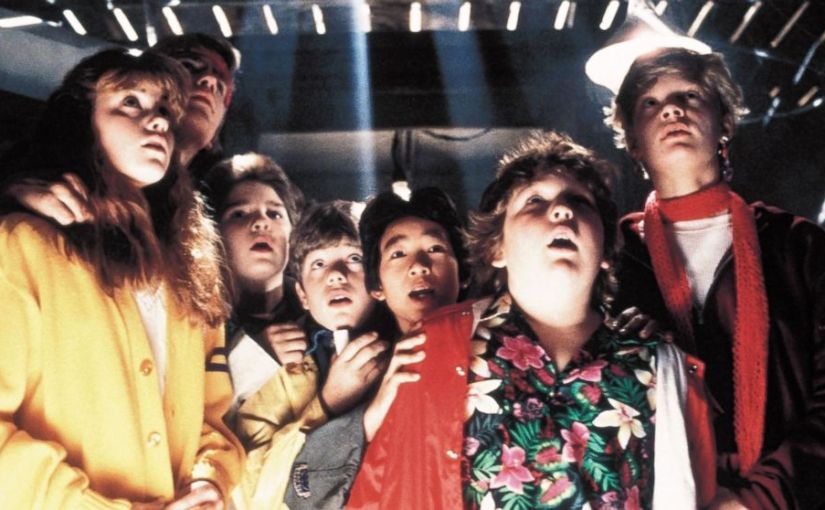
Sean Astin plays the asthmatic leader of the gang, named Mikey.  A son of actors Patty Duke and John Astin, he made his film debut with The Goonies, and I think it holds as one of the best child performances to grace a screen.  He’s such a genuine little guy, who is passionate about making any last ditch effort to save his house and home town from being bulldozed by greedy golf course developers.  On a rainy Saturday afternoon, Mikey’s buddies ritually come over to the house and with his older brother Brand (Josh Brolin, another celebrity son making his film debut) make their way into the attic and uncover a treasure map written by the infamous pirate from the 16th century, One Eyed Willie.  Soon after, Mikey along with Mouth, Data and Chunk (Corey Feldman, Ke Huy Quan and Jeff Cohen) embark on adventure that leads them to the underground caverns of an old restaurant off the Pacific coast.  Two high school girls, Andy and Stef (Kerri Green, Martha Plimpton) join the gang.  Andy and Brand have adorable puppy love crushes on each other. 

One Eyed Willie’s map supposedly leads to a treasure of enormous wealth that Mikey and the gang believe can save their small town of Astoria from being razed.  However, there are inventive booby traps along the way, and the nasty Fratelli brothers with their cranky old mother (Robert Davi, Joe Pantoliano and Anne Ramsey) are hot on their trail.  The Fratellis are straight out of those old Hardy Boys and Nancy Drew mysteries.  They are hilarious with their bickering, and scary at the same time. Anne Ramsey was a special kind of character actor with her ugly appearance and craggily voice. It eventually even got her an Oscar nomination (Throw Momma From The Train).  

We may know how the story will end up, but Donner, Spielberg and Columbus advance with one unpredictable scene after another.  Reader, when I feel the height of suspense in a film, I actually tear up and I get a very nervous laugh.  The shootout scenes in Heat (1995) and Lethal Weapon will do that to me every time.  The lightsaber dual in The Empire Strikes Back and the snake pit scene in Raiders Of The Lost Ark!!!!  I’ve been watching The Goonies since I was the age of most of these characters.  I still get this natural reaction when Andy has to play the correct notes on a skeletal piano to open a passageway.  Each time she plays the wrong note though, a tease of impending doom appears.  It works so well in the ensemble performance of the cast bellowing “Oh no!” and “Oh shit!” and “My God!” and “Hurry up!”  Edited with the quickly advancing villains getting closer, and the pulse beat music accompanied by composer Dave Grusin, and you are so caught up in their escapades now, that it feels like you are there.

All these kids become your best friend quickly.  Data is the inventor with the tripped out gadgets, inspired by James Bond, ready to set his own booby traps.  Mouth is the Spanish interpreter who gleefully causes trouble and mischief, but Feldman the actor is allowed some tender moments as well.  Jeff Cohen is like the Curly of The Three Stooges who gets sidetracked on his own adventure with a monstrous but loving, and sadly rejected son of the Fratellis.  A chained-up ghoul named Sloth (John Matuszak).  Cohen might have the best comedic moments in the film.  When I moonlight in Community Theater, I still must remind myself that just once I’d like to audition with his hysterical crying monologue where he confesses to stealing his uncle’s toupee to use as a beard to dress up as Abraham Lincoln, while another time he used fake vomit to sicken an entire movie house.  Hilarious stuff! 

There are dropping boulders, rattling pipes, a waterfall wishing well, scary skeletons, that creepy piano, and fun water slides to circumvent around One Eyed Willie’s maze onward to his legendary treasure aboard the most spectacular pirate ship ever seen.  Rarely are kid’s adventures constructed like this anymore.  I dunno.  Maybe it’s the script.  More likely, maybe it is the cast of kid actors doing one of the best ensemble performances together on screen.  Their timing could not be more perfect among the seven Goonies. 

The Goonies is a much more honest and transparent look at how kids behave with one another than you might find in a bleached-out Disney flick.  These kids get dirty and unsophisticated, yet thoughtful.  They are not age 21 playing age 14.  They don’t have fashionable haircuts and designer clothing. They are not pop singers trying to be actors.  Most importantly, the conversations among the gang are more natural in pal around rudeness.  You’re not really a friend unless you are telling the kid next to you to shut up and exclaiming “Oh shit!” when another encounter with danger lurks ahead. 

The Goonies is just a fun ride to watch over and over again. It succeeds with its own interpretation of The Little Rascals, and it’ll give you all the feels as you watch Mikey plead with One Eyed Willie for the next clue, or when he stops to remind his Goonies that there’s more at stake than just a play date on a Saturday afternoon. 

My advice is to keep the rose colored glasses off your children’s eyes.  Let them know it’s okay to get in trouble and make mischief.  Make sure your kids know they should be the best Goonies they can be.
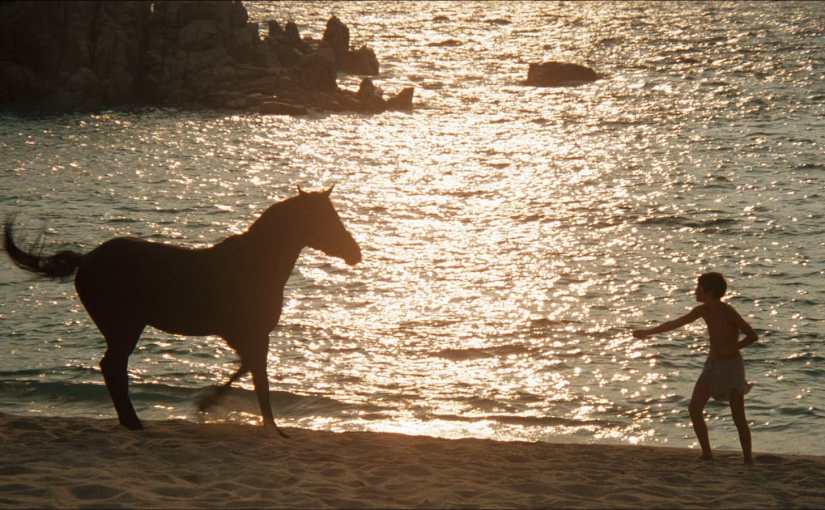
THE BLACK STALLION (1979)

by Miguel E. Rodriguez

Director: Carroll Ballard
Cast: Kelly Reno, Mickey Rooney, Teri Garr, Clarence Muse, Hoyt Axton
My Rating: 8/10
Rotten Tomatometer: 90% Fresh
Everybody’s a Critic Category: “Watch a Film Starring Animals”

PLOT: After being shipwrecked off the coast of Africa in the 1940s, a boy bonds with a magnificent Arabian stallion and trains him to race after their rescue.


Horses are great, but they are not my favorite animals.  That honor goes to the great white shark.  (They fear nothing; the only things they are even cautious around are larger great whites…but I digress.)  I always hear and read about how magnificent and majestic and spiritual horses are.  I have never denied their intelligence, but I never jumped on the bandwagon with folks who believe they are angels on four legs.  And I’ve never really gotten into horse racing, at least not on an ongoing basis.

But there is one movie that combines the mystique of horses and horse racing with poetry, grace, and true art.  Carroll Ballard’s The Black Stallion is one of the most beautiful films ever made.  The visuals are so good and well-edited that fully 28 minutes of the movie are presented with zero lines of dialogue spoken.  After a fearsome shipwreck, Alec Ramsay (Kelly Reno) finds himself stranded on a desert island along with a magnificent unnamed black stallion whom he later simply calls the Black.  During this shipwrecked portion of the movie, all dialogue is dropped, and we simply watch as Alec and the Black overcome their initial fear of each other and bond.

It is in these scenes that The Black Stallion truly shines.  There is one particular sequence that will stick in my memory forever.  After some days and weeks alone, Alec tries to get the Black to eat food directly out of his hand.  In a nearly unbroken take, we watch as the Black warily approaches Alec, then turns away, snorting and stomping, then turns back, taking one cautious step after another, getting closer and closer…and it all looks completely organic.  It’s one of the greatest acting performances by any animal in any film I’ve ever seen.  In that scene, the Black exhibits more proficiency at acting on camera than I’ve seen in a few human actors I could name.

When I first saw this movie at 8 years old, I couldn’t fully appreciate the ingenuity of this portion of the film.  All I cared about was how invested I was in seeing Alec bond with the Black.  I didn’t care about cinematic theory and editorial processes and visionary cinematography.  But it’s all there in full view, presenting a visual story clearly and cleanly.  Buster Keaton would have loved this movie, I think.  (At least, the silent portions, I would imagine.)

The Black Stallion piles on one visually exhilarating scene after another involving Alec gradually gaining enough trust from the stallion to the point the Black allows Alec to ride him.  And then they are both rescued and returned home to America, and it’s here the movie seems to stumble just a bit.  After the grand vistas of their desert refuge, the white picket fences and tree-lined avenues of 1940s suburbia is a tad underwhelming.  When the Black gets spooked by garbagemen and runs off, we do get a nice contrast of seeing this semi-mythical creature of a bygone age galloping past storefronts and hurdling fruit crates.

Alec chases the Black and eventually finds him in a seemingly deserted barn owned by one Henry Dailey, an ex-jockey played to utter perfection by Mickey Rooney.  To say Rooney’s performance in The Black Stallion is “natural” is an understatement.  And to older audience members familiar with Rooney’s performance as a jockey in the 1944 film National Velvet, this must have been like seeing the remaining members of the Ghostbusters reunite in Ghostbusters: Afterlife (2021).  When he trains Alec how to ride the Black, you get this incredible sense of a man tapping a massive reservoir of knowledge for the benefit of the next generation.  I don’t know if I’m accurately describing this facet of Rooney’s performance, but if you watch the movie, you’ll see what I mean.

As do so many other movies featuring horses (not all, but many), The Black Stallion culminates with a horse race, this one pitting the Black against the two fastest horses in the country.  As we are fed information about how and why this race comes about, I particularly noticed how one phrase was repeated at least twice: “They’ll never let him run…he doesn’t have any papers.”  No doubt there are horse enthusiasts who know what that means.  I haven’t the foggiest clue what they’re talking about, but the cool thing is…it doesn’t matter.  It doesn’t matter now, and it certainly didn’t matter when I saw it as a kid.  It’s enough to know that “papers” are something other horses have, but the Black doesn’t, and that seems pretty important to some people, no matter how fast he runs.  It’s just another way The Black Stallion is constructed to appeal to audiences of all stripes, be they equestrian aficionados or rank amateurs.  There are not a lot of films that can do that, and I don’t know if The Black Stallion gets recognized enough for that accomplishment.

The climactic horse race ends exactly how you would expect it to end.  Formulaic?  Of course.  But what a race!  The cinematography, editing, Oscar-winning sound design, and carefully restrained use of the musical score all combine to create a moment every bit as thrilling as any NASCAR race.  Even now, watching the movie for this review, I fell into the moment all over again, smiling with delight as Alec and the Black pound their way around the track, hooves thundering on the dirt, pumping my fists when Alec discards that pesky helmet and goggles, and those other horses ahead of them get closer and closer…

Any lover of horses owes it to themselves to find and watch The Black Stallion.  Kids will get a kick out of it, but adults will, too, perhaps on another, more nostalgic level.  (That could just be me projecting based on my own childhood memories, but I stand by it.)


QUESTIONS FROM EVERYONE’S A CRITIC

  1. Which character were you most able to identify with?  In what way?
    Well, for me, there’s no question I identify with Alec.  I still remember how I felt watching this movie for the first time.  I mean, I didn’t necessarily want to BE Alec, but he was my entry into the world of the movie.  I knew how he felt when he was trying to convince his mother to let him ride in a race.  I knew what he must have felt at the very beginning of the movie when his curiosity about the Black overcame his very real fear of such a powerful animal.  And I thrilled when he raised his hands in triumph during the horse race.  (Kind of an easy answer, to be honest, but…there you go.
  2. If you were to make a movie starring animals, what animals would you choose, and why?
    …well, as I mentioned before, great white sharks are my favorite animals, but they are notoriously difficulty to film, as shark cinematographer “Three-Fingers” Joe will tell you.  I’d have to go with dogs.  Much easier to train, plus every day they see you arrive on set, they’ll treat you like they thought you’d be gone forever.  My film would be a comedy/sci-fi story involving a cat’s brain being transplanted into a dog’s body.  Maybe get Paul Rudd to do the voice of the dog.  …it’s a work in progress.

A CHRISTMAS CAROL (1984)

by Miguel E. Rodriguez

A CHRISTMAS CAROL (12/17/1984)
Director: Clive Donner
Cast: George C. Scott, David Warner, Joanne Whalley, Edward Woodward, Susannah York
My Rating: 10/10

PLOT: In 19th-century London, a bitter old miser who rationalizes his uncaring nature learns real compassion when three spirits visit him on Christmas Eve.

——————————

[SPOILER ALERTS! (For anyone whose souls are so dead they have never seen or read A Christmas Carol before…)]

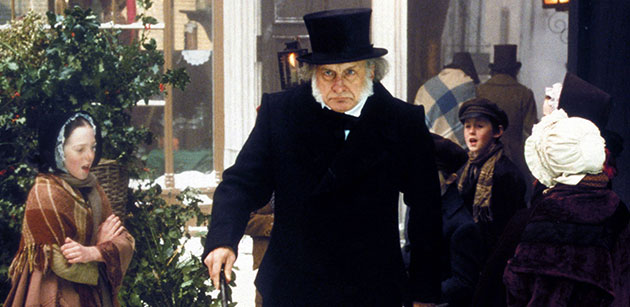
The TV version of A Christmas Carol that first aired on CBS in 1984, starring the legendary George C. Scott as Ebenezer Scrooge, is the best version of Charles Dickens’ story that I’ve ever seen.

Oh, but let me tell you why.

Without exception, every other version I’ve ever seen, including live theatre versions, have made humor and lightness their prevailing mood. The musical Scrooge (1970) does have its share of dark moments towards the end, but the darkness is derailed by an unnecessary detour into cartoonish humor (while in the depths of Hell, no less). I’m not saying that making the story fun is wrong, necessarily. After all, it’s a Christmas story, with a strong message of redemption, so why shouldn’t it be a joyous experience? Right?

Ah…but this 1984 version takes a novel approach. It realizes what I’ve always known all along: that this is, above all, a ghost story with a Christmas message. And not all ghost stories are merry and bright.

Take the Ghost of Christmas Present, for example. In this version, he’s played by Edward Woodward, with a deep booming voice, an absurdly hairy chest, and hidden stilts making him upwards of 7 feet tall. His eyes twinkle, but something about his grin and hearty laughter gives you the sense of a cat toying with a mouse. There are moments when he berates poor Scrooge for his vices, and his voice becomes intense, and the smile vanishes from your face, and he tells Scrooge that his life may be worth less than MILLIONS of other souls like Tiny Tim, and…it’s quite a moment. It reminds you that this is a morality tale.

Another example, of course, would be the ever-popular Ghost of Christmas Yet to Come. In every other version I’ve seen, this specter doesn’t speak, just points, usually with some kind of musical flourish. This version is no different, except the filmmakers ingeniously use an intensely creepy sound effect whenever this Ghost points or nods. It’s like someone pulling a violin bow across a huge piece of sheet metal. The effect is not comic or melodramatic. It’s deeply unsettling.

Of course, yet another reason to love this version is the towering performance from George C. Scott as the proto-Grinch, a man for whom Christmas is just an “excuse for picking a man’s pocket every twenty-fifth of December.” He injects moments of sly humor if you watch carefully (to the mute Ghost of Christmas Yet to Come, he mutters, “You’re devilishly hard to have a conversation with”), but for the most part he plays the character completely straight with nary a grin to be seen except on the rarest occasions. This is an aspect missing from every other version. The prevailing wisdom seems to be to amplify and overdo the character of Scrooge, so he’s not as unlikable, I guess. Not this time. Scott creates a mean, heartless, ruthless businessman who would as soon bankrupt you as say two words to you. Even Albert Finney’s interpretation in Scrooge, as completely as he disappears into the role, is not as dark and merciless as George C. Scott’s version.

It’s that darkness that appeals to me here. Yes, yes, the ultimate scenes of happiness and redemption are all there – the boy on the street, Scrooge skipping around his room, “giddy as a drunken man”, the massive turkey – but I love this version because it remembers its roots. This is a gothic ghost story, and as far as I’m concerned, any version of A Christmas Carol would do well to remember that.

KLAUS (2019)

by Miguel E. Rodriguez

KLAUS (2019)
Directors: Sergio Pablos, Carlos Martínez López
Cast: Jason Schwartzman, J.K. Simmons, Rashida Jones, Norm MacDonald, Joan Cusack
My Rating: 10/10
Rotten Tomatometer: 94% Certified Fresh

PLOT: The origin story of a certain jolly fellow in a red suit is told with beautifully enhanced hand-drawn animation in a film that deserves to be ranked with the best holiday classics.


I was not prepared for this.

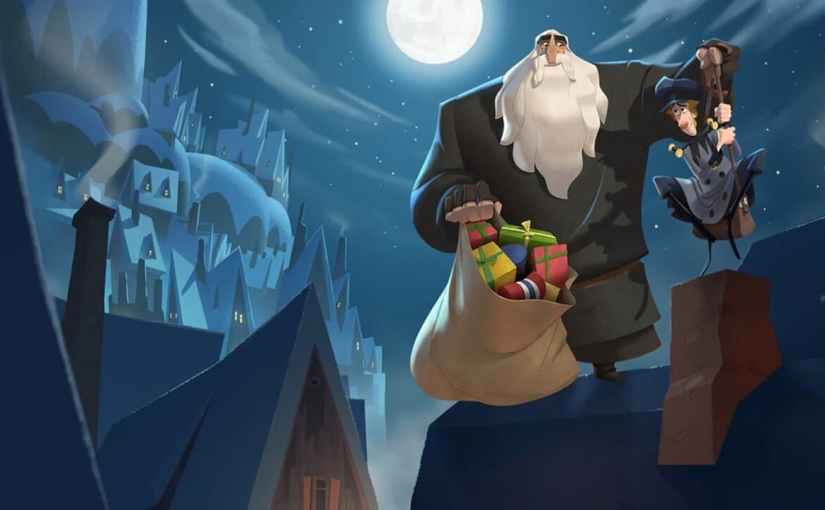
Netflix’s Klaus from 2019 is one of the most beautiful, magical, and relentlessly original holiday films I’ve ever seen.  And heart-rending.  There are emotional beats in Klaus that rival anything in Pixar’s catalog, from the opening sequence of Up to the finale of Inside Out.

Short review: Go. Watch it now. Why are you still reading this?

Long review:

It starts an unspecified number of years ago somewhere in what appears to be Scandinavia, but it could be anywhere.  Or nowhere.  Jesper (Jason Schwartzman) is the ne’er-do-well son of the postmaster general, or something like that.  Determined to make a man out of his son, Jesper’s father assigns him a task: start a post office in a remote northern village on a desolate island and generate 6,000 letters in a one-year period or get cut off from his family’s substantial wealth.

The visuals in this forbidding village could warm the surrealist cockles of Tim Burton’s heart.  Rooftops aren’t so much pointed as sharpened.  Wide-eyed children make snowmen that would give Calvin nightmares.  A generations-long feud between two families on either side of town seems to be their only purpose for staying in town in the first place.

(So far, I’m thinking, okay, kinda weird, not sure where they’re going with this…is this scrawny dude gonna be Santa?)

One thing leads to another and Jesper travels to the other end of the island to visit the isolated house of someone known locally only as the woodsman.  Here he discovers shelves and shelves of handmade toys, gathering dust.  One of these toys finds its way into the hands of a child back in town who wrote a letter asking for a toy…

And here is where the story’s streak of inspired originality really took off.  Virtually every aspect of the legendary Santa Claus is given its own special origin story, from the reindeer to the sleigh to the concept of a Naughty List, right down to getting coal in your stocking instead of a present.

Aha, you say, but this has already been done!  I liked it better when it was called Santa Claus is Comin’ to Town, on TV in 1970, with Fred Astaire, Mickey Rooney, and Keenan Wynn!

True enough.  But Klaus ups the ante by imagining this tale in a way I’ve never seen before.  I’m finding it difficult to express my admiration without giving away key aspects of the film that make it such a delight.  It’s all done so organically, so naturally, that something happens, and you think, “Well, of course they think reindeer can fly, after seeing that!”  I found myself laughing out loud due to the sheer ingenuity on display.

I think it’s a great companion piece to that much-maligned holiday classic, The Polar Express.  Both films approach the Santa legend from different angles, but neither one talks down to its intended audience.  Here is a mystical figure, possessed of magical abilities beyond mortal man.  Both films treat him with the kind of childlike reverence he deserves, and if he’s a little scary sometimes, well…he is always watching…

But none of that would be enough to achieve perfection on its own.  What makes this movie perfect are the heart-rending emotional beats that come as complete shocks to the viewer.  You may notice that I haven’t mentioned Mrs. Klaus, nor is she listed on IMDb.  There’s a very good reason for that, but you won’t get it out of ME.  You may also be asking yourself, well, if this hermit woodsman turns into Santa Claus, what’s the deal with the postman?  Great question!  Watch the movie and find out.

(Pay attention to the wind…that’s all I’ll say.)

These and other surprises pop up here and there, like searching through old clothes and finding folding money in the pockets.  The finale might make you cry like a baby if you’re not careful.  You’ve been warned.

Klaus is buried treasure, lost amid the hubbub of many other films from that year that have been forgotten.  This one does not deserve to be forgotten.  It belongs on any list of classic holiday films, old and new.  If you’ve made it this far in the review, congratulations, thanks for reading, but now it’s time to GO WATCH THIS MOVIE.

Now available on Netflix.

TOY STORY 4 (2019)

by Miguel E. Rodriguez

Director: Josh Cooley
Cast: Tom Hanks, Tim Allen, Annie Potts, Keegan-Michael Key, Jordan Peele, Christina Hendricks, Keanu Reeves, Joan Cusack
My Rating: 9/10
Rotten Tomatometer: 98% Certified Fresh

PLOT: A new toy called “Forky” joins Woody and the gang, and a road trip with old and new friends reveals how big the world can be for a toy.


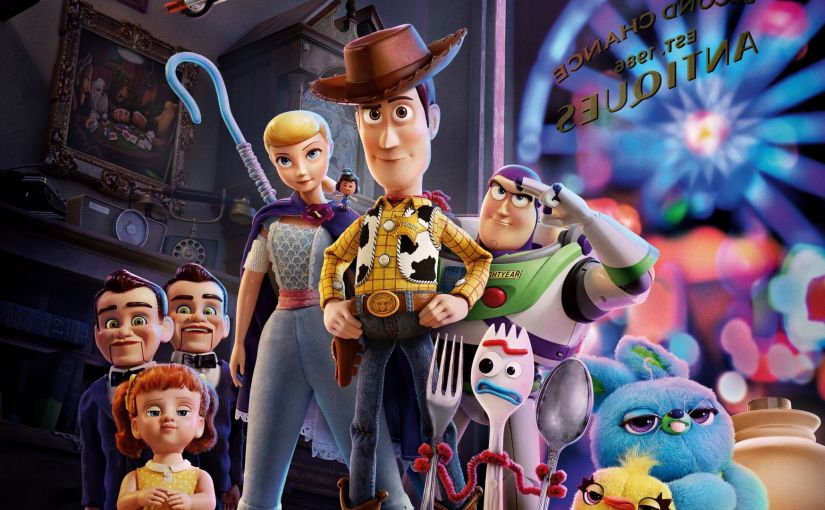
Frankly, one of the best “perks” of Toy Story 4 is the return of Bo Peep.  I had always wondered what had happened to her in Toy Story 3 that had Woody so sad.  I’m glad we got to see why she was no longer around, and I’m glad we get to see how she’s fared in the intervening years.  Just wanted to get that out of the way.

Toy Story 4 is not quite the pinnacle of perfection that is Toy Story 3, especially when it comes to the heartstring-tugging, but it’s a marvelous film on its own, and the ending is a fitting curtain call to the franchise.  Woody, Buzz, and the gang have gone through more hair-raising, death-defying adventures than Indiana Jones, it sometimes seems, and the fact that they reach the start of truly new chapters in their lives by the time the credits roll is comforting.

This fourth film introduces an intriguing element in the form of a doll named Gabby Gabby.  She’s one of those dolls that every girl seems to have owned at some point in her life…at least, every girl born before the year 2000, I’d guess.  She resides in an antiques store, and she has a problem: her voice box is defective.  When you pull her string, instead of a little girl’s voice, you hear what sounds like a 45 being played at 33 1/3.  (You older readers can explain that to the younger ones.)

Her potential salvation: Woody’s voice box is in perfect working order.  All she has to do is somehow exchange voice boxes with Woody, and she’ll have the chance to get a little human girl to love her enough to take her home.

This is…creepy.  There’s something unsettling about this Gabby Gabby character because she’s a cute little doll who essentially wants to perform an organ transplant whether Woody wants to or not.  She’s just so…matter-of-fact about it.

I’m doing a lot of simple play-by-play, and not really giving a sense of the movie itself.  That’s because, while it’s skillfully made and emotionally engaging, it’s not like this movie breaks new ground, exactly.  I think it’s a good thing this will finally be the last Toy Story film.  It’s becoming much harder to imagine what else Pixar can put these characters through, and I’d hate for them to push things too far like they did with the Cars franchise.

But don’t get me wrong, it was incredibly entertaining, and I loved every minute of it.  If you liked the first three movies – heck, if you love ANY Pixar movie – you won’t be disappointed by this one.  It’s just…you’ve gotta see it for yourself.  At this point, any further reviewing of the movie would involve spoiler alerts and scene descriptions and re-telling my favorite lines, and that’s not really a review anymore, that’s just a synopsis.

Suffice to say: “Toy Story 4” delivers the kind of movie we’ve come to expect from Pixar.  It’ll make you laugh, jump, laugh some more, give you a couple of hanky moments, and it’ll look GREAT doing it.

ZATHURA: A SPACE ADVENTURE (2005)

By Miguel E. Rodriguez

Director: Jon Favreau
Cast: Josh Hutcherson, Dax Shepard, Kristen Stewart, Tim Robbins
My Rating: 9/10
Rotten Tomatometer: 75% Certified Fresh

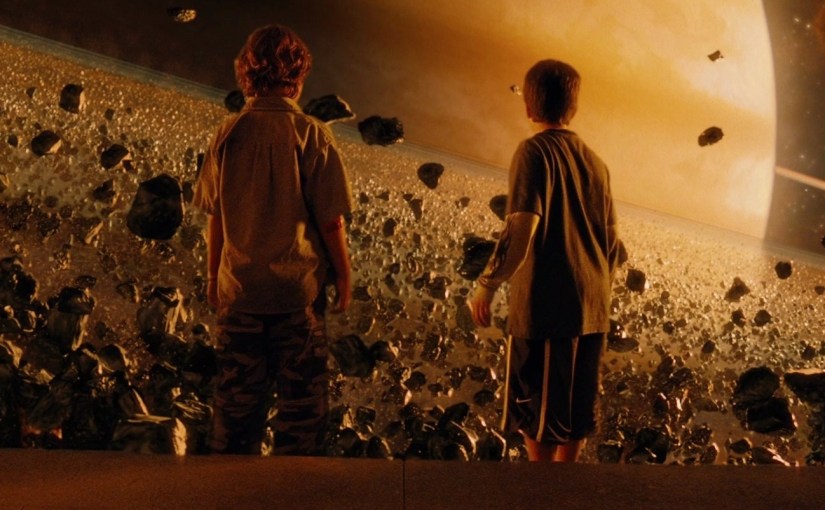
PLOT: Two young brothers (Hutcherson, Jonah Bobo) are drawn into an intergalactic adventure when their house is hurled through the depths of space by the magical board game they are playing.


If only all family movies were like this.

Too often, so-called family films are mealy-mouthed cream puffs that appeal to the short attention span of their target audience, leaving the parents either bored to tears or fatigued from sitting through 90 minutes of explosions.  The scripts are subpar and tend to treat kids as if they’re not all that bright.

Not Zathura.  With his third film (after the forgettable Made and the Christmas neo-classic Elf), director Jon Favreau proved that he’s the real deal.  Here’s a REAL family film with something for everybody: comedy, family drama, peril, thrills, a killer robot, fearsome aliens, and nostalgia.

The nostalgia part is especially notable.  The board game at the center of the film is constructed to look like something made in the ‘50s or ‘60s, which, to the kids in the film, is practically ancient history.  But for me, I found the film nostalgic in the way it captures the kind of fun I used to have at the movies.

Not that I don’t still have fun, mind you.  It’s just that, when I was a kid, sci-fi and fantasy films felt more real, you know?  It was so easy to imagine myself as a resident of the Goondocks, or discovering an alien in the cornfield behind my house, or building a spaceship in the backyard with my two best friends.  Zathura captures that kind of feeling like few other modern family films can.  It’s a movie that has the potential to live on in the imagination after countless other films have vacated your consciousness.

And the VISUALS.  I don’t know what kind of budget the movie had, but it looks like a $100 million movie.  The killer robot is absolutely convincing, as are the aliens.  Which brings up another great element of the film: danger.  The bad guys in this movie may occasionally look a little cartoony, but they are not to be trifled with.  That’s something a lot of kid’s movies tend to get wrong.  The filmmakers lose their nerve in creating real villains, for fear of pissing off too many parents.  In reality…dude, kids can handle it.  Give the bad guys fangs and spinning saw blades.  It just makes it that much more satisfying when the bad guys LOSE.

Zathura barely made its money back, and that’s including domestic AND worldwide grosses (okay, I looked it up).  I could be wrong, but I’ll bet too many people thought it was a Jumanji ripoff.  It IS based on a book by the same author as Jumanji (and The Polar Express, as it happens).  But it is possible, I think, to see Zathura in its own light.  It’s a fantastic movie that will please all ages.

FANTASTIC BEASTS: THE CRIMES OF GRINDELWALD

By Marc S. Sanders

The Wizarding World franchise of Harry Potter and Fantastic Beasts has suffered its first absolute failure, and much of it is owed to staple director David Yates, and more importantly JK Rowling.

I’ve been saying it for years. The wealthiest woman in the world possesses an incredible imagination, but it serves as an Achilles Heel because ALL of that creativity is thrown into her works along with the kitchen sink, the kitchen and 30 or 40 bedrooms. It’s much too much.

The Crimes Of Grindelwald is mired in overly long confusion. A week ago, I more or less praised the prior installment but I noted that it seemed as if 5 different stories were going on at once and none of them had anything to do with the other. The new film doesn’t just suffer from the ailment. Rather, it is slaughtered by it. It seemed like there were 50 stories going at once. None of them were very interesting. Everything seemed bland, and all of it was near indecipherable.

The lead is once again played by a charismatic, yet innocent looking Eddie Redmayne as beast caretaker Newt Scamander. Redmayne has the mannerisms down. He fits comfortably in the early 20th century England, the costume works well on him, but he speaks in gibberish it seems. As well, Rowling has written his role so as not to reveal everything he knows. He feels incomplete. In this film, he also feels irrelevant to anything that is going on. I couldn’t figure out his purpose. His random pet beasts’ appearances offer nothing to progress anything or anyone. They are helpless creatures. He is assigned early on in tracking down prison escapee Grindlewald, played with disappointing reservations by Johnny Depp and yet I don’t recall a showdown between them or an acknowledgement of each other.

Grindlewald is a disappointing character. He’s bent on making the magical world full of pure blood magic folk. That’s all we know ahead of his albino threatening appearance. Sure he’s got a past with a young Dumbledore (a well cast Jude Law), but hardly anything is written for Depp to play with. He’s flat. He doesn’t amp up the evil. This is Johnny Depp, formerly Jack Sparrow and a half dozen Tim Burton characters before???? He has few lines in a very long picture. He does not declare his cause really. His motivations are only explained in long drawn out scenes by some boring magic politicians. All talk in these scenes, no magic and thus very dull.

There’s an early prison escape for Grindelwald but thanks to David Yates and his team, it is very hard to follow who is disappearing and reappearing and how it’s all happening. Like the whole film, the cinematography is very dark (and this wasn’t even 3D). Everything is so dim in this film. It’s as if Yates was not confident in his spookiness he demanded all camera lamps be turned off while the dry ice machine is turned on. This is including in the daylight scenes. The editing of this opening scene is choppy at best. Visual effects are masked with dark blurs and loud sounds and music to heighten danger that just doesn’t feel very urgent.

The cast is way too large. My favorite character from the prior film, Stanley Kowalski (Dan Fogler) is given nothing to do and considering his memory of magic had been erased, his purpose for returning is poorly explained. This time, there’s nothing cute or charming written about Kowalski. You’d have the same film whether he was here or not. He serves no point and when he’s given material to fawn over Queenie (Alison Sudol) his love interest, and also pointless, it amounts to nothing. Katherine Waterston as Tina, Newt’s love interest American partner, as well serves no meaning. She’s there because she must be paired up with Newt.

So Rowling as before on other occasions brings back the four main characters from the first film and just gives them nothing to do. Rowling is notorious for side stories in her Harry Potter novels. Fans really love that it paints an ongoing landscape of this world. Here however, her original screenplay oversteps.

The Crimes Of Grindelwald is not funny or whimsical. Nothing is jaw dropping or fun for the whole family. (This is a franchise spawned from young adult novels??????) It all feels like edited junk from all the other films thrown into this one. There’s nothing new here in tricks or treats. Grindelwald ignites beautiful glowing blue fire at the end. So? We’d seen that already.

The film is obese on characters and side tracks. It is poorly filmed in foggy settings and gloomy skies, and the editing is a patchwork moldy blanket of irrelevance.

As you try to find the stitching between all the stories, you realize that you are working too damn hard. What I’d give for a little magic right now!

FROZEN II

By Marc S. Sanders

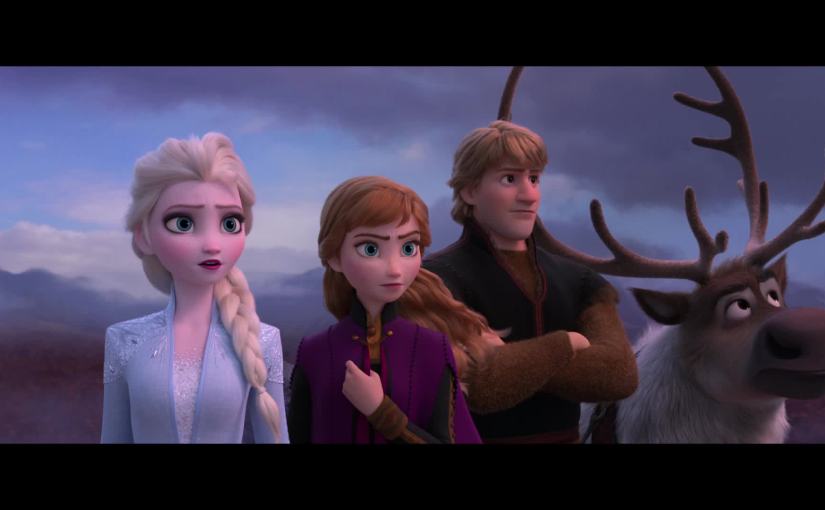
You’re not going to see anything you haven’t seen before in Frozen II. All that that you have witnessed in other Disney classics, particularly in the original film, is back again. Still, that doesn’t mean you’ll be disappointed either. Walt Disney Studios has become so meticulous and masterful at putting out project after project that they have literally altered the blueprint of the world’s pop culture psyche. Elsa is the modern day Cinderella. Anna is the modern day Ariel.

Frozen II opens with a flashback story involving young Anna & Elsa frolicking together before bed only to be told a story by their Father of a time when their grandfather led the people of Arrendelle to an enchanted forest and encountered the people of Northuldra. A dam is built as a gesture of peace to help Northuldra, and soon after both peoples witness the spirits of Earth, Wind, Fire & Water. It’s probably a more nuanced story in the visual sense, than I can describe here. Actually, the film gradually shows more to this tale as it progresses. Yet I dare not spoil anything.

Jump to present soon after where the last film left off and everyone is living happily ever after. Elsa is at peace but concerned over a repeatedly harmonious call from far away. Kristoff is stressed over how to propose to Anna-an overdone story only new to kids under 10. He is given too much story and is the weakest element of the picture. Even his solo number, though sung well, is even way too corny for a genuine laugh.

The call that Elsa hears doesn’t stop and is soon followed by a disturbance within the kingdom causing the streets to come up and strong winds to overtake everyone. It is up to Anna, Elsa, Olaf and the rest to journey into the enchanted forest where grandfather explored and uncover the source of the problem.

Frozen II is almost as good as the first film. The characters remain likable and colorful. The music is very strong and easy to learn. Maybe that’s because many of the songs seem to have an identical tempo to every number from the first film. “Show Yourself” sung by Idina Menzel as Elsa is this film’s “Let It Go.” “When I’m Older” is an adorable variation of “Summer” sung by Josh Gad as Olaf, the lovable, comic relief little snowman.

Again, you’re not gonna find anything new here, but the experience is lighthearted fun that’s impossible to resist.

Beyond the uninteresting Kristoff storyline-he gets an opportunity to ask for Anna’s hand in marriage, stutters and stutters, and gets interrupted…again! Yeah! You know what I’m talking about.

Frozen II has glorious animation that makes you wonder if the Swarovski franchise has an actual mine for all of its crystal products. Gorgeous animation of glass like cathedrals within the land and snowflakes in the sky offer prisms of color in blue, purple and pink. Directors Jennifer Lee & Chris Buck, using a script penned by Lee, give you something eye popping to take in with nearly even caption. It’s positively beautiful.

I took my daughter to see The Addams Family animated update. It was good. Had a message I appreciated. Yet, I couldn’t feel wowed by anything. When you are seeing a Disney production like Frozen II vs a Universal production like an Addams Family retread, you can’t fully appreciate what Universal settled for in its artwork of skinny legs and fat heads for its characters. I’m paying the same price for both films. I’m devoting comparably the same amount of time to both films. Universal gave me an overcooked hamburger. Disney gave me a juicy steak.

Make the right choice. Go see Frozen II. It’s a terrific experience for all ages.

MALIFICENT: MISTRESS OF EVIL

By Marc S. Sanders

Maleficent: Mistress Of Evil has a strong cast and a serviceable approach for the sequel to Disney’s 2014 live action hit. Yet, the film falters anyway.

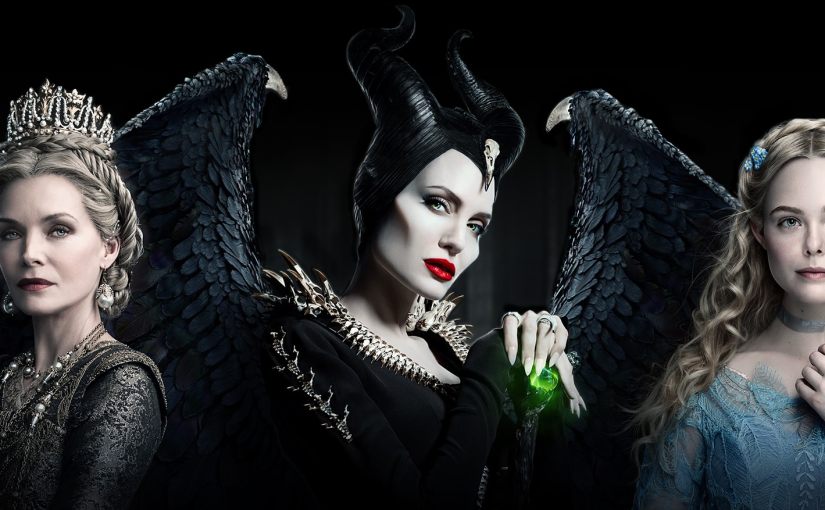
First, and this is always something that irks me, the sub title is completely inappropriate. (Like Star Wars: The Phantom Menace where the only menace was Jar Jar Binks, who was never my first choice to be a phantom.). The film carries a bait and switch title. Did the marketing department at the Happiest Place On Earth even watch the film? Angelina Jolie returns as the title character, still dressed in stereotypical evil black. However, the script penned by Linda Woolverton, Noah Harpster and Micah Fitzerman-Blue offer up an adoring struggle for her to keep up appearances. Never does the film imply that Maleficent returns to her evil impulses. Rather, she’s only characterized by Michelle Pfeiffer’s evil queen as such. So there’s a betrayal of advertising going on here.

The film directed by Jochaim Ronning is a Meet The Fockers variant. When Princess Aurora (Elle Fanning), who was unofficially adopted by Maleficent, gets engaged to the Prince, naturally the in laws have to become acquainted. As expected, dinner does not go very well and the King is spellbound, leaving Maleficent as the scapegoat forced into running underground where she meets up with her fellow fairy community ready to wage war against the human kingdom.

Pfeiffer’s queen uses this as an opportunity to convince the kingdom to wipe out the fairies. Yeah. You’ve heard this story a hundred times before.

I can forgive the redundancy of the storytelling. However, Rollins can’t get his film right. The cinematography is annoyingly murky in darkness and clouds and mist. Doesn’t matter if it’s the fairy kingdom, the castle or even the forest in daylight. Rollins serves up murky, dramatic effect for the sake of murky dramatic effect. It’s hardly visible. This film has Angelina Jolie and Michelle Pfeiffer. If I want to emit drama, I’m gonna rely on them to bring their game.

As well, and disappointingly, Jolie is hardly in the film, at least not enough to justify the title. Rather, Pfeiffer is here to chew up much of the scenes. There are long periods of storytelling where Jolie is nowhere to be seen. She actually doesn’t appear for at least the first 15 minutes. Again, like the title itself, the film under promises what it sells. I have no problem with Pfeiffer or Fanning. They’re really good. Yet, there’s just too many opportunities for them to exchange dialogue and threats, and not much else. Yes, you get to see the fairy kingdom, but they really are a miserable angry bunch for a family oriented film. The 3 fairies led by Imelda Staunton? Yup. They’re here…hardly though and they were the most fun of the last film. Maleficent’s sidekick, Diaval (Sam Riley) – the half man/raven? Well he’s only there when Maleficent is there (literal sidekick) and tell us he wishes he could be turned into a bear. What do you think happens? Incidentally, the CGI bear is nothing great, an uncolorful blur of roaring with a raven beak.

All of these elements present themselves but never follow through with any humor or fun or eye opening surprise. Instead we get a lot of Pfeiffer and Fanning.

The third act is straight out of Lord of the Rings with swords and shields and marching and charging. Meh. I was bored with all of this and the CGI of fairy flights and swoops looked blurry.

Clearly, Disney prioritized preparation of the film for IMAX and 3D. Can we let this go for a change, and just make a movie, please? It’s apparent, watching a 2D standard presentation of this film, where the 3D pops were to occur. Yet, it’s a lousy sacrifice for a simple view.

Maleficent: Mistress Of Evil is a shameless, opportune cash grab on Disney’s behalf. Crank out the sequel, prime it for 3D, get Jolie back for whatever time she’s available, and make sure to slap on a title that amps up the darkness that audiences relish and surefire goosebumps.

I like the story. The execution however fell very short however. No one will remember this sequel in a year from now.

ONWARD

By Marc S. Sanders

I’m thinking director Dan Scanlon could very well be the next Chris Columbus or JJ Abrams or maybe…well maybe not Spielberg. But still! His new film Onward from the genius labs of Disney/Pixar is better than I ever expected.

Think about it. The imagination of the film all goes in reverse. Magic and sorcery once ruled in a land of mythical creatures. But then the automobile was invented, along with cell phones, video games, exercise machines and every other every day to day invention known to mankind. Who needs magic anymore?

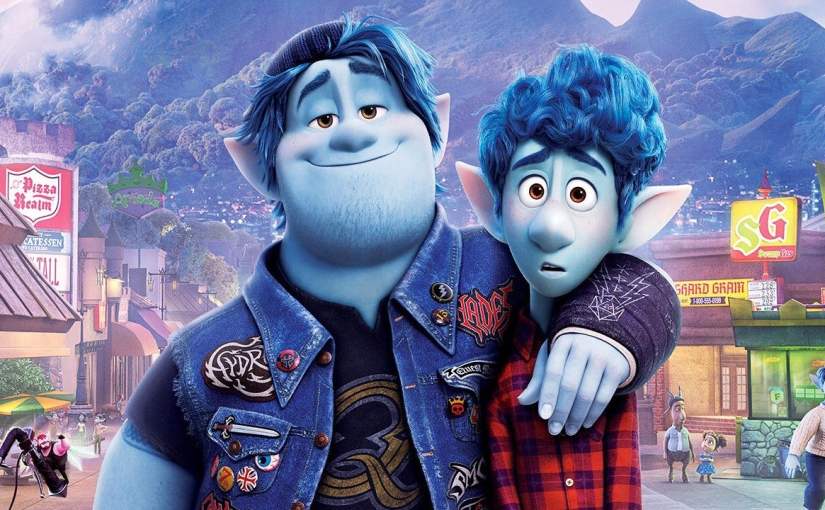
When two elf brothers, Ian and Barley, voices by Tom Holland and Chris Pratt, come upon their deceased father’s magical staff, they realize that as nerdy as he was, he was in fact a wizard. Some exposition allows them one day to revive him and spend only that particular day with him. It’s an opportunity for older brother Barley to reconnect and Ian to meet him. Something goes awry though when dad is only resurrected up to his waste, legs dressed in khakis with chino shoes and black leather belt. Hilarity and adventure ensue as they must embark on a quest to find a precious gem that will complete the resurrection before time runs out and the sun sets.

As the boys hop into Barley’s van called Guinevere. Adventure inspired of the level of The Goonies fare takes place. There are caverns with booby traps, maps and Holland and Pratt give up good vocal chemistry as they sort out their brotherly issues.

Julia Louis Dreyfus is mom and basically doing the typical Pixar mom but she has a great sidekick. Octavia Spenser as Corey the monstrous Manticore who runs a restaurant. To give side story filler, Dreyfus and Spenser are brought in to be on the trail of the boys. They have some good moments.

Onward has good, often funny and sentimental writing from Scanlon along with Keith Bunin and Jason Headley. It’s ironic actually. So many films from Harry Potter to Star Wars to Marvel focus on mysticism and magic that as movie goers we’ve become inundated with the gimmicks. Onward reminds us that ordinary dependence in a more grounded reality can actually lead to adventure too.

I liked it.