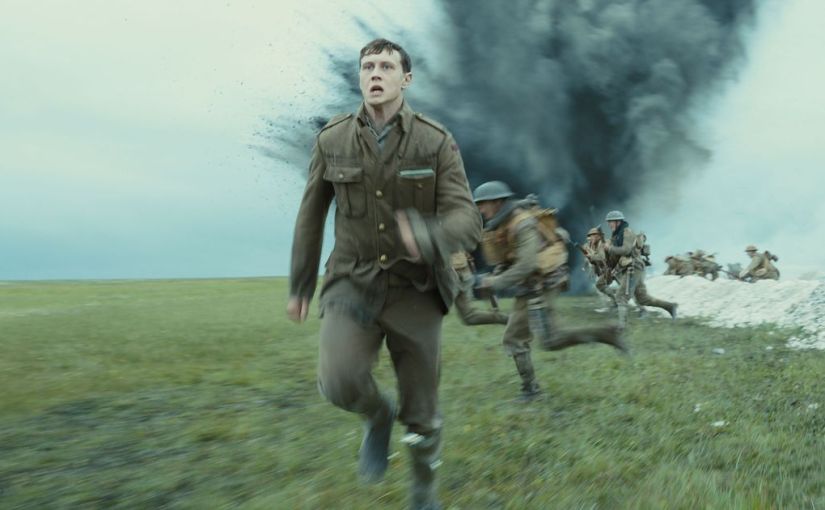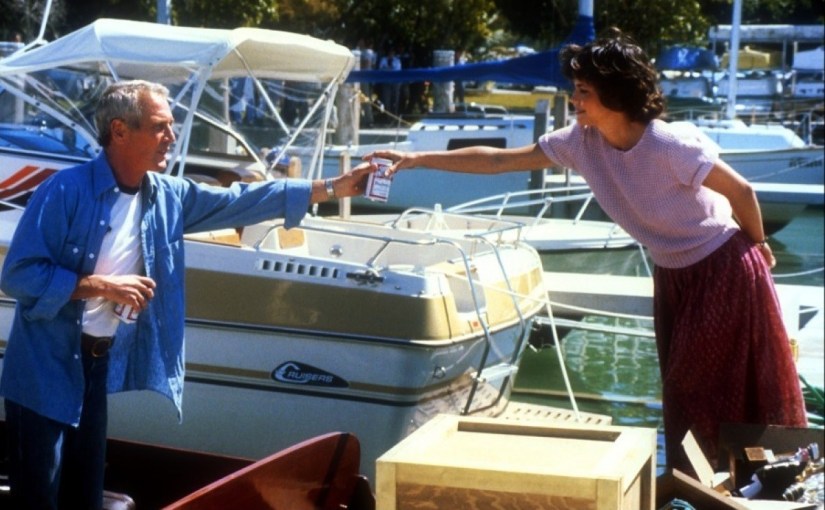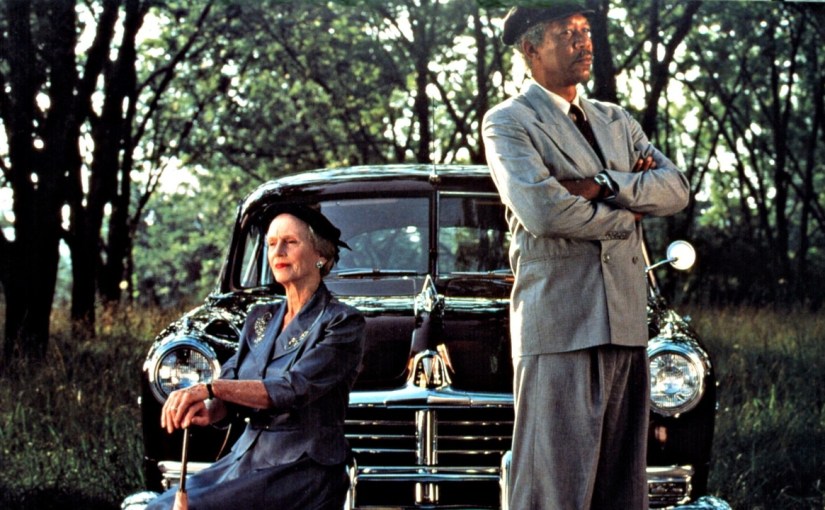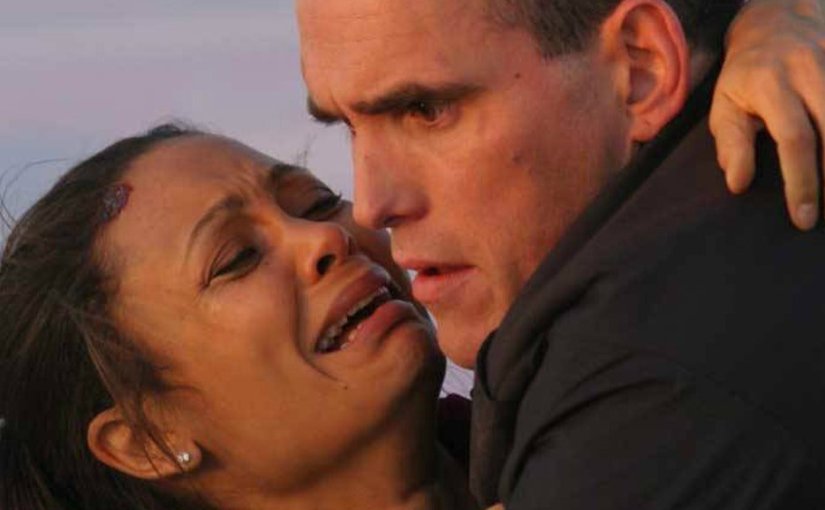
CHARIOTS OF FIRE

By Marc S. Sanders

The 1981 Academy Award Best Picture winner was Chariots Of Fire directed by Hugh Hudson. However, because of that honor I’m not going to pretend that this was a marvelous film viewing experience. This may be one of a select few movies where the soundtrack is far superior to the film itself. That memorable score that gets your pulse racing belongs to Vangelis, and if the soundtrack to Raiders Of The Lost Ark from John Williams should lose the Oscar, it’s not a surprise if it was to the soundtrack from Chariots Of Fire. For me, the two compared against one another though? Well, we might have an argument there, my dear reader.

The film centers particularly on two outstanding runners, maybe the fastest in the world, who compete in the 1924 Olympics for Great Britain. One runner is Harold Abrahams (Ben Cross), a Jewish Cambridge student who is frowned upon for his religion while he is well aware that his heritage is not valued for anything amongst the Christian Anglo Saxon community. It’s all the more challenging when he agrees to private coaching from Sam Mussabini (Ian Holm in an Oscar nominated performance) of Italian and Arab descent.

The other runner is Eric Liddle (Ian Charleson) who loves the exhilaration of running, though his sister prefers he devote his time to the church. He is devout in his Christian beliefs, nonetheless, and he is tested when he learns that one of his competitions is scheduled on a Sunday, the day he observes Sabbath. Despite the Olympic team’s firm position that he compete, Eric’s stance is not to participate in the race.

I don’t want to say that I was bored with Chariots Of Fire, and yet I was bored. The effort to stay with the picture informs me of the value a film can have with marquee names in its cast. As the screenplay moves from one character’s storyline to the next, it was hard to gather where things had left off. Other runners are covered as well though just not as in depth. Most of this cast, I must admit I’m not so familiar with. Sometimes they all seemed to be cut from similar molds in costume, hair color and the like. With known names in a cast, it’s much more easy to put a face with a name and follow along. Here, it was challenging to stay focused with each character. They didn’t seem distinguishable enough for me.

I know! This is not a fair argument. However, this turned out to be my experience with the film.

The technical production of Chariots Of Fire is outstanding, though. Everything from the cobblestone streets of Cambridge to the Olympic stadium in France and the hilltops of Scotland are spectacular to look at. Absolutely immersive.

I did take issue with the film’s beginning. The first ten minutes opens with Abrahams’ funeral in London, 1978, then jumps to 1924 as a student writes in his journal recalling the team’s experience and so then the narrative moves back to 1919, only to wrap up with the funeral again before the closing credits. Why so much work with these albeit brief time jumps? They carried no impact. Why not simply begin in 1919 and move forward through time?

Chariots Of Fire has always been on my bucket list to catch. It’s a necessary film to see for devoted film buffs due to its accomplishments in technicality and score plus art direction. As well, it is an educational experience in British history, despite the liberties the film takes.

I recommend the picture, but I also forewarn to have patience and strict attention to its narrative. There’s a lot of dialogue and information contained within, Hudson is passionate with slow edits of running scenes and hurdle jumps, for his method of dramatic impact and excitement. All I suggest is to be prepared to sit for what will feel like a good long while. Try to avoid any interruptions (turn your phone off). You’ll need to pay attention where the film carries you from one scene and storyline to the next.

ONE FLEW OVER THE CUCKOO’S NEST

By Marc S. Sanders

After watching One Flew Over The Cuckoo’s Nest for the first time in many years, I recognized a political dual taking place on the battleground of an insane asylum. Director Milos Foreman sets the stage for one patient to win over the community from the Head Nurse in charge.

Jack Nicholson is Randall P McMurphy, a criminal who is transferred to the asylum for examination even though there are likely suspicions he’s faking his current condition as a means to escape prison life work detail. Louise Fletcher is his opponent as Nurse Ratched who has maintained an organized control over the floor of 19 men with an assortment of mentally unwell behavior.

McMurphy is a cut up as soon as he joins the gang. At first he appears observant during Ratched’s daily sessions where she asks the men to contribute to the discussion but at the same time she couldn’t be less encouraging. She’s happy to welcome ideas with open arms but don’t disrupt the process. There will also be “Medication Times” and there will be samples of classical and childlike music to subdue the patients as well. McMurphy may request the volume be lowered, but that’s not a simple request that Nurse Ratched will honor.

McMurphy’s experience outside the realm of insanity works as a wake up call for some of the men which consist of introductory performances from great character actors like Christopher Lloyd, Danny DeVito and Vincent Schiavelli. The stand out is Brad Dourif as Billy Bibbit, the stuttering suicidal young man with the baby face who fears his mother’s judgment as Nurse Ratched methodically continues to imply.

McMurphy wins over the crowd eventually. A fascinating scene is when Ratched challenges McMurphy to obtain enough votes among the men in order to watch the World Series. The count of raised hands appears to tie, but then Ratched reminds him that he needs one more vote to win. Before he can get to that point, the session is ended by Ratched. The call for election is lost due to a technicality by the governing control. An election won’t silence the voice of the people as McMurphy quickly encourages the masses to watch a blank television screen imagining his own interpretation of the game. Ratched can only domineer to a certain degree. Here’s the flaw in the Ratched character. At last a breakthrough among these ill men is established as they’ve learned to vote for themselves. They want to watch a baseball game. Ratched won’t stand for progress though.

Questions arise in One Flew Over The Cuckoo’s Nest. Is McMurphy truly faking his mental condition? Is Ratched so drunk on control to disregard doctors’ opinions for his release and keep him institutionalized? If he’s not insane, then why would she want him there? Is it all about Ratched’s obsession with winning?

Ken Kesey wrote the original novel the film is based on. He hated Foreman’s approach particularly with disregarding telling his story from the perspective of the deaf/mute six foot five Native American that McMurphy regards as “Chief” (Will Sampson). Chief seems to be the quiet one who does not take sides until McMurphy demonstrates the ease of obtaining freedom such as when the Chief helps him escape over a barb wire fence and then takes the men on a boating joy ride. I can’t side with Kesey’s insistence that the film be done from the perspective of the silent, yet memorable Chief. Film is a different medium than what’s read on a page. You can’t watch people’s thoughts. What I do find interesting is that Kesey opted for a Native American as McMurphy’s best sidekick. This is a man whose ancestors historically lost their land. McMurphy attempts to rob the rule of the asylum from Nurse Ratched. The political undertones just seem so apparent. The government control, however, is hard pressed to surrender even after McMurphy arranges for his own party of celebration complete with booze and alcohol. Ultimately, and sadly, the fate of McMurphy shows that he eventually becomes a product of his own environment. The Chief however, acknowledges his independence though.

One Flew Over The Cuckoo’s Nest is the second of three films to win the five main Academy Awards (Best Picture, Director, Actor, Actress, and Screenplay). It deserved it, and because of the film’s unsettling and messy nature it’s almost surprising that it was so well received. It’s not a glamorous film. It can show the ugliness of men drowning in their own consciousness.

At the same time, the film shows the subtle yet brutal control of those living fulfilling lives at the expense of the constituents they oversee. Sure, let’s have an open minded community of provoking thoughts, but only if it’s confined to the restrictions that remain in place. Step outside those lines and a more permanent technique will be applied so you adapt to what’s mandated…unless you can bodily lift a concrete water fountain and smash it through a cage bar enclosed window to freedom.

TRUE CRIME

By Marc S. Sanders

Clint Eastwood is having a pretty eventful day in the film True Crime, a picture he produces, directs and stars in. He plays Steve Everett, a womanizing journalist who is assigned at the last minute to interview Frank Beechum (Isaiah Washington) for a human interest story about the man’s last hours before he’s sentenced to death by lethal injection for shooting a young pregnant woman. Everett gets a hunch though that Beechum may be innocent and he’s quickly running out of time to prove his gut feeling. It does not help that his editor (Denis Leary) has discovered that Steve has been sleeping with his wife. It’s also inconvenient that Steve has to honor his promise to take his young daughter to the zoo.

For the simplicity in the storyline of Eastwood’s film, I still found moments that kept me engaged. Washington’s footage which begins at sunrise on his supposed last day at San Quentin penitentiary is very well detailed. I liked how the warden spells out to Beechum what to expect today ranging from requesting his last meal to ensuring direct phone lines to the governor are working properly. I got to witness how all activity of a death row inmate is strictly recorded. I found it interesting how the lethal cocktail is to be administered.

Washington has really good moments with his wife (Lisagay Hamilton) and young daughter wanting to color him one last picture of green pastures. The film doesn’t drown in sappiness or long monologues that you might expect. Like other Eastwood films he looks for the quiet moments in a person’s day; familial, but painful intimate moments of a loving family with all options exhausted.

The other storyline might be debatable for existing. Steve has to contend with his editor’s animosity towards him while also trying to balance what’s left of his family life with his current wife (Diane Venora). Opportunities are given for tough guy comebacks and insults between Eastwood and Leary along with their boss played by James Woods. There’s good timing in these lines but some might question why waste time with this material. I had no objection, however.

These are men who are not putting their lives or instincts on hold to focus just on an inmate sentenced for death. This is just routine work of the day. We don’t stop working just because we find out our spouse is a two timer. We also don’t put our personal interests in hold for a criminal we have regard except to fill a square in the news paper.

Same goes for Steve’s time sparingly spent with his daughter (Francesca Eastwood) at the zoo. Steve turns out not to be an attentive father as he also tries to stay on top of his story on Frank. My cinephile colleagues (including Miguel) took issue with most of the material that the journalist experiences. They thought it was meant for a different film other than the death row storyline. Not I, however. I found it courageous of Eastwood with a script from Larry Gross, Paul Brickman and Stephen Schiff to stay true to this portion of the film. All people have demons they live with and those setbacks don’t grant mercy in even the most desperate of times such as when a possibly innocent man has mere hours left to live. Life is never put on hold even if you’re a lousy father and husband.

True Crime stayed with me up until its last ten minutes. At that point, Eastwood takes the film in a beat the clock car chase direction. This moment is unlike anything else the film presented and I took issue with it here. I wasn’t watching an action picture before any of this. Before the end arrived, I was caught up with the different perspectives of those involved in the process of supposedly humane lethal injection. I saw the prison guards who’d make a joke out of what’s to come. I saw a self involved minister trying to egg on a confession for his own personal salvation, and I saw a warden (Bernard Hill) who actually possessed sensitivity to a prisoner’s fate; that’s something you don’t see too often in film.

Eastwood never allows the audience to empathize with his character’s personal problems. This guy made his own bed. His personal life is not wrapped up in a pretty pink bow by the film’s conclusion. Instead, True Crime told me that beyond a man’s own personal issues is the necessity to help rescue another man who is arguably in a much worse scenario. Dismiss the film’s ending, and you’ll nevertheless appreciate the structure of the rest of the picture.

SPOTLIGHT

By Marc S. Sanders

It’s tough to be a fair journalist when a higher power carries great influence over the what and how of honest reporting. In Tom McCarthy’s Best Picture Oscar winner, Spotlight, it’s not so much the crimes of child molestation by the hands of priests from the Boston Archdiocese that are so important. Rather, it is how the facts are suppressed and the pressure to contain the truth are so apparent. Maybe it finally took the will of a new editor, a Jewish editor from New York, named Marty Baron (Liev Schrieber), at the esteemed Boston Globe newspaper to get the special section crew known as Spotlight to work on how case after case of reported child molestation incidents were allowed to occur for decades under the eye of the highest powers in the church.

First, it’s important to note how easy it is for a priest to seduce a young boy. He welcomes the boy for special duties within the church. Then the priest and child may share a dirty joke together. Just their little secret. After that, touching occurs which leads to unimaginable and irreversible damage. Yet, the grown man once considered that special attention he received as a direct link to God himself. McCarthy deliberately repeats that viewpoint from more than one victim in the film; it was as if God had selected them for special attention and God was especially speaking to them. None of this could be more patterned.

Marty Baron counts on his team to not only collect the mounting number of cases. He tells them to uncover an even worse truth and that is the systemic response the church upheld where when a new case comes to light, a deal is worked with a pawn for an attorney to give settlement hush money while the priest in question will take sick leave or simply be reassigned to another church location free to do God’s will while also committing his own willing nature.

The Spotlight team consists of Mark Ruffalo and Rachel McAdams as well as Michael Keaton. All of their true to life characters were born and raised in Boston. Some under Catholic influence. So the conflict for them to do their jobs ethically and morally is challenging when faced with literally going up against the one institution that seems to own the city of Boston without it showing on paper necessarily. It also means coming to disheartening terms with their own upbringing.

To convincingly depict the grasp the church has on the politicians and newspapers in the area, McCarthy shoots a lot of his talking scenes outdoors on public benches and sidewalks. Therefore, you get an almost claustrophobic shadow of how close the Catholic Church is to the city’s residents. If a scene is at a dinner party or cocktail hour, a man of the cloth is nearby. A sidewalk stroll between a victim and a reporter seems to tread carefully. You never know if that cathedral on the corner is listening. Spotlight is primarily a journalism film of the highest standard. The pursuit for the truth is ripe with the obstacles of slamming doors when trying to get a statement or dealing with the unfair reveal of no records that legally are meant to be public. There’s a race to get the whole truth before a competing media outlet grabs it and misconstrues it. As well, what happens when a bigger story suddenly takes precedence and this story must be put on hold. I mean how do you not drop everything to report on 9/11?

Spotlight is another important film as it does not compromise in its true to life storytelling. It’s unfathomable to believe that men of God could use their positions to take advantage of the innocence of children and then refuse to accept responsibility for it. Even worse is the egregious actions taken to modify the authority of local law enforcement and judicial objectivity that should be there to protect the rights of these victims.

Tom McCarthy’s piece is excellent with a cast in top form. It would have to be as the screenplay is peppered with conversation after conversation. This is a newspaper film. So therefore it’s a talky piece. You get passionate monologues from Ruffalo who does not hold back his anger and disgust at what he uncovers with an acerbic but crusading attorney played beautifully by Stanley Tucci. This attorney has lost every battle he’s had with the church but he does not give up on his client victims either. He’s their only protector in an arena of powerful criminals who hide behind scripture.

You also have a real go-getter reporter in Rachel McAdams. McCarthy repeatedly shoots her from behind walking the streets of Boston with a pad and pen as she meets a victim or simply knocks on neighboring doors for some facts. Her challenge is seeking the truth while her grandmother holds an undying faith in religion of Catholicism by visiting the church at least three times a week. A crushing, albeit brief, scene occurs near the end of the film when the reporter’s grandmother reads her final story in the Spotlight section.

Michael Keaton is the Irish Bostonian rooted in tradition. He knows all the important people in the city. He knows Cardinal Law who runs the church and he holds on to his journalistic code of fact collecting for as long as he can muster.

The truth and web of lies and deceit could never really shock me in Spotlight. I’ve heard it all before. Instead, it’s the knowing acts of concealing horrifying sin. Ironically, those actions are committed by those that listen to the confessions of its sinful disciples. As I’m of an age where I question the validity and need for religion in our upbringing, I can’t help but wonder how these victims would have turned out had religion never became a factor in their lives. These children, now men, went on to commit suicide, become chemical dependent, and occasionally became child molesters themselves. It’s easy to argue that these conditions were never part of their chemical make up. It’s also easy to argue that the Catholic Church carelessly determined the destinies of these men without any regard for being accountable of the damaging results. Spotlight confidentially reaffirms both of these arguments.

TOPSY-TURVY

By Marc S. Sanders

For those that are unaware, I dabble in community theatre. I perform on stage. I direct. I produce. Occasionally, I write plays. So while watching Mike Leigh’s film Topsy-Turvy, I could not help but ask where have I heard some of these conversations before.

As Leigh’s film focuses on the making of the Japanese inspired opera The Mikado from Gilbert & Sullivan, I felt assured that the backstage tendencies of actors, composers, directors and producers has always been the same. They have egos. They are diva like. They are perfectionists, and the best ones of all catagories rehearse over and over and over again until it feels and sounds just right.

Gilbert (Jim Broadbent) is the writer. Sullivan (Allan Corduner) is the composer. Early in the film, Sullivan seeks to break away from the more playful stage escapades of Pirates Of Penzance material. He wants to do more human interest material that don’t just rely on whimsy and “magic potions” or elixirs. Gilbert finds nothing wrong with continuing on the same tract. Audiences seem to respond to it and it comes naturally to him. When the pair are recruited by a producer to write a new production for the Savoy Theatre in London, they find themselves at odds in their artistic goals.

Only after Gilbert attends an expedition featuring Japanese culture does the idea arrive for the opera to be famously known as The Mikado. Sullivan finds himself inspired as well. After all, the English are not so familiar with Japanese lifestyle. Who says films and theatre can’t teach you anything?

From there, Topsy-Turvy presents backstage scenes of rehearsals where there is stop and start readings from the script. Personally, I could not understand why none of the actors wrote their own blocking down, but I digress. The scene with Broadbent as Gilbert directing a portion of his cast by perfecting enunciations and staging is a joy to watch, and a lesson in the efforts to stage a perfect showpiece. It also amuses me how they dress for a backstage rehearsal. The men in their finest day wear suits with top hats. The actress in her well tailored silk gown. Somehow, theatre has diminished itself to my superhero t-shirts and shorts for a seven o’clock call on a Tuesday night.

There are costume fittings. Makeup on the Anglo Saxon performers to make them appear Asian is a constant humorous sidebar.

Dressing room banter is also on display. I love the back and forth ego trips between the lead actor, a fabulously snobbish diva played by Timothy Spall cast as the production’s Mikado, and another cast member played by Vincent Franklin. These actors are not shy about their self regarded importance to Gilbert & Sullivan’s reputable accomplishments. They are even nervy enough to question if the writer/composer still have the knack…but only discuss this backstage when no one is listening. Later, you see how an actor’s insecurity shows when Gilbert considers cutting one of the Mikado’s most popular numbers. Spall’s expressions of hurt say so much.

Another great scene is realizing that another actor questions his costume. Heaven forbid but he cannot perform on stage without an undergarment corset. It’s unheard of.

Mike Leigh’s film was one I was never familiar with. I didn’t know anything about it until Miguel introduced it to me. Technically, it’s spectacular, offering outstanding period set designs and costumes from the the early 1900s before turmoils of war and conflict invaded Europe.

The film runs a little long as it takes just a little bit of effort to get accustomed to period setting and high brow dialogue. On a second viewing I imagine it’ll leave you with a pleasing grin as you’ll feel more in on the jokes and attuned to the nature of operatic theatre. Topsy-Turvy is a well researched and a terrific examination of life in theatre. It explores the disagreements and struggles to stay relevant as a writer, composer or actor. Most importantly, it demonstrates that live theatre is never considered a hit until its one true test; the test of performing in front of a live audience.

KRAMER VS KRAMER

By Marc S. Sanders

Probably the most personal film for me, the one that I watched for the first time with adult eyes even though I was only age 8 or 9 at the time, was writer/director Robert Benton’s 1979 Best Picture winner Kramer vs Kramer.

Though my parents never divorced, somehow I recognized the character of Ted Kramer, an extremely busy New York City advertising executive who could be having a great day while staying flirtatious but then also having an outburst of frustration when things are not going his way. My father was a busy man and a hard worker. He was a man who was always very proud of his work. He loved his work so much that he wasn’t as present in my life during my adolescent years. My mother on the other hand was my best friend who could make me laugh and demonstrated unconditional and very natural love for me. I learned about humor and love from my mother during those early years. I learned about responsibility from my father and some of his own humor later on. So, as I reflect on this film I imagine what life could have been for me had my mother walked out with no notice, leaving my father to tend to my needs while having to suddenly make sacrifices with his work.

On countless occasions, I’ve written about the importance of a character arc where a protagonist will start out one way and completely change through the middle and end of the film. In Kramer Vs Kramer, the arc is not focused on a character but rather a relationship between father and son. When Billy (Justin Henry in an Oscar nominated performance) at age 6 wakes up to discover mommy is not there, he sees how lost daddy is with waking up and trying to make coffee much less crack an egg properly for french toast. Ted and Billy have been blindsided and without any warning they need to adjust to one another very quickly.

Later, Benton does an insightful tracking shot of their apartment as they wake and we see they’ve grown accustomed to a routine together of getting each other up, setting the table and reading their newspaper and comic books side by side while never uttering a word. Benton realized that the comfort of living with each other does not have to be evoked with dialogue. This routine is offered one last time at the end when an inevitable and unwanted conclusion has befallen Ted and Billy. Again, no dialogue because now as a viewer I’ve become comfortable with this special relationship. Truly, I envisioned my father and I in these three moments.

Meryl Streep is the other Kramer, Joanna. She won the Best Supporting Actress Oscar and its well earned. Benton opens the film on her sad expression in a quiet darkness. When Ted finally comes home with good news from work, Streep is really good at holding her firm stance at leaving the household permanently. It doesn’t matter that Ted has gossip to share of a co-worker’s suicide or that he got a huge promotion. She just up and hurries for the elevator despite Ted’s resistance in allowing her to leave.

Benton follows afterwards with a good long portion of the film to display the struggles that Ted and Billy need to overcome, and in a second act finally has Joanna return stating her desire for Billy to live with her. Ted will not allow that to happen. For a real actor’s showcase, it’s important to watch the scene when they meet for the first time in 18 months. The conversation is cordial and they appear pleased to catch up with one another. Seconds later, the opposite sides on what’s best for themselves, and more importantly Billy, surface and the back and forth is so perfectly timed. Streep and Hoffman have those stutters and talking over one another that seem so natural. The scene ends with a broken glass that was not rehearsed and fortunately Streep’s shocked expression remains before the scene is cut.

Hoffman is extremely good in his role. He runs a gamut of emotions to bring humor, sadness, anger, warmth and love to this part. Another powerful scene is when he desperately must find a new job within three days before Christmas. Benton makes sure that Ted appears completely strong in a disarming situation when he squeezes in a four o’clock Friday afternoon interview during a raucous office Christmas party. I love how Benton focuses a still camera on Ted sitting quietly in a lobby chair amid partiers while waiting to hear if he gets a job offer. This is determination of a very full degree. Nothing will allow Ted to lose his little boy during this custody hearing.

Kramer vs Kramer is a simple and brisk film. It moves with a fast pace, and I believe the reason for that is it takes place in a home with a father, a child and a mother. So, I like to think it was very open to relating to viewers of all ages including my preteen self. There are many different and recognizable facets to Kramer vs Kramer. Billy compares Ted’s rules to what “all the other mothers” do. There’s the school play. Ted running late for work and picking up Billy from a birthday party complete with a goody bag. Of course, there’s also the heightened drama of the courtroom custody hearing. It’s like watching stage work monologues from Streep and Hoffman. It’s brilliant.

I especially took a scene very personally where Billy falls off the monkey bars, and Ted rushing through the streets of New York to get him to the emergency room for stitches. I had a door slammed in my face once that required stitches in my bottom lip. Just like in the film there was blood all over my clothes and there was a terrible fear for this 8-year-old kid who now still feels a bump in that area. Billy’s anguish and Ted’s terrible fear and guilt seem so genuine.

I find it interesting that this film won Best Picture in 1979. A year prior it was The Deer Hunter and Patton was a few years before that. In 1980, Robert Redford’s Ordinary People won the award and in 1983 it was Terms Of Endearment. Hollywood didn’t forget the impacts of hellish war and combat films. However, with the 1980 Reagan years of much decadence and pop culture positivity, a middle-class domestic life was becoming more honest and apparent. These films were not just Father Knows Best. Films like Kramer Vs Kramer were ready to show the hard parts of living a yuppie life. Things seem so normal on the outside when really there’s a struggle to love and live on the inside.

Cinderella like films showed my eight year old eyes that if a prince and princess finally meet and dance together all will be well in the kingdom. However, Kramer Vs Kramer told me that marriage and family life do not equate to happily ever after. Don’t mistake me. I’m not being pessimistic here. What I learned at that young age is that the story really only just begins after the prince and princess fall in love with one another. Thereafter, the conflicts settle in and the happy ending arrives only when the characters adjust to the evolution of their futures together, or if necessary, without one another.

ALL ABOUT EVE

By Marc S. Sanders

Today’s actresses can lobby and vie to be Wonder Woman or Black Widow or Jane Bond. Yet, what so many filmmakers and actors fail to recall are the powerhouse performances of yesteryear that didn’t require guns and magic lassos. Movies shouldn’t simply be super heroes and villains in spandex and leather. No movie is a better example of this argument than Joseph L Mankiewicz’ 1950 Best Picture winner All About Eve.

This is also the only film in history to have four actresses nominated for acting awards – Bette Davis, Anne Baxter, Celeste Holm and Thelma Ritter. What an accomplishment!!!

Davis is Broadway legend Margo Channing, a sexy, tough, cigarette smoking broad who grew up and keeps her social life within the limelight. She’s a warrior among the Hollywood and New York elite. When her friend Karen Richards (Holm) welcomes a mousy young girl in a raincoat backstage to meet the famous Miss Channing, it becomes more than just a quick hello. This girl is Eve Harrington who proudly admits to following Margo’s career from San Francisco all the way to Broadway waiting outside the theatre on each performance night for that opportunity to meet the legend in person.

Upon introduction, Eve shares her tragic story of growing up poor and losing her husband in the war. Margo and Karen are taken with Eve, and now the young ingenue has wielded her way into the upper crust life among the pomp and circumstance. Margo’s test of her own celebrity seems to come unexpectedly as it occurs to her and her smarmy personal assistant Birdie (Ritter) that maybe Eve is angling for a way to fill Margo’s big shoes along with her wardrobe and stage costumes.

The elite are intruded upon by this outsider. Karen’s friendship to her playwriting husband Lloyd (Hugh Marlowe) and her friendship to Margo is tested by Eve’s surprising manipulations. As well, Eve is making herself more aware to Margo’s younger lover and stage director Bill (Gary Merrill). Eve also finds ways to build an acting career on the shoulders of these show biz upper class by eventually winning the opportunity to be Margo’s understudy.

The outsider who narrates these developments is the famed theatre critic, Addison DeWitt (a charming and cultured George Sanders who won the Oscar). DeWitt might not get welcomed to every exclusive black tie party in town as he’s “the critic” but that’s fine for it’s how he survives in his career. He’ll recruit a young naive actress like a newcomer played by Marilyn Monroe to maintain a stay within the social circle, and soon he’ll ride along on Eve’s journey for personal gain.

Mankiewicz’ script is brilliantly witty, absolutely biting and sharp. One of the best moments in film belongs to Bette Davis wearing a gorgeous dark evening gown designed by the legendary costumer Edith Head, and used as Margo’s armor ready for social battle. Davis declares “Fasten your seatbelts. It’s going to be a bumpy night.” No line could be so forthright in what to expect of a film like “All About Eve.”

This picture is ranked at the top of many “greatest film” lists. As it should be. This is not a sweeping biographical epic. Rather, it’s a lot of story branches that begin at the introduction of one character and expand in various directions among a handful of others who become disarmed by her ongoing presence. It’s not even that simple as Mankiewicz writes about Eve’s duplicity and how she manages to collide one piece of her destruction with another kind of destruction elsewhere, and the victims are simply blindsided.

Anne Baxter certainly had me fooled as Eve. She’s sweet and innocent on the surface and soon an inner and more evil shell emerges. Bette Davis looks spectacular and delivered one the best female performances of the last hundred years. She can carry herself and keep her guard up and authority in place. There’s a rich and commanding history about Margo that seems easy to believe. She is the queen of Broadway at the film’s beginning. Yet, for a moment her guard is let down and Mankiewicz gives us that window of time for his showcase.

Mankiewicz effectively opens his picture with Eve winning a very exclusive show biz award. She graciously approaches the podium to accept and deliver her speech. However, there are a select handful of individuals who withhold their applause of celebration. Then he flashes back to how we’ve come to this particular moment. It’s a great opening leaving me curious with a bunch of why questions. To watch this sequence the first time leaves you curious. To watch it on a second or third time is to be in on Addison DeWitt’s exclusive story of show biz scheming and diva one-upmanship. I only wonder if Joseph L Mankiewicz was as keen as George Sanders’ character to foresee how much life will come from Eve Harrington’s intrusion upon the lives of Margo & Bill and Karen & Lloyd. Before the age of desperate “if it bleeds, it leads” gossip rags, All About Eve was the real storyteller. 

THE SHAWSHANK REDEMPTION

By Marc S. Sanders

The purest form of humanity can be found in some of the most unexpected places. Frank Darabont’s first film, The Shawshank Redemption, based upon a novella by Stephen King is a perfect example of that truth. In a federal prison, the true test of a man’s character is established. Will a prisoner be as cold hearted as the crime he’s been punished for, or will he find a deeper meaning to his existence for himself and those around him? What if this particular man is actually innocent, wrongfully convicted? Will his innocence of crime be upheld?

To experience The Shawshank Redemption is to learn about a community that I am completely unfamiliar with, and I’d bargain most of its viewers are as well. Shawshank prison is not a place I would like to check into. Though many of its residents display heart and comradery, nonetheless. These men likely didn’t know they were capable of such merit until Andy Dufresne (Tim Robbins) arrived to serve two concurrent life sentences for murdering his wife and her extramarital lover. Andy says he’s innocent without any desperation or urgency because none of that elevated showmanship would make a difference. The evidence and circumstances at trial unfortunately were coincidental to easily sentence Andy for a crime he didn’t commit. Everyone at Shawshank insist they’re innocent. Likely though, Andy is the only one who can genuinely make that claim.

Andy’s introduction to the prison is hard for the first couple of years. He’s consistently beaten and raped by inmates who need to exhaust their sexual tendencies. Fortunately, he sidles up with Ellis “Red” Redding (Morgan Freeman in maybe my favorite role of his career). Red is the go-to man for contraband resources like whiskey or as Andy requests a small rock hammer and a large poster of Rita Hayworth. Everyone is happy to know a guy like Red. Yet, Andy does not lose sight of his personal value. He was a banker by trade and when an opportunity opens up, he assists the viciously frightening prison guard Byron Hadley (Clancy Brown, who really should have more villainous roles in film beyond his voiceover as Lex Luthor in cartoons) with a legally accepted government tax exemption. More importantly Warden Samuel Norton (Bob Gunton) takes advantage of Andy’s talents to sustain his seemingly innocent money laundering schemes.

There is much education to be had from viewing The Shawshank Redemption. I learned what the term “institutionalized” means from Red’s experience. A man who has served a near half century has become accustomed to prison life. He offers little significance or purpose outside the prison walls. I also learned the value of music and literature and art. It’s needed to survive those lonely nights in a prison cell, or worse in the hole where you can wind up should you step out of line from the Warden’s strict guidelines of adhering to discipline and the Holy Bible. What you hear and what your read stay with you in your heart and mind, offering a most valuable commodity – hope. A life sentence will take away your liberties to walk freely among the masses, but nothing will take away what you’ve absorbed. If you can at least hold on to your memories, then you will never lose hope. Andy reminds Red and his fellow prison inmates of the hope you hold onto no matter how long you are held against your will.

Frank Darabont introduces a spectacular midway scene where Andy finally receives a donation of books and records for a prison library he envisions building for Shawshank. He uncovers a vinyl record of an Italian opera and with complete disregard for rules, he airs the music through the intercom. Darabont gathers gorgeous close ups of the hundreds of prison extras with overhead shots of the yard, woodshop and infirmary. The men freeze for a moment to look up in the sky from where the music is emanating from while mixed in with the soothing voiceover narration from Freeman. It’s a beautifully directed scene. A risky scene for late 20th century audiences who are used to quick cuts of action in their films with powerhouse soundtracks and pop music. Darabont found a way to connect the audience delicately to the film through Andy’s personal values and Red’s learned observations.

The Shawshank Redemption is an exceptional piece of writing. I can’t compare it to King’s source material as I’ve never read the story. Having said that, I’m typically hot and cold on the author’s books and screenplays. Sometimes they go too over the top for me. However, Darabont honed in on a perfect balance of likable characters and honest life within a prison; at least I feel that it’s honest. All men are created with good inside them. What they learn from day one is what can drastically change them and what can come of their sins can revert their instincts. Andy Dufresne is the instrument that redeems the men of Shawshank prison. Tim Robbins is right in this role; maybe his best role for his career as well. He does not underestimate any of the men in Shawshank and keeps to his personal enrichment which he also shares, despite the selfish hypocrisy of those meant to maintain order like the Norton and Hadley.

Morgan Freeman is the man who is becoming more and more institutionalized to prison life, always failing to get paroled for a murder he committed when he was a young and stupid kid. If not for Robbins’ melancholy performance as Andy, Freeman’s performance as Red would not realize a new kind of importance for himself. In fact, many of the inmates wouldn’t be able to acknowledge what they are capable of or what they mean in the world they live in without Red, but more importantly Andy as well. Morgan Freeman and Tim Robbins make for one of the best on screen couples in film history. Their chemistry is magical. Any scene between them can be studied for the weight of emotion or lack there of which the two actors carry. They both went on to win Oscars later in their career, respectively from a pair of Clint Eastwood projects actually, but the argument can be said that the awards should have come their way for Darabont’s film.

The ending to The Shawshank Redemption is an unforgettable and unexpected piece of storytelling that never seems to imply itself before the reveal and yet pleasantly makes so much sense. Maybe the one convenience to build to it’s winning conclusion stems from the location of Andy’s cell within Shawshank prison. Bah!!!! I dismiss that little contrivance to allow me to joyously appreciate this film over and over again.

There are ironies and unfortunate moments to see in The Shawshank Redemption. Still, there are revelations and opportunities to cheer and feel better about yourself when watching the movie. It’s one of the most uplifting films you will ever see. It’s inspiring and imaginative. Most of all it is smart and defiant. The Shawshank Redemption never believes in despair. It only grasps upon the hope of its characters. The Shawshank Redemption is a must see film.

THE LINCOLN LAWYER

By Marc S. Sanders

Michael Connolly authored a series of best seller legal thrillers featuring his famed character Mickey Haller. His most favored book of that series was adapted into a 2011 film called The Lincoln Lawyer with Matthew McConaughey in the role and directed by Brad Furman. I only wish more of Connolly’s books were adapted thereafter, because this movie is at least as good as the novel.

McConaughey is well cast as Haller, a defense attorney who operates out of his Lincoln Town Car working to get low level criminals off on technicalities or by easy settlements with the prosecution. His clients range from prostitutes accused of possession to notorious motorcycle gang members. When these clients can’t pay, Mickey wisely becomes resourceful with favors they can provide later on. One of his former clients drives the car while Mickey works in the back seat making calls out of his mobile office.

Louis Roulet (Ryan Phillippe) has just been arrested for beating up a prostitute at knifepoint. Roulet is a spoiled, preppy thirty something who is protected by the vast wealth of his mother (Frances Fisher) and their successful real estate enterprise. So it’s surprising that Roulet turns to street lawyer Mickey to be his legal counsel. At the same time though, this is a big score in legal fees. So Mickey is enthusiastic to accept the case, and go to trial. Louis doesn’t want it any other way to prove and insist upon his innocence.

It wouldn’t be fair to reveal much more about The Lincoln Lawyer because it’s got a lot of welcome surprises and twists along the way. What I can reiterate is how good an actor Matthew McConaughey is as I’ve written before. He just performs with a relaxed and confident swagger about himself. Mickey Haller is written as a smart and very strategic attorney. He knows the ins and outs of the courtrooms. He not only uses his clients for additional help, but he also sidles up to the bailiffs so he gets his clients cut ahead of the line to quickly face a judge. McConaughey is really good at not glamorizing the intelligence of Mickey Haller, but rather the charming personality of the guy. The character doesn’t come off as having all the answers at his fingertips, even though he likely does. It makes the film that much more dynamic to see McConaughey’s personality ahead of a Sherlock Holmes or Perry Mason kind of lawyer who might telescope everything five steps ahead of what’s eventually going to happen.

The supporting cast of The Lincoln Lawyer is also magnificent with Marisa Tomei, Bryan Cranston, John Leguizamo, Bob Gunton, Michael Pena, Trace Adkins, Josh Lucas and William H Macy. These are just great character actors. Everyone serves a purpose, even if it is just for a few moments.

Again, Mickey Haller is a great, modern day crusader. Like other literary characters such as Alex Cross and Jack Ryan, based on this film, I always hoped McConaughey followed up with at least one or two more additional films. I’d sure as hell be there to watch. Heck, the eventual Oscar winner went on to be a spokesman for Lincoln automobiles. So why couldn’t he have continued to carry the torch on the big screen?

PATTON

By Marc S. Sanders

You may find this hard to believe but as I was watching the epic Best Picture winner of 1970, Patton, I was actually thinking of a dreadful film I had seen the day before called Under The Cherry Moon, featuring and directed by Prince.  How in the hell could that be?  Well, both films are laced with the vanity of their films’ main characters to the umpteenth degree.  However, I’ll save Prince’s piece for another column, when maybe I’m out of excuses to avoid death or a root canal.  The point is both films never tire of the close ups of its featured player to enhance the pride, ego and conceit they do not hesitate to thrive off of.  The difference is that director Franklin J Schaffner knew that to really show what motivated General George S Patton you had to drill for the American warrior’s drive, and Patton’s motivation was truly his own self-worth.  (Prince just wanted one more close up on top of one more close up as a means of self service.  Sorry but that’s not enough of a reason for a character to live.)

Patton is portrayed by George C Scott in an Academy Award winning performance.  No one else could have played this role.  No one else should ever play this role again.  Scott and Patton are symbiont in a camera’s lens.  One can not be imagined without the other.  Schaffner’s film opens in front an American flag that fills the entire screen.  Patton steps up in front.   Somehow, his figure seems like a bigger, more prominent figure than the large backdrop of the stars and stripes.  He delivers a monologue that was aimed at the troops fighting in the second World War, but this is really an introduction to the audience of what to expect for close to the next three hours.  He reminds us that the blood and guts of the Nazis will be used to grease down the tread of our tanks and he will be proud to lead his men on any battlefield that calls for the bloodshed of Hitler’s regime.  In the film’s first five minutes, you know that this biographical character will never sway from what he stands for.

The theme of the film tests the egotism of General Patton.  We see him get dressed in his military uniform before heading in to battle.  His subordinates put his military jacket on.  Another one places his helmet upon the great battalion leader’s head, but it is done with great detail.  This helmet will never fall off.  I can promise you that.  Early in the film, the two star general takes it upon himself to decorate his shirt collar with three stars.  He’s reminded that President Eisenhower has not made his promotion official yet.  Patton proudly dismisses that detail.  None of this has to do with the strategist Patton became known for on the battleground.  George C Scott demonstrates that the General knew when to bestow himself with another honor in his proud military career.  No one else, not even the Commander in Chief, would determine when the General was worthy of another star.

In the heat of battle, Patton happily volunteers historical facts about the regions he is fighting on.  He even insists that he knows for sure what happened before.  He, General George S Patton, was there.  He’s not kidding.  He truly believes that.  History did not deliver General George S Patton.  Rather, General Patton delivered history. 

All throughout the film, Patton is seen in moments of great pride.  He’ll be standing as his jeep caravans his military forces through conflicts in Tunisia and war torn Europe.  General Patton loved to lead, but his leadership was specific to sending a battalion into one conflict after another and what was most important was earning the glory for himself.  The British couldn’t have the accolades.  Certainly, his fellow generals couldn’t either.  Patton is who the Nazis feared.  Patton is the towering six foot tall man who must be seen walking off the bow of a ship into battle when the US back home gets film updates. 

Scott’s character is tested however as Ike loses confidence in the great general.  Patton’s mentality on war does not mesh well with the propaganda of the United States with the other allied countries, particularly Russia.  Patton is not interested in making friends with Russia as he is more concerned with anticipating an eventual disagreement with them and thus, we must be prepared for war.

More significantly, Patton only cared for the bravery of his men.  Early on in the film, Patton arrives at the camp site of a US battalion to take over its leadership.  George C Scott’s presence is all that needs to be said as he visits the mess hall followed by an office and then an infirmary.  Men will no longer show up late for breakfast.  If other men are going to sleep, well then that’s fine as long as it is a means to end with an advantage towards military victory.  Doctors will don their helmets even if it means drilling holes in them to continue properly using stethoscopes, and any man who is being treated for self-inflicted gun shot wounds will not be entitled to a bed for healing.  Get those cowards out immediately.  Hospitals are for those soldiers who proudly shed their blood in the name of the United States of America. 

This last detail is further echoed at a pivotal point in the film.  Patton chastises a crying soldier who is simply terrified of the shelling of war.  No man who dons a military uniform should ever be crying in fear.  Following slapping the boy around, Patton orders that the soldier be sent to the front lines.  My question is how useful is this kid going to be on the front line if he is crippled by his own fears.  Patton would have then slapped me around, most likely.  The front line will certainly wake this kid up and load his weapon to spill some enemy blood. 

The other interesting dynamic to the film falls upon the role of General Omar Bradley played with contradictory delicateness by Karl Malden.  The script by Francis Ford Coppola and Edmund H North display Bradley as a man who came up through the ranks of General Patton.  Yet, because of Patton’s controversial nature as a proud war hero and not a politician representing the ideals of Ike’s administration, Bradley is eventually put in charge of the United States’ positions in the War.  By the time this arrives, the film is only approaching the beginning of its second hour and I could only imagine how Patton is going to take this. He’s advised by his friend Bradley to calm his nature and maybe even question his motivations for battle.  Yet, Patton can only see that his apprentice has taken over and he has been grounded or meant to serve as a decoy to Hitler’s armies.  This is a complete misuse of his skills and his pride as an American symbol.  Patton is relegated to delivering speeches to gracious European women.  This is beneath him.  Adding insult to injury, the dog he proudly walks by his side is a fraidy cat when confronted with a woman’s little yappy pup.  The great general’s ego has been terribly bruised.

General Patton might have been controversial but the film serves as a means to show his imperfections ahead of his historical conquests.  When Patton is questioned as to how he can overthrow Hitler’s positions in various parts of Europe within two days of heavy snowfall, Patton is proud to say that he alone has trained his men to overcome any ordeal they are faced with.  His men are killers; killers of Nazis.  The doubt of other military leaders is proven wrong thanks to the General’s insistence.  Sure, the old general might have been a pain in the ass for the United States, but how would the war have really ended for the Nazis if they hadn’t have had to deal with the great leader?  Periodically, during the course of the film we see how the Nazis try to gage what Patton will do next.  It makes no difference how the United States are censoring their general.  The Nazis stare at a proud photograph of him, knowing he is still out there.  Where is Patton leading his forces to, and how will they ever explain it to their Fuhrer? 

George C Scott is truly a great presence here. Schaffner’s work with the camera must also be recognized.  The film is epic because of its scale.  Years before the age of CGI and a great war film like Steven Spielberg’s Saving Private Ryan, this film from 1970 showed vast settings populated with tons of extras and infinite tanks and vehicles, as well bomber planes.  It’s astounding.  How was this all accomplished?  Other films like …Ryan or The Thin Red Line would show more intimate fights among the opposing forces.  Shootouts and one on one grappling.  Patton shows the enormous battles.  Tanks are overturned, bombs are dropped right in the middle of a sea of extras.  The film was also awarded for its art direction and its hard to question why.  It’s unbelievably impressive.

As the film directly says, Patton lives for the love of war.  Therefore, the ending is a little sad.  The war ended.  The Nazis fell to the triumph of Patton, the United States and their allies.  Schaffner simply offers a wide shot of Scott walking alone into a field of no significance.  Other biographical films would resort to a death bed moment.  That’s too easy an escape sometimes.  In a way, the film could be a tear jerker.  Mind you, I didn’t cry at the end of Patton.  However, any film must have a certain sense of sorrow when a character no longer serves any meaningful purpose in life.  The heart might continue to tick, but the soul no longer has anything left to accomplish.  Coppola and North knew that, as well as Schaffner, and George C Scott knew so as well.  Once the war had ended, a proud (very, very proud) man was put out to pasture.  That has to be more meaningful than any physical passing.