
THUNDERBALL

By Marc S. Sanders

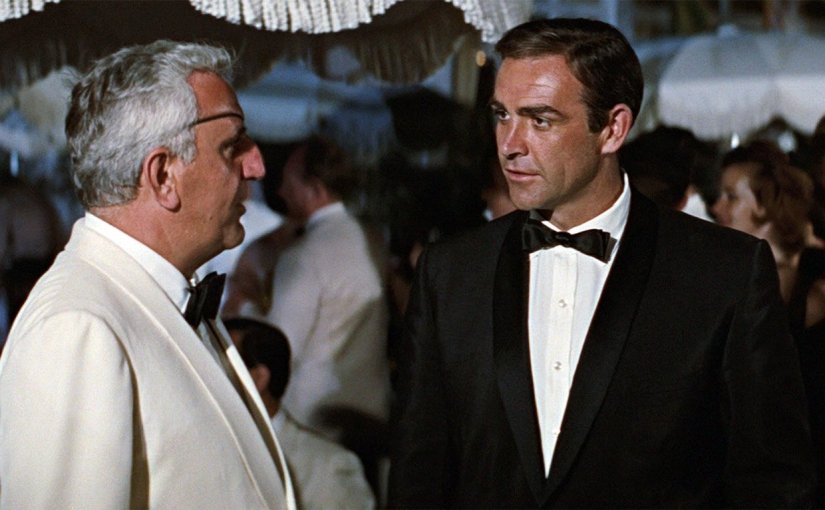
Director Terence Young returns to direct the most auspicious James Bond adventure yet, Thunderball from 1965.

SPECTRE’s Number 2 officer, Largo (Adolfo Celi) captures a British jet carrying two nuclear bombs, and demands England pay 100 million pounds or he will destroy a location in Europe and the United States. Bond is on the mission heading to Nassau, Bahamas to stop Largo (complete with evil voiceover and eyepatch), and recover the plane with the bombs.

The crystal blue sea of the islands allow for a huge undertaking of underwater footage complete with sharks and fight scenes with fists, knives and spear guns. It remains dazzling how well the footage is. Bond (Sean Connery, actually underwater) is there, easily disarming countless SPECTRE agents.

A great centerpiece scene occurs when Bond gets trapped in Largo’s swimming pool with a thug and three sharks to contend with. All this while Largo covers the surface of the pool with a steel sheet. The moment seems inescapable, and Young shoots a memorably suspenseful action piece.

Connery maintains that smooth, suave composure that audiences became accustomed to in his three prior outings, even if his hairpiece is noticeable and his girth is a little wider. On the beach, Bond takes out a bad guy with a spear to the chest and utters the line “I think he got the point.” It’s perfect delivery for 007.

The girl this time around is Domino (Claudine Auger). She is not the most memorable. A beautiful redhead who is not given much to do, even with Bond.

While the underwater camera work is marvelous, Thunderball is not ranked near the best in the series. It feels a little long even when the action scenes are occurring.

Still, Bond continues to hold up as does the curiosity of SPECTRE. Just who is the man with the white cat? We’ll just have to wait and see I guess.

FROM RUSSIA WITH LOVE

By Marc S. Sanders

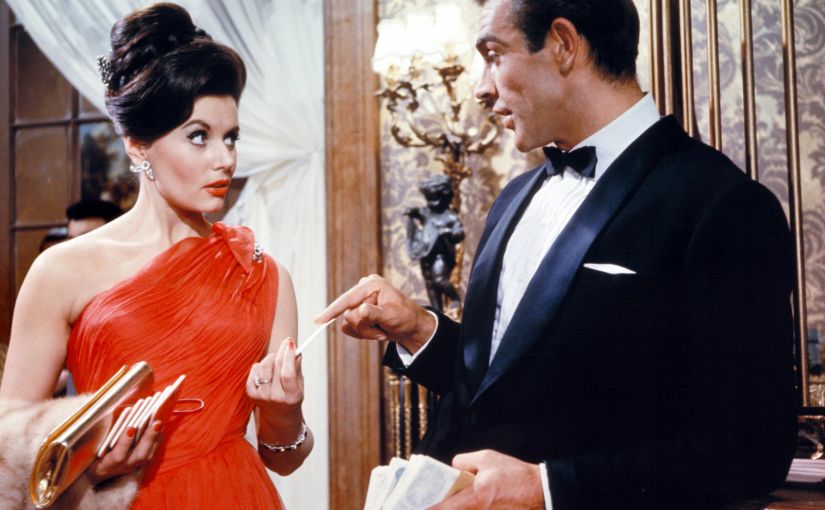
Terence Young returns to direct the second installment in the James Bond franchise, From Russia With Love.

Sean Connery is back as 007 and he is assigned to escort the beautiful Russian Tatiana Romonava with the Lektor, a secret Soviet computer.

Tatiana (Daniela Bianchi, one of the most beautifully charming Bond girls) claims to be wanting to defect, but she is under duress from the terrorist organization SPECTRE to trap Bond (revenge for the demise of Dr. No) and cause a conflict between England and Russia.

Ian Fleming’s story is deeply rooted in the Cold War climate of the mid 1960s. It only makes sense that SPECTRE, with leadership from the mysterious Blofeld, would become a formidable opponent to Bond. Moments like the Cuban Missile Crisis and other events of the time were on everyone’s mind. I imagine it was easy to relate to in this film.

The story primarily takes place in one of Fleming’s most favorite known locales, Istanbul, Turkey. Young has great shots within enormous cathedrals and museums and even underground in 16th century tunnels, as well as outdoors on the ferry. It’s a fascinating, scenic tour.

Connery is at his best here. He looks great in his fitted suits, letting the suave and dry humor of Bond come naturally. 007 even disapproves of one ordering red wine with fish. Yet he’s also a great player, as his chemistry with gadgets like his quick assemble sniper rifle and trick briefcase (complete with explosives, gold coins, and dagger) really works well. A great fight scene aboard a train against Red Grant (Robert Shaw, in a great toughie role, nowhere recognizable compared to his later portrayal as the shark fisherman Quint in Jaws) is brutal and bare knuckled; well choreographed within the close quarters of a small train compartment.

Another killer comes in the form of Rosa Kleb (the miserly Lotte Lenya) with the shoe knife that’ll kill you in 12 seconds. She’s a lot of fun.

From Russia With Love is the most unusual of the Connery/Moore films. There’s no giant fortress for a villain, or global domination plot that is speechified to Bond over dinner.

The film is more like a Hitchcock interpretation as a pursuit is the driving force. People turn up dead just feet away from Bond and he doesn’t confront or acknowledge the villains himself. He knows they are there, but he doesn’t pick them out of the crowd. Young’s film relies on the suspense that Hitchcock introduced time and again as in North By Northwest, for example. A great scene pits Bond against an aggressive helicopter dropping grenades.

The gadgety playfully exists however, as does Bond’s chauvinism for great puns and tongue in cheek material.

The future of the franchise was looking even more promising here thanks to Connery and EON productions upping the stakes in action and more forthright innuendo.

Bond was going to be here to stay for quite a long time.

DR. NO

By Marc S. Sanders

Sean Connery introduced the iconic James Bond, Agent 007, with a license to kill the way he should be (sorry Woody Allen); handsome, highly intelligent and perceptive, quick with fighting techniques and even faster with a beautiful woman.

However, one hero who gets overlooked is director Terence Young who must receive credit for changing the movie landscape. In 1962, sets like Dr. No’s Crab Key fortress were not often conceived in movies. Dr. No is a mysterious villain with limitless resources who serves a Dom Perignon ‘55 while revealing his sinister intent to Mr. Bond. To make him even more unnerving he is bestowed with a handicap of black steel hands to intimidate the hero. This is a scary villain.

Terence Young deserves much credit for a lot of this imagery. It would change how we see action/ adventure films for the latter half of the 20th century and thereafter. Bond’s first cinematic mission set a standard in adventure formula. Set up the threat or mystery, assign the hero to the job, cross him with an ally or two, give him a damsel in distress, interfere him with one bad guy after another. Indiana Jones, Luke Skywalker, Riggs & Murtaugh, Batman and even The Goonies follow this path time and again.

Dr. No doesn’t look so sophisticated a film these days in its cinematography and effects (a car chase consists of going around the same curve 3 times), but it’s storytelling still holds up and even managed to get my 10 year old daughter interested. That’s proof of its staying power.