
By Marc S. Sanders
After watching the 1978 Best Picture winner, The Deer Hunter, I followed up by reading some of the trivia about the film on IMDb. Please do not think I’m a terrible person, but the racial overtones within the portrayals of the Viet Cong never occurred to me. I guess I can only surmise that war is hell, and I suppose that when any one of us are being held in captivity our prejudices go out the window, and the hatred we feel towards another human is directed at the ones who are exercising their sadistic torment upon us. It does not matter where they come from or what they look like or even if they are related to me. Being held prisoner and forced to participate in games of Russian Roulette must allow my seething abhorrence.
Another important factor that was questioned in Michael Cimino’s film is whether games of Russian Roulette were in fact forced upon POWs during the Vietnam War. Many veterans insist it wasn’t, therefore holding a strong grudge against the filmmaker. Cimino argued that he had testimony and photographic evidence to its validity. I will not even give you an opinion. I do not know enough about that terrible conflict, and I will not disrespect the service that so many men and women devoted during its time. I can only focus on the context of the three-hour film.
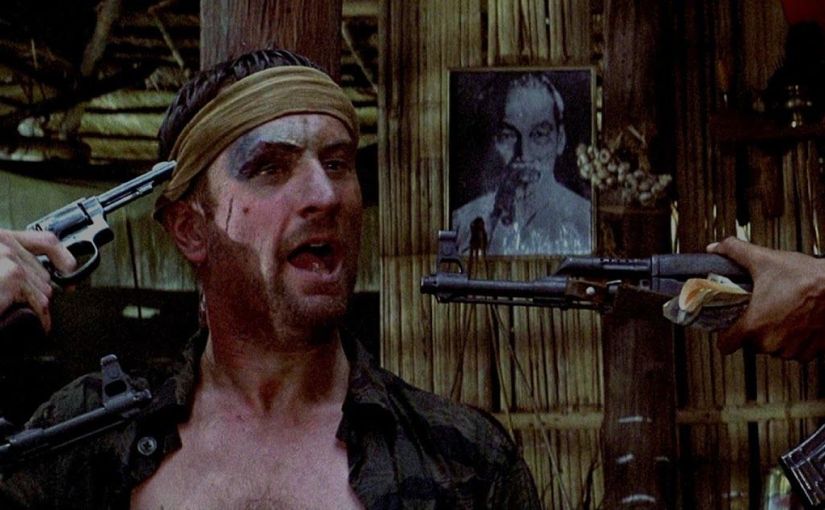
In this movie, I see a perspective of three buddies from a small Pennsylvania steel mill town who voluntarily enlist in the army in the late sixties to serve in the Vietnam War. Thereafter, they are held as prisoners of war, confined in submerged bamboo cages infested with rats and mosquitoes. They are only let out to compete against one another in face to face Russian Roulette by a forceful unforgiving Viet Cong. Upon escape, the three men are separated with different measures of terrible destinies to live with afterwards.
Mike, played by Robert DeNiro, is the Green Beret Army Ranger who returns home to a lifestyle he can no longer lead. Steve (John Savage) has been permanently traumatized both mentally and physically as he has lost both legs. Nicky’s (Christopher Walken) whereabouts are unknown.
Before any of this occurs, there is a lengthy first act to The Deer Hunter. The three men are celebrating their send off to serve, but more specifically Steve is getting married. Michael Cimino takes much of his time focusing on the ceremony, which contains orthodox Russian traditions, and the party with an enormous amount of wedding guest extras (probably the whole town) to carry out endless, drunken celebrations.
The first time I saw this film I grew bored with the wedding footage. It seemed to be overly long and tiring. Pointless, even. On this most recent view, however, I found it completely absorbing. There’s an unbeknownst future to all of these people, not just the three eventual servicemen. None of the people in this Pennsylvania town live extravagantly. It’s special for the ladies to wear their formal pink bridesmaid dresses but they run through the wet streets of the town on their way to church. The men throw on their tuxedos that they likely wore only one time before during their prom. Once the reception begins for Steve and his wife, Angela, everyone is sweaty and out of breath, happily drunk and wobbly. They lean on one another in a sloppy way for a group photo. They never stop drinking. More importantly, they never think about how scary or horrifying the Vietnam War could be for them. They are celebrating a happily wedded future for their buddy Steve and their soon to come legacies as American war heroes. Nicky even takes a boozy moment to propose to Linda (Meryl Streep). Already an abused woman, she immediately accepts. Mike can only gaze with inebriated amazement at a uniformed serviceman who is disturbingly quiet as he sidles up to the bar. Mike insists on buying him a drink.
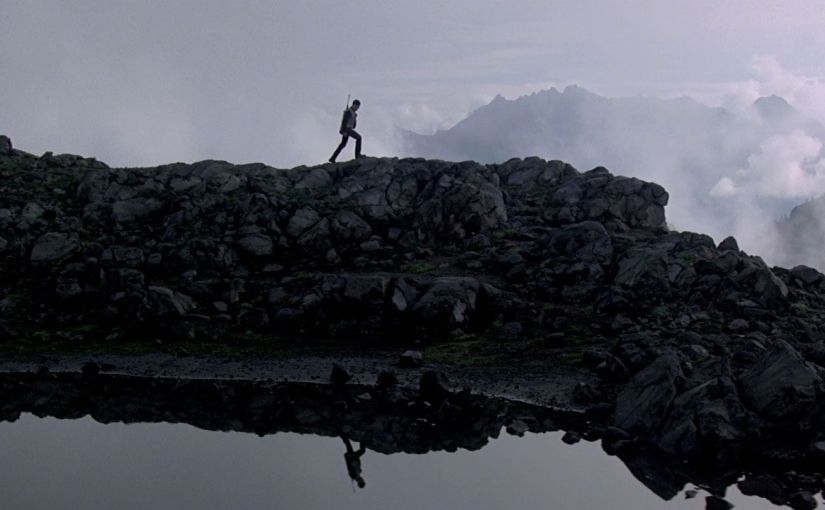
Late into the night and onto the next morning, the guys are doing their traditional favorite activity with a ride into the mountains for some deer hunting. They change out of their tuxes and into their hunting gear as they tease one another and gorge themselves on Twinkies with mustard. None of these boys have a care or worry in the world, except for nerdy Stan (John Cazale) who has once again left his hunting boots behind.
There’s a relaxation and calmness to these people; to the men who are staying behind, to the ones getting ready to leave and to the women who share in their lives.
Regardless of the questions of racism or authenticity, Michael Cimino, with a joint screenplay written with Deric Washburn and Louis Garfinkle, show how the war not only directly changes those that served but also the ones who welcome them home. Steve’s wife is not only separated from him but also appears mute and inactive. Linda attempts to move on with her life but is absent of comfort from Nicky, the man who proposed to her on a whim. Mike is not capable of being the drunken party leader or precise deer hunter he used to be. The deep scars of the three also draw scars for everyone else back home.
The Deer Hunter is a very difficult film to watch. The picture ends leaving you feeling traumatized because it stretches from innocent celebration and debauchery over to some of the worst images that could ever be fathomed. Wars end in a truce, a victory or a defeat, but the conflict does not cease for many of those who participated as pawns for a governing power.
Nicky never comes back to Pennsylvania. He tries calling home, but he can never follow through. He has been changed permanently by his time as a killing soldier and captive who was being forced to use his life for stakes. Mike returns dressed in his uniform with his medals signifying his achievements but as soon as he sees the “Welcome Home Mike” banners he insists the cabbie drives on by and he does not enter Linda’s trailer home until he sees all the guests leave the next morning.
There’s a haunt that Cimino’s film ends with as the remaining members of the group assemble following a funeral and segue into singing “God Bless America” together. I don’t ask this question as a means to minimize anyone who has served or lives as an honored citizen of our country; should these folks who must endure loss from now on be chanting about blessing America, or should they be pleading for a blessing upon themselves? The characters of The Deer Hunter struggle internally and are desperate for a salvation and peace.
War may be a chaotic, unforgiving hell, but living thereafter is another kind of hell that you cannot escape from.
 2 UNPAID MOVIE CRITICS!!!!