
IT HAPPENED ONE NIGHT

By Marc S. Sanders

If you want to stay on top of how the world of American cinema evolved over the last hundred years, within all its categories, you must find time to watch the one film that paved the way for the romantic comedy, as well as the travel comedy.  Frank Capra’s Oscar winning picture, It Happened One Night, is the first of three films to win Oscars for every major category: Best Picture, Director, Screenplay, Actor and Actress. Nearly a hundred years later, the accolades still feel worthy.

Claudette Colbert is wealthy heiress Ellie Andrews who dives off and swims away from the captivity of her father’s yacht and buses from Miami to New York to reunite with her new husband, King Westly (Jameson Thomas).  Her father, Alexander Andrews (Walter Connolly), never approved of this marriage and insists his spoiled daughter get it annulled once she is found.  A ten-thousand-dollar reward is up for grabs to the person who finds her.

Along the way, a rogue reporter, Peter Warne (Clark Gable) ends up next to this young lady on the bus.  Complications ensue where their money gets lost, bags are stolen, buses are missed, and buses get stuck.  Then this trip becomes a walking experience.  Ellie has agreed to stay by Peter’s side though.  He promises to get her to New York as long as he gets to write about her story firsthand amid the constant headlines that recount Alexander’s desperation to get his daughter back.

It’d be easy enough if only Peter and Ellie were not falling for one another.

Sounds familiar, doesn’t it?  Any Nora Ephron script has the elements of It Happened One Night.  Screwball comedies with Cary Grant and Katharine Hepburn seemed to follow a similar blueprint.  To the best of my knowledge, Frank Capra’s film was first though.  

A famous scene has Colbert and Gable on the side of the road trying to hitch a ride.  Colbert’s bare leg does the trick that Gable’s outstretched thumb could not.  Eventually, this scene for the ages evolved into Meg Ryan and Billy Crystal daring to fake an orgasm effectively while dining at Katz’s Delicatessen.

When Harry Met Sally… is what easily comes to mind while watching It Happened One Night.  Peter will tease this spoiled rich girl. Yet, he will also be gentlemanly enough to put up a blanket to divide a cabin room he shares with Ellie, allowing for some privacy.  In the middle of the night though, the two will stay up chatting from either side of their blanket wall, as both acknowledge sad voids within their personal lives.  It’s parallel to how Harry and Sally would chat on the phone from their respective apartment bedrooms while discussing their newly evolving friendship with Casablanca on TV.  

Ellie and Peter become relaxed as their sojourn continues.  They could be left in the middle of nowhere with no money or food, but Gable and Colbert’s chemistry show an easy comfort to each other.  That is what’s expected of any troubled travel film.  At first Ellie does not want to share a rear bench on the bus with Peter.  She’s married to King and the purpose of this runaway trip is to be back in her new husband’s arms.  Plus, this odd fellow on the bus feels unseemly.  His charm is overbearing to the socialite’s proper petiteness.  He’ll resort to munching on a carrot he finds in a patch. She can’t find the appetite for it. Time together breaks down barriers though, just as movies in later decades eventually accomplished with films like Midnight Run and Planes, Trains & Automobiles.  This kind of formula, with ongoing new settings and circumstances, is almost guaranteed to end in positivity once the mutual antagonism is behind the pair.  

For 1934, It Happened One Night was bold in its content, ahead of an eventual ratings system intent on upholding an acceptable level of conservatism.  Colbert’s leg is the most unforgettable.  Later, Peter feels it necessary to spank Ellie.  Then there is the fact that the two share a room together.  Comedic circumstances and shock lend to the humor of this scenario.  Plus, there’s Claudette Colbert undressing down to her slip while a bare-chested Clark Gable is only one side of a blanket away from her.  

Would It Happened One Night endure an endless admiration if moments like these were contained? I doubt it.  Frank Capra’s film hinges on sexual appeal that feels naughty and rebellious.  

The dialogue remains witty.  Clark Gable’s introduction in the film while on the phone with his editor is a precursor to what an outlandish Bill Murray might have done with the script. The material is sometimes quite brash, and the ending, which has been duplicated hundreds of times since, is a perfect example of romantic escapism.  

Over ninety years have passed but unexpected romance is what remains treasured.  When two people with nothing in common begin an unwelcome journey together, it’s still easy to hope they find a way to like each other.  They have to like one another first before they can even concern themselves with falling in love.  The progress of this east coast bus ride allows for the stages to develop naturally.  Frank Capra, Clark Gable and Claudette Colbert were the first to give it a shot and it works brilliantly and beautifully.
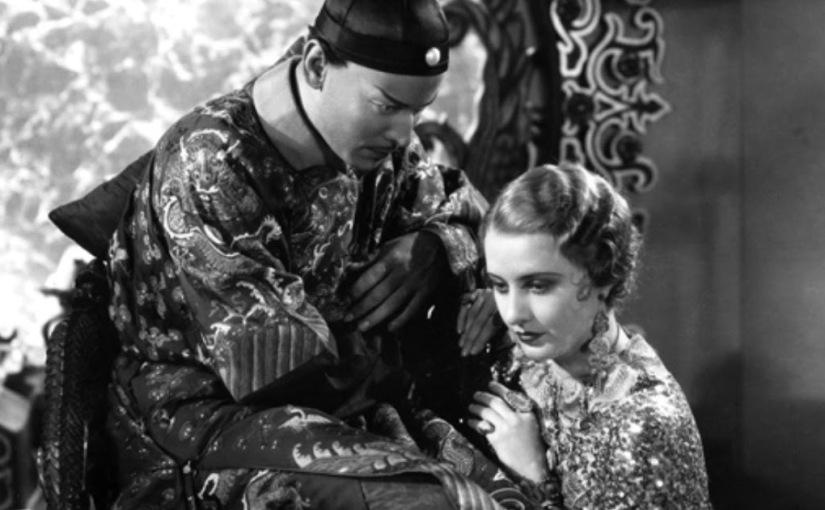
THE BITTER TEA OF GENERAL YEN (1932)

by Miguel E. Rodriguez

DIRECTOR: Frank Capra
CAST: Barbara Stanwyck, Nils Asther, Toshia Mori, Walter Connolly
MY RATING: 10/10
ROTTEN TOMATOMETER: 86% Certified Fresh

PLOT: During the Chinese Civil War, an American missionary is gradually seduced by a courtly Chinese warlord holding her captive in Shanghai.


When I hear people talking about the “pre-Hays-Code era” of Hollywood, I conjure up seldom-seen images of nearly-nude starlets bathing or swimming or dancing in unison, as filmmakers and studios took advantage of the proven formula: Sex Sells.  But it never really occurred to me that some filmmakers would be able to use that freedom to make films that not only showed a little bit of skin, but also took the time to tell a story that appealed to mature adults in ways that seem fresh and alive nearly a century later.

Frank Capra’s The Bitter Tea of General Yen is a contemporary “Beauty-and-the-Beast” tale of an American missionary, Megan (Barbara Stanwyck), who travels halfway around the world to Shanghai to marry her childhood sweetheart, Bob (Gavin Gordon), also a missionary.  It’s set in an unspecified year during the Chinese Civil War [1927-1949] when turmoil rocked the city and hundreds of thousands of refugees filled the streets.  A remarkable opening shot shows hundreds of extras flowing past the camera as Shanghai burns in the background, while a houseful of Americans prepares for Megan’s wedding, untouched and unbothered by the human misery thirty feet from their doorway.  (I was reminded of the idyllic family scenes in Spielberg’s Empire of the Sun where English families held birthday parties oblivious to the impending chaos in Japan leading to World War II.)

Bob insists on postponing his wedding to Megan so he can help rescue some orphans stranded in a burning section of the city.  During the rescue effort, they are separated; in a surprisingly violent scene, Megan is struck on the head by an angry civilian and is knocked unconscious.  She wakes up on a train and finds herself under the care of General Yen (Nils Asther), a famous warlord, reputed to be more bandit than soldier, but who is unfailingly courteous and polite to Megan, even as he informs her that he is unable to return her to Shanghai for security reasons, effectively making her his prisoner.

This scene on the train is a masterpiece of visual storytelling.  Yen sits in a chair and is tended to by Mah-Li (Toshia Mori) who seems to be more than just Yen’s servant.  In an unspoken passage, Mah-Li puts a pillow under Yen’s head, covers his legs with a blanket, and reclines on a chaise.  Megan, with her head bandaged, observes this ritual, then notices Yen staring intently at her.  She becomes acutely aware that she is showing a small patch of bare leg through her covers.  As slowly as possible, she gently pulls the covers up to cover her leg.  Mah-Li observes all of this, Megan watches Mah-Li, and they all go to sleep, each one of them knowing exactly what has been stated without saying a word.  Brilliant.

In a bold move, once Megan is under Yen’s care/protection/whatever, the film never cuts back to her fiancé or to any of the missionaries.  In fact, Yen refers to a Chinese newspaper article which states that Megan is missing and presumed dead.  So that takes care of that.

In another scene of startling violence for its time, Megan wakes up one morning in her private room to the sound of gunfire.  Yen’s soldiers are executing prisoners in a courtyard across the way.  Megan is horrified and complains to General Yen, who promptly orders the soldiers away: “They are taking the rest of them down the road, out of earshot.”  Megan calls him cold-blooded, but he reasonably says he has no rice to feed any prisoners: “…isn’t it better to shoot them quickly than let them starve to death slowly?”

The theme of the film establishes itself in this and other scenes.  Megan, a Christian missionary who believes that people can and must be good for the sake of their souls and their fellow man, finds herself at odds with (and strangely attracted to) a soldier who is brutal by necessity and has no illusions about any innate goodness to be found in any man during a time of war.  There is a powerful scene when she argues with Yen, and in a heated moment utters a racial slur, and as soon as she says it Yen goes silent and squints at her, and she realizes she has crossed a line.

This is not the kind of moral and ethical complexity I expected from a melodrama made only five years after the advent of sound.  I saw the name of Frank Capra and the weirdly evocative title, and I imagined a potboiler with outdated attitudes and cheesy dialogue and racial stereotypes galore.  I could not have been more wrong.  Yes, the title character is played by Nils Asther, a Swedish actor in “yellowface,” but I had to remind myself that, in the time the film was made, this was de rigueur for most films dealing with Asian characters (the highly popular Charlie Chan films starred white actors in the role for years).  I don’t endorse the practice, but it is a fact that must be acknowledged.  And, it must also be said, Nils Asther’s performance as a Chinese man is quite convincing.

The Bitter Tea of General Yen gives us espionage, intrigue, forbidden romance, high melodrama that teeters on the verge of soap opera but never gives in to that temptation (not like Gone with the Wind would do in 1939 with, let’s face it, a rather similar character arc for the two romantic leads).  It’s a film that could be remade today, almost word-for-word, and I have no doubt it would feel right at home with today’s hip audiences.  So many other films of that era feel obviously dated by their dialogue or their performances.  The Bitter Tea of General Yen suffers none of those drawbacks.  It’s a modern classic that just happens to be over 90 years old, that’s all.

[Author’s Note: there is, in fact, one sequence which I’ll call “The Dream Sequence” that feels uncomfortably over-the-top in its depiction of the vilest racial stereotypes associated with Asians.  However, given the context of the scene, who’s having the dream, why they’re having it, and the dream’s resolution, it fits perfectly with the story.  I can’t find it in myself to “cancel” this film based on this sequence.  Just in case anyone was wondering.]

IT’S A WONDERFUL LIFE

By Marc S. Sanders

I have finally righted a serious wrong and watched Frank Capra’s It’s A Wonderful Life, and what a pleasurable experience it has been.  Reader, if this movie lover who gets hopped up on science fiction gobbley gook with laser swords and spaceships can watch an old black and white movie feeling sorrow for its main characters, and elation when the film finishes, then it’s easy to understand how timeless and impressionable Capra’s classic film truly is.

I recall when I had finally seen It Happened One Night, originally released in 1934 and arguably the pioneer of the romantic comedy genre.  I could not help but connect certain moments and pieces of dialogue to the films released while I was growing up, like When Harry Met Sally… and Bull Durham.  Those films took inspiration from Capra’s comedy with Clark Gable and Claudette Colbert.  Capra pioneered storytelling once again with It’s A Wonderful Life.  As my wife and I watched the movie late last night until nearly two in the morning, I said to her this is like Back To The Future.  My wife said A Christmas Carol.  Both true statements.  So perhaps while Capra was revolutionary with his own storytelling, he might have been adopting some inspiration from what came before as well.  Regardless, I applaud his approach.  Frank Capra is a tremendous gift to the cinematic medium.  If there was a Mount Rushmore for filmmakers, Capra would most certainly be sculpted alongside the likes of Hitchcock, Chaplin and Disney.

George Bailey (James Stewart) has big dreams of leaving his sleepy little town of Bedford Falls and building grand designs of skyscrapers while also exploring the world, beginning with Europe and Alaska and whatever else needs discovering.  Like any of us, our yearning for adventure and the destinies we wish for get interrupted. Before you know it, we ask ourselves if life has passed us by.  It takes a guardian angel named Clarence (Henry Travers) to remind George that life has been with him all along; maybe not the life he envisaged, but certainly a life of purpose and significance beyond just himself.

George watches as his high school chums go on to grand accomplishments that pay off in enormous amounts of wealth.  His younger brother Harry (Todd Karns) goes to college, gets married and becomes a celebrated war hero.  However, George remains in Bedford Falls offering loans to his fellow townsfolk that he can’t afford to honor with a business he inherited from his father.  To lend and support comes involuntary to George.  He’s just a good man. 

On the other end of the spectrum is the mean, wealthy miser Mr. Potter (Lionel Barrymore).  Barrymore plays Potter like one of the worst villains in the history of cinema.  An unforgiving, jealous wretch of a man.  His cruelty is long and unmatched, even if he is relegated to a wheelchair.  He knows how destitute George is, despite his unending generosity, but Potter won’t tolerate the admiration George receives.  To squash George’s stature, he’ll buy out his business.  He’ll make every effort to silence George Bailey’s influence.  Potter will even try to take George under his wing where he can maintain complete authority as a big fish in the small pond of Bedford Falls.  Yet, Potter’s never-ending wealth cannot crush the love for George’s humbleness and giving nature.

A favorite device of mine in movies is when the filmmaker can turn the story’s setting into a character all its own.  Examples of this are shown in pieces like Spielberg’s Schindler’s List where the use of thousands of extras and piles of rubble bring testimony to the atrocities of the Holocaust.  In James Cameron’s Avatar (which I just watched as a refresher for the just released sequel), an imaginary neon glowing planet awakens our senses, and we learn that its inhabitants form a symbiont circle with the plant life and animals that dwell there.  In many films, the time and place speak to the viewer.  Bedford Falls is a main character to the story.  Capra makes wonderful use of the Main Street where each business building quickly becomes very familiar as if we have walked into these small town structures a hundred times.  It hearkened me back to my time in Fair Lawn, New Jersey where I would accompany my grandmother on her daily errands to the bank, the kosher deli and the Woolworth’s.  Wherever she went, everyone knew Helen.  In Bedford Falls, the pharmacy with the soda jerk doesn’t look new to me.  It appears like I’d seen it a hundred times before.  Martini’s, the bar, felt like I knew every hob knobber in the joint.  I could smell the ink and feel the creak of the wooden floors in Bailey Building and Loan. 

The townsfolk are also assembled wisely by Capra.  An old man sitting on his porch at night takes in the flirtations that George and soon to be wife Mary (Donna Reed) exchange with one another.  This man represents Bedford Falls taking stock in what’s to come next for our protagonist.  The people in this town have a rhythm to their gatherings.  Capra offers a magnificent shot where the camera is overhead behind George, wearing his overcoat and hat, and the townspeople are facing him at the other end of the sidewalk.  They expect of George, but does George have anything left to give?  I can only see the back of Jimmy Stewart, but I know all too well the expression he’s sending to the people opposite him.  Look at the scene where they march over to George Bailey’s business demanding their monies back.  How one delivers a line followed by another is perfectly timed to James Stewart’s despair.  The ending is beautifully cut as these same folks come into George’s home to offer their sense of giving during a desperate hour of need for George. 

I always knew the story of It’s A Wonderful Life.   Years ago, I saw a stage production where Miguel portrayed George opposite his girlfriend in the role of Mary.  Yet, I was not familiar enough with the surprises that Capra’s film offers.  I just didn’t realize how much fantasy is embedded in the movie as Clarence is meant to be a naïve angel who has yet to earn his wings.  Seems a little too childlike for me on the surface.  I’ll admit I didn’t take to the angels represented as blinking stars early in the picture.  That’s hokey!  However, when Clarence is personified in the latter half of the film, Henry Travers brings a sense of clarity to the purpose of life when he forces George and maybe anyone watching the movie to imagine what things would be like had they never been born.  Reader, I think I’ve seen story adaptations like this on episodes of Family Ties and The Golden Girls.  In this movie, it becomes frightening as we realize the actions we take carry impacts with them.  Had George not rescued his brother Harry from a skating accident, what would have happened to a squadron of soldiers during the war?  Had George not had the nerve to dance with Mary at his high school dance, what would have happened to her?  Had George not existed, then he wouldn’t be available to lend monies to people and what would have happened to a beautiful collection of new homes that would never be erected?  These questions are incorporated into roughly a thirty-minute last act that remind you to appreciate all that you saw earlier in the film.  I want to say its cheesy, but Travers and Stewart really don’t make it that way.  The sequence comes through with forthright honesty from Travers, never going big or outlandish, and genuine anguish from Stewart who convincingly appears like he’s lost everything when earlier he felt like he had nothing. 

I read that Jimmy Stewart did this film shortly after returning from serving in World War II.  He was suffering from PTSD and much of the torment and agony that George exhibits was coming through naturally on film.  This has to be one of the all-time greatest performances on screen.  Jimmy Stewart’s timing in practically every scene of the picture is perfection.  He’s a wide eyed optimist with big enthusiasm to get his life going.  Then he transcends into a teasing flirt with the girl he was not expected to hook up with.  When George tells Mary he wants to throw a lasso around the moon and give it to her, I really believe he could do it.  We have Jimmy Stewart to thank for that.  Later, he’s unexpectedly frightening as he is on the verge of being charged with fraud and penniless.  Stewart is uncompromising in front of Donna Reed and the young actors playing his children.  When he kicks over the table with the train set and gifts, on Christmas Eve, it’s terribly shocking.  Sadly, it’s relatable.  A film from 1946 presents personal problems and struggles that exist today.  That is why It’s A Wonderful Life is such an important piece.  We struggle to live with our struggles.

Frank Capra’s film is necessary to remind each of us to never give up, no matter how hard it gets.  We have value.  We have importance to ourselves and to others.  We are loved.  Yes, it’s only a movie and it conveniently solves itself in its made-up fantasy.  However, those that enrich and occupy space in our daily lives are real and they are folks who depend on us for their fulfillment and happiness.  We are necessary to making their lives better and sustainable.  Reciprocally speaking, they are just as important to mine and your satisfactions.  It might be drippy to claim that Frank Capra’s film is a “feel good movie,” but I prefer to believe that the writer/director, along with Stewart, Reed, Travers and the rest of the company served a higher purpose. They demonstrate that we have all been blessed with an enormous gift filled with the riches of love and friendship that life absorbs and treasures. 

Happy Holidays!!