THERE’S SOMETHING ABOUT MARY

By Marc S. Sanders

Love never dies.  Sometimes it just gets jammed in your zipper.

Ted (Ben Stiller) can’t put his finger on it.  Neither can Pat (Matt Dillon) or a couple of other obsessed, stalking paramours.  There’s Just Something About Mary.

In 1985, brace faced, insecure Ted gets the opportunity to go to prom with the prettiest girl in school, Mary (Cameron Diaz).  He’s a good guy, but disaster strikes in truly one of the most unimaginable ways and prom never works out for these kids.

Jump thirteen years later to 1998 and Ted gets the idea to hire Pat, a private investigator, to track down Mary in hopes of rekindling a new romance.  She’s in Miami, Florida now, working as a chiropractic surgeon and even more beautiful than ever.  Problem is that Pat has lied to Ted about what has come of Mary and wants to pounce on her all for himself.  Ted eventually gets up the gumption to trek from Rhode Island to Florida anyway.  Along the way complications ensue.  Let me change topics for one second and remind you to be mindful of rest stops when you are road tripping.

There’s Something About Mary is one of the all-time great comedies and my favorite of the Farrelly Brothers’ collection (Kingpin, Dumb & Dumber, Me, Myself & Irene).  I’ve described the spine of this film, but it’s the guts of endless sight gags within that uphold this picture.  Everything from a dog that gets drugged, electrified, drugged a lot more, and body casted to a handicapped friend of Mary’s who simply cannot pick up his keys without instigating terribly guilt-ridden chuckles. (I’m laughing as I write this.)  Special needs adults lend to the comedy as well.  The Farrellys are proudly nowhere near politically correct. Yet the material manages to not be horribly offensive either.  You need not worry, you will still get into heaven even if you laughed at There’s Something About Mary.  Still, that’s what comedy is.  Somebody always needs to be the victim of the stooges who lend to the mayhem.

This comedy is also perfectly cast from the three headliners all the way down to the extras.  A South Carolina jail cell setting draws big laughs at poor Ted’s demise. 

Cameron Diaz is such a sport though, always looking beautiful while willing to be the fool.  It was great to watch this with my seventeen-year-old daughter since she had no idea of that hair gel scene.  If you don’t know, don’t read about it.  Just watch and look at how well Diaz holds the moment together.  I remember SCREAMING in the movie theatre next to Miguel.

Stiller and Dillon are two dumbasses you likely never would have envisioned in a film together.  Nevertheless, they are perfect foils of stupidity against one another.  Matt Dillon is often recognized for his tough guy dramatic roles.  Yet, he puts it all on the line.  Stiller is primarily known for comedy, and this film is the first of a series where he becomes the unfortunate victim of circumstances (Along Came Polly, Meet The Parents).  I wouldn’t want anyone else in these scenarios though.  You laugh at what Ben Stiller ends up in but also feel sorry for the poor guy.  I would have no objection if Matt Dillon and Ben Stiller paired up again for another comedy, even all these years later.

Other cast members also lend their level of comedy from Chris Elliott to Lin Shaye to Sarah Silverman, Jeffrey Tambor, Markie Post and especially Keith David, who knows he belongs nowhere in this movie, but that’s exactly why he should be part of the cast.  He’s utterly hilarious.

A nice touch to the movie are the series of outtakes during the end credits while the cast lip sync to The Foundations celebratory number “Build Me Up Buttercup.”  This had to have been such a party to film and finally the audience is assured that they can laugh along in front or behind the camera as well. 

There’s Something About Mary is the movie so many of us need right now.  Turn off the news and turn on what went on between Ted and Pat and their pursuit of Mary. 
MAESTRO

By Marc S. Sanders

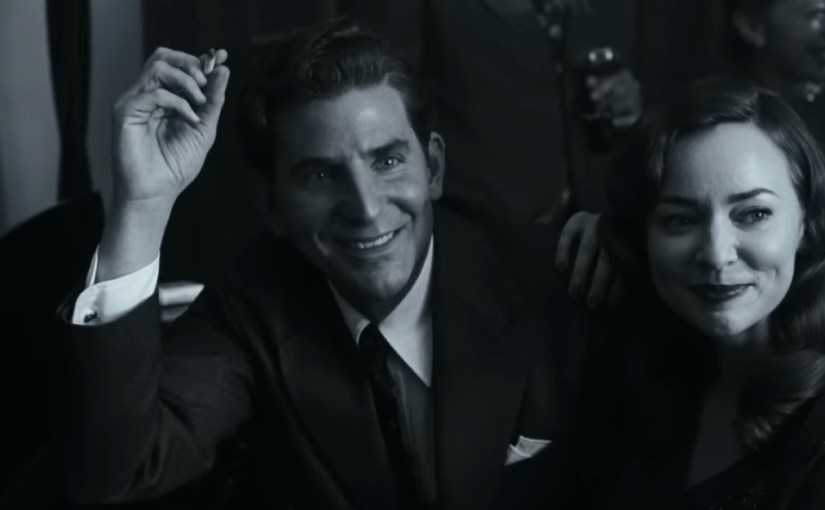
Bradley Cooper’s second directorial film suffers from the same ailments as his first film.  Like his interpretation of A Star Is Born, Maestro is not as good as the sum of its parts.

Constructively speaking Maestro is a gorgeous looking picture with a first half in a comfortable, historic black and white followed by its second half in vibrant colors.  The acting from Cooper, as Maestro Leonard Bernstein is well performed.  Carey Mulligan is sensational at no matter what age she is portraying actress Felicia Montealegre, the conductor’s wife.  Within the scenes they share together there is a beautiful rhythmic exchange of dialogue, written by Bradley Cooper and Josh Singer.  Cooper also looks powerful as he reenacts the conductor in front of his choruses and orchestras.  There are also inspiring shots that start out vague and unclear only to come into a full blossom as Cooper’s camera maintains an unbroken focus on an image. 

All that being said, none of it matters because the script from Cooper and Singer is muddied.  While Mulligan and the actor/director are in the midst of marital argument on Thanksgiving day, much is hard to understand as they naturally speak over one another, and what can be made out seems to mean nothing as they fight over people and issues that I do not believe are ever touched upon in the picture.  A scene like this looks like an actor’s dream piece, but it is hollow of substance. 

Like A Star Is Born, there are characters that enter Maestro for long winded scenes and then are never heard from again.  Either Bradley Cooper does not feel the weight of their importance, or he mistakenly presumes the audience will catch on.  An outdoor brunch with Felicia, Leonard, another couple and I believe a mentor or agent of Leonard’s seems well written, but I have no idea who those people are or what kind of influence they carry.  I was hoping to realize later, but those three amount to nothing.  Was the other couple supposed to be Leonard’s parents, and perhaps they were meeting Felicia for the first time?  I’m just not sure.

Bradley Cooper is a master with his camera.  An important moment in Bernstein’s life is when he gets the call to perform at Carnegie Hall when the other conductor calls in sick.  With its black and white imagery, a young and enthusiastic Leonard answers a phone call while a black square, with light from behind, occupies three quarters of the screen.  I was wondering if that was a stage curtain that needs to be lifted.  I was half right.  It’s a window curtain to the apartment Leonard shares with his gay lover.  The film moves into high energy as the would-be composer slaps his lover’s bottom and leaps down the stairs with a quick edit into the theater.  Mike Nichols would be proud. 

Another moment that struck me was Cooper pointing his camera up into the tall reaches of his apartment building staircase.  It’s quite dark.  You may have trouble realizing what you are looking at but then his son drops a paper airplane “good luck” note down to his father on the bottom floor.  These images blossom into something as alive as I would imagine the director/co-writer/actor regards Bernstein.

So, there is much to praise in Maestro.  Unfortunately, the assembly of these shiny, inventive, and magnificent pieces of film do not mesh very well together.  Bernstein led a homosexual lifestyle, even going so far as to welcome a lover into the home he shared with Felicia.  Carey Mulligan is excellent with expressions of resentment towards this other life that her husband follows.  However, the storyline never feels fully fleshed out.  We never get an opportunity to see the value or the menace of the other relationships that Leonard holds on to.  A so-so moment is accompanied by Bernstein’s saxophone opening to West Side Story.  The piece is used as a subtle tool of deceit and ignorant cruelty by Leonard while escorting his apprentice/lover in the home he shares with an angered Felicia in the foreground.  We presume the threat that Felicia likely feels, but it never comes to the surface. 

Bernstein’s career is glossed over as well.  Who pushed him to move on to bigger moments and acquire greater crescendos in his life?  I’d like to think it was Felicia, but I’m not certain.  Felicia has conversations with Leonard’s sister (Sarah Silverman) and other acquaintances, but what is she really alluding to or really talking about?

The most impressive moment in the film is when the Maestro conducts the London Symphony Orchestra at Ely Cathedral.  (I’ll own up and say I looked up what this scene was on IMDb.)  Bradley Cooper does a masterful reenactment of Berstein, dripping in shaggy grey hair sweat, dressed in a three-piece tuxedo with baton in hand.  This is a major multi talent working in films today.  Cooper studied film footage of the scene over a six-year period to get this six-and-a-half-minute unbroken moment caught on film.  It’s positively mesmerizing and I could watch this over and over again.  I’m waiting for the side-by-side comparison to appear on You Tube soon. It is reminiscent of what Rami Malek did as Freddy Mercury at the Live Aid concert at Wembley Stadium in the film Bohemian Rhapsody

Still, this scene much like a lot of the footage in Maestro seems to just be wedged in there.  There’s a balletic flow to some moments in Cooper’s film and then there are times that come out of nowhere and I’m left to wonder how exactly we arrived and what was truly going on in Bernstein’s life when he conducted at this historic moment time.  I’m watching a blazingly fine impersonation of Bradley Cooper doing Leonard Bernstein but I’m lacking the sub conscious dimension a biographical film should have at this point in a historical figure’s life.

Carey Mulligan is laying everything out to portray Felicia and her best moments come in the last third of the picture when the poor woman is struck with breast cancer that has spread to most of her body. We witness how she lives with the illness along with her separated husband by her side.  I’ve seen ill women before in films.  I know I sound crude by saying it’s nothing new.  I’m still allowed to be impressed though.  It’s a huge feat to bring a performance to this kind of level.

The makeup work is marvelous too.  Raw footage of the real Leonard Bernstein is shown before the end credits, and I’m impressed with how much Cooper looks in comparison.  The aging of him and Mulligan over the decades since the late 1930’s all the way through the mid 1980’s is perfectly captured.  At one moment, Carey Mulligan looks just like my mother.  I choked up a little bit when Felicia gazes upon Leonard at the Ely Cathedral.  Same hairstyle.  Same eyes.  Same expression.  Mom would have even worn a soft blue evening gown like that in the mid-1970s.

I wanted to like Maestro more than I did.  I almost feel guilty for not liking it as much.  There is magnificent camera work, sensational acting, wonderous music and perfect impressions on display, but the puzzle just did not have all of its pieces assembled together properly.  Sadly, Maestro lacks the focus it needs, either for the famed conductor’s amazing career or for his relationship with Felicia with his not so concealed homosexual lifestyle on the side.  Bradley Cooper put together a million magnificent moments, but it caused him to overlook the enduring structure of his subject.

MAESTRO (2023)

by Miguel E. Rodriguez

DIRECTOR: Bradley Cooper
CAST: Carey Mulligan, Bradley Cooper, Matt Bomer, Sarah Silverman, Maya Hawke
MY RATING: 8/10
ROTTEN TOMATOMETER: 80% Certified Fresh

PLOT: This love story chronicles the lifelong relationship of conductor-composer Leonard Bernstein and his wife, actress Felicia Montealegre Cohn Bernstein.


Bradley Cooper’s Maestro is a film of scope and depth and tremendous technical artistry, both in front of and behind the camera.  The performances from the two leads contain some of the best acting I’ve ever seen, especially their argument during a Thanksgiving Day parade.  But I cannot deny that, for reasons I’ll try (and probably fail) to explain, I did not feel emotionally invested in the story until the final two or three reels, when something occurs that, if it were fiction, could easily be dismissed as a shameless attempt at Oscar-baiting.  The fact that this really happened lends these final scenes an emotional weight that was missing from everything that came before.

The story is straightforward, but beautifully told, visually.  After a brief prologue, we meet a young Leonard Bernstein (Bradley Cooper), in bed with his male lover (hope that’s not a spoiler), as he gets an early morning phone call that will change his life forever.  This opening scene sets the visual tone for the first half of the film: standard 1:1.33 framing as opposed to widescreen to give it a classic feel, as well as gorgeous black-and-white cinematography.  Indeed, this opening shot alone looks like it could hang in a museum of modern art and not look out of place.

Everything proceeds breathlessly from there, with some conversations held at speeds that would make the Gilmore Girls dizzy.  After a series of early musical triumphs, he meets the woman that will become the polestar of his personal life: actress Felicia Montealegre Cohn (Carey Mulligan, in a performance that will almost certainly win her an Oscar nomination).  After some verbal sparring/flirtation, it becomes clear to them, and to us, that they are meant for each other, despite his later dalliances with male fans and hangers-on.

I especially liked a scene during this early section where Felicia and Lenny – as his friends and family called him – dine with some older friends (or family? I can’t quite remember), and an older gentleman gives him some advice: “They’ll never give Leonard Bernstein an orchestra in America.  But Leonard S. Burns…”  I loved that scene because I loved how Bernstein’s entire career is a rebuke to that well-meant but wrong-minded sentiment.

This gentleman advises Bernstein to give up writing scores for musicals, but Felicia disagrees.  That sets up a wonderful sequence where Felicia and Lenny watch a rehearsal of the stage musical On the Town, with sailors leaping balletically, and then in a fantasy reminiscent of The Red Shoes, Bernstein himself becomes one of the sailors, and the dance becomes a micro-miniature of their relationship and his early successes.  It’s a thrilling little cutaway that had me grinning the whole time.

From there, the movie jumps forward chronologically in leaps and bounds, giving only a cursory glance at the 1960s before settling more or less for the rest of the film in the mid-to-late 1970s, with Bernstein’s face becoming the craggy icon that I personally remember from my own youth, while Felicia Bernstein somehow looks just as beautiful as she did thirty years and four children ago.  I would blame that on movie magic, but I mean, we are talking about Carey Mulligan here, so they get a pass.  And then the last act of the film arrives and we get a glimpse perhaps of why Mulligan receives top billing over the actor-star-director Cooper.  And that’s all I’ll say about that.

As I said, the movie looks amazing.  Obviously the period décor and costuming are all spot on, but the cinematography and direction – what theatre or film studies majors would call mise-en-scène – are just incredible to behold.  Another shot that stands out in my mind is a scene where Bernstein is conducting, and we get an angle where we are looking into the wings, but his undulating shadow looms large, and standing in that shadow, but still illuminated, is Felicia.  Verbal descriptions won’t do them justice, just see for yourself.

But as I mentioned, I just wasn’t invested in the story from an emotional standpoint.  I felt like I was watching an extremely inventive and ingenious exercise in moviemaking.  I suppose I could compare it to the recent sci-fi film The Creator, if that doesn’t get me accused of hyperbole.  Both films show supreme confidence in staging, cinematography, and direction.  But like The Creator, Maestro feels like something is missing where its heart should be for the first 75% of its running time.  Things happen, arguments take place, children are born, Lenny gets a little sloppy with his paramours, but I never felt like any of it really meant anything to me as the viewer.

I tried asking myself, “What statement is the film making?”  And I couldn’t answer that question, aside from fulfilling its purpose in presenting the facts of a story in almost documentary-like fashion.  But the performances and cinematography are so stunning that I must acknowledge that fact with a higher rating than I would normally give a film that doesn’t really grab me emotionally.  (EXCEPT for the last 25%, I mean…I don’t want to give anything away, but the last reels are heart-tugging.)

So, do you want to see this movie?  Well, certainly not if you are an absolute acolyte of Leonard Bernstein.  You’ll see some pretty cool stuff musically, but Maestro does not paint an altogether flattering picture when it comes to his personal life.  But if you want to see one of the best-acted, best-directed, best-LOOKING films of the year…Maestro is your ticket.

WRECK-IT RALPH

By Marc S. Sanders

Walt Disney Studios is the granddaddy of animation. No one questions that. Yet when I watch a film like Wreck-It Ralph, I am enthralled at not just the imagination of story or the eye-popping visuals, but most importantly the made-up science the film’s video game characters interact with.

There are rules in play. All arcade game personalities can schmooze with each other after hours. Cross each other’s paths at “Cross Central Station” where a Pac Man cherry is offered up to a homeless Q-Bert, and even attend a Bad Guys Anonymous Group, moderated by the orange ghost Clyde (infamous rival of Pac Man). That last bit is one of my favorite parts of the movie. So inspired to have a Satan character console a dejected hulking, overalls wearing Ralph, aka Wreck-It Ralph. He’s the villain in the arcade game known as Fix-It Felix.

One rule to watch out for though, if you die in an arcade game you normally don’t inhabit, you can die permanently. When our title character gets overanxious, that’s a threat to not only himself but other important characters like Fix It Felix Jr (Ralph’s adversary), Calhoun (a first person shoot ’em up military woman) and Ralph’s inadvertent best pal Vanelloppe (the unfortunate glitch of a candy land racing game called Sugar Rush).

The jokes are great. The vocal cast of John C Reilly, Sarah Silverman, Jack McBryer, Jane Lynch and Alan Tudyk is perfectly assorted, as if the script was written specifically with these performers in mind.

There’s a lesson to be learned, because this is a Disney movie after all. It’s a pretty good lesson in knowing to love everything about yourself, glitches and all. Thankfully, the film does not patronize and melodramatically bash it over your head.

I love the arcade 80s relatability of the games and the settings of games like Fix It Felix, Heroes Duty, and especially Sugar Rush, looking as if ideas from Willy Wonka were swiped and polished to bring chocolate mud puddles, peppermint stick trees, Nesquik quicksand, and stalactites made of Mentos that drop into a lava like pit of diet cola that molten upon impact.

Soon after Ralph almost broke the arcade, he breaks the internet in a subsequent adventure, and that’s as endlessly hilarious and fun as his feature film debut.

RALPH BREAKS THE INTERNET

By Marc S. Sanders

You and your family are likely to be entertained with Disney’s Ralph Breaks The Internet featuring John C Reilly voicing the title character and reunited with Sarah Silverman as his trusty, spunky video game racer companion Vanellope.

Reilly and Silverman have perfect timing. Their voice work plays so well, it wouldn’t be too outrageous to see them do a live action comedy together one day.

Disney has made another winning animated film but this Ralph plays superbly as a comedy. As the title suggests, Ralph and Vanellope end up in the world wide internet and beginning with an out of control bid on an item in eBay, they cause a mess of trouble for themselves. Along the way their friendship is tested as they realize things never can stay the same forever. Honestly, Disney’s films have offered up more fleshed out life lessons in other films. Never mind though. It doesn’t weigh down the film in kitschiness.

There’s much to offer in high speed car chases with Gal Gadot as a stunning tough, leather clad roadster in a game called Slaughter Race; a far cry from the innocence of Sugar Rush but still a reminder of the violent fare offered up today. No worries, parents, it’s all shown in a G rated fashion nonetheless. As well, Ralph comes face to face with user commentary that isn’t always the most flattering and the trends of You Tube videos.

Everything is familiar to a 2018 viewer and we are seeing new things as we actually get an imagination as to how the internal workings of the internet engage with one another. It’s an invented engineering of science as we see how viruses might interact and an “Ask Jeeves” encyclopedic character voiced by Alan Tudyk rapidly presumes your question as you offer up a word at a time.

The all time highlights of the film come from the Disney Princesses and how they socialize outside of their films. It’s so hysterical. Maybe the funniest moments on screen of the entire year. Even more impressive is that the original voice actors were recruited to reprise their respective parts like Jodi Benson as Ariel, Ming Na Wen as Mulan and Idina Menzel as Elsa. You read it here first. Disney will be offering a comedy featuring all of their princesses in one film. I’m telling you. It’s coming. I know it.

Ralph Breaks The Internet is an hysterically inventive comedy. It only falters slightly in its overly long final act featuring a gigantic Ralph made up of millions of little Ralphs (just see the movie to understand what I mean), and the lessons are kinda throwaway, but the gags are fast. The animation is sharp and colorful and the voice cast is second to none.

This is a film that’s worth multiple viewings. You’ll have great fun each time you watch it.

NOTE: Stay to the end for an exceptional end credits scene. I mean its truly exceptional. TRUST ME!!