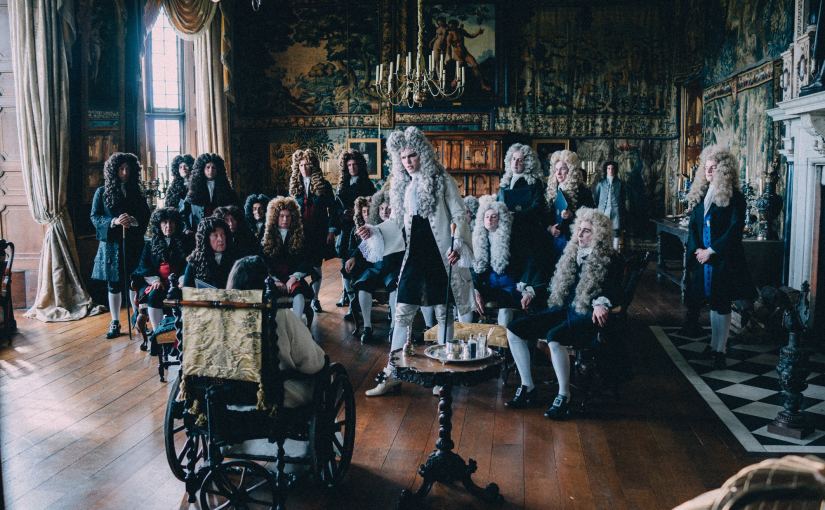
THE BOURNE SUPREMACY, THE BOURNE ULTIMATUM, THE BOURNE LEGACY, JASON BOURNE

By Marc S. Sanders

Sometimes the same old thing is all we want, right?  It’s like comfort food.  That’s what the Jason Bourne films offer.  The first time (The Bourne Identity) it is original.  The second time (The Bourne Supremacy) it is familiar.  The third time (The Bourne Ultimatum) it is what we expect.  When you get to the fourth and fifth time (The Bourne Legacy and Jason Bourne), well then perhaps you’ve overstayed your welcome.

The second and third films in the Matt Damon action series function as one long four-hour film.  They are absolutely gripping in high octane, fast cut editing, pulse pounding music from James Newton Howard, and taut direction from Paul Greengrass.  They work because at least two thirds of the material is shown through the eyes of the former assassin Jason Bourne who is trying to learn of his past and who he worked for and why.  Plus, though he may hide deep undercover on the other side of the world in places like populated India, he only resurfaces when he discovers someone is trying to kill him.

The other third of these two pictures function on the other side of the coin with clandestine departments within the CIA who only consider Bourne being alive as a threat to the integrity of their black operations.  He must be eliminated.  There are great acting scenes with Joan Allen first up against an intimidating Brian Cox, and later she’s going toe to toe with David Strathairn.  If you are not part of the chase for Bourne, then you are engrossed in the cause these three supporting players offer with government politics and debate.  With each passing film, it’s an old, grey haired white gentleman in a suit who is insistent on eliminating Bourne and anyone who he associates with.  This started with Chris Cooper in the first film followed by Brian Cox (my favorite) over to David Strathairn.  The baton is then passed to Albert Finney.  A new film moves over to Edward Norton and then Tommy Lee Jones.  Scott Glenn and Stacy Keach are in the recipe too, but they are not as prominent.  All these guys start to look alike and when you watch the films in succession, one after the other, like I recently did, you start to question when this actor and this actor entered the fold.  Best way to describe it is that it is a ladder climb.  There was one guy in charge, then another above him and so on.

The appreciation for the Bourne series comes mostly from its action and the absolute cleverness of its hero.  Jason Bourne functions with ease about staying one step ahead of those trying to kill him.  They think they have a lead on him, but in reality, he has the lead on them.  Do you know how satisfying it is when he calls these people to talk to them and they play dumb? Jason will simply say “If you were in your office right now, then we would be having this conversation face to face.”  Moments like this are what gets an audience to clap and cheer.  The old white guy has been duped.

The action works because, once again I lay claim to the lack of CGI.  So, the overabundance of car chases seems nerve wracking like they are supposed to.  That door on that car is actually getting bashed in.  That taxi cab is really getting t-boned and turning into a 360 tailspin.  Jason can grab a seatbelt, lie down on his side and when the car careens over the barrier onto the landing fifty below, upside down, I’ll believe he gets out with only just a slight limp and a dribble of blood on his brow.  Only Jason Bourne can drag a wrecked rear bumper on a stolen police car through a busy Times Square and bash an SUV into a concrete barrier.

Fight scenes are not just fight scenes in the Bourne films.  It’s not just fists and punches and karate kicks.  Creatively speaking, the films construct their fight scenes to have the hero arm himself with a ball point pen or a magazine that’s wrapped up ready to wallop an opponent in the nose.  I’ll never forget when my colleague Miguel and I saw Ultimatum in the theatres and witnessed Jason punching a book into the face of a dangerous bad guy.  How many times have you seen a guy get punched in the face?  How many times have a seen a guy punch a book into the face of another guy?  There’s a difference. 

Matt Damon has been quoted as saying he believes the Bourne films carried the least amount of dialogue for him to memorize.  Yeah.  That’s likely true.  These films are visual feasts.  They rely on watching Damon move.  They are paced by how he walks, drives a car or tinkers with props.  Even how he listens and observes move with a kinetic progress. 

The locales are spectacular, spanning the globe from India, to Russia, to London, to Morocco, to the Philippines, and on to New York City and Las Vegas.  Following the first film, Paul Greengrass directed three of the next four.  (Writer Tony Gilroy directed the fourth film, The Bourne Legacy with Jeremy Renner taking the lead while Damon’s character was only talked about.) Each film takes every advantage of the atmosphere, using the overpopulated extras as obstacles and means to hide and weave away from the antogonists while on foot, behind a steering wheel or saddled upon a motorcycle.  Greengrass practically invents the concept of putting the viewer so much within the environment, you can almost smell the diesel or the food trucks within the area.  Zoom in overhead shots offer quick glances of the playground and traffic we are engrossed in.  Approximately twenty-five minutes within the center of The Bourne Ultimatum go by with no dialogue as Jason Bourne pursues a bad guy through a labyrinth of apartment tenements and rooftops, while the bad guy pursues actor Julia Stiles.  Finally, when all three catch up to one another, with a leap through a window, do you let out the deep breath you never realized you were holding on to. 

The first three films in the series (Identity, Supremacy and Ultimatum) work as a tight trilogy.  Each film ends with hanging threads to consider and lend to the next film.  By the time Ultimatum concludes, you feel as if all that needed to be told has been covered.  The next two (Legacy and Jason Bourne) function as cash grabs for the studio.  Legacy is entertaining and it boasts a good cast with Jeremy Renner and Rachel Weisz trying to outrun the government adversaries.  It hinges on operating as parallel material that occurs in the prior Damon installment.  While Jason Bourne is being pursued, this is happening over here.  It’s not unwatchable, but it is also truly unnecessary as it doesn’t advance the universe of the series at all.  A thrilling motorcycle chase closes out the film, but it’s a retread of what we’ve seen before.  It gets old quickly.  The film demonstrates that guys like Jason are trained to become dependent on drug enhancements for their highly trained arts of warfare and instinct.  Renner’s character is just another kind of Jason Bourne.  I was more impressed when I thought Jason was just a highly skilled fast learner to all that he’s capable of.  If you tell me blue and green pills lend to what he’s capable of, well then, he’s not much of a superhero in my eyes anymore.

With the final film, Jason Bourne, Greengrass returned to the director’s chair and Damon agreed to come back (paycheck had to be right, I’m sure), though he was significantly greyer and older than his prior films.  It was a weak return.  Just when we think Bourne has learned everything he needed to know and he could now live comfortably underground as a street brawler for bucks, he is informed that his deceased father knew and did some things for these secret agencies that put Jason on this path of special operations.  It doesn’t hold much weight and the payoff is nothing special.  Another car chase occurs in Vegas that appears nearly shot for shot similar to what we already saw in Damon’s prior installments. 

I wrote in an earlier review of The Bourne Identity, that Matt Damon works so well in the role because he’s such an unexpected surprise.  He’s not the muscle guy like Stallone or Schwarzenegger.  He comes off common.  In the first three films, he’s simply a kid.  When you place him in action or see how he gets the drop on a bad guy who is surveilling him, it is so satisfying.  The Bourne films work best with the locales they choose to shoot from.  Bourne will spy on his pursuers from a rooftop building across the street from where they are.  This is inventive filmmaking not just found in the pages of the script.  Paul Greengrass strategically shoots his players.  Director Doug Liman planted the seeds for this series’ potential (The Bourne Identity), very loosely based on the Robert Ludlum novels with creative adaptations from Tony Gilroy, primarily.   Greengrass enhanced the characters and their motivations by use of scenic locales, skillful shaky cameras to make it look like the audience is running at the same pace of Bourne and his adversaries, and quick cut, real time editing.  He applied this approach to his 9/11 film United 93.  The last two films are good even if they seemingly peter out the series, but overall, the four sequels hold up very well. 

If you’re asking, the best of the series is The Bourne Ultimatum, followed very closely by The Bourne Supremacy.  Either way, no matter which film you’re watching, you’re in for a good time when Jason Bourne shows up on the grid.

THE LOBSTER (2015)

by Miguel E. Rodriguez

Director: Yorgos Lanthimos
Cast: Colin Farrell, Rachel Weisz, John C. Reilly, Olivia Colman
My Rating: 4/10
Rotten Tomatometer: 87% Certified Fresh

PLOT: In a dystopian near-future, single people, according to the laws of The City, are taken to The Hotel, where they are obliged to find a romantic partner in forty-five days or be transformed into an animal.

[So, yeah, this is about 1,800 words of how much I disliked the majority of this movie, so this review is FULL OF SPOILERS, because it pissed me off so much…if you have ANY interest in seeing this movie, I’d seriously advise against reading this review.  I’d advise you MORE against SEEING the movie, but whatever, dealer’s choice.]


“The course of your relationship will be monitored closely by our staff and by me personally. If you encounter any problems, any tensions, any arguing, that you cannot resolve yourselves, you will be assigned children. That usually helps, a lot.” – Hotel Manager (Olivia Colman)

(That’s the best line in the movie, just thought you should get the highlight now.)

——————


I first became interested in The Lobster after discovering The Favourite, one of the very best films of 2018.  I thought director Yorgos Lanthimos’s vision and directorial style were stunningly original, and the story was exquisitely well-acted by all three of the female leads.  So, by extension, I figured The Lobster would be more of the same.  It came highly recommended by other friends, and I remember seeing it in stores with that now-familiar “Certified Fresh on Rotten Tomatoes” sticker.

Well, I just finished watching The Lobster on Netflix.  It was, putting it mildly, a major letdown.

It had a promising start.  The opening scene features a woman driving wordlessly through some countryside.  She stops on the side of the road, and as she exits the car, you can see she’s carrying a revolver.  She calmly walks into a field and approaches a nearby donkey and…well, let me just say that my attention was immediately grabbed.

Eventually, the audience is fed enough information to deduce that, for reasons left unexplained, single people from The City (it’s never referred to by its proper name) are being trucked to a resort hotel in the country.  Their personal possessions are confiscated, and they are assigned small rooms with single beds.  They are calmly informed that, if they manage to pair up with another hotel guest, they will both be relocated to a room with a queen bed, and from there to a yacht.  (They are mum about what’s supposed to happen after that.)

If, however, you are unable to pair up with someone after 45 days, you will be literally transformed into an animal.  You are permitted to decide which animal.  Well, naturally. (David, our “hero” (Colin Farrell), wants to be a lobster if his time comes, although not for any reasons that Phoebe Bouffay might celebrate…)

So…yeah.  You’ve basically got Logan’s Run meets Black Mirror.

—————–

For the first section of the film, taking place mostly in and around the resort, I was mesmerized.  It felt like the best films of Spike Jonze, or even Monty Python.  For example, The Hotel strictly prohibits masturbation.  When John C. Reilly’s character breaks this rule, his punishment is bizarre but, I would imagine, 100% effective.  (And let me just say, it’s probably not what you’re thinking.)

Another bizarre moment: sexual intercourse with any other guest while still single is also strictly prohibited, but as part of the “treatment” for a single person, once a day, a maid comes to your room to replace any tranquilizer darts you may have used the previous night (long story) and then performs, for lack of a better word, a lap dance.  This dance, while technically “erotic”, is drained of any sexual chemistry.  It defies description.  It is one of the most bizarre things I’ve seen on film in recent years.

Now, I LIKE bizarre.  This whole opening third of the film is right up my alley.  I had literally NO idea where any of this was headed, and that thrills me. But then…disaster strikes, at least from my point of view.

David, Colin Farrell’s character, can take it no longer and engineers an escape from the Hotel.  In the surrounding forests, he discovers a band of Loners, single people who survive off the land, as they are unwelcome in The City.  They pride themselves on being able to do what they want where they want (as long as it’s not in The City), but they ALSO have strict rules about not pairing up.  Masturbation: A-OK.  Hooking up: VERBOTEN.

From an allegorical point of view, I believe The Hotel represents the cult of Couplehood, or Marriage, if you like, that tends to assault single folks, in one way or another, their entire single life.  (Argue with me all you want, but if you want concrete examples, look no further than television commercials, game, set, match.)  On the other end of the spectrum, you’ve got the cult of Singularity [my own name, not from the film], the folks who love being single so much that, when their friends couple up, the single friend backs off from invitations and begs off of parties and fades away, because who needs that pressure, am I right?

So the rules of the Loners make sense from that perspective.  But…from a STORY perspective, the movie comes to a stop once David finds himself in that forest.  He meets a beautiful woman (Rachel Weisz, credited only as “Short Sighted Woman”), they flirt surreptitiously, they develop a forbidden relationship, they go undercover into the city with another faux couple (just to prove they can, I guess), and then they are discovered by the leader of the Loners.  The Loner leader tricks Short Sighted Woman into seeing an eye doctor on the pretense of getting her vision corrected, but instead, the doctor [SPOILER ALERT] blinds her as punishment for her transgression.

BLINDS her.  Don’t you think a severe tongue-lashing and two nights without food or water would have sufficed here?  I mean, what the actual f***?

At this point, I was getting tired of this story.  I felt bogged down by melodrama after a seriously promising start.  (For example, the way in which the forbidden relationship between David and Short Sighted Woman was discovered was absurdly preventable; it felt like something that happened only because the screenplay required it, not because it was something the characters would actually do.)

——————————

So, now we’re at the REAL reason I disliked this movie so much.  If you’ve stuck with me this long, we’re at the home stretch.  MAJOR spoiler follows, so last chance to bail.

David and the newly-blinded S.S.W. engineer a second escape and wind up on foot on a country road, presumably heading into The City.  At this point, I made a startling realization.  From an allegorical point of view, David and S.S.W., at least to a small degree, represented my relationship with my own girlfriend.  They were in a relationship, but not an officially “sanctioned” one (Marriage), so they don’t belong in The City.  And they’re a couple, but not truly “single”, so they don’t belong at The Hotel.  They’re in relationship limbo, at least as far as cultural designations go.

I was like, “Hey!  Finally, a movie that acknowledges a relationship like mine!  …although I certainly don’t feel like I’m navigating a no-man’s land, but at least we’re being represented in some small way.”

So.  They wind up at a diner, where David makes a decision: he will blind himself with a steak knife.

What.  The f**k.  What is this plot point supposed to represent in this allegory?  The need (requirement?) for one partner in a relationship to make drastic changes to themselves, physically or otherwise, in order to belong with the other person?  I understand the need for change and compromise in ANY relationship, but here’s my two cents: if you decide your relationship depends on you BLINDING YOURSELF for your partner, you need to check yourself before you wreck yourself.

So, picture the scene: David leaves blind S.S.W. at the table and heads to the bathroom.  We see him preparing to do the deed.  The knife is in his hand.  He stuffs paper towels in his mouth to stifle the screams that are sure to come.  He holds the steak knife with the point JUST about to penetrate the eyeball.  Suddenly, CUT back to S.S.W. at the table.  Waiting.  And waiting.  And waiting some more.  A waiter refreshes her water glass.  She continues waiting.  Through the diner window, construction is in progress across the street.  She waits.  And waits.  And waits.

Suddenly…CUT TO BLACK…ROLL CREDITS.

Reader, I am being 100% truthful when I say, at that point, I literally flipped the double-bird at my TV screen and yelled out, “WHAT THE F**K!!!”

I mean, seriously…what is the POINT of that dangling participle of an ending?  There are only three possible outcomes: he blinds himself and returns to S.S.W., OR he chickens out and returns to S.S.W., OR he chickens out and bails on S.S.W.  Since we get the Schrodinger’s Cat ending, it is simultaneously ALL of those endings and NONE of those endings, which is extraordinarily FRUSTRATING BEYOND BELIEF.  I got NO resolution to the story OR the characters.  Do they try to find safe harbor in The City, perhaps on forged documents?  Do they travel the country, taking only the back roads and taking shelter in backyard sheds or hastily dug shelters?  ARE THEY BOTH BLIND during all this?

Don’t tell me, “Well, it’s up to you what happens.  What do YOU think he does?”  I don’t know, I DIDN’T WRITE THE SCREENPLAY.  Farrell plays the character with an almost childlike simplicity, so it’s impossible to predict what he’ll do.  This serves the story extremely well in the first part of the movie, but it does the viewing audience no favors when it comes to this absurd anti-climax.

I felt short-changed and cheated at the end of this movie.  And I really liked the characters, and I liked the first third of the story, and I stuck with it hoping it would arrive at a grand conclusion, some epic, symbolic imagery that would bring things full circle or SOMETHING.  And I got bupkis.  That’s not how you treat a viewer, folks.  I felt insulted.

So.  Despite my hatred for the ending, I still give it a 4 (rounding up 1/3 of 10) because of how original and oddball the first third of the film was, and how much promise it displayed.  If they had stuck with that tone all the way through, I could see this REALLY being a gem.  As it is, I would like to quote Admiral Ackbar:

“IT’S A TRAP!”

THE FAVOURITE (2018)

By Miguel E. Rodriguez

Director: Yorgos Lanthimos
Cast: Olivia Colman, Rachel Weisz, Emma Stone, Nicholas Hoult
My Rating: 10/10
Rotten Tomatometer: 94% Certified Fresh

PLOT: In early 18th century England, a frail Queen Anne (Colman) enjoys the attentions of her close friend, Lady Sarah (Weisz), but when Sarah’s cousin (Stone) arrives at court, a subtle power struggle ensues.


This movie is a TRIP.  Imagine that someone crossed the sex-driven antics in Dangerous Liaisons with the cat-fighting in All About Eve, directed by someone who idolizes Stanley Kubrick and David Fincher.  It’s that good.

Where to begin?

I loved the story.  It’s a basic power struggle/love triangle, but told with immense wit and originality.  Queen Anne indulges in sexual dalliances with her closest confidante, Lady Sarah.  Then Abigail appears, a distant cousin to Lady Sarah; she’s hired as a scullery maid and slowly works her way into Lady Sarah’s confidence as her handmaiden.  When the Queen starts to show a preference for Abigail over Lady Sarah, oh, the fur doth fly.

Rarely has it been so much fun to see such bad people behaving so badly.  At first, I was rooting for Abigail, who is only doing what seems necessary to survive, but then it becomes obvious that there ARE no good guys in this movie.  Abigail proves herself just as capable of social atrocities as Lady Sarah or Queen Anne herself.  Normally, I HATE movies with no clear heroes, but the screenplay and camerawork kept me constantly engaged and entertained.  I think I had a smile on my face continuously after the 30-minute mark.

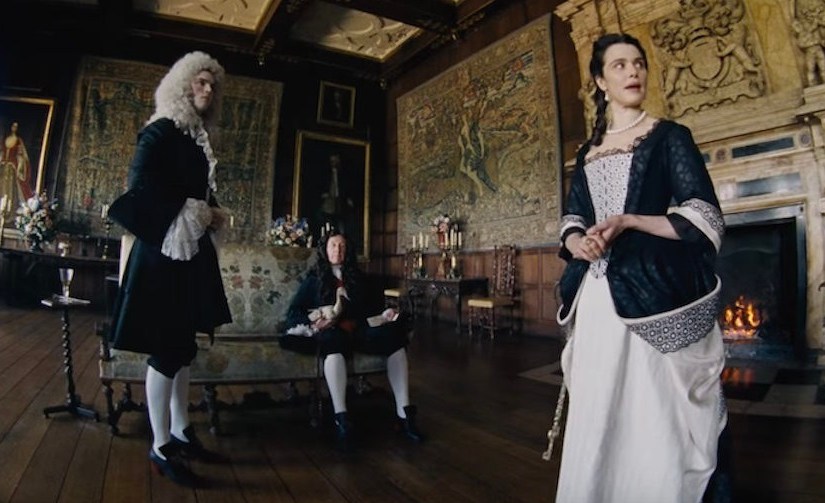
And let’s talk about that camerawork.  I’ve never seen one of this director Yorgos Lanthimos’s films before, but if they share the same visual inventiveness as THIS movie, I am going to seek them out.  The list of directors working today with visual styles unique to them is relatively short, so to find this fresh take on moving pictures was a delightful surprise.  There are a couple of places where extremely-wide-angle “fish-eye” lenses are used, distorting the picture on the edges so it looks like you’re looking at the scene through the bottom of a Coke bottle.  I found that particular device odd, calling attention to itself, but it worked.  It sort of created this idea that we’re looking at a staged performance rather than attempting to mimic or capture strict reality, which makes some of the behavior of the main characters more palatable than they might be in another film.

There are one or two moments that are so over the top, they might have derailed another film.  At one point, two characters dance during a formal party, as the Queen looks on.  It starts out daintily enough, like you’ve seen in countless other 18th-century films, the mincing steps back and forth, a little bow here, a curtsy there.  Then, as the music continues…something happens.  The man lifts the woman and swings her around on his hips like a swing dance.  They start to move their hands like in the “Vogue” video.  At one point, I’d swear the man started a rudimentary breakdancing move.  What’s going on here?  Why is this jarringly anachronistic dance intruding on the proceedings?

My first reaction while watching the movie was to just laugh in disbelief, while asking, “What IS this?”  Looking back on it now, I’d guess the purpose was to put ourselves into the mind of the Queen, whose perception of the dance starts to degrade the angrier she gets.  Regardless of its true purpose, it’s thoroughly weird but hilarious.

(Also, the screenplay contains some of the greatest zingers I’ve heard in a very long time, although I doubt some of them are historically accurate.  Not that I’m a historian, of course, but I remain unconvinced that British royals in the 1700s ever used the term “vajoojoo.”)

I’ll be honest, I was not previously aware of the actress Olivia Colman, who portrays the fragile, temperamental Queen Anne, before this movie, but I’ll be looking out for her from now on.  She more than holds her own with two Oscar winners (Emma Stone and Rachel Weisz).  Colman’s Queen Anne is a spoiled brat whose petulance is tolerated because, you know, she’s the Queen.  I loved a moment when she walks past an unsuspecting footman and yells at him, “Look at me!  Look at me!!!”  He turns and looks, and she immediately yells: “HOW DARE YOU LOOK AT ME!!!”  Right there, early on, her character is indelibly defined.

The depths to which all three women sink to exact their own particular brands of revenge upon each other will astonish you.  While the ending is not the one I quite hoped for, it’s extremely satisfying in a “be careful what you wish for” kind of way.  This movie was a delicious romp, and is definitely worth your time.

THE FAVORITE

By Marc S. Sanders

Director Yorgos Lanthimos’ The Favorite. Wow! This is a weird one.

This film focuses on a competition of one-upmanship between two ladies, one a servant named Abigail (Emma Stone); the other a close friend, Lady Sarah (Rachel Weisz) of Queen Anne during 18th Century England. As Queen Anne is frail physically, and often mentally (she insists on keeping 30 rabbits running loose in her bed chamber), Abigail capitalizes on opportunity to win the admiration of the Queen over Lady Sarah, a cruel woman in her own right. The humor is more shocking than overt or witty.

It becomes laughable to witness the shenanigans of the highest of aristocrats from mud baths to duck shooting to naked fruit tossing at one another. Sometimes, you ask why? Then again, it is probably because a lower class, say the majority of the free world, would like to stick it to the upper class and show them as the fools that they are or that we wish them to be. A royal vase is always nearby if a lady feels the need to vomit; not a bucket, a vase.

Olivia Colman is very good as the Queen, seemingly incapable of making decisions and being subtly overruled by the influence that her friend Lady Sarah carries. If the Queen really wants to reduce the taxes imposed to prolong a war with France, Lady Sarah will make certain that just the opposite is done. The Queen will unsurely oblige and back up the message that Sarah makes to the Cabinet. Sarah has no reluctance in abusing and humiliating the servants, the men in the Cabinet or anyone else, including the Queen. She will happily admonish the Queen by criticizing her makeup just as she is to meet with a Russian diplomat, thereby allowing herself to run the meeting while the Queen retreats to her chambers.

Abigail has come from wealth but due to hard times, has become recruited to be a servant destined to take care of menial tasks or be humiliated by being forced to watch an English officer pleasure himself, falling into “mud that stinks,” or taking cruel showers with a rough sponge. An opportunity arises however, when she discovers a natural way to bring relief to the Queen’s frail legs. Soon, Abigail is becoming intimate with the Queen much to the dismay of Sarah and now the cruel games of back and forth begin.

No one is really likable here. It’s a competition in royal politics, and politicians of any nature in any setting are never entirely liked. To hold stature, requires ego. Ego, however, is not a strong enough word for how these three ladies treat each other. The frail Queen is just as guilty. If she feels slighted, she will disregard those that have won her over in prior moments, particularly to her first friend Sarah and later to Abigail. When Sarah goes missing, the Queen declares she better be dead when she eventually begins to worry. If she’s not dead, the Queen will surely slit her throat. Abigail wins the Queen’s affections but will ultimately be used cruelly as well.

Eventually, all of this back and forth has to end of course, and Lanthimos along with screenwriters Deborah Davis and Tony McNamara bring in a sneaky last “stick it to ya” moment.

I’d never seen a film by Yorgos Lanthimos before. I’d heard good things about his other film The Lobster, though. Here, he’s got a camera angle I rarely see in films. There are times when a wide shot of a room, like the Queen’s chambers or outskirts of the palace are shot through the bottom of a glass, where the edges of the caption are curved outward, almost like looking at the film through a view finder or a telescope. Not sure why he opted for this technique. Perhaps it was to up the ante on the strange environment of it all; to offer a discomforting feeling towards watching this community of Establishment behave behind closed doors.

Rachel Weisz and Emma Stone are also very good. A film like this could have played like a bad day time soap opera cat fight. Yet, when you have Academy Award winning actresses like Weisz (The Constant Gardner) and Stone (La La Land), you are watching a period piece that will stand out albeit very strangely.

Yes. Once again, The Favorite is a very strange film. A good film and a weird film that takes some patience and getting used to. Four people walked out of the theatre I was in, but there was still plenty of laughter from the crowd. The best of the year, like most critics claim? Maybe not. Then again, most of the critics’ common choices for best of the year is indicative that 2018 really was not a great year as a whole for movies. I’d argue prior years have offered a better collection of films to treasure, admire, award and salute. In another year, The Favorite would be trumped by many other candidates.