
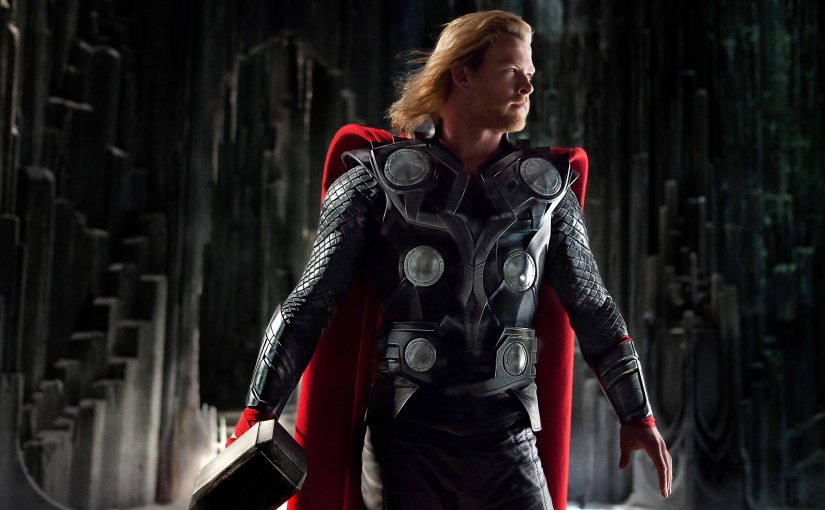
THOR

By Marc S. Sanders

Chris Hemsworth is the God of Thunder who must learn to grow up if he is to inherit the throne over the land of Asgard from his father Odin (a welcome Anthony Hopkins), and more importantly become worthy of lifting his mighty hammer. Hemsworth is great; full of cocksure assuredness, humor and heroics. Chris Hemsworth makes you believe he’s the only guy who could play Thor.

Thor’s adversary is the God of Mischief, Loki played by one of Marvel’s best actors, Tom Hiddleston. This is a guy who plays so many different levels. If one didn’t know the story of Thor and Loki, I’d argue they might be shocked at some of the turn of events Hiddleston masterfully orchestrates with simple facial expressions and passiveness that progressively switch over to madness, obsession, jealousy, envy and deceit. Hiddleston effectively spins all the plates perfectly.

Natalie Portman plays the love interest carrying the torch of least significance that Liv Tyler and Gwenyth Paltrow held in prior Marvel films. That’s a pattern the Marvel films will begin to improve upon with the next film in line.

Director Kenneth Branagh is the right guy for this movie. Inspired Shakespearean settings and dialogue overlap with modern day America. Branagh brings a nice balance to it, and he also directs his actors well. A great exchange of dialogue and performance occurs midway through between Hiddleston and Hemsworth. Branagh gets good close ups of both actors as the conniving villain manipulates the naive hero. The camera angles move at a slant almost evoking a necessary confusion between what is true and what is a lie. Moments like this allow Thor to be more than just an action film. There are nice opportunities for acting as well, and because of that Hiddleston especially has become quite treasured among loyal fans.

Compliments must also go towards the setting of Asgard. I normally frown on immersive CGI normally. Not here though. Asgard is as regal as anything Peter Jackson offered in his Tolkien films, complete with a striking rainbow bridge and towering structures. I want to tour through that whole land. It’s that spectacular. Characters also work well with the CGI, especially the fire breathing, metallic Destroyer.

Thor is a great introduction to the legendary comics character. The film offers a character arc of change much like what was captured with Tony Stark in the first Iron Man. The character must grow and learn about his identity over the course of the film in order to have legs for future installments. This film accomplishes that feat, and thus Chris Hemsworth has become a box office draw while his most popular character to date has become a screen favorite.

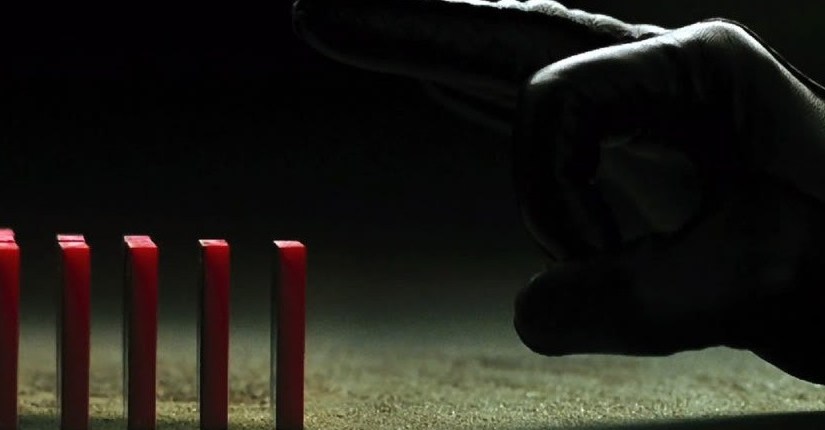
ANNIHILATION

By Marc S. Sanders

Science Fiction/Horror for the thinking viewer is the best way to describe this film.

Director Alex Garland has found a way to make a viewer’s eyes pop, not just with fear but with the unimaginable. This is as good an effort or better than his other well known film, Ex Machina. I foresee it will not be long before Garland is recognized among the ranks of today’s most notable and popular directors like Del Toro and Nolan.

This is not a run of the mill monster movie. This is fictionalized science that seems foreign and strange, yet makes complete sense by the time the credits roll. All questions are thankfully summed up despite a hanging thread or two to relish in deep thought long after the film has ended.

Natalie Portman strongly leads a nearly all female cast to uncover the purpose and functionality of “The Shimmer.” She does so, but at what expense? She’s great and believable in her role with lots of dimension by way of her career as a Johns Hopkins professor/former army infantry soldier and through periodic dreams of sin she feels guilty over.

Jennifer Jason Leigh does her best no nonsense disturbing creep. Gina Rodriguez makes good transitions in levels of sanity.

Like Black Panther, I’d argue this is also a front runner for art direction as an encapsulated swamp is overrun with strange pastel plant life, mixed up animal life and cinematic lens flare. Yes, here the lens flares serve a narrative purpose which is why the cinematography should also be given some recognition.

I’m looking forward to seeing this again to uncover what I missed the first time.

Annihilation turned out to be one of the biggest surprises of 2018.

V FOR VENDETTA (2005)

By Miguel E. Rodriguez

Director: James McTeigue
Cast: Natalie Portman, Hugo Weaving, Stephen Rea, John Hurt
My Rating: 7/10
Rotten Tomatometer: 73%

PLOT: In a dystopian future Britain, a shadowy freedom fighter, known only as “V” (Weaving), plots to overthrow the totalitarian government with the help of a young woman (Portman).


V for Vendetta is based on the single greatest graphic novel I’ve ever read, bar none.  It breaks free of the narrow term “comic book” and becomes a leaping, soaring work of fiction that should be on every serious reader’s Must-Read list.  When I heard a movie version was coming, and that it was being produced by the visionary minds behind the Matrix trilogy, reader, I will not lie…I flipped out a little.  At last, the mass market would have a chance to see what I’d been talking about all these years.

To say the movie does not exactly match up to the graphic novel seems a little unfair.  After all, I’m a chief proponent of the notion that movie adaptations of books, TV shows, et. al., deserve the chance to stand apart from their source materials.  On those merits alone, V for Vendetta works, albeit a little unevenly.

Hugo Weaving was a great choice for the title role of a masked revolutionary whose face is never fully seen, whose voice and gestures alone must carry the character for the duration of the film.  At first, one is reminded of Willem Dafoe playing the Green Goblin in the first Sam Raimi Spider-Man film.  It’s unsettling, but it works better here, due to the ambiguous nature of the mask itself, which is the traditional Guy Fawkes mask.  It’s a smiling visage, but the light-hearted nature of the face presented to the public makes it infinitely more creepy and untrustworthy.

The central story of the movie works well enough.  It’s a trope that I, for one, have always thoroughly enjoyed: the story of a man, or of people, rebelling against the dystopian forces governing their lives.  There are echoes of countless other films in this story: Equilibrium, 1984, The Matrix, Gladiator, etcetera.  In fact, although it’s set in Britain, I’d go as far as saying it’s a distinctly American story, given the history of our country’s origins.  It’s always deeply gratifying to see corrupt powers-that-be get their comeuppance by the final reel.

My reservations with the movie lie primarily with certain long stretches of expository dialogue providing vital information, particularly with the chief inspector, Finch (played by Stephen Rea), re-telling a gruesome episode involving the deaths of tens of thousands of children due to disease, and of their government’s possible role in the epidemic.  While the information is needed as backdrop for what comes later, it brings the movie to a screeching halt.  And it happens more than once.  This is the movie’s greatest flaw: the need for tons of information that is more easily conveyed in the written word than it is on film.

However, for the viewer that is not deterred by these long stretches, the movie is immensely satisfying.  It sets up a loathsome Supreme Chancellor (played with spittle-spraying gusto by John Hurt) whose primary message to his cabinet is to instill fear in the people, to “remind them why they NEED US!”  The various action scenes are expertly done, reminding me of the best fight scenes from the Bourne movies, with a little extra flair provided by V’s weapons of choice, lethal throwing knives.  And the finale is suitably spectacular…make sure your volume is turned up to eleven.

The movie contains one speech that is NOT in the graphic novel, and which troubled me greatly the first time I heard it, and is still problematic for me today.  At the opening of the film, “V” has blown up a building in London as a sign of protest, which of course parallels the face of the mask he has chosen.  Evey, a young woman who has come into his care (long story), questions him about his future plans to blow up the Parliament building:

V: “People should not be afraid of their governments.  Governments should be afraid of their people.”
EVEY: “And you’ll make that happen by blowing up a building?”
V: “The building is a symbol, as is the act of destroying it.  Symbols are given power by people.  Alone, a symbol is meaningless, but with enough people…blowing up a building can change the world.”

This was startling to hear four short years after 9/11.  Other movies had already referenced it as a historical event, but this was approaching the act itself in a deeper sense.  Here is the hero of our story talking casually, even heroically, about doing exactly what the terrorists of 9/11 were hoping to do.  In the context of the movie, he makes sense: the totalitarian villains must be sent a message that the people will be sheep no longer.  But…I couldn’t help thinking that this is the philosophy that drove Timothy McVeigh, and the 9/11 perpetrators, and the Weathermen, and Ted Kaczynski, and countless others.  Is it possible to look at this idea of “symbol-killing” in a positive light?  In this day and age, do we even WANT to find a positive spin to the idea of blowing up a building as a symbolic act?

As I said, for me it was problematic, and it cast a faint shadow over everything that came after it.  Yes, “V” is definitely the hero here, but is this line of thinking dangerous?  I dunno.  Perhaps I’m overthinking it, but there you go.