INTERVIEW WITH THE VAMPIRE: THE VAMPIRE CHRONICLES

By Marc S. Sanders

Fantasy of the supernatural or science fiction work best when the writer can teach the reader or the viewer how its foreign worlds work and how the characters who occupy the environments function and live.  Anne Rice had her own interpretation about how creatures of the afterlife live by night.  Her vampires possessed theatricalities.  Some were charming and sophisticated, and relished how they lived immortally while satisfying a hunger for the blood of living humans.  Some struggled with the discomfort that comes from being a remorseful bloodsucker.  The first of Anne Rice’s series of vampire novels, Interview With The Vampire, runs a very wide gamut of perceptions.  By the end of the film adaptation, directed by Neil Jordan, I’ve earned quite an education.  (Frankly, Rice’s novel was tediously slow moving and bored me to tears.)

In present day San Francisco, a young man (Christian Slater) sets up his tape deck to record a conversation with a soft spoken pale faced man in a dark suit with a neat ponytail in place.  This mysterious person is Louis, played by Brad Pitt.  His story begins two hundred years earlier, in New Orleans, back to the day when he was incepted into an immortal life as a vampire. His agent of delivery is the devil-may- care and mischievous Lestat, one of Tom Cruise’s most surprising and unusual portrayals.  He gives a brilliant performance that’s as far a cry from his lawyer roles or his Maverick and Ethan Hunt heroes as possible.  

Lestat is eager to guide Louis into the benefits of vampire life.  Louis, having already been depressed following the loss of his wife and daughter during childbirth, cannot grow comfortable with Lestat’s insatiable appetite to feast on aristocratic figures or plantation slave servants.  This is not a match made in heaven and their chemistry as a couple is tested. Louis would rather miserably feast on chickens and rats, while Lestat grows frustrated by unsuccessfully swaying his partner to taste the sweet nectar of blood dripping from the wrist of a lovely young lass.  Lestat turns towards a grander extreme to maintain his embrace of the morose Louis.

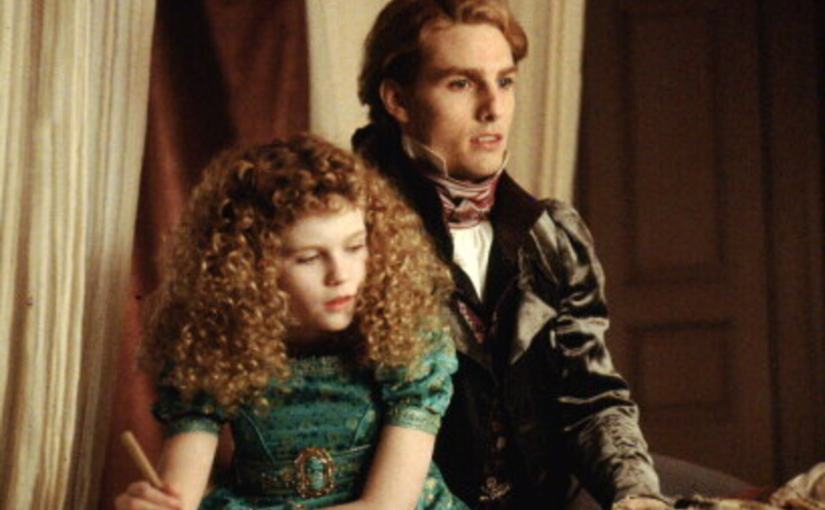
Through deception, the men welcome an eleven-year-old “daughter” into their underworld.  Her name is Claudia, played Kirsten Dunst in her introductory role.  I still believe this is her best performance, worthy of an Oscar.  The life of a vampire is delightful to the child, the same as Lestat perceives it.  However, as the decades move on, with changes in fashions and industry quickly developing, so does Claudia’s understanding.  Her body never matures, destined to always remain within the shell of a preteen child, and thus she commiserates with Louis.

It appears like I’ve summarized Anne Rice’s entire story, but I have not even come close.  Interview With The Vampire is to gothic horror the same way The Godfather is to mafia gangster life.  Both communities victimize people of an innocent world, but their members are expected to follow codes of decorum and respect.  The conflict lies in living as a bloodsucking vampire or a criminal gangster.  When a peer interferes or does not cooperate, then the individuals of these respected worlds become violent unto each other.    The viewer/reader observe how their patterns of behavior all play out and how one action or policy generates one response after another.  These films are high ranked authorities on their subject matters.

Louis explains to his interviewer how Bram Stoker’s celebration of vampires is dreamed up escapist fiction, though coffins and the avoidance of sunlight are absolute necessities to carry on.  Just like any person, vampires want to live happily, but life gets in the way and that can be frustrating on any number of different levels.  

Neil Jordan’s film is a marvelous exploration into the mindset of being a vampire.  Tom Cruise perfectly exudes Lestat as a vampire ready to joyously live with sin while he savors and lives a life of eroticism and material wealth.  A child like Claudia sees the attraction of being spoiled and spoiling herself, and she cannot get enough consumption of blood. Eventually though, her mentality outgrows what becomes redundantly mundane.  Louis is relatable like many people.  He is unhappy living the life he was born into.  Lestat grows aggravated with his family’s resistance to partake of what he relishes.  There is an extensive range of emotions on display with Interview With A Vampire. To be a vampire can be a privilege or a curse. It all depends on who you interview.

The look of this film is astonishing.  I know it was shot within New Orleans, Paris and San Francisco locations.  However, I can easily recognize some sound stage locales, and I have no complaints.  The art designs from Dante Ferretti are thoughtfully crafted with lantern lit, rain-soaked cobblestone streets of the seventeenth century to mucky, moonlit swamps.  Horse drawn carriages transporting abundances of coffins serve a purpose of humor and narrative as character misdeeds are routinely committed by Louis, Claudia and especially the trickster Lestat.  The furnishings of the aristocracy are embracing too.  It’s a remarkably convincing step back in time.  

The periodic costume wear by Sandy Powell completes the settings with colorful, silk garments, white ruffled shirt sleeves and buckled shoes for both the men and women as well as for Kirsten Dunst and some cherub cheeked children who come into play.  Everything looks so rich. The whole picture feels like stepping into one of those late-night ghost walking tours I’ve taken in small southern towns like Savannah and St Augustine.  Every scene, even when the film jumps to late twentieth century, is immersive.  

Anne Rice’s screenplay adaptation tells so much within two hours.  She allows time for the characters to sail to Europe seeking out others like them.  The second half of the film teaches us more about what it means to uphold oneself as a vampire.  

Neil Jordan sometimes delivers his film like a how-to documentary because you are consistently learning new details, not so much about plot but about a people you are not as familiar with. Often, the film segues into theatrical play as you might expect from Phantom Of The Opera.  It’s no wonder since eventually Anne Rice puts us in touch with the cabal known as Theatres des Vampires. Stephen Rea and Antonio Banderas get to take center stage within a literal theater where the facade of behaving like a vampire can be executed beyond the suspicions of a – ahem- live audience.  

Rice and Jordan get playful while also performing with horrific familiarity.  The bites on the neck are known to many of us for drinking blood.  Did you also realize that a vampire can drink from a crystal wine glass? There’s an elegance to how the actors’ characters consume the blood of humans.  Cruise and Pitt begin by going in for a passionate kiss, either on the neck or the weightless wrist of a victim.  Lestat is more aggressive. Louis caresses his meals on the rare occasion he dines. Claudia gives a puppy love bite. Cruise especially finds new and titillating ways to dine with each new feast.  Both actors are deliciously homoerotic, but on different parental planes with their child. Their love/hate relationship operates like Shakespearean stage work. That’s why I really take to Neil Jordan and Dante Ferretti’s choice of soundstages.  

I’ve become so bored with zombies and vampires.  How many iterations must be churned out of the same kind of monster.  This year’s horror hit, Sinners, was superb until it stopped being eye opening with surprise.  It eventually became the same old thing and offered nothing new to show me in its final blood-shedding act.  

Interview With The Vampire is one of the best vampire films though.  The film never ceases to speak directly to its audience.  The settings describe how life is lived.  The characters grapple with both internal and external struggles.  

It’s one shortcoming is that Anne Rice, Neil Jordan and cast/crew did not follow up with the author’s subsequent tales.  The subtitle, The Vampire Chronicles, seemed to promise an extension of this universe. I know of other Anne Rice film adaptations that chose not to continue on from what was done here, and the execution was terribly poor and disappointing.  There’s a biographical intelligence to Neil Jordan’s film that many films of all genres lack.

Anne Rice’s first film adaptation set the standard on vampire culture, and I have trouble thinking of anything since its release that closely matches it.  

Interview With The Vampire is the only one with a blood curdling bite.
CIVIL WAR

By Marc S. Sanders

On the drive home, my wife and I left saying that we could not recall this country existing on a such a divisive plane within our lifetimes as it is currently.  Maybe we were not paying enough attention as we were growing up.  With that in mind however, it’s not unreasonable to see a possible future coming to life from Alex Garland’s Civil War.  What’s clear is the vitriol displayed in Garland’s film is not surprising.

Civil War is an observational piece as it is told through eyes of photojournalists who function with no stake in the conflict.  Lee (Kirsten Dunst) has become a legendary war photographer.  Along with Joel (Wagner Moura), who’s a reporter, they intend to journey through the Northeastern battlegrounds from New York City to Washington D.C.  As they believe, the seceded states of California and Texas are close to overthrowing the government, they are determined to interview and photograph the President (Nick Offerman) before he’s taken prisoner or more likely, assassinated.  An old-time New York Times journalist named Sammy (Stephen McKinley Henderson) and Jessie (Cailee Spaney), a young photographer who idolizes Lee, tag along.  To do this trip is a crazy undertaking, but Lee and Joel know what importance their purpose serves and the fact that they have press passes should uphold their survival amidst violence and chaos. 

My wife asked which side does writer/director Alex Garland lean towards politically and I said I do not know as he’s primarily known for science fiction movies (Ex Machina, Annihilation).  Garland likely wants his political leanings to remain unknown as it upholds what Civil War deliberately steers its focus away from.  We never learn what policies each side of this war stands for or what instigated it.  In fact, it is quite intentional of Garland to make what are arguably the bluest and reddest states in the United States the united seceders who lead one side of this bloody chess board. 

This fictionalized war is well established when the picture opens.  The President attempts to deliver a speech that is clearly uncertain despite the staple resilient vocabulary he includes.  Nevertheless, buildings on fire randomly appear, looters are bloodied pulps who are strung up by random factions, downed helicopters are the carnage occupying a parking lot in front of a JC Penney.  Nothing that anyone says, much less the President of the United States are going to sway this country into a state of comfort.  That time has passed.

The production value of Civil War is astonishing.  Sometimes it looks just like photographic accounts of what we see on the evening news coverage from the Middle East.  Garland also never forgets that his main characters are photographers as he captures in freeze frame people being randomly shot or beaten or simply screaming at one another.  The film abruptly turns off the sound and a black and white photograph interrupts the chaos for you to catch a freeze frame glimpse.  The editing lends to the character designs of the story’s four main players.  I did question, however, why video footage was not also taken beyond just photographs.  Cell phones are not used or mentioned in this picture.  The inconvenience of Wi Fi on a laptop is however. 

The sound design of the film is spectacular and reminiscent of how powerful it served in the Oscar winning film The Zone Of Interest.  As the characters set up camp for the night, rapid pop pop pops are heard in the distance.  On multiple occasions, Garland gets you right in the middle of the various firefights that occur in and around office buildings or what were once shopping districts.  The machine gun fire and rubble blasts are all around you.  The cinematography is also quite eye opening.  I like to think of areas like Virginia and the Carolinas as beautiful American spots during the summertime, and that is when these events unfold. Yet, to see how ugly it is amidst endless debris and bloodshed is an awful, still convincing effect.

My Cinemaniac pal Thomas made a good point about Garland’s approach.  Out of nowhere a needle drop of songs will intrude on the picture and often I found them to be overly distracting and definitely unnecessary.  One such number is a hip hop tune with samples from an 80s tune (I can’t remember which one now) that plays over a gunfire scene.  Regrettably, it takes me a little out of the picture.  Thomas is entirely correct in this area. This technique is not effective as when Oliver Stone or Francis Ford Coppola included The Doors in their set pieces. 

Kirsten Dunst is quite good in her role.  Lee knows where to point her camera, and Dunst lives up to the legendary status that her character is supposed to have.  You can feel the exhaustion that teeters on her mental stability, especially as the story reaches its third act.  Lee has been doing this for far too long and the horrors are a part of her now.  Her trauma can never be erased or covered.  Cailey Spaeny is the standout performer though as Jessie, the young girl who is eager to reach the levels of her idol.  Lee wishes Jessie would just not tag along.  Alex Garland writes good characters, but they are not what stayed with me following the conclusion of the film.  What upholds Civil War is the depiction of this all too convincing reality. 

I write this article the morning after Iran delivered missiles and drones in the direction of Israel and with every article I’ve read, I ask myself again and again what is the purpose.  These efforts are not done for strategic overthrow.  Rather, actions are executed with hate and revenge and the only ones who are paying for it are those that are not arguing; those that are just trying to raise families and live in peace.  Alex Garland might know what finally began his fictionalized American civil war, but none of that matters any longer.  It’s what the pawns do to one another in place to place to place.

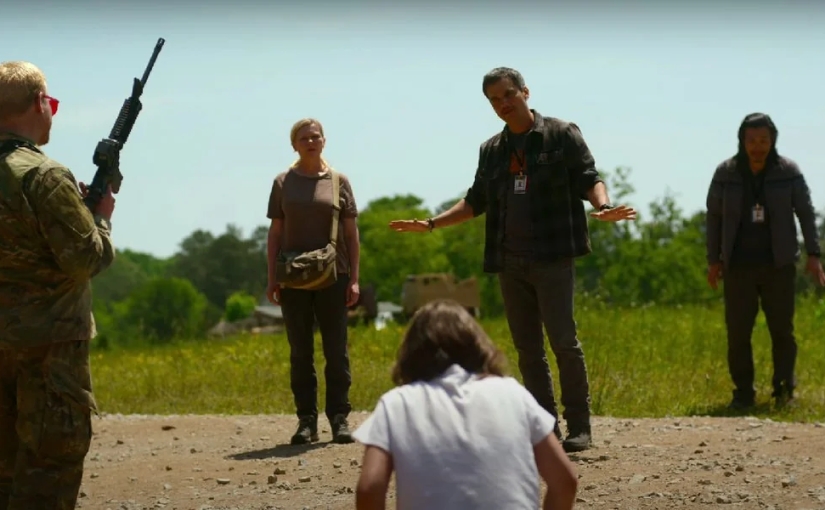
The fighters and individuals you meet in his film all move with their own ulterior motive.  A chilling scene includes Jesse Plemons (Dunst’s real-life husband) dressed in camouflage fatigues who does not even have a statement or a cause to deliver.  His minimal dialogue is nowhere near as expressive as the vast graveyard of Americans he’s sprinkling with lye and burying. When the press team comes upon him, nothing they say matters or motivates him to lower his machine gun.

Fighting, fighting, fighting.  That’s all you see in Civil War.  You don’t even know the position that the President holds, or even what his name is.  You never learn what party he represents either.  I salute Alex Garland for not leaning one way or another.  It is the divide that is tearing our country, our world, apart and not what we stand for. 

Sadly, some commentators on social media have already devised in their own minds that Civil War is a “woke film” (whatever the fuck that means) simply because of the pink (HOT PINK!!!!!) sunglasses that Plemons’ sadistic character wears.  Reader do not listen to the voices in your head.  There is no political agenda to this film.  Rather, Civil War shows us what occurs when political agendas have been entirely deafened by gunfire.

THE POWER OF THE DOG

By Marc S. Sanders

Don’t blame Jane Campion.  Blame me. 

The ending to The Power Of The Dog feels ambiguous, but writer and director Campion invites you to think and ponder.  It also helps that I have a good friend who shed some light on how the film actually wrapped up.  I’m grateful because I appreciated the picture even more.  Ironically, my friend didn’t care for the movie.

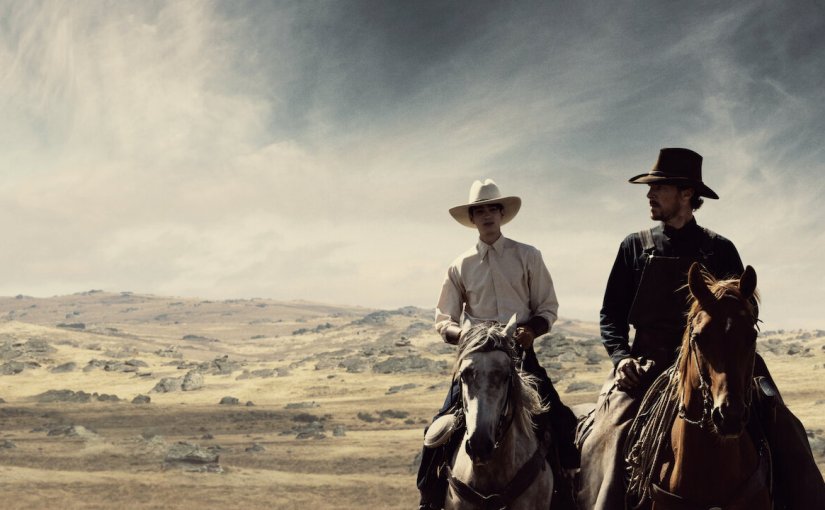
Technically, Jane Campion directs an absolutely breathtaking film with majestic cinematography and art design of open Montana fields taking place in 1926.  Tech work can only take me so far though, and I appreciated the four different perspectives of the headlining cast that includes Benedict Cumberbatch, Jesse Plemons, Kirsten Dunst and Kodi Smit-McPhee. 

Cumberbatch is Phil, a cowboy relic of the Old West.  He’s an expert horseman donned with spurs on his boots, and leather padding on the jeans along with the worn in staple cowboy hat.  He also has a fearful and intimidating temper.  Maybe that’s because his era is soon to be passed by and he’s not designed or updated for anything else.  Plemons is George. Phil’s subdued, business wise brother who knows his way around their Montana ranch, and more importantly knows how to build connections that’ll provide fiscal and political support, while he drives his Ford buggy to get from one place to the next.  Dunst is Rose, the artist of appetizing delicacies and designs who marries George.  She manages the kitchen of her restaurant and can play piano; not exceptionally well but her love for the instrument is what matters.  Her son is Peter, played by Smit-McPhee, a lanky and weak, yet book smart, young adult with his focus on the science of medicine.  He aspires to be surgeon.  So, as the 20th century is now over a quarter complete, these four individuals represent what once was, what is now, what is trending and what will become.

Campion sprinkles her film in more atmosphere than telling dialogue.  The gist of the story is how Phil’s tormenting presence scares both Rose and Peter.  A hair-raising scene occurs midway while Rose attempts to play a song on the piano, only to be drowned out by Phil’s cruel banjo interpretation from the top of the staircase.  Cumberbatch is really scary here as the bear teasing the cub to poke him.  Rose tries again and again to play only to be further interrupted by Phil.  A banjo is an instrument of a bygone era, the Old West.   The piano is the more sophisticated and elegant device to use now within the decorated designs of a reading room.

The future is also upon the characters.  Young Peter purchases a pair of sneakers to wear; not exactly the most appropriate for a horse ranch, nor are his suppressed homosexual yearnings.  Still, the future carries forth as he studies the latest in medicine and surgical practices, whether it is through dissection of a rabbit or studying the most up to date medical journals.

George is the symbol of transition.  He was raised like his brother Phil to be a rancher, but he knows that time has passed.  Currency, technology and longevity are necessary and it is not wise to remain stagnant in a time gone by.  It’s practical to develop connections with the Governor of the state, to drive himself and Rose in a car as opposed to by horseback.  To carry on the family name, it is also prudent he marries and builds a new generation.

I appreciated the subtle visuals and behaviors that Campion weaves into her adaptation from the novel by Thomas Savage.  Over the course of two hours, I was always learning something new, whether it be about the characters or the period setting.  Most telling is the fact that the past can not live in an updated future such as Phil with his suprising and deeply inhibited attraction to Peter.  As well, the future is not going to adjust well to the past like when Peter is trying to learn horse and ranch handling from a teasingly cruel Phil while wearing a ridiculous cowboy hat, white sneakers, and factory tailored jeans.  Furthermore, even if you’re only a frequent movie watcher, you likely are aware that Westerns would pit cowboys against Indians.  Rose demonstrates with her talents for craft how Native Americans are appreciated in this still young new century.  Phil and his ranchers would never imagine such relations to ever exist.

Our history is not comfortable with our eventual future, and our future can not fathom how we ever lived within our past.

Because these two worlds can never mesh in accordance with each other, a loss will have to be committed.  In another storyteller’s hands, The Power Of The Dog, might have resulted in a gun shot, or a stabbing or an illness to eliminate what cannot survive.  As well, long speeches of dialogue would spell out what must cease to continue and what must continue to flourish and go on.  With Campion’s lens, and with Savage’s work, it works atmospherically, however.  The environment of the Montana landscape along with life on a transitioning horse and cattle ranch serve the conflicting time passages and the characters who are relegated to a past, or a present, or a future. 

Don’t watch The Power Of The Dog with expectations of simplicity or quotable dialogue.  I value Campion’s approach to not spoon feed me.  Rather, take in the visuals of the four main characters’ behaviors.  Allow yourself to become more observant of the nature of how things end up.  Powerfully speaking, Jane Campion shows that some people will work well together, while others will crave to blend effectively, and sadly some can never live within another environment or time period, much less someone else’s.

The Power Of The Dog offers a thought-provoking message of loss and reflection while gazing into what’s just beyond.  It’s a very well-made film.

MIDNIGHT SPECIAL (2016)

by Miguel E. Rodriguez

Director: Jeff Nichols
Cast: Michael Shannon, Joel Edgerton, Kirsten Dunst, Adam Driver, Sam Shepard
My Rating: 10/10
Rotten Tomatometer: 83% Certified Fresh

PLOT: Two men go on the run with a child in tow, pursued by federal agents and by members of a cult who believe the child has special powers.


The general concept of “mystery” in a film is a subtle art.  Not enough mystery, and people will say they’ve seen it all before.  Too much mystery, and people will wonder why they’ve spent good money to be confused for two hours.

Every now and then, though, a movie comes along that shows everyone else how it’s done.  It manages to plunge the viewer headlong into the story with little to no exposition, provides just enough clues to keep things intriguing without giving the game away, and supplies a climax that is not just satisfying, but revelatory.  Prometheus is one of those movies.  So is Freaks (2018).

And so is Midnight Special, from director and screenwriter Jeff Nichols (Take Shelter, Mud).

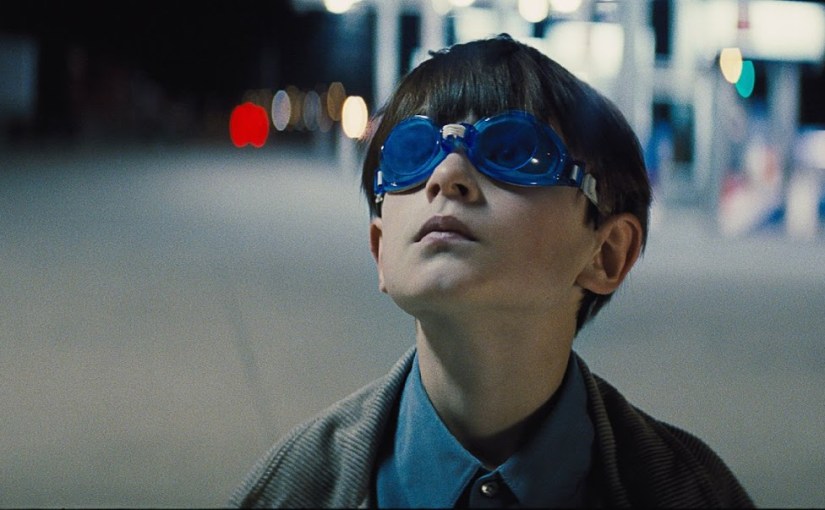
This movie grabs you right from the opening minutes.  Two men appear to be holed up in a hotel room with a young boy wearing blue swim goggles.  Cardboard and duct tape cover the windows.  A news broadcast on the TV reports on the young boy’s kidnapping.  However, he does not appear to be distressed in any way.  One of the men may or may not be his father.  He goes willingly when they vacate the room and hit the road.

In another part of the country, a pastor watches the same newscast with concern.  He later leads a church service, but the scripture reading consists of non-sequiturs and random numbers.  The FBI interrupts the service and hauls each and every church member in for questioning about the missing boy.

What the deuce is going on here?  How is this church connected to the boy?  Where are the two men taking the boy?  What’s with the blue goggles?  What is so important about this boy that the two men with him would be willing to kill for him?

These are all very good questions.  Whenever the movie takes the time to answer one of the questions, two more spring up in its place.  And I may as well tell you now: not every question will get an answer.  But instead of feeling frustrated, I just got more and more involved in the film.  I felt like I was an active participant in figuring out the story, along with the characters.  There’s nothing quite like feeling involved in a movie, rather than simply watching a movie.

When the revelations arrive about where the men are headed with the boy, why they’re headed there, and why the FBI is interested, I’m not gonna lie, I was gobsmacked.  In retrospect, I suppose I should have seen some of the plot points coming a mile away.  But that’s the beauty of the screenplay and the direction.  I wasn’t interested in trying to second guess what surprises were in store.  As a result, when the surprises arrived, I was constantly in a state of jaw-dropping amazement.

I would also like to point out the great restraint used by the filmmakers when it came to the few scenes that required CGI enhancement.  There are a hundred ways these scenes could have gone wrong, resulting in a shot that completely takes you out of the movie.  They avoided all those pitfalls and instead created scenes of startling beauty, even when things seem to be going wrong…or when they at last go right.

This is a movie that deserves to be seen with as clean a slate as possible.  It didn’t exactly make a dent in the pop-culture zeitgeist, so it’s not likely you’ll see any spoilers on the internet without Googling the movie, but why would you want to do that?  Keep an open mind, don’t ask how it ends, and find a way to see this movie.  You won’t be disappointed.