
DR. NO

By Marc S. Sanders

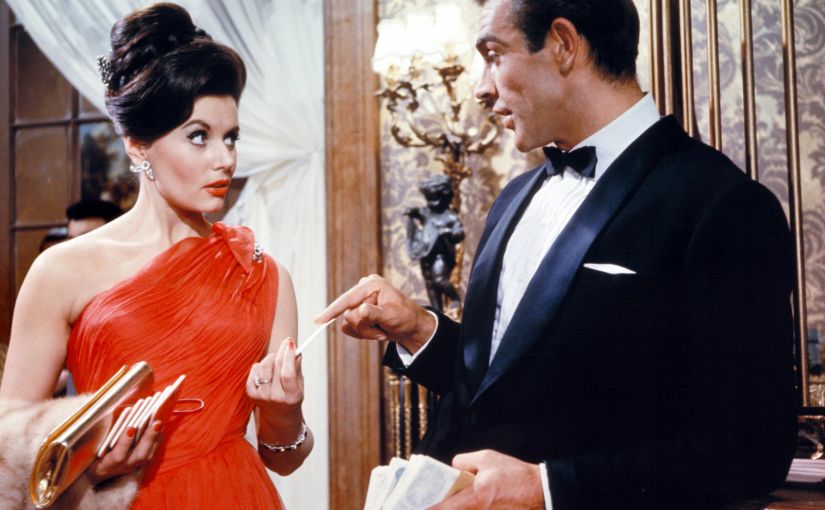
Sean Connery introduced the iconic James Bond, Agent 007, with a license to kill the way he should be (sorry Woody Allen); handsome, highly intelligent and perceptive, quick with fighting techniques and even faster with a beautiful woman.

However, one hero who gets overlooked is director Terence Young who must receive credit for changing the movie landscape. In 1962, sets like Dr. No’s Crab Key fortress were not often conceived in movies. Dr. No is a mysterious villain with limitless resources who serves a Dom Perignon ‘55 while revealing his sinister intent to Mr. Bond. To make him even more unnerving he is bestowed with a handicap of black steel hands to intimidate the hero. This is a scary villain.

Terence Young deserves much credit for a lot of this imagery. It would change how we see action/ adventure films for the latter half of the 20th century and thereafter. Bond’s first cinematic mission set a standard in adventure formula. Set up the threat or mystery, assign the hero to the job, cross him with an ally or two, give him a damsel in distress, interfere him with one bad guy after another. Indiana Jones, Luke Skywalker, Riggs & Murtaugh, Batman and even The Goonies follow this path time and again.

Dr. No doesn’t look so sophisticated a film these days in its cinematography and effects (a car chase consists of going around the same curve 3 times), but it’s storytelling still holds up and even managed to get my 10 year old daughter interested. That’s proof of its staying power.
GOLDFINGER

By Marc S. Sanders

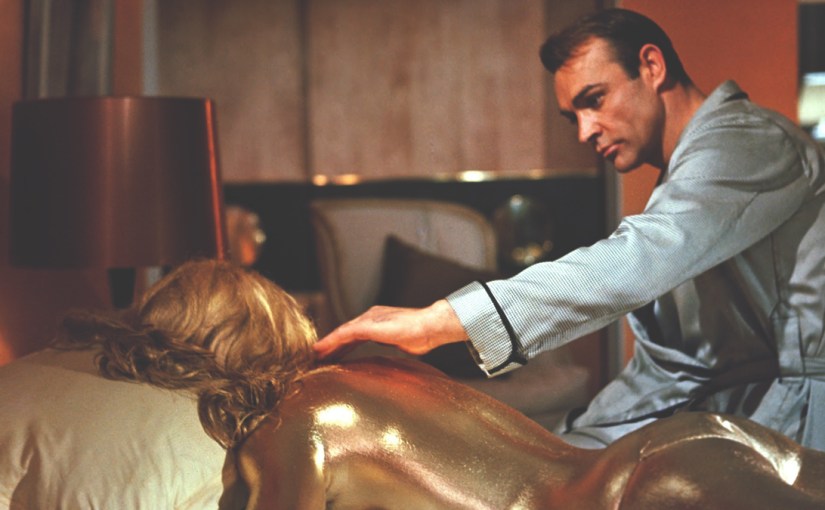
If From Russia With Love offered a promising future for James Bond, Guy Hamilton’s direction of Goldfinger solidified it. This is Sean Connery’s best representation of 007, and yet the only triumphant thing the character does is win a golf match against the title character, Goldfinger, played by Gert Frobe.

As good as the film is, ironically Bond does not succeed in any effort to thwart the diabolical plans of Auric Goldfinger, who intends to invade the gold depository located at Fort Knox. Bond doesn’t deactivate the bomb. He doesn’t successfully get his CIA allies on the right track. He doesn’t even do away with Mr. Goldfinger. Everything happens to occur circumstantially. James Bond just got lucky this time.

So then why is the third entry considered by many to be the best in the series?

Well, the movie is immense in its charm, and it pioneers the flavor of nearly ever Bond film released from here on out, at least until the coming of the blunt, brooding instrument of Daniel Craig.

The vile henchman, Oddjob, with his razor bowler hat introduced a staple needed for a winning film. Every bad guy had to have an unusual trait. Pussy Galore (Honor Blackman) set a more defined precedent for the Bond Girl. Even Shirley Bassey’s dangerously pounding title song carried a threat of the most sadistic villains to come.

Plus the gadgets are exceedingly fun. How do I know? Because time and again Bond returns toward using his classic Astin Martin DB5 with tricked out machine guns, oil slick and (I wouldn’t joke about this) ejector seat. 007’s moment with Q became a necessary ingredient in every Bond film following “Goldfinger.” Actually, I think Q is only missing from 2 or 3 films following this entry.

The tongue in cheek theme couldn’t be more apparent in this film thanks to Sean Connery. “Manners Oddjob. I thought you always took your hat off to a lady.” 007’s casual response to any threat, or what follows after subduing a bad guy, is such fun. What else would you say after you’ve electrocuted a guy in a bathtub?

“Shocking. Positively shocking.”