NEVER SAY NEVER AGAIN

By Marc S. Sanders

If it walks like James Bond, if it talks like James Bond, it is…STOP RIGHT THERE! 

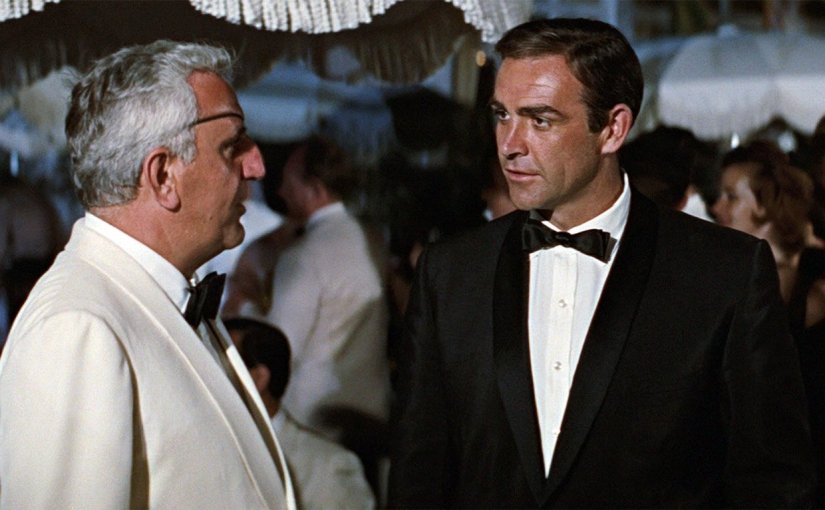
Sean Connery in Never Say Never Again is not James Bond…at least not the James Bond that I know.

Why was this movie even made?

I know.  You don’t have to tell me. 

For the most part it was a legal blessing for a gentleman named Kevin McClory, a contributing writer to the film Thunderball.  McClory sued the Ian Fleming estate for the rights to such named properties as the villainous “Ernst Stavro Blofeld” and the organization he heralds known as “SPECTRE.”  Eventually, it came to be that none of the films could use these copyrighted terms going forward.  (Hence, why Roger Moore never uttered these names in any of his films.  He just dropped a wheelchair bound bald man down a smokestack.)  Anyway, the courts allowed McClory a second chance at his Thunderball creation by granting him the blessing to remake the film with certain moments and developments that upheld the structure of the story.  So, in 1983 a competing studio to United Artists called Warner Brothers greenlit the release of this new film and banked on Sean Connery’s return to the famed secret agent.

Frankly, the backstory is a much more tantalizing adventure than this misfire.

Never Say Never Again always eluded me.  I never had a desire to see it.  I regarded it like a generic brand.  I turn to the EON productions for my James Bond fix the same way I turn to Heinz ketchup, never, ever Hunts.  What I’d heard of this film and the scant moments I saw of Connery in the picture over the years made me question how necessary this movie ever was.  It’s like that Gus Van Sant shot for shot remake of Psycho.  Why do it?  Because you can?  Is that all you need?

So, Connery opted to return for a large salary and for the only time in history two James Bond films were released in the same year, 1983, when Moore’s Octopussy also made it to the big screen.  Connery’s picture is a direct remake of Thunderball. One of SPECTRE’s top agents Maximillian Largo (Klaus Maria Brandauer) catches possession of two United States nuclear missiles and hides them in the Bahamas.   Bond is older now, reflective of Connery’s age at the time, and practically retired as he loses a bit of his step in a training simulation.  Soon, however, he is on the case and contends with a female henchman by the name of Fatima Blush (Barbara Carrera) while also womanizing Largo’s main squeeze Domino (Kim Basinger, in a very early role).  His primary gadget is an exploding fountain pen.

Other than Carera who was Golden Globe nominated for her role, I can’t say anyone is doing anything terribly wrong here.  It is simply that this reiteration seems altogether flat.  This film is certainly missing the exhilarating pace of director Irvin Kershner’s The Empire Strikes Back.  Here, James Bond the hero just seems to walk and sit and stand in and out of frame.  A lifeless tango occurs midway between Connery and Basinger as an opportunity to share some confidential information.  I don’t care if 007 is adorned in his tuxedo next to a 1980s hair sprayed Kim Basinger, the tango is boring to watch.  It is a dance that goes nowhere or builds to anything. 

Games are updated as well.  We are not in the casino watching baccarat or poker anymore.  James Bond plays video games against Largo and the only threat is a shock on the joystick when a parlay is struck.  I can’t feel the zap that is supposed to happen, and Sean Connery is hardly displaying any anguish as Klaus Maria Brandauer smirks in triumph.  So, where’s the suspense here?  Sound effects from an Atari 2600 while the hero and villain sit at a table with joysticks doesn’t send this scene into astonishment. In 1983, in the movie theatre next door, Roger Moore is undoing a cheating Louis Jordan in backgammon while the muscle headed henchman crushes the dice into dust.  That’s much more frightening. 

A midway motorcycle moment with smoke and missile gadget tricks is fun but still not as escapist as most other Bond pursuits. Maybe it’s because 007 wears a dark helmet and thus hiding his charm.  It’s a lot more fun to see Connery or Moore give a wink and nod as the chase continues.  Here there is no reaction and no response to the environment of the Bahamas.  Couldn’t a banana tree topple over or something?  Maybe some coconuts?  Could a yacht or boat capsize?

I always remember the infamous shark scene in Thunderball as Bond gets trapped in a swimming pool with a couple of great whites.  That scene is now changed to an ocean floor shipwreck setting.  For the most part this works as Bond circumvents through the wreckage trapping one shark after another.  This is one of the film’s few improvements.

The big regret is that Klaus Maria Brandauer as the main villain Largo was not served a better product. He is gleefully good.  He’s at least trying as hard as he can. He has the evil grin and short fused temper, but he’s also sophisticated among his wealth. 

He’s certainly working much harder than Sean Connery who seems to just be going through the motions and hardly exerting himself.  The actor is much too relaxed in his role here.  It looks like he memorizes his few lines minutes before the camera starts shooting.  Then he says what needs to be said.  You can subconsciously visualize Connery walking back to his trailer take after take.  There are some decent one liners, but none of his delivery soars anymore.  I think Connery was out of the role far too long since his last turn in 1971 and he just didn’t pick up where he left off.  He’s never applying himself.  His wardrobe, from the tux to a camouflage uniform, or even his swimsuits do not seem to rest well on him.  The tailoring looks off.  He’s not wearing anything as well as he used to.  Not even his hair piece, which is far too thin and uncooperatively resting on his scalp, sits well.

Kim Basinger is the blond.  Nothing more needs to be said.  Rowan Atkinson debuted on the screen with some silly escapist humor but either he’s not on long enough or he’s there too much.  The part should have just been cut altogether.

You don’t forget Barbara Carrera but that’s not necessarily a compliment.  She’s working like a dastardly cartoon from the Adam West Batman TV show and Connery is hardly responding to her screaming or antics.  Funnily enough, the screenwriter is Lorenzo Semple Jr, writer of the Batman show and Flash Gordon, from 1980.  So, while the tongue is trying to touch the cheek it’s only reaching the roof of the mouth this time.  Carrera is a headache. She acts like a misbehaved child.  Somebody loved her though for that Golden Globe nomination.  How? Why?

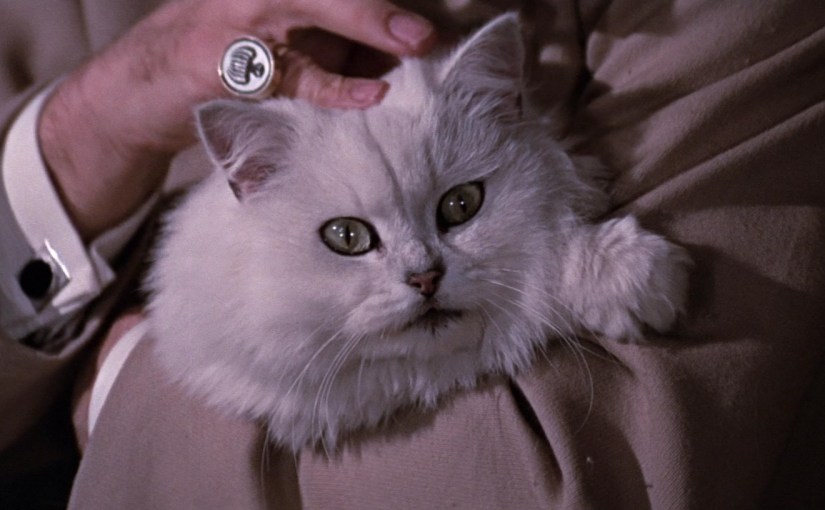
Another bit of buyer’s remorse is the casting of Max Von Sydow as Blofeld.  Inspired casting.  Yet, why is he given nothing to do?  This is Max Von Sydow!!!!!  He’s been hired to watch a Sony monitor with his white cat tucked into his lap, but that’s it.  Between Brandauer and Sydow, these are some heavy hitters.  Plus, Connery, and a built-in storyline.  It should have all worked but it doesn’t.

The theme song is a painful earworm.  It is performed by Lani Hall, doing a Holiday Inn barfly lounge act that will never leave your consciousness.  You can practically see that wet, shiny lipstick slobber all over the microphone while she’s wearing a blingy sparkle dress and a red, leafy boa around her neck.

Never Say Never Again is a lifeless, uninteresting, tedious and sleep-inducing picture that no one but a Mr. Kevin McClory wanted. 

Like Jeff Goldblum would say ten years later, just because you could doesn’t mean you should.
MURDER ON THE ORIENT EXPRESS (1974)

By Marc S. Sanders

When considering Sidney Lumet’s admirable body of work, many would likely connect him with covering corruption within police precincts and the legal jargon of courtrooms.  Fortunately, on occasion, he experimented outside of those genres, and we are all the better cinematic viewers because we were treated to an all-star cast, devouring up the scenery in an adaptation of Agatha Christie’s celebrated mystery Murder On The Orient Express.

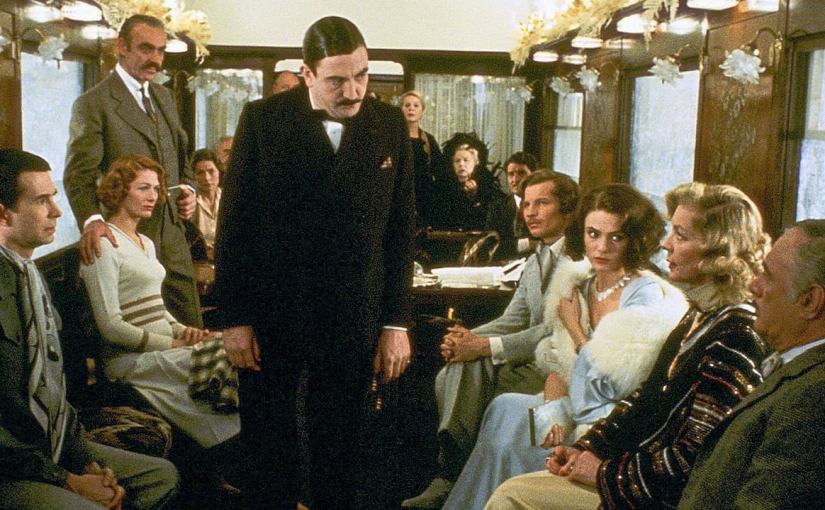
Lumet abandons his penchant for the metropolitan jungles of conflicted souls and high stakes drama to offer up a deliciously fun who done it, with Albert Finney gleefully playing the oddball, mustached Belgian (not French) detective, Hercule Poirot.  Despite a cast that features Sean Connery, Lauren Bacall, Jacqueline Bisset, Vanessa Redgrave, Martin Balsam, Richard Widmark, Michael York, John Gielgud, Anthony Perkins, and an Oscar winning performance from Ingrid Bergman, it is Albert Finney who makes the film wonderfully delightful.  His stature that seemingly hides his neck within his stout torso, along with a shoe polished, flattened hairstyle and a thick, echoing dialect tempo are an absolute combination of pleasure.  He makes the glossary of Tim Burton’s bizarre characters seem rather straightlaced.

He’s strange, but funny.  Before the expected murder gets underway, we observe an unrecognizable Finney performing Poirot’s nightly routines, including applying cream to his hands and unique mustache, as well as donning a kind of strap beneath his nose to keep his signature trait in its proper shape.  Batman maintains care of his cowl.  This crime fighter must preserve his facial hair.  It’s completely normal for Hercule.  While these mundane tasks of his are executed, the great inspector is also alert to several rumblings and bustles going on in the nearby cabins aboard the famous train in the title. Lumet ensures we see how smart and observant Mr. Finney chooses to portray Poirot; unique, and instinctively wise without limits.

An impolite and bossy man named Ratchett (Widmark) is discovered dead with multiple stab wounds to the chest.  It doesn’t make much sense considering the other passengers should all be complete strangers to one another.  Or are they?  Each one has an alibi, and their respective personalities couldn’t be more different.  Who would have the motive to kill a stranger aboard a moving train?

There appear to be twelve suspects for Poirot to consider.  That’s quite a list.  The standouts for me include Bergman, Bacall, and Perkins, but Lumet allows at least a scene or two for each celebrated actor to shine.

Ingrid Bergman dresses down to portray a shy, nervous, homely Swedish woman.  Sidney Lumet knows to back off on directing inventions when working with talent of such magnitude.  In one uncut take, Bergman controls an interrogation scene with Poirot and the camera stays fixed on her never diverting away and very subtly tracking behind Finney to stay with the actress’ nervous portrayal and expression.  The question is, should we trust this person? If Ingrid Bergman is putting on a façade, she’s awfully good at it.

Lauren Bacall carries such a strength on screen.  She walks with square shoulders and utter confidence that makes it seem like she’ll be impenetrable to Poirot’s inquiries.  Bacall’s booming signature voice would make me back down at any given moment.  She commands the supporting cast and appears to defy intimidation.

This film was made fourteen years after Psycho and yet Anthony Perkins portrays Mr. McQueen, a secretary of the murder victim, with youthful naïveté.  His stutter is perfectly timed and authentic, and he’s got body language that flails from one direction to the next when put to the test, not just by scenes he shares with Albert Finney, but anyone else in the cast as well.  His character is clearly unrelaxed.

I decided to watch this picture for reference.  In September of this year, I will be portraying Hercule Poirot in a stage adaptation of Agatha Christie’s story, written by Ken Ludwig.  My colleague Miguel Rodriguez is in the production as well, occupying Martin Balsam’s role.  They’re brilliant with magnificent energy by the way; Balsam and Rodriguez.  I had to watch Lumet’s film twice to appreciate the gleeful nuances he offers with this celebrated cast, including the actual train which serves as not only a claustrophobic setting but a character as well, stuck in a snowdrift, trapping the guilty party with no means to escape.  The dialogue flies fast and many of the various accents (Belgian, Russian, Scottish, Italian, Swedish, Hungarian) are challenging to decipher on a first watch, particularly Finney’s performance.

On a second watch, I was more wide-eyed to the detective’s behavior and how he breaks down a suspect during an interrogation.  No two interviews of suspects are even remotely similar.  Finney alters his way of approaching a scene partner each time.  I’ll credit the screenplay’s dialogue from Paul Dehn for that achievement as well. 

When a cabin door is opened to reveal the deceased victim, Finney’s odd mannerisms drastically change as he enters the room knowing what to say and look for immediately.  Sidney Lumet characteristically will position his camera pointing up at his actors, so the audience is the perspective of the subject being looked upon.  Albert Finney is gifted a wide scope within a narrow quarter to react as the famed detective.  This filming technique was an inspired choice by the director. Hercule Poirot is built up to be the foremost detective and now we see him demonstrating his specialty for examining a crime scene, and thus where to begin with his examination.  Albert Finney received an Oscar nomination for this role and it’s because of the skills he orchestrates under a guise of heavy makeup with a thick incomprehensible dialect.  All are meant to be taken as winning compliments from me.

The art design of the train is breathtaking.  The exteriors are magnificent too, particularly the train station located in Istanbul where the Turkish merchants crowd each cast member as they enter the film for the first time ready to board the Orient Express.  In one spot, a steward is inspecting the food cargo.  Another area has a merchant spilling over a carriage of oranges.  Locals crowd Bacall, Bissett and York with trinkets to buy.  Lumet captures the whole exotic tapestry.

Richard Rodney Bennett’s musical score is unforgettable.  A sweeping, romantically uplifting waltz accompanies the locomotive’s ongoing trajectory.  Then it gets more brooding when the journey comes to an unexpected halt in a chilling snowdrift, with the thought of a dangerous killer nearby.

Sidney Lumet is to be applauded for stepping back to allow his who’s who of legendary cast members play with Agatha Christie’s famous mystery.  He’s done this on other occasions including his outstanding cast in Network and Paul Newman’s career best performance in The Verdict

Those who are not familiar with the Agatha Christie’s tale are fortunate to experience the wonderfully twisted ending that serves the story’s continued appreciation.  Lumet deserves credit for the final touch though.  It’s not often that a film boasts such a collected caliber of talent together.  So, the best way to cap it off is with a charmingly giddy champagne toast.  It’s Sidney Lumet’s perfect little garnish to wrap one of greatest literary mysteries to ever be published and adapted for the stage and screen.

A BRIDGE TOO FAR (1977)

by Miguel E. Rodriguez

DIRECTOR: Richard Attenborough
CAST: Sean Connery, Ryan O’Neal, Gene Hackman, Michael Caine, Anthony Hopkins, James Caan, Maximilian Schell, Elliott Gould, Denholm Elliott, Laurence Olivier, Robert Redford, and MANY others
MY RATING: 7/10
ROTTEN TOMATOMETER: 63% Fresh
Everyone’s a Critic Category: “A Movie Set During an Historic War”

PLOT: A detailed account of an overly ambitious Allied forces operation intended to end the war by Christmas of 1944.


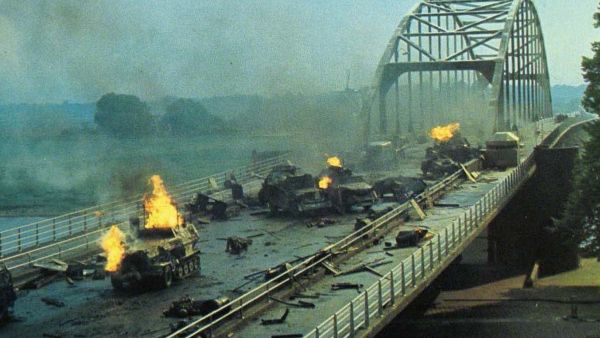
In September of 1944, in an attempt to land a finishing blow to Germany following D-Day, Allied forces launched Operation Market Garden, a bold offensive that would drop over 30,000 soldiers behind enemy lines.  The objective was to capture and hold three strategic bridges in the Netherlands, over which a massive column of British tanks would then roll straight into the Ruhr, the heart of Germany’s industrial complex.  Neutralize the Ruhr, and taking Berlin would be inevitable.  However, as with so many other simple plans in history, multiple factors led to the operation getting bogged down at the third bridge, and after massive Allied casualties, the offensive was abandoned.

Based on a bestselling novel by Cornelius Ryan (who also wrote the novel The Longest Day), the movie of A Bridge Too Far resembles the actual Operation Market Garden, not just in appearances, but also in its ambition, scope, and ultimate failure to achieve its goal.  However, as a pure combat movie, I give it credit where it’s due.

First off, look at this cast.  There had not been an assemblage of so many of Hollywood’s leading men since 1962’s The Longest Day (“42 International Stars”, that movie’s posters proclaimed).  Naturally, most of the actors are pitch perfect in their roles, with one glaring exception.  Whoever thought Gene Hackman was just the right guy to play a Polish general was either desperate or foolhardy, or both.  Hackman is a talented actor, without question, but his attempt at a Polish accent is a MAJOR distraction from whatever he’s saying.  Every once in a while, it even pulls a disappearing act, not that it matters.

ANYHOO.  The all-star cast.  To offset the lengthy running time, the story is told in semi-episodic fashion, which makes me wonder if someone hasn’t thought about rebooting this movie as a Netflix/HBO/streaming miniseries.  I’d watch it.  Within each of these episodes, it helps if we remember right away that Michael Caine is the leader of the tank column, Sean Connery is heading up one of the ground units, Anthony Hopkins is holding the bridge at Arnhem, and Elliot Gould is the cigar-chewing American trying to get a temporary bridge put together, and so on.  It’s a rather brilliant way of using visual shorthand to keep the audience oriented during its nearly three-hour running time (including an intermission at some screenings).

There is one “episode” featuring James Caan that has literally – LITERALLY – nothing to do with the plot.  He plays an Army grunt who has promised his young captain not to let him die.  After a grueling ground battle, Caan finds his captain’s lifeless body and, after improbably running a German blockade, holds an Army medic at gunpoint, forcing him to examine his dead captain for signs of life.  I read that, unlikely thought it may seem, this incident really did happen as presented in the film (more or less).  All well and good.  But what does it have to do with capturing bridges?  I’m sure the story is in the novel, but the movie takes a good 10-to-15-minute detour from the plot to follow this bizarre story.  Did director Richard Attenborough think we needed comic relief or something?  I remember liking that story as a kid, but watching it now…is it necessary?  Discuss amongst yourselves, I’ll expect a summary of your answer at tomorrow’s class.

I want to mention the combat scenes in A Bridge Too Far.  First off, I never served in the armed forces.  Well, never in combat.  I was in the Air Force for about a week.  (Well, Air Force boot camp in Oklahoma for about a week…LONG story.)  So, my observations of the combat scenes are less about historical accuracy and more about how they compare to other films.  While some of the combat portrayed is rightfully horrific in its own way – the river crossing in those ridiculous canvas boats, the slaughter of the paratroopers, the seemingly endless holdout at Arnhem – a lot of the combat, particularly the tank shelling and the skirmishes at Arnhem, is…I have to say, it’s kind of fun to watch.  There’s something, I don’t know, charming about it all.  It reminded me of how I used to play with my army men and Star Wars figures, or how I used to run around with neighborhood friends wearing plastic helmets and pretending we were “good-guys-and-bad-guys” while throwing dirt clods at each other and making fake explosion noises.  It was movies like A Bridge Too Far that shaped my young impressions of what wartime combat was like, and whether it was realistic or not was irrelevant.

Anyway, enough nostalgia.  Here’s the sad truth: A Bridge Too Far, despite its thrilling combat and all-star cast, falls short of delivering a truly meaningful war film.  There are half-hearted attempts to drum up some dramatic impact with scenes in a makeshift field hospital and a speech in Dutch from Liv Ullman wearing her best “isn’t-war-awful” expression, but for some reason those scenes fall flat.  (I did like the “war-is-futile” scene with that one soldier who runs out to retrieve the air-dropped canister, only to discover…well, I won’t spoil it, but it’s a good scene.)

After writing almost 1,000 words, I’m no closer to explaining why A Bridge Too Far falls short.  It’s still an entertaining watch, but I’ve really got to be in the mood for it.  It’s rather like reading a historical novel that isn’t particularly thrilling like a Crichton or a Clancy, but it does deliver some eyebrow-raising information.  It doesn’t hit me in the heart, but it does feed my brain.  Maybe that’s not such a bad thing in the long run, but if movies are about stirring emotions, I must say: A Bridge Too Far is no Saving Private Ryan.

(Sure, I probably could have just said that instead of writing this long-ass review, but where’s the fun in that?)


QUESTIONS FROM EVERYONE’S A CRITIC

Best line or memorable quote:
“Remember what the general said: we’re the cavalry. It would be bad form to arrive in advance of schedule. In the nick of time would do nicely.”

Would you recommend this film?  Why or why not?
Ultimately, I would recommend it to film buffs who have not yet seen it.  If nothing else, it’s an interesting time capsule movie.  This would be the last time for a VERY long time that anyone would attempt to make an epic film with a truly all-star cast.  …come to think of it, I can’t think of a major, epic drama since A Bridge Too Far with an actual A-list cast.  Can you?

INDIANA JONES AND THE LAST CRUSADE

By Marc S. Sanders

Steven Spielberg is great when he takes advantage of a silhouette. His best example of this is with Indiana Jones. He’ll hide the character in deep sun so you only make out the recognizable shadow of his famous fedora hat and bullwhip by his side. I treasure a moment like this as Indiana Jones And The Last Crusade approaches it’s closing credits and he rides off into the sunset along with his father and their trusty companions. (Other great silhouettes happen in Raiders Of The Lost Ark – when he first meets Marion, or when he’s traversing through the South American jungle or when he’s digging towards the Well Of The Souls. I love it every time I see it.)

The Last Crusade no longer offers the mystery of the famed archeologist. Unlike Raiders where Indy only says what is necessary and his past experiences remain unknown, this story offers a background. How does Indy first dabble into the world of rare antiquities and what did he miss out on as a child followed by an adventurous transition into adulthood? How about that scar on his chin? There are some answers here.

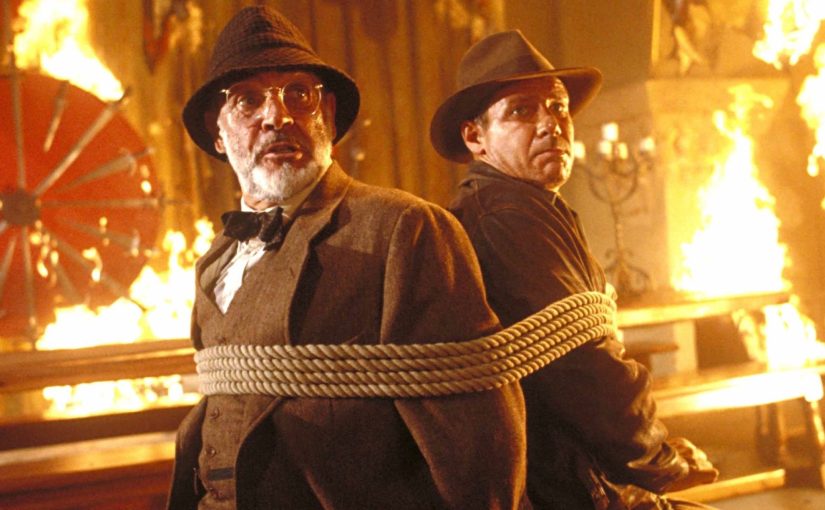
Harrison Ford keeps Indy stoic and only amusingly frustrated when interfered with by pesky Nazis and a wonderfully naive and innocent Sean Connery as his father, Henry Jones. Their pursuit of the Holy Grail, the cup that belonged to Christ at The Last Supper, is a similar narrative sequence of events to Indy’s first adventure. However, what sets it apart here is the relationship between father and son. I imagine it’s a similar connection between a lot of dads and their sons, and therefore I have a nice affection for the film.

Spielberg continues to be great with his action moments by keeping it light and fun. River Phoenix echoes a young Indy as Ford would have played it as a pre teen. It’s a convenient short story to show how the character earns the hat, the jacket, the whip and even his infamous fear of snakes.

Boat chases, underground relics, rats and fist fights atop a tank are well edited and clearly shot.

The 3rd of four wonderful adventures (soon to be five) is still fun to watch and offers enjoyment that many of today’s blockbusters have simply forgotten.

It’s always exciting to ride alongside Indiana Jones.

THE HUNT FOR RED OCTOBER

By Marc S. Sanders

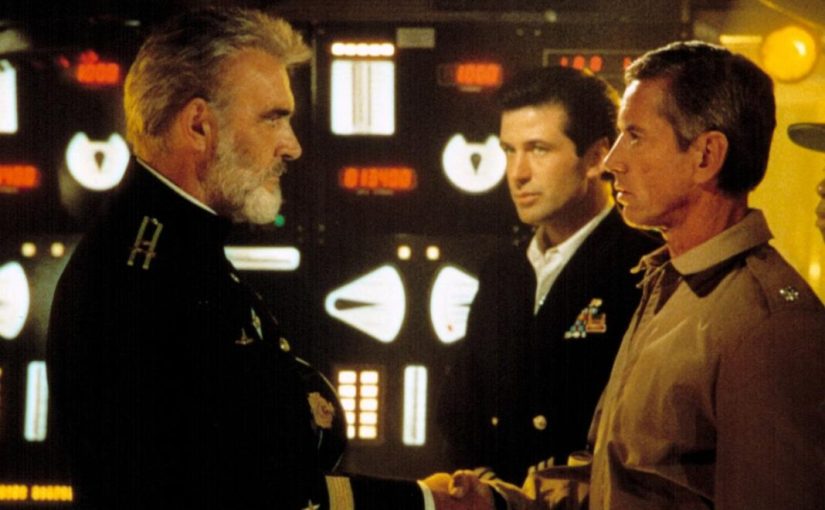
John McTiernan’s adaptation of Tom Clancy’s first bestselling novel, The Hunt For Red October, might seem dated but it’s still a crackling good thriller. It’s one of those films where you truly feel like you’re walking through the secretive hallways of DC government buildings with their elevators accessed only by an Admiral’s key. Soon you’re in a dark, underground boardroom. You’re also there on the various naval crafts and submarines with alarming lights, shiny steel and glowing monitors. The biggest treat is being in the command center of the titled sub, Russia’s Red October, commanded by their captain, Marko Ramius (Sean Connery). All in all, Terence Marsh built a convincing production design.

Clancy’s story takes a different approach than most thrillers involving Cold War politics. Ramius might have been a James Bond villain in another film as he hijacks Red October, but there’s more to him actually. Rather, Ramius wants to defect to the United States. Most of his command crew is in agreement as well. America doesn’t necessarily see it that way; a Russian, missile equipped submarine quickly approaching the eastern seaboard with other subs following him?!?!?!? Let’s not polish the tea set so quickly.

Fortunately, one man had the pleasure of meeting Ramius once and doing extensive research on the General’s background; Jack Ryan (appropriately cast with a young Alec Baldwin). Ryan is given three days to catch up to Ramius and guide him safely to the United States while avoiding getting the famed submarine shot down by either power nation.

I must point out my favorite scene and it actually takes place in that secret boardroom where it dawns on Ryan of Ramius’ true plan. Baldwin is great here. The young guy who is green when it comes to military and political protocol. McTiernan gets his company of generals and high ranking officials into a large quarrel over what to do and then he zooms in on Baldwin thinking for the close up before he calls Ramius a SON OF A BITCH. It’s at this moment, that the movie going consensus and fans of Clancy overall determined that Alec Baldwin was the best of the cinematic Jack Ryans. (No slight to Harrison Ford, who was too middle aged for the role when he took the part).

Connery at least has the commanding appearance of Ramius’ stellar reputation. He is not very exciting or charismatic. Then again, I don’t think Clancy built the character that way. Connery plays the role as silent, yet wise and experienced as implied by his well groomed, white beard and hairpiece plus his square stature. If this man is standing in your presence, you better give him an update. You shouldn’t have to ask if he wants one.

Good moments are made available to Scott Glenn, James Earl Jones, Sam Neill and Stellan Skaarsgard as well. It is the talking scenes among all these fabulous actors that really build tension. The underwater scenes…not so much. The subs look like long, black blobs weaving their way through depths and avoiding missiles coming their way. It’s forgivable because McTiernan always keeps the characters at play. This isn’t a film that relies on the dog fights depicted in Top Gun or Star Wars. McTiernan keeps his audience away from drowning in the underwater murkiness.

The makers of this yarn really are a great combination of imagination. We got Tom Clancy and John McTiernan to thank for a gripping tale from 1990 that still holds up today. The Hunt For Red October is definitely a film worth revisiting.

THE UNTOUCHABLES

By Marc S. Sanders

Brian DePalma directed the very loose cinematic adaptation of Eliot Ness’ squad of treasury agents during the 1930s prohibition era. The movie is The Untouchables, based on the famed TV show starring Robert Stack. It’s a gorgeous picture with incredible set designs, props, and Georgio Armani costume wear. It’s also bloody as hell.

Kevin Costner solidified his leading man status as the righteous Eliot Ness who swears by the law he promises to uphold, while making efforts to topple Al Capone’s (a convincing looking Robert DeNiro) massive Chicago empire that thrives on the buy and sell of illegal alcohol. Capone controls the city on all levels, from government officials down to the police force. His power is unlimited, but he has not filed his tax returns in four years. It’s crazy, but that just might bring him down.

Ness teams up with veteran beat cop Jimmy Malone played by Sean Connery, in one of the most celebrated and winning roles the Academy Awards ever bestowed. Malone knows where the underground liquor operations are located. He knows who accepts the bribes and kickbacks too. The question is how involved does he want to get. He’s the grizzled Irish mentor for Ness, and his timing is perfect for David Mamet’s script.

Memorable additions to the team also include a young and tough Andy Garcia and nerdy Charles Martin Smith as the IRS agent happy to pick up a shotgun for the cause.

DePalma’s film carries the epic look. There’s much splendor in the art direction of the film. It’s a glamorous piece of film, but it’s also just a movie.

Mamet’s script takes lots of liberties against the actual occurrences that came through historically. I do not recall hearing that The Untouchables ever took down a deal while riding horseback alongside the Canadian Mounties, for example. A villainous henchman for Capone is Frank Nitti (a happily slimy Billy Drago), always dressed in bad guy white and putting on the bad guy charm. His demise in the film never happened and most certainly not so adventurous or violently, but DePalma and Mamet clearly don’t care. This is lean entertainment for action sequences set in a gorgeous gangster period. The Untouchables is a slick looking gangster flick and nothing more.

A real star of the film is the Oscar nominated score of the film from The Maestro, himself, Ennio Morricone. His opening piece of drum beats with quick piano keys during the credits will get your pulse going. He also has great horn sections that capture the four heroes in tight shots of shining cinematography from Stephen H Burum. For me personally, this is my favorite soundtrack of Morricone’s massive career.

Costner is well cast. He has the handsome hero look to him. Garcia became a well-known and sharp looking tough guy. Smith did not move on to more celebrated material beyond this. He was remembered comedically here, just as he was in American Graffiti. He also directed since this film. As a team though, Costner, Garcia, Smith and Connery have wonderful chemistry together.

DeNiro actually took a step back from the spotlight here. His Al Capone is not so much a character as he is an every so often antagonizing appearance with a couple of well paced lines from Mamet’s famed dialogue. He’s got a memorable moment with a baseball monologue that convinces you of Capone’s strong arm, but his villain does not get too personal with the hero.

The Untouchables holds a special place in my heart. It was the last film I saw before my life changing move from New Jersey to Florida in 1987. Because the move was hard on me from a teenager’s perspective, I found great escape with this film as I memorized the lines of the enormously colorful characters along with getting absorbed by the violence and emotional variety of tones in the score. Having watched the movie many times since it was released, it’s become a kind of therapeutic experience for me. I take in the gorgeous craftsmanship of the film, the humor and the surprise moments many of the beloved characters face.

The Untouchables is not a perfect film I thought it was at age fourteen. It’s almost proud of its admitted inaccuracies, but it remains a favorite and very personal piece for me. I still love the film, all these years later.

DIAMONDS ARE FOREVER

By Marc S. Sanders

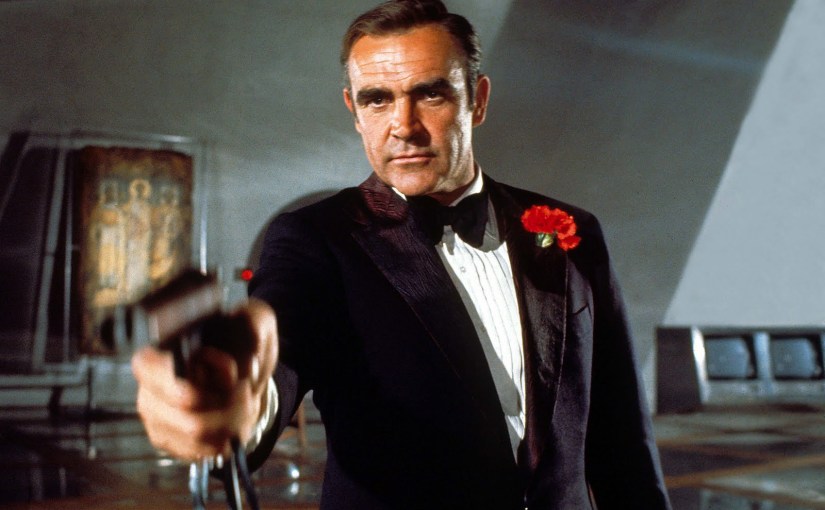
Director Guy Hamilton (Goldfinger) returns to helm Sean Connery’s final portrayal of 007 in the EON Productions series with Diamonds Are Forever. Unfortunately, this film doesn’t even come close to measuring up to Hamilton’s prior effort.

Little regard is offered to the shocking ending of the prior installment, On Her Majesty’s Secret Service. A quick opening has Bond tossing Blofeld (head of SPECTRE, here played gleefully by Charles Grey) into a lava pit. Following Shirley Bassey’s pretty good theme song, 007 is assigned to acquire diamonds that are getting smuggled from the mines of South Africa and intercepted by a beautiful American red head named Tiffany Case (Jill St. John, who is pretty fun in the role). Only problem is that nearly every person the diamonds pass through ends up dead by the homosexual henchmen Mr. Kidd & Mr. Wendt. Considering the sexual tête-à-tête the Bond films became known for by the 7th film, Hamilton and company play up these guys like a weird joke in their inflection with one another, and even the fact that they hold hands at times. The music resorts to a mischievous note on the saxophone. In 1971, this might have held for a good laugh. In the PC era, it really doesn’t feel appropriate to imply these assassins are disturbing simply because they’re gay.

Eventually, the pursuit of said diamonds moves to Las Vegas where some silly Smokey & The Bandit (which was not even close to being released yet) humor occurs. Bond pilots a moon buggy through the Nevada desert while cars that are chasing him fall apart and flip over against the sandy terrain. More silly car chases happen in the heart of Vegas. The sheriff and his men are turned into Keystone Cops. It’s a little too much slapstick actually.

Still, why the need for the diamonds and what does a mysterious, unseen, wealthy man named Willard Whyte (Jimmy Dean) have to do with it?

Bond films work best when the villains work. There’s not much given from a powerhouse villain here like there was in Goldfinger. The necessary shootout ending occurs on an oil tanker this time, and Bond is hardly threatened or under much duress. Thus, killing any kind of suspense.

Connery is fine but you can also tell his commitment is hardly in the role. He’s working just enough for a paycheck-reportedly collecting a record million dollars to return to the role one more time.

By the time the film ends, you feel ready for a drastic change in the franchise. The ‘60s camp is over with. Disco seventies is here. So you wish that 007 can make a smooth transition to the changing cultural times. We would have to wait and see what producers Harry Saltzman & Albert Broccoli could do next to reinvigorate the franchise.

YOU ONLY LIVE TWICE

By Marc S. Sanders

James Bond is murdered in a murphy bed!!!!

Thereafter, he ventures off to Japan to uncover who is capturing American & Russian spacecraft in an effort to pit the two countries in a global war. 007 already has his suspicions. Could it be SPECTRE?

In Sean Connery’s 5th outing as the super spy, Roald Dahl (yes, the same guy who wrote James & The Giant Peach and Charlie & The Chocolate Factory) pens the script for You Only Live Twice, a story that finally reveals the architect in charge of the terrorist organization. His name is Ernst Stavro Blofeld. Donald Pleasence appears as the man with the white cat, long before he chased after slasher Michael Myers every October 31st. “Austin Powers” films have taken all of the shock & awe away from this Blofeld. You can’t help but see Dr. Evil when Pleasence appears.

Still, there is so much to be impressed with. Producers Harry Salzman & Albert Brocolli throw all the money into this film with a hidden fortress beneath a giant volcano, plus gorgeous footage of the Orient, as well as in simulated outer space and underwater, for the secret agent’s funeral.

The first two thirds are fast paced storytelling as Bond encounters one informant or enemy after another. He even gets into a great brawl with the grandfather of Dwayne “The Rock” Johnson. A large sofa makes a great battering weapon.

Regrettably, the movie languishes very unnecessarily into a silly subplot where Bond has to disguise himself as a Japanese man (Mickey Rooney may have looked better in Breakfast At Tiffany’s), learn how to be a ninja in four days (ummmmm…why????), and get married to a Japanese woman (again…..why?????). This apparently is all necessary to raid the hidden volcano fortress. Yeah. It’s ridiculous and you can almost see how ridiculous Connery thinks this is. One of Dahl’s everlasting gobstoppers might have been more useful.

Fortunately, the film redeems itself very well in its ending with an explosive battle between ninjas and henchmen. Bond serves the biggest henchman to some quick eating piranhas. That’s pretty fun.

You Only Live Twice is a gigantic production of grand indulgence largely thanks to the success of 007’s four prior large screen adventures. It’s got big moments, cool gadgets like “Little Nellie” and some unexpected surprises too.

It’s good entertainment.

THUNDERBALL

By Marc S. Sanders

Director Terence Young returns to direct the most auspicious James Bond adventure yet, Thunderball from 1965.

SPECTRE’s Number 2 officer, Largo (Adolfo Celi) captures a British jet carrying two nuclear bombs, and demands England pay 100 million pounds or he will destroy a location in Europe and the United States. Bond is on the mission heading to Nassau, Bahamas to stop Largo (complete with evil voiceover and eyepatch), and recover the plane with the bombs.

The crystal blue sea of the islands allow for a huge undertaking of underwater footage complete with sharks and fight scenes with fists, knives and spear guns. It remains dazzling how well the footage is. Bond (Sean Connery, actually underwater) is there, easily disarming countless SPECTRE agents.

A great centerpiece scene occurs when Bond gets trapped in Largo’s swimming pool with a thug and three sharks to contend with. All this while Largo covers the surface of the pool with a steel sheet. The moment seems inescapable, and Young shoots a memorably suspenseful action piece.

Connery maintains that smooth, suave composure that audiences became accustomed to in his three prior outings, even if his hairpiece is noticeable and his girth is a little wider. On the beach, Bond takes out a bad guy with a spear to the chest and utters the line “I think he got the point.” It’s perfect delivery for 007.

The girl this time around is Domino (Claudine Auger). She is not the most memorable. A beautiful redhead who is not given much to do, even with Bond.

While the underwater camera work is marvelous, Thunderball is not ranked near the best in the series. It feels a little long even when the action scenes are occurring.

Still, Bond continues to hold up as does the curiosity of SPECTRE. Just who is the man with the white cat? We’ll just have to wait and see I guess.

FROM RUSSIA WITH LOVE

By Marc S. Sanders

Terence Young returns to direct the second installment in the James Bond franchise, From Russia With Love.

Sean Connery is back as 007 and he is assigned to escort the beautiful Russian Tatiana Romonava with the Lektor, a secret Soviet computer.

Tatiana (Daniela Bianchi, one of the most beautifully charming Bond girls) claims to be wanting to defect, but she is under duress from the terrorist organization SPECTRE to trap Bond (revenge for the demise of Dr. No) and cause a conflict between England and Russia.

Ian Fleming’s story is deeply rooted in the Cold War climate of the mid 1960s. It only makes sense that SPECTRE, with leadership from the mysterious Blofeld, would become a formidable opponent to Bond. Moments like the Cuban Missile Crisis and other events of the time were on everyone’s mind. I imagine it was easy to relate to in this film.

The story primarily takes place in one of Fleming’s most favorite known locales, Istanbul, Turkey. Young has great shots within enormous cathedrals and museums and even underground in 16th century tunnels, as well as outdoors on the ferry. It’s a fascinating, scenic tour.

Connery is at his best here. He looks great in his fitted suits, letting the suave and dry humor of Bond come naturally. 007 even disapproves of one ordering red wine with fish. Yet he’s also a great player, as his chemistry with gadgets like his quick assemble sniper rifle and trick briefcase (complete with explosives, gold coins, and dagger) really works well. A great fight scene aboard a train against Red Grant (Robert Shaw, in a great toughie role, nowhere recognizable compared to his later portrayal as the shark fisherman Quint in Jaws) is brutal and bare knuckled; well choreographed within the close quarters of a small train compartment.

Another killer comes in the form of Rosa Kleb (the miserly Lotte Lenya) with the shoe knife that’ll kill you in 12 seconds. She’s a lot of fun.

From Russia With Love is the most unusual of the Connery/Moore films. There’s no giant fortress for a villain, or global domination plot that is speechified to Bond over dinner.

The film is more like a Hitchcock interpretation as a pursuit is the driving force. People turn up dead just feet away from Bond and he doesn’t confront or acknowledge the villains himself. He knows they are there, but he doesn’t pick them out of the crowd. Young’s film relies on the suspense that Hitchcock introduced time and again as in North By Northwest, for example. A great scene pits Bond against an aggressive helicopter dropping grenades.

The gadgety playfully exists however, as does Bond’s chauvinism for great puns and tongue in cheek material.

The future of the franchise was looking even more promising here thanks to Connery and EON productions upping the stakes in action and more forthright innuendo.

Bond was going to be here to stay for quite a long time.