EQUILIBRIUM

By Marc S. Sanders

It’s amazing what drugs can do to you.  Take them on a regular basis and perhaps you can maintain focus and discipline as an enforcer to a dystopian humanity.  Then again, if you stop taking the medication, maybe you’ll open your eyes wider with an ability to nurture, care and appreciate.

This is the set up to writer/director Kurt Wimmer’s futuristic sci fi tale, Equilibrium.  The immense action scenes look like a modified springboard off of what The Matrix provided.  Be that as it may, at least the story stands on its own with an Orwellian inspiration to give it legs. It actually looks like an elder stepbrother to that Apple Super Bowl commercial directed by Ridley Scott.

The best of a specialized police force is the Grammatron Cleric, John Preston (Christian Bale).  Within the bustling city of Libra, large monitors periodically remind commuters to take their routine Prozium.  This allows emotions and feelings to be suppressed.  Thus, order is upheld.  Jealously, for example, is ostracized from this community. The Clerics must heed to this program strictly as a means to live by example.  

Still, even with most of the world population wiped out, there are factions and individuals who do not abide by this governance.  Preston, along with large squads of heavily armed militia seek out these offenders and often discover their fix for stimulation coming from sources of art, literature, and music.  Apprehend the criminal(s), and destroy the contraband they conceal under floor boards and behind plastered walls.  The actual Mona Lisa becomes an early casualty of legal property possession. 

If the culprits take up arms, they’ll be no match for the Clerics, especially the best of this class, John Preston.  

Yet, what happens if John opts not to continue his dosage?

Equilibrium does very well at teaching this unfamiliar science fiction before exploring how it all crumbles.  The expository opening presents an exciting scene of Preston’s methods.  Later, it follows how the system malfunctions.  

Miguel warned me ahead of time because about the only thing I feign at seeing in a movie is any kind of harm to a dog.  A disturbing moment occurs as John experiences his “awakening,” and considering the value I have for a dog’s affection I cannot deny how necessary the moment plays here.  It lends to the change in the protagonist’s character arc.  It is a cruel scene but with anything that feels unjust, within reality or fiction, an event has to occur to pull our heads out of the sand.

The action scenes have a unique flair to them as the Clerics reveal firearms that dispense from under the uniformed sleeves ready to use for firing, but with a martial arts kind of gloss.  While you watch it’s just plain cool, and Christian Bale looks great doing the stoic, less is more exertion to the moments.  He’s such a good actor at performing choreographed dances of shoot ‘em up violence while struggling to maintain an uncompromising mentality this character is expected to be accustomed to.

On the other hand, his new partner, Brandt, is either drafted incorrectly in the script or miscast with Taye Diggs in the role.  He’s a Cleric in training and an admirer of Preston. If the Clerics are supposed to be devoid of emotion, then why is his envy of this man so apparent.  It’s Taye Diggs stepping off his familiar Broadway stage.  However, I do not believe that’s what Equilibrium is expected to offer.  Brandt seems to possess too much pleasure for his calling.  Ultimately, Brandt becomes the antagonist who serves the greater power as his suspicions grow about Preston’s “withdrawal.”  Taye Diggs and Brandt feel like they belong in another film.

Preston had a wife who disappeared mysteriously as well, and he’s left with two children who are being designed to perform like him.  I found the kids to be too much excess for Wimmer’s script though.  Yes, the son turns up at a crucial moment of discovery.  However, after the children appear early in the film, their father does not associate or see them again until close to when the story is wrapping up.  I’m certain the daughter had no more than one line of dialogue. I think it would have been better to excise this storyline altogether.  It has no urgency, nor is it fleshed out enough.  Why must John Preston be a father?  

Equilibrium is an interesting sci fi amalgamation of George Orwell and Phillip K Dick constructs.  There are some disturbingly decent ideas here and if you’re not careful you may find yourself comparing its designs to what some worldwide political climates feel like today.  Don’t overthink it though.  

It has some faults, but the action is entertaining.  Fortunately, Christian Bale occupies the whole of the piece.  The guy is just too dang cool, dressed in black garb with surprise weapons appearing from nowhere at his will while he twirls through the air with his arms outstretched and ready for fast moving combat.

Let’s see John Preston face off against Neo from The Matrix next.  My god, that’ll make the John Wick movies feel like nursery rhyme programs.

Think about all the artillery and jiu jitsu. 

I gotta lie down.  The headrush is making me feel like I overdosed on Prozium. There was a time when I got emotional over things, wasn’t there?

PATRIOT GAMES

By Marc S. Sanders

You may remember Patriot Games as a tense thriller featuring the favorite hero Jack Ryan doing the wherewithal action that is demanding for the adaptation of Tom Clancy’s best-selling novel.  Harrison Ford (taking over the role from Alec Baldwin) plays the guy who will thwart an assassination attempt on the Royal Family or punch out a terrorist thug invading his home or on a speed boat during a dark and stormy night.  Only a small bit of the action sequences are flawed, but that doesn’t take away from what makes the picture truly special.  In the follow up to The Hunt For Red October, Jack Ryan goes back to the CIA to investigate who wants revenge against him and who was responsible for that assassination attempt.  What the picture serves as the covert halls of the Central Intelligence Agency is what is especially convincing and most fascinating.

On the surface, the Irish Republican Army appears to be the scapegoat for attempting to murder members of the Royal Family as they are pulling out of the front gates of Buckingham Palace.  Jack Ryan is in London vacationing with his wife Cathy (Anne Archer) and daughter Sally (Thora Birch) when he comes upon the incident just in time to foil the crime.  In the process, Ryan takes a bullet to the shoulder and kills the younger brother of the most dangerous squad member, Sean Miller (Sean Bean).  A quick trial puts Miller behind bars and Jack is recognized as a hero.

However, Sean Miller escapes with his surviving comrades and vows revenge on Jack and his family.  An attempt is made on the Ryans’ lives and Jack insists on getting back into the CIA to locate Miller and his team.

The revenge plot is the main thread and its pretty ho hum.  We’ve seen all that many times before.  However, what branches off are the conflicts within Irish politics and how Jack Ryan gradually uncovers who and where this small faction of terrorists may be.  Cold War commentary is delivered by an under the radar performance from one of my favorite character actors, Richard Harris.  He attempts to deny responsibility of these attacks and offer an olive branch to Ryan.  Ford and Harris have three good scenes together, two of which are minimal on dialogue but effective in sending their messages to one another. 

As well, Harrison Ford occupies another great heroic role.  I agree with a majority who believe he was too old to play the novice Jack Ryan described in Clancy’s early novels.  Many insist casting Baldwin was perfect.  It was. Yet, I am able to look past that as the character does not have the rookie appearance or regard in this picture.  With Harrison Ford, Jack Ryan is now at a point where he looks seasoned and experienced like the character eventually becomes in the book series.

Director Phillip Noyce is good at using the mysterious and quiet orchestral accompaniments of James Horner to follow Jack as he studies photographs or reflects on the day of the assassination attempt in order to piece together random clues.  In other films, this might get boring and tedious.  However, the director captures good closeups of Harrison Ford and quick flashbacks are edited to help identify what were important blink and miss it moments necessary to assemble the puzzle.  A simple visit to the restroom for Jack Ryan and a glance at a woman’s ponytail lead to a solid conclusion.

Sean Bean has the physical and quiet intensity to his role.  He’s the muscle of the terrorist group, not the leader (played by Patrick Bergen).  Bean serves the revenge element and his physique and weapon handling work well as a nice threat to the hero of the picture.

As the story progresses, the audience follows along with Ryan.  Satellite photographs are studied and zoomed in seeking some semblance of an image in a blur.  Sometimes Jack Ryan is moving in the right direction but in other times he’s unsure.  Even though we always know how the bad guys are doing and where they are, we empathize because Harrison Ford’s character does not.  Still, it’s a thrill to witness him eventually make his discoveries.

A nice approach occurs when the CIA sends in troops to what they believe is an enemy base camp.  We watch Jack Ryan and all of the government officials stare with intensity on a big screen as little black pixels drop down and move at a running pace from an overhead satellite shot.  We don’t have to endure one more machine gun battle.  This kind of intensity is much more interesting where lives are taken as a means of protection, but still a principled man like Jack Ryan does not feel good about what has to be done.

Patriot Games works well with its plays on espionage, spy activity, traitors, and government relations between America, Great Britain and Ireland.  The select action scenes are done well and hold their suspense for quite long.  However, the final sequence is challenging to sit through. 

As the enemy prepares a covert attack on the Ryans’ Virginia home where the Royal Family are guests, there is much running around upstairs and down, in the basement, and outside the roof and so on.  It’s pouring rain with the standard thunder and lightning in the middle of the night as well.  Once the villains and the hero make their way to some getaway boats, the film unravels.  The picture shakes like crazy against the waves and rain.  There’s little light on any of the shots as well and the sound goes loud due to the boat engines and the storm setting.  All of these elements make it challenging to get absorbed in the movie’s climactic ending. 

Hollywood pictures fall back on this approach often in films like Ang Lee’s Hulk and the first installment of The Hunger Games.  It’s dark and wet and shaky and rainy. So, it is hard to decipher who is hitting who and who is shooting at who and who is driving which boat and where are they now.  It’s a shame really because Patriot Games is a taut thriller that holds your attention for nearly two hours, but then you give up in the final few minutes to simply rely on your instincts for how the story is going to wrap itself up.

Jack Ryan’s second adventure is worth watching but oddly enough, maybe wait for your restroom break until the last ten minutes of the picture.

RONIN

By Marc S. Sanders

John Frankenheimer directed the exceptional thriller Ronin, featuring Robert DeNiro and a band of baddies all hired to intercept a mysterious suitcase. The contents are never revealed, and it really doesn’t matter. It’s the pursuit that’s important. Consider this a glossier version of Reservoir Dogs and Pulp Fiction. Not big on exceptional dialogue but huge on top notch car chase action.

Frankenheimer works with a script co-written by J.D. Zeik and David Mamet (using a pseudonym), and all that’s necessary to assemble a gripping two hour story is to have the characters team up, then abandon each other and then double cross each other. How do you identify professionals like these? Well, recruit Michael Lonsdale (former Bond villain from Moonraker) to explain the meaning of the samurai known as Ronin who have become masterless; skilled swordsman with loyalty to no one any longer.

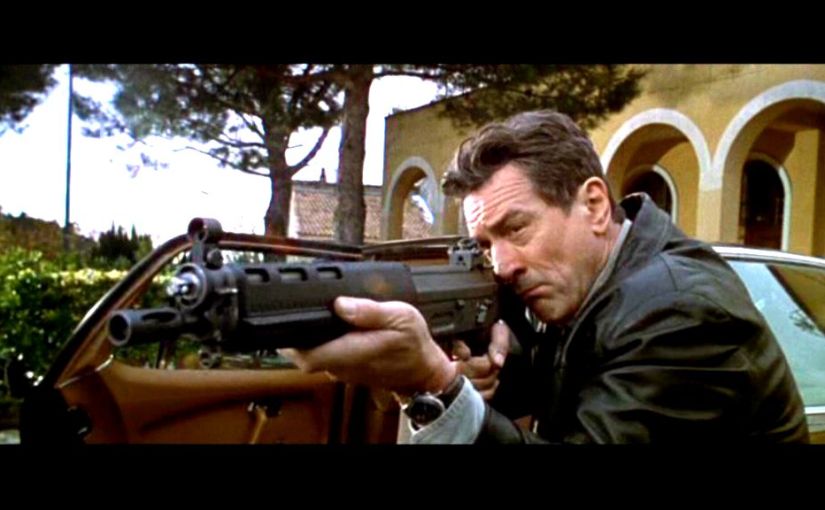
DeNiro plays “Sam” who may be former CIA. He’s one of five men hired by an Irish woman named Deirdre (Natasha McElhone) to retrieve the well-guarded package. This entails intercepting a convoy of cars riding along the French countryside. The fun in the car chase action of all this is that the characters are implied to be at least as ruthless as the subjects they’re stealing from. Therefore, Frankenheimer and his team of 300 (yes, that number is accurate) stunt drivers can offer up reckless collateral damage; cafes are crashed into, buses flip over, and motorcycles skid out of control. It’s Vice City before there was ever a Vice City video game. These guys are not stopping for little old ladies crossing the street.

Jean Reno partners up with DeNiro for a time as a Frenchman and Stellan Skaarsgard plays a German ex-KGB agent. Eventually, Jonathan Pryce comes in to play as well, representing more Irish influence. Sean Bean is here too. (Have you been paying attention? That’s three Bond villains in one movie!!!!) All good casting.

That’s about all there is to say. The plot is deliberately thin with a slight, mediocre twist, and a romance that’s nothing truly interesting.

Still, Ronin is watchable. Frankenheimer and his cinematographer, Robert Fraisse, present awesome locales of a thriving Europe from 1998. Editing is quick and sharp too. Consider Ronin a precursor to Paul Greengass’ Jason Bourne films.

If nothing else, beyond the various car chases and high stakes shootouts, DeNiro had me convinced he was clearly instructing his colleagues on how to remove a bullet from his gut.

Yes. You pretty much see everything.

THE LORD OF THE RINGS: THE FELLOWHSHIP OF THE RING

By Marc S. Sanders

JRR Tolkien was one of the 20th Century’s greatest fantasy writers. The Lord Of The Rings series was a dense, sweeping epic inspired by the torn European climate during World War II and its conflict with the Axis nations, particularly Hitler and his organized Nazi Germany.

Peter Jackson found the opportunity to adapt Tolkien’s works. In 2001, The Fellowship Of The Ring amazed audiences with its epic landscape of Middle Earth, Isengard and Mordor where the fiery Mount Doom is located and the evil eye of Sauron waits for a resurgence of overthrow.

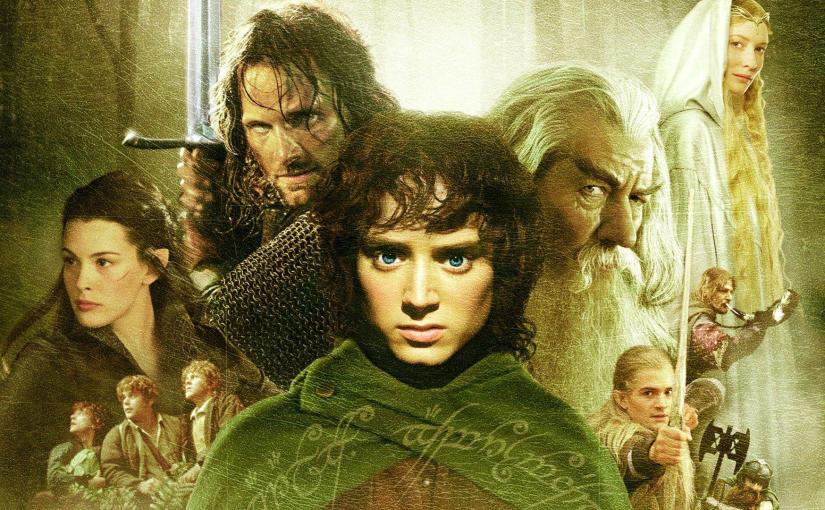
Much happens in each three hours plus Rings films. Tolkien’s story is not so much plot, but moreover a journey from one adventure to another. What’s special is that the main hero is a small, kind Hobbit named Frodo Baggins (Elijah Wood) who has been tasked with carrying the dangerously powerful “One Ring To Rule Them All” back to Mount Doom and destroy it. He is aided by eight fellows, three other Hobbits and four representatives of various nations and backgrounds to protect and escort him. The most significant member is the wise wizard Gandalf The Grey played by Ian McKellen in an Oscar nominated performance. The other characters’ significance become more established in later films.

This first installment is my favorite of the series because it is the most absorbing. I believe in the all but sinister and deadly value of Tolkien and Jackson’s MacGuffin, the Ring. Jackson does well of posing the threat of danger each time Frodo dons the Ring for the sake of invisibility while the Orc army of Saruman, Sauron’s Wizard henchman played by Christopher Lee, bears down on the Fellowship. The film shows one battle after another but the suspense is heightened each time as we become more familiar with Jackson’s digital world. It’s also quite dramatic to see Frodo become consumed in fear and a kind of sickness as the possession of the Ring weighs upon him. To precisely show that transition requires a three hour film, and Elijah Wood is up to the task, always appearing quite angelic and unsure of his assignment. Wood is quite the underrated actor.

There are a multitude of character descriptions in The Fellowship Of The Ring and a number of them come into play when centered around the viewpoint of the Ring. Backstories for others are really not necessary but Jackson attempts to cram as much of Tolkien’s narrative as possible. Beyond Frodo, and maybe Gandalf, the other most interesting character here is that of Boromir played by Sean Bean, often playing a variation of a hero in his films, but quite good at not being worthy of endless accolades. Boromir is a great character to show how the temptation of the Ring can cloud and poison the mind. Bean evokes that of one who might be a weak addict, needing a quick fix of the Ring’s power. There’s a complexity to his performance. Boromir is likable but Sean Bean makes the character quite shocking as well. He’s not a villain but his internal weakness presents a conflict for Frodo and his band. Sean Bean never got enough recognition for his role here.

Peter Jackson is the real hero though. This series is a massive cinematic accomplishment. Everything feels gratefully familiar. Perhaps that is from reading Tolkien’s visually descriptive books, or maybe even the animated film from the seventies. There’s something to see in every corner of the screen. It’s a world come alive in leaves, creatures on land or in the sky, sorcery and swords, flames and even saloons of overflowing drink and large platters of food. The Shire where Frodo lives with his uncle Bilbo (an excellent and jovial Ian Holm) comes off as a happy utopian village of farming and Hobbit celebrations of laziness and relaxation from any outside elements. Jackson contrasts this beautifully against the majesty of Rivendell and the hell of Mordor. It’s a nuanced universe.

Again, for me this first installment remains the best as it is cinched up tightly in its exposition and narrative. Later films are just as grand but maybe sidestep away from themselves a little.

I never got that impression with The Fellowship Of The Ring. Everything I see belongs in the film.

GOLDENEYE

By Marc S. Sanders

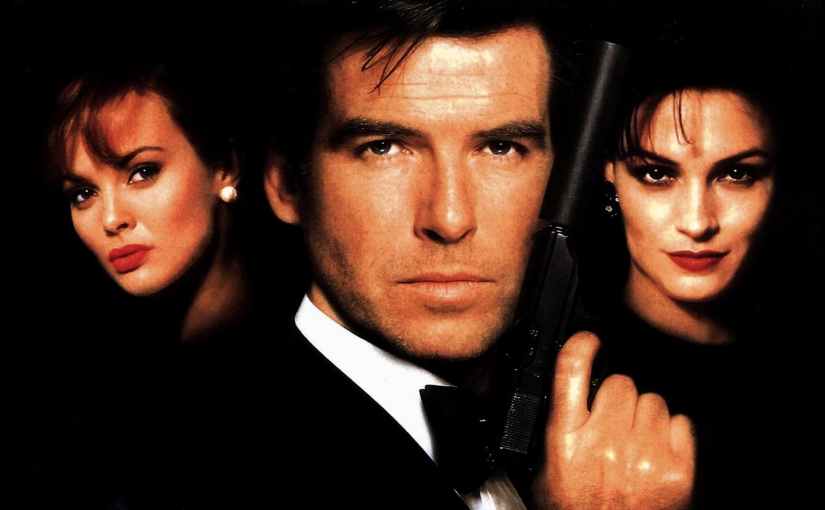
Over six years went by following Timothy Dalton’s last appearance as James Bond. He wasn’t likely to come back and the big question, besides if we’d ever see another film, was who would carry the Walther PPK pistol next as 007. Pierce Brosnan was not a likely choice as I recall, having missed out on the opportunity before with a flimsy Remington Steele contract commitment with NBC. Yet, one day my brother called me at work to share with me the news that Brosnan had signed on. His first film in the everlasting series was Goldeneye directed by Martin Campbell (eventual director of Casino Royale and Green Lantern). It was a welcome debut for the former odds-on favorite contender.

Bond goes up against the Russians in a post-Cold War 1990’s era, with Sean Bean as his adversary, also once known as Bond’s ally, Agent 006-Alec Trevalyen.

With Famke Jannsen as sidekick Xenia Onatopp (holding on to the sexual innuendo tradition), Alec steals a super helicopter that allows him to take possession of the Russian Goldeneye disc. Dame Judi Dench, making her first appearance as M, assigns Bond to locate the disc and find out what Alec intends to do with it. Forget about what the disc is for; you don’t uncover that until the end of the film.

Brosnan is a good physical Bond and he does the tongue in cheek well, sounding much like his Remington Steele character. Screenwriters Jeffrey Caine and Bruce Fierstein provide a wealth of signature puns for Bond to deliver. Onatopp can masterfully kill someone by squeezing a victim between her thighs. Bond’s observation: “She always liked a tight squeeze.”

The film has an outstanding but unrealistic opening scene with a motorcycle trying to catch up to a descending airplane. There’s also a fun tank/car chase in Red Square, and a great action-packed ending in Cuba where a satellite is hidden to aid Alec in his plot.

Bean’s role, like most of those on his resume, makes for a great villain – a real equal to Brosnan in physicality and wit. A great match up.

The Bond girl is also very good. Beautiful but not exuding too much sexiness. More so, actor Izabella Scorupco as Natalya, the Russian computer analyst, is an intelligent addition to the story. Alan Cumming is fun as a nerdy analyst as well. I love when he consistently boasts “I AM INVINCIBLE!!”

Goldeneye was well celebrated upon its release. James Bond was back and updated for the modern action film. The first scene of the film cemented Brosnan as the super spy with a true to life stunt where 007 bungee jumps off of a high-altitude water dam, with just enough time to take out his cable pistol. As soon as the scene graced the screen, fans sat up with attention.

This was a James Bond everyone could love.

FLIGHTPLAN (2005)

by Miguel E. Rodriguez

Director: Robert Schwentke
Cast: Jodie Foster, Peter Sarsgaard, Sean Bean (who, miraculously, does NOT die in this film)
My Rating: 8/10
Rotten Tomatometer: 37%

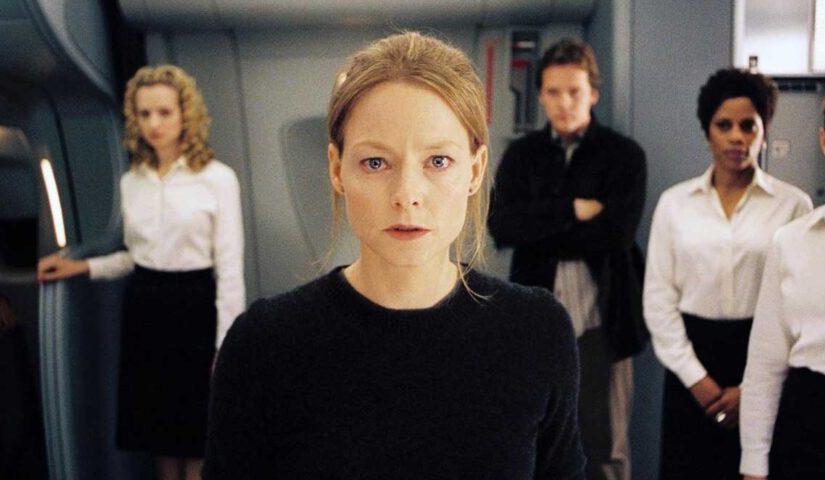
PLOT: A bereaved woman (Foster) and her daughter are flying home from Berlin to America. At 30,000 feet, the child vanishes, and nobody will admit she was ever on the plane.


I get it. Flightplan strains at the leash of credibility. A lot. In order for the plot to work, the audience has to believe that a number of people would have to be involved in a massive conspiracy, a cacophony of coincidences that screams “CONTRIVED” to any sane moviegoer.

But, as ridiculous as it seems, the movie still works incredibly well, even upon repeat viewings. Director Robert Schwentke has not exactly distinguished himself since this film (credits include R.I.P.D., Red, and the last two Divergent movies), but Flightplan displays a surefire command of tone, creating a claustrophobic atmosphere while keeping the camera free to move around the plane along seemingly impossible paths.

This film is a classic example of what Roger Ebert called a “locked room” puzzle. A girl is missing on an airplane – admittedly a very LARGE airplane, but still. There are only so many places she can be. The plane is searched, but she’s nowhere to be found, leaving only two possibilities: she was never there to begin with, or someone’s lying. But who? And why? She thinks she recognizes an Arab passenger on the plane…was he staring in her apartment window the previous night? Is she going crazy, or has there been an actual kidnapping? That’s the central mystery, and it carries the movie for most of its brief running time.

(There’s a neat section where Foster’s character (who, coincidentally, helped design the plane they’re on), monkeys around with the plane’s electronics and gets the oxygen masks to fall, to create a diversion for herself. Tell you what, that would get MY attention.)

The final resolution is…well, let’s say it answers all the questions of what happened without addressing HOW it happened. A lot of folks found that unsatisfactory (thus the 37% on Rotten Tomatoes), but the movie is so well-made and executed that, by the time the credits rolled, I didn’t mind it so much. But, you know…that’s just me.