
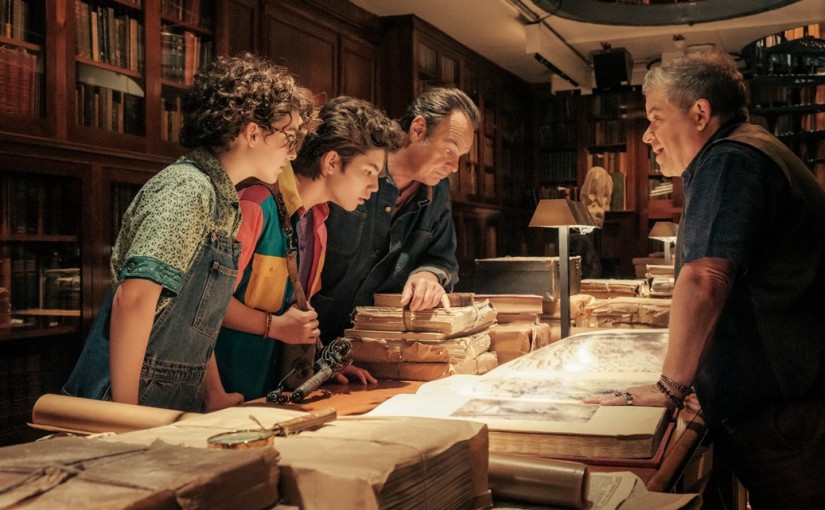
GHOSTBUSTERS: FROZEN EMPIRE

By Marc S. Sanders

When you make a new installment in a long-celebrated franchise, going on forty years, you have to reinvent the base material to keep it fresh and new.  I think the Jurassic Park/World movies are fun, but don’t they also feel like carbon copies of each other by this point?  I mean how much can you broaden the adventures that come with dinosaurs? The roar, they run, they eat.  

With the Ghostbusters films, there’s more flexibility in what you can do.  You can replace Saturday Night Live players with a fun, lovable leading man like Paul Rudd and he can team up with some brainy kids to fend off ghosts in the best movie jungle there is, New York City.  However, why drain all of the comedy out of the burger?  

The ongoing teenage troubles of the latest reinvention of the Reitman/Ramis/Aykroyd property hinges on so much teen angst that ghosts and ghouls only appear after we’ve endured one Breakfast Club moment after another.  Sadly, there aren’t many spooky critters roaming around the metro area anymore.  Who you gonna call? Doesn’t feel like we need to call anybody, really.

Here’s the pyramid food chain of Frozen Empire.  1) Sad, frustrated teens 2) Inevitable cameos of the celebrated heroes of the first two movies 3) Ghosts.  This movie needs to reexamine its priorities.  

The main storyline is carried by McKenna Grace as Egon’s granddaughter Phoebe who is grounded by Walter Peck aka Mr. Pecker aka Dickless (William Atherton).  I’m referencing what this guy is remembered as because the movie fails to do so. Phoebe is a minor.  Therefore, she can’t hunt after ghosts and thus builds a relationship with a sixteen-year-old friend named Melody (Emily Alyn Lind) who appears in the form of blue supernatural lighter fluid.  Melody died in a fire.  Sooooooo…much of these two young ladies’ sad sleepover conversations populate the film.

Then there is Dan Aykroyd returning as Ray to enlighten some back story on the main monster we can expect to appear in the third act.  He’s performing like an R.L. Stine adult in a second-rate Nickelodeon kid’s picture though.  Ray Stanz was always the guy who had loony science on his mind, but the comedy of the character shown through with Aykroyd’s boyish naïveté.  Remember how excited Ray was to go down the fire pole or when he thought up the giant marshmallow man?  What about when he talked back to the pink slime in the first sequel? It was downright ridiculous and now Ray is a midlife crisis depressant.  

Bill Murray is collecting a paycheck again.  The character is the same with the comedian’s special sarcasm, but if he’s in this film longer that ten minutes it’s a lot and he utters no more than five lines.  He serves one purpose to Frozen Empire – to be in the advertisements and draw a crowd.  Paul Rudd and Bill Murray have done two Ghostbusters and an Ant-Man movie together and somehow, they still have yet to share a great exchange of dialogue.  For the third time in four years, Rudd and Murray seem to be unaware that they are both members of SAG working on the same project.  If I ever need to deliver the argument that there is a lack of good writers working today, I’ll use these missed opportunities as an example of what I mean. 

Annie Potts wears the nerdy glasses, but I don’t remember a thing she says.  Ernie Hudson as Winston plays the financier of the modern Ghostbusters, but there’s nothing special going on with him.  Even the librarian from that fantastic opening of the 1984 film appears.  He talks to Ray for a moment and that’s it.

Why are these people here?  Just so we can say “Uh!  Look who it is!!!”  C’mon!  Surely, there’s something better to be spun here.

Part of the plot involves the threat that the storage container of all the ghosts ever captured over the years will be breaking down soon and set all of the paranormal prisoners free.  That’s brilliant!!!  Yet, why doesn’t the movie capitalize on that????? We are threatened by this terrible scenario over and over with music of impending doom and glances at a digital monitor.  Can the thing just break already?  

We see the slimer green ghost blob under a pile of candy wrappers in the attic.  Not bad.  Where are the other ghosts we had become familiar with?  Remember the cab driver, or the angelic apparition that seduced Ray in his sleep?  Where are they?  I’d rather see these guys than a boring Dan Aykroyd in a jean jacket.

The best parts of Frozen Empire occur in a turn of the century prologue with frozen characters in a formal dining room.  There’s also a fantastic pursuit following that scene showing all the cool tricks of the updated ECTO mobile as it races through the streets chasing after an eel like monster.  During the sequence a drone trap launches off the roof of the hearse!  That’s awesome.  The last good scene occurs midway when one of the stone lions outside the NYC public library comes alive. Everything else in this sleepy picture is very bland, however.

The original, and even Ghostbusters II and the Paul Feig lady comedienne reinvention worked as comedies like the franchise became known for.  I wasn’t crazy about those two sequels but at least the ghosts were the punchlines.  Now the main ghost needs therapy and so does the lead character.  It’s so dreary.  

Where’s the funny?  There is no longer a silliness or loony tune appeal to these monsters.  As well, there are no more jokes to tell about The Big Apple.  Don’t forget that Ghostbusters showed us that ghouls can pop out of drainpipes, drive cabs, gorge themselves on room service meals and hot dog stands and even cause the ghost hunters to wreck a posh banquet hall all in the service of the greater good.  The well of laughs that stem from New York cannot be all dried up just yet.  There are subways and buses to haunt. Broadway theatres. Cell phones. Parades. Ferrys. Morning News Shows.

I left Ghostbusters: Frozen Empire feeling morose and melancholy.  When I got home, I knew for the first time that Zuul could never be living in my refrigerator and suddenly I was as sad as Melody and Phoebe.  If this movie is depressing, then is it me or is it the Ghostbusters of today?
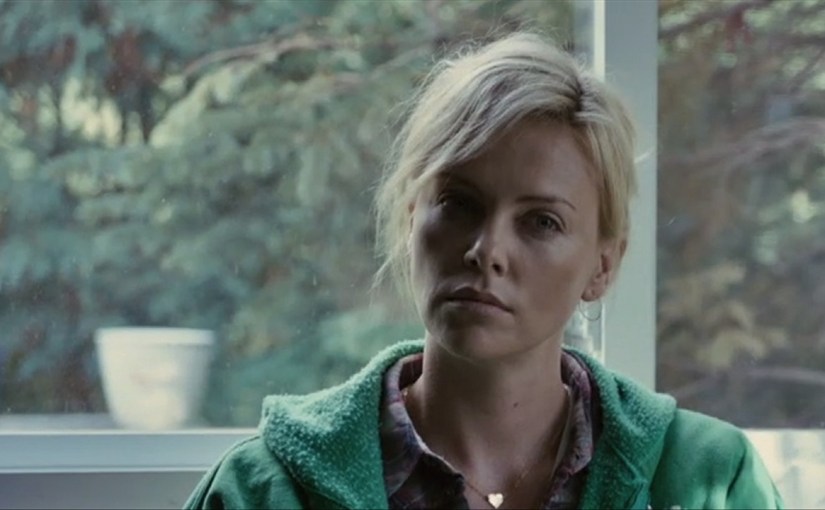
YOUNG ADULT

By Marc S. Sanders

Charlize Theron is always an actress who impresses me. Ever since I saw her in The Devil’s Advocate, I’ve been taken with her on screen presence. She simply has a natural way of bringing a character to life, and usually it is with unhinged and complicated women who never escape and overthrow what’s tormenting them. Her Academy Award winning turn in Monster as serial killer Aileen Wuornos is a perfect example, and her role in Jason Reitman’s film Young Adult is a close second best.

Young Adult was written by Diablo Cody (Juno, also directed by Reitman) and depicts Theron as Mavis Gary, a once successful author of a series of novels aimed at pre-teen and teenage girls. When she receives an email baby announcement from her former high school boyfriend Buddy Slade, Mavis wearing her sweatpants and worn-out t shirt packs up her puppy dog and leaves her one-night stand in her Minneapolis apartment and heads back to her small Minnesota town. She’s not there to see the newborn bundle, however. Mavis is under the delusion that she can win back Buddy who is now happily married.

This isn’t going to go well for Mavis, especially while she’s drowning in one bottle after another.

Patton Oswalt plays Matt, a former classmate, who comes upon Mavis’ arrival. Matt knows immediately that Mavis doesn’t have it altogether. She has not endured as well as he has following a terribly violent hate crime experience in high school when he was mistakenly taken for being gay. Mavis recalls this moment but with great insensitivity. She laughs as she reflects on the incident. Her take equates to maybe Matt being victim to a wedgie or being trapped in a locker. It was much worse than that. Matt’s legs and genitals were smashed in the beating.

Oswalt is very good in his role. Matt doesn’t need to have any regard for Mavis, the once popular prom princess. However, he can’t help but see her pitifully make a fool of herself as she attempts to intrude upon Buddy’s life.

Buddy appears naive to Mavis’ sloppy advances. Buddy sees the image of a successful author prim and proper. Matt sees the ugliness of Mavis beneath her makeup and dress clothes that never hang well on her intoxicated stature.

Cody’s screenplay takes place over three days. In that time, she allows her main character to come to the realization that she’s not a happy person and most certainly is alcohol dependent. A baby welcoming party makes evident of this conclusion. It is an event that will be remembered but for all the wrong reasons. Theron is astonishing in this scene. Not a likable character and yet so well performed.

Reitman is a good director with simplicity. He is simple at showing what likely eats at the good, published writer Mavis used to be. When Mavis drives back into town, Reitman shows her car pass by franchise businesses like Chili’s or Staples. There’s no imagination in these locales. No history or depth. There’s no stimulation. It’s all corporate. Just my theory, but I’d say that could drive a successfully imaginative writer into a depression. No wonder Mavis left town. Problem is she moved on with no constants in her life. Consider the fact that Mavis doesn’t even share with her parents that she’s come back into town.

Juno is the better film from Reitman and Cody. There was a broader scope of the characters at play, beyond just Juno herself. Theron and Oswalt are the only ones with multi dimensions in Young Adult. It’s a benefit that the film clocks in at only just over 90 minutes. Any longer and I’d have grown tired of this film. I can’t expect Mavis to overcome her demons in this short period of time. So, we are reserved to seeing how she further undoes herself and nearly destroys the family and people (not friends) she once knew. Basically, Young Adult shows a woman arrive at rock bottom. Therefore, I applaud Reitman and Cody for keeping this film condensed. The high school popularity is but a memory. Success is gradually moving away from her. Despair and depression and the illness of addiction is all that is left for her.

MAGNOLIA

By Marc S. Sanders

Ernie Anderson was the cool voiceover for the ABC television network that would introduce upcoming programs for years. He was a staple of the television industry from the 1970s through the ‘90s. I promise that you or your parents know his sharp, recognizable tempo. So, it makes sense that his son Paul Thomas Anderson would center his multiple story crossover film Magnolia around the television industry, within a 10-block radius in the Hollywood Area. Magnolia presents the off-chance coincidences that somehow happen and the unusual phenomena that can occur when never expected.

Anderson’s three hour epic offers storylines centered around former and present day game show quiz kids (Jeremy Blackmon, William H Macy), the game show host stricken with cancer (Phillip Baker Hall), the drug addicted daughter he’s estranged from (Melora Walters), the dying game show producer (Jason Robards), the producer’s son who is a motivational speaker for men to sexually conquer women (Tom Cruise), and the producer’s gold digging wife (Julianne Moore).

Because the narrative of the film has a biblical theme specifically referencing Exodus 8:2, there are also two good natured guardian angels involved. John C Reilly as a sweet but clumsy police officer proud of his work, and a sentimental hospice nurse played beautifully with bedside sympathy by Phillip Seymour Hoffman.

Anderson’s film opens with three stories of random coincidence that resulted in the deaths of three different men. More than likely most people would say these tall tales of legend could only occur in a movie. Yet, the voiceover narrator , Ricky Jay, says they did not, and thus begins one specific day with torrential downpours of rain, where all of these random characters will come in contact with a personal experience of monumental impact that will change their individual lives forever. Oddly enough, all these people are somehow connected to one another and are within blocks of each other located near Magnolia Blvd in the Hollywood Hills.

Like Boogie Nights, Paul Thomas Anderson directs a film of very weighty emotions that thematically focuses on the sins of fathers that carried over to the futures of their children. The game show is titled “What Do Kids Know?” which likely symbolizes what they didn’t know while at the behest of their parents during their youth. What they know now about their fathers is a burden to bear in insecurities, drug abuse and outright cruelty for the opposite sex. Every character represents some aspect of this ongoing theme during Magnolia. It’s a lot, a whole of information, but fortunately it moves at a very swift pace with an energetic steady cam and dramatic notes of instrumental soundtracks.

Anderson consistently shows different references to Exodus 8:2 by either using the numbers in clocks or decks of cards or temperature readings of the weather or on marquee signs. It’s almost like a scavenger hunt when seeing the film on a multiple viewings.

MAYBE A SPOILER ALERT:

“But if you refuse to let them go, behold, I will plague all your country with frogs.”

Sure. Most recognize the Bible verse as Moses’ decree to Pharaoh to release the Jews from Egypt. I like to think Anderson used Magnolia to release his beloved, but damaged, characters from their own sins or the sins of their fathers. Set them free even if it could be by means of confession, judgment, offering and begging for forgiveness, or journeying towards a personal salvation.

The smart device that Anderson uses is the angelic music of Aimee Mann. Often I talk about how I love when film characters would spontaneously dance. In Magnolia, the cast surprisingly breaks into song with Mann’s confessional number entitled “Wise Up.” It more or less summarizes each individual plight that all the various characters must endure. Magnolia is only an even better film because of Mann’s music.

Magnolia is a beautiful film that I draw many personal parallels from, especially having now lost both of my parents and being by my father’s bedside during his difficult final days of illness.

It is very touching, sometimes funny, and sometimes a difficult film to watch with a belief in random coincidence that is only stronger after watching it.

Like the film insists “we may be through with the past, but the past ain’t through with us.” After Magnolia finishes, you won’t be through with Paul Thomas Anderson’s film. It’s a film that will stay with you.