THE PLEDGE

By Marc S. Sanders

The Pledge is a moody and bleak crime drama that follows a retired detective’s descent into obsessive madness.

Director Sean Penn opens his film with the gruesome discovery of a murdered nine year old girl found amid the snow covered woods outside a small Nevada town.  She happens to be discovered on the evening of veteran detective Jerry Black’s (Jack Nicholson) retirement party.  Upon receiving word of the crime, Jerry leaves his celebration to explore the scene that is carelessly compromised by the local sheriffs.  His protege partner Stan (Aaron Eckhart) rushes through a possible suspect’s (Benicio Del Toro) interrogation that draws a quick conclusion along with an unnecessary and bloody outcome.

Jerry surrenders his position with the police department, but he’s not entirely convinced the crime has been solved.  He obligates himself to uphold a devout promise he gave to the victim’s parents (Patricia Clarkson, Michael O’Keefe) that he will catch their daughter’s killer.

Time passes and rather than retire into a quiet life of fishing, Jerry purchases an old gas station located within the vicinity of the crime scene as well as nearby where two other murders with similar circumstances occurred.  Jerry is going to wait out the next attempt committed by “The Wizard” or “The Racoon Killer,” and catch him in the act.

The Pledge is a brooding and lonely film.  Sean Penn’s piece offers an impressive list of who’s who actors that appear in small roles to shape out the detective’s progress.  Amidst all of these familiar names in the cast, Jack Nicholson has never appeared so isolated or despondent before.  His character is limited on dialogue.  A thin mustache and a wrinkled complexion with a smoking habit hide any humor or joy.  Jerry Black knows he’s the last capable police detective in this area.  It pains him to abandon his post to the halfwits he leaves behind.

A promise is a dangerous gesture.  If you adhere to it, all obstacles become nonexistent.  Anything will be done to uphold a pledge and conclude your wild theories, even if proof is not conveniently supplemented.   Nothing stands in the way of pledge.  

The second half of The Pledge moves at a slower pace when Jerry welcomes an abused mother (Robin Wright Penn) and her daughter into his home.  A new life seems destined for these three people but at what cost?  Is the hero of this film at least as dangerous as the psychopath that supposedly remains at large?

Would you go to the great lengths that Jerry puts himself through?  Is the expense of his own sanity, and the safety of an innocent woman and her daughter worth this pursuit?

Sean Penn’s film does not operate on suspense. What action there is only fuels Jerry’s chase at a long-shot truth.  It’s a slow burn crime drama that makes the central murder a far second priority to how the initial discovery overtakes the main character.  Again, this kind of mania is a different breed from Jack Nicholson’s other crazed portrayals found in One Flew Over The Cuckoo’s Nest, Five Easy Pieces, or The Shining.  Nicholson is not as vocal or expressive in this role.  Yet, we all know what drives this guy with what few words he uses.

Robin Wright Penn and Nicholson share some effective scenes together. Their motive to be with one another stems from a misery loves company ideal. Good casting here, and throughout the film with small appearances from Helen Mirren, Harry Dean Stanton, Sam Shepard, Vanessa Redgrave, Mickey Rourke, Tom Noonan, Clarkson, O’Keefe, Del Toro and Eckhart.

Sean Penn is very good at creating visual moods to his film. The image of Nicholson standing within the pen of a crowded turkey farm with the anguished parents of the victim is truly haunting. Animals of all kinds seem to emote a cold harshness as well. The first image to appear consists of a swarm of large, winged birds soaring above this backwoods area where the biggest thing to happen is a town parade. Otherwise, as one girl tells Jerry there’s nothing else to do here. This remote Nevada area is unprotected from greater powers, and its only guardian is forced to accept retirement, leaving his community vulnerable. This formerly decorated Marine is now a formerly decorated cop, and the unseen animals-or monsters-still roam.

I won’t spoil the ending which I commend, but there is one moment that Sean Penn includes in the final cut that is objectionable.  For the first time in the picture since Jerry Black accepted the case, one moment near the end of the movie tells the audience everything they need to know while leaving Jerry in the dark.  I think it was a poor choice to go this way.  The audience is going along with Jerry’s pursuit until they are spoon fed a resolution they didn’t earn because Jerry never arrives at this conclusion.  A better route would be to leave the audience in the same dizzying haze that Jerry must live with.  Some hanging threads should be left untied. The Pledge is a pot boiling, well-made and disturbing film, but with minutes to go before the end credits roll, a less is more approach should have been adopted.
MAN ON FIRE (2004)

By Marc S. Sanders

A movie that has eluded me until now is Man On Fire featuring Denzel Washington in another Tony Scott film.  I say eluded because with this director/actor combination I’m usually satisfied with the finished product.  That wasn’t the case here, though.

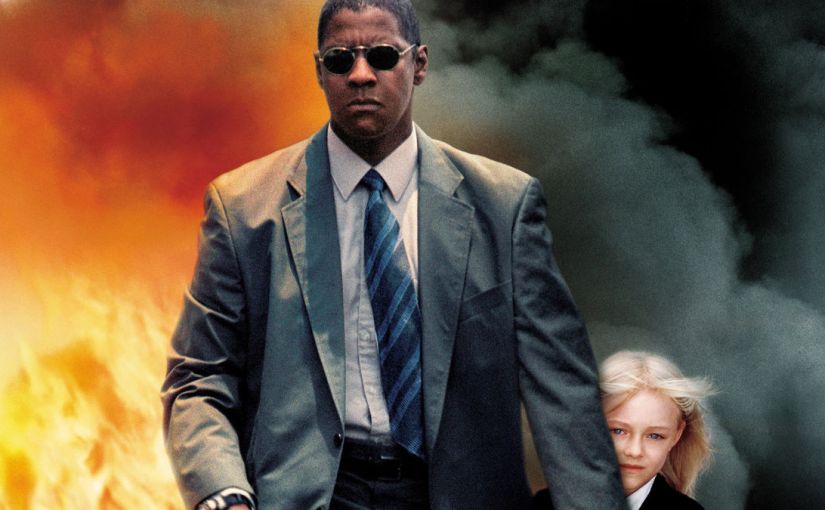
Washington portrays a hard drinking bodyguard named John Creasy.  He’s recruited by his war buddy, played by an uninteresting Christopher Walken, to protect a young girl named Pida (Dakota Fanning), daughter of an automobile industrialist and his always fashionable wife (Mark Anthony, Rahda Mitchell).  Creasy is a cold fish at first who refuses to accept Pida’s friendship.  Jump to a couple of quick scenes later and he’s become her surrogate father and swimming coach.  In a matter of seven minutes of running time, I’m supposed to accept that this guy has turned into a cuddly teddy bear for this kid.  As soon as that happens, Creasy is ambushed and Pida is kidnapped following her piano lesson. We are not even a quarter of the way through the picture, but the remaining hour and forty minutes play like an awful how-to documentary on effective means of torture for bad guys before ruthlessly killing them.

Tony Scott is a director who always seeks to demonstrate that glossy film styles are more significant than the screenplays he directs or the characters who reside within.  (Two exceptions come to mind though, Crimson Tide and True Romance.  Maybe some of Top Gun too.)  Man On Fire is a frustrating watch as Scott’s camera performs like a narrator with attention deficit disorder.  It can never sit still.  The movie jerks around so much with ridiculous quick cuts and deliberately grainy and distressed cinematography.  Just when I’m trying to comprehend a new player who enters the fold, the camera jumps to something else like a street corner or a moving car or Denzel Washington’s sunglasses. There are subtitles for the Spanish speaking characters that appear in a block letter font that looks like it came from a karaoke machine.  There’s also subtitles for what somehow appear to be “important” or “powerful” statements.  A line like “pass the salt” might read like “PASS the SaLt…PLEASE!!!!”  Tony Scott is obviously going for some kind of MTV music video approach, but it’s awfully distracting and downright annoying.  As well, I must ask why.  Why go through all this effort? The cameramen must have been getting motion sickness while fumbling and shaking around their equipment to shoot this picture.  So why bother?

The most interesting plot point happens in the first three seconds of the movie.  A statistic pops up describing how often kidnappings occur in Mexico (one every sixty seconds), and how as many as seventy percent of those incidents end up with a dead victim.  That’s a shocking dilemma, worthy of attention. Through his career, Washington’s selection of scripts has allowed him to tackle important issues with moments of debate and smart dialogue, as well as suspenseful action if there is a call for it.  However, Tony Scott and screenwriter Brian Helgeland are not interested in using these facts as a springboard with Man On Fire

Once the expected kidnapping occurs, and following a very quick healing – as in less than two days – of multiple gunshot wounds to the chest and back, John Creasy goes on a war path of revenge when he learns that Pida is dead.  Creasy doesn’t get to perform with much intellect here.  Having only a partial license plate number, he’s able to follow the breadcrumbs that lead to a crime syndicate notorious for winning millions in ransom demands.  Creasy simply goes up the food chain from one member to the next until he gets to the top of the pyramid.  That’s the movie!  That’s it!

He’ll cut a guy’s fingers off and cauterize them with a car cigarette lighter.  He somehow has access to a rocket launcher to use within the city.  Sadly, the most novel technique is to stick a rectal detonator (yes, I said rectal) up a man and set a timer for the guy to come clean with information before it goes off.  We can thank Tony Scott for putting up a countdown digital clock on the screen to gauge how close this thug is to his demise.

My past experience with movies like these have taught me that there’s always a traitor.  Someone set the plan in motion to abduct the little girl.  That’s not hard to figure out.  Once the character appears on screen, it could not be more obvious.  The motivation is just as ridiculous.

Man On Fire is only imaginative in how the protagonist dispatches one guy after another.  It lacks any effort in creativity towards its hero.  The guy drinks. He torments his enemies.  He’s got nothing interesting to say.  There’s a neglect for a very real and common problem within the country of Mexico.  The only design that is given attention is “artistic style” that Tony Scott adopts to mask away what is not there in any of the writing or character development.

I’d like to learn more about how the Mexican government responds to these kidnappings and maybe the experience that survivors endured.  Show me the torment that the families go through.  Can I see the method to the kidnappers’ plots or how they select their next target?  A very real predicament was offered with Man On Fire, but then it was tossed aside so I could see the effectiveness of an explosive suppository.  Now, is that really a movie that any of us want to see?

THE RAINMAKER

By Marc S. Sanders

Francis Ford Coppola didn’t just call his film The Rainmaker. He called it John Grisham’s The Rainmaker. I understand the significance as a large portion of the film relies on voiceover narration from its main character, Rudy Baylor (played very well by Matt Damon).

The film focuses on much of the underpinnings of the legal system within the state of Tennessee. Rudy gives insight into his position of ethical practice – he’s fresh out of law school but doesn’t have a license yet – versus the large giant sell out attorneys (a towering, sharp dressed and slick Jon Voight) that represent goliath parties like big time insurance companies. Grisham’s novel, along with Coppola’s screenplay, also leave room in the beginning of the film for the sleaze of the law practice with Rudy’s first employer who goes by the moniker “Bruiser,” played by an oily Mickey Rourke.

Rudy has not even passed the bar exam at the start of the film but he’s already got three cases in progress. He has agreed to completing a will for a kind old lady (Teresa Wright) who is adamant about leaving her estate to a television evangelist. He also volunteers himself to protecting a young woman named Kelly (Claire Danes) from an abusive husband. His biggest case is going after a million dollar insurance company for wrongfully denying a claim filed by one of it’s ill insured. Rudy knows the insured is justified to sue and it could be a huge and necessary windfall for him and his unlicensed, corner cutting partner (Danny DeVito), but it’s only him against a grand army of legal gods lead by the great Leo F. Drummond, Esq. (Voight).

Grisham and Coppola wanted to depict a drive for doing right by the law and the people it’s meant to protect. Damon’s portrayal of Rudy represents that ideal. His father hated lawyers and he grew up in a home life that never responded favorably to the merits of officers of the court. Rudy defies what his father frowned upon. Despite his inexperience in a courtroom and his ability to respond with objections and cited legal rules, he knows he’ll be a good lawyer simply because he can distinguish between right and wrong. He doesn’t need to sink as low as Drummond’s cronies by bugging the opposition’s office. Will Rudy’s righteousness be enough though? He’s so dang honorable in his profession that it might just be the ultimate means of his defeat.

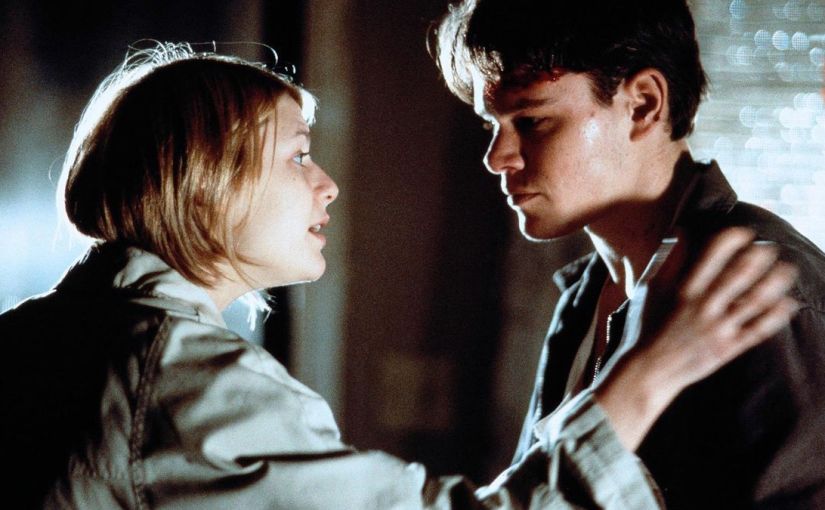
Same can be said for Rudy’s will to protect Kelly, the young, abused wife. Precedents of law keep her husband on the streets no matter how bruised and bloody she gets time and again. This man is a monster, but no higher power is looking upon this victimized wife to legally protect her, and this man will continue to beat her until one day she’s dead. Rudy wears his heart on his sleeve for this woman and again can only serve as an honorable servant of the court. When he steps out of that line a little by risking his life to save this woman, he’s testing his own sworn code that he’s respected while others have dismissed it.

John Grisham’s The Rainmaker is one of those under the radar films not celebrated enough. I recall it being shown in limited theatre capacity, and it hardly did well at the box office, but it’s really a remarkable piece as it shows an unconventional and honorable attorney, reminiscent of Harper Lee’s Atticus Finch but set in modern day. Nearly everyone around Rudy, from his own father, that he describes to the students he attended law school with, to even the even the fool of a judge (Dean Stockwell) who swears him in as well as his own partner (DeVito in a hilarious, quick solving, underhanded role), are beyond any moral compass and yet Damon ensures Rudy Baylor sticks to his convictions.

Coppola’s film is not a legal thriller. It’s an observation of how the established perceive the law and the one fish who treads water above the bottom feeders, allegorically shown in Bruiser’s fish tank, seek out big rewards. For Rudy, the client matters. For everyone else, only the money matters.

IRON MAN 2

By Marc S. Sanders

Iron Man 2 is a Frankenstein’s Monster of a film. Director Jon Favreau returns, but not with the same insight he invested into the first Iron Man. This loud, headache inducing sequel is an assemblage of cutting room floor scenes taped together to mask itself as a cohesive narrative brought to life. The movie exists. Yet it has no brain.

Six months have passed since the events of the first film, and Tony Stark (Robert Downey Jr) is ready to open his peace parade Expo in New York. The problems begin here. Stark, who redeemed himself as a born-again, eyes open martyr at the end of the first film, reverts to an obnoxious jerk full of brash, rude cockiness. Downey goes so over the top with his improvisational one liners that you can hardly stand Tony Stark, and this is all before he gets drunk and pees in the Iron Man suit.

Stark is experiencing rapid blood toxicity from the suit and he is unable to find a solution. I might have been concerned at first but after the film is over, the convenient remedy just made me feel cheated. Poor writing offers a convenient get of jail free card.

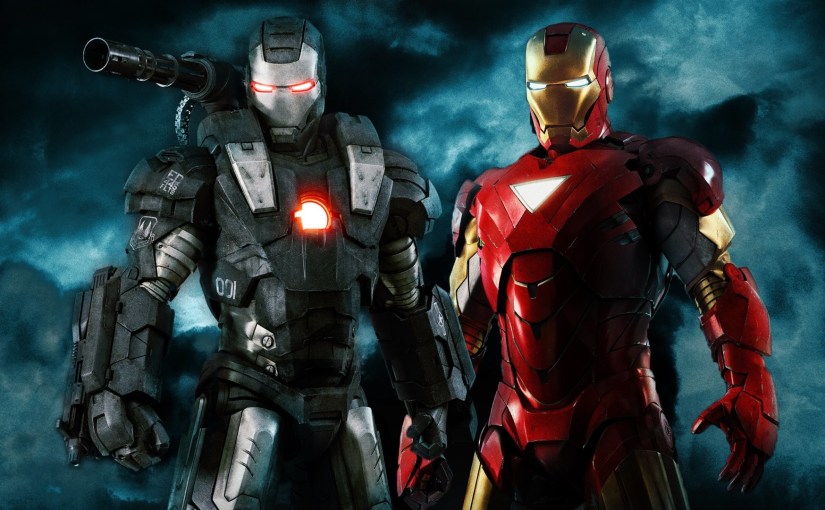
Then there is Stark’s relationship with his friend Rhodey (Don Cheadle). Cheadle shows potential in the part he resumed from Terrance Howard, but he really only serves two sole purposes, to have an armor throw down with Tony throughout the mansion (a stupid fight by the way), and to wear the new War Machine armor. That, I’ll say is pretty cool in charcoal black with red eyes and a shoulder resting machine gun.

Gwenyth Paltrow is back as Pepper Potts, and she just kvetches a lot. Paltrow and Downey’s chemistry are all but gone. Not really the actors’ fault though. More so, it’s the dumb screenplay by Justin Theroux who I guess found it adorable for the two players to squabble amid the action scenes. It’s rather annoying actually.

Theroux makes a lot of misfires here. The great Mickey Rourke appears to have fleshed out a great villain known as Whiplash. A Russian physicist with a grudge against Stark. Rourke offers a scary appearance of long hair, gold teeth and a tattooed muscular body. Oh, and he has a cockatoo as well. Mustn’t forget that. Too much of this film is devoted to this bird that does nothing. Whiplash is insufficiently written. He has a mid-film battle with Stark at the Grand Prix in Monaco, then following a prison escape, he’s harbored by Stark competitor, Justin Hammer, in a factory where he does nothing but build robots. None of this is interesting.

Sam Rockwell plays Hammer as a whiny kid in nerdy glasses and even nerdier three piece suits. He’s not a villain you ever love. He’s a Frank Burns, but his stupidity against Stark and Rourke’s character offers no humor from the stooge that he is.

Side stories focus on anticipation towards the first Avengers film with Samuel Jackson as Nick Fury and Scarlett Johansson’s Black Widow, yet not much is offered. They have nothing to do with anything else going on in this hodgepodge. Johansson finally gets a good fight scene during the climax, but it remains brief.

So there’s really nothing in Iron Man 2. It’s just a mix of things smashed together. The Iron Man suit only has three scenes, one to open the Expo (no fight there), one to have drunk Tony Stark fight with Rhodey while wrecking his house (Belushi did it better in Animal House, as well as the cast of Sixteen Candles), and then finally in a climactic ending against Hammer’s military robots and Rourke’s Whiplash who hardly participates in the moment.

Iron Man 2 is likely my least favorite of all the MCU films. (Actually, Eternals took that top honor, recently.) It offers one redeeming quality and that’s its end credit scene, maybe my favorite of that particular category.

Otherwise, Iron Man 2 is pointless, dumb, ignorant of its product, and flat out obnoxious.

Stan Lee Cameo: Was that Larry King? Really?