THE RIVER

By Marc S. Sanders

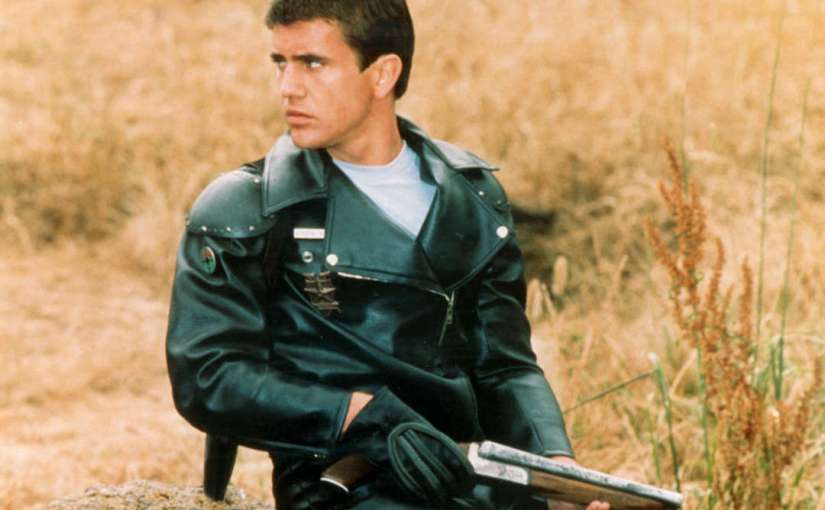
A film like Mark Rydell’s The River only thrives on witnessing the misery of people living with the misery of others.  That’s not to say this is not how ordinary people are often forced to live.  There’s too much suffering in the world.  I can never deny that.  A homeless shelter or a prison are settings of great misfortune, hardship and sadness.  Yet for a movie, sometimes you must ask what the point is, especially when it is apparent that the heroes are destined to lose against the forces of nature while the villain is entirely correct in his own cause.  Sometimes in a no-win situation it is honorable to just give up.  I wish Tom Garvey, the corn farmer, would have just quit being a farmer and sought a better life for his wife Mae and their two young children.

Tom and Mae are played by Mel Gibson and Sissy Spacek.  He is the current generation who owns the Tennessee corn crop farm that his family lineage has passed down.  The first twenty minutes of The River depict the harshness of terrible rainstorms that flood the nearby river and wash away the family’s prized crops and land.  Tom, Mae and the children do everything in their power to recede the water as the rain continues to come down in buckets.  Mae fills up sacks of mud and water with their daughter Beth.  Their son Lewis works with Tom on the beat-up tractor against a never-ending battle of plowing the flood waters away from the land.  There’s no way to overcome this terrible plague of weather that comes at least twice every year.  As I watch the sopping wet struggle that opens the picture in the middle of a stormy night, shot very well by Rydell and his crew, I already ask myself what’s the point?  Get out of this situation Tom!!!!! Take up babysitting, tutor, become a fireman, go back to school.  Relocate for heaven’s sakes!!!!

What recuses the Garvey family and the farm, one more time, is when the rain finally stops.

Scott Glenn is Joe Wade.  He is a wealthy industrialist, who also grew up in these parts under a family legacy.  Joe is on the good side of the state politicians and is aggressive in buying out the farmers’ land so that he can flood the valley, build a dam and use the overabundance of water to power the utilities of the area in a more efficient and much less costly way for everyone.  And he’s the villain of the story????????

Joe makes sense.  Tom’s passion for holding on to what his family has owned does not.  I get the idea of grasping on to family heirlooms like my grandfather’s watch that he maybe kept hidden in an uncomfortable orifice while being held captive by the Nazis, or the prized jewel that survived a shipwreck generations ago.  I also understand the desire to carry the torch of the harsh labor a father and a father before endured and died for while allowing a farm to thrive.  Yet, there are children to feed and debts to pay. The ruin that comes from the acts of God do not empathize.  Therefore, I say again, sometimes the bravest and most sensible thing a person can do is actually quit.

Tom, along with most of the neighboring farmers, are adamant about not selling their land to Joe.  When auctions occur to sell off the equipment and leftover supplies of the few that do surrender, it is practically considered a gross violation of a sacred code in these parts.  I look at the stubborn folks who frown upon their peers as terribly disrespectful.  The script is expecting me to empathize with Tom and those who stand with him though. 

Midway through, The River takes a detour as Tom leaves to do hard labor elsewhere to earn much needed cash.  This is where misery does not love company.   He is one of many men selected to do factory work as an inexpensive replacement for the union workers on strike.  Tom, along with the other recruits, are threatened, called scabs, and in a glaring scene spit directly in the face.  A fellow worker is beat up in the middle of the night.  All of this is powerful footage and yet who am I supposed to empathize with?  These workers on strike are demanding better benefits and rights.  A guy like Tom, who values the survival of the Garvey farm, interferes in someone else’s just cause for his own welfare. 

I think about films like Schindler’s List and even The Lord Of The Rings fantasies and I witness the hardships and suffering of a collective people.  Those stories never expect me to value the misery of a select few over others.  I take stock in a whole populace.  In Mark Rydell’s film, however, I feel like I’m only asked to cry for Tom Garvey’s relief, the stubborn father who is defiant for an unlikely future of promise for the area he occupies while also ignoring the welfare of his family against the forces of nature.  Joe is offering Tom and Mae hundreds of thousands of dollars for their land so that he can enhance the state.  Joe’s bounty will rescue the family from insurmountable debt and the unforgiving floods that repeatedly destroy their crops.  Still, I’m supposed to believe that Joe is the asshole.

Sissy Spacek was nominated for Best Actress for her performance.  She competed against Sally Field (who won) and Jessica Lange.  Both were ironically featured in their own “farm life films” in 1984.  Spacek remains one of Hollywood’s finest actors.  However, I did not think there was much for her to do here.  A drawn-out sequence has Mae caught under a tractor with a nasty wound while the blistering heat bears down with no one around to help.  It has its moment of suspense because this film could go in many different directions of tragedy, but a development like this is more circumstantial than performance based.  If Katherine Hepburn or Laurence Olivier were under that tractor, the scene would not play out much differently.  It’s just a standard farmer accident destined to be included in a standard farmer picture.

The possibility of a love triangle is also implied during the film.  As soon as I saw the opening credits (Sissy Spacek, Mel Gibson, Scott Glenn), I hoped against all hope that the story would not go there, and yet…

Having hardly even used a rake or a shovel, I know that farming is a grueling life and still so necessary for our world consumption to survive.  The River attempts to demonstrate this message. I empathize with people like Tom.  I really do.  However, I empathize with the sacrifice they may need to take, not with their with their foolhardy stubbornness or their intrusion upon others’ challenges for gain.  If a doctor told me that no matter what efforts he performs he will not be able to save my arm or my leg, I’m going to have to believe him and accept that the limb must be amputated.  If an overflowing river and an unbearably long rainstorm affects my home, my farm, my family and my livelihood at least twice a year, eventually I’m going to come to my senses and tell myself that the bad guy is probably right. 

Contrary to the well-known slogan, sometimes money is everything.
THE ROAD WARRIOR

By Marc S. Sanders

An Australian post-apocalyptic desert wasteland is the setting of George Miller’s B movie classic The Road Warrior.  It’s a film deliberately short on depth, but big on mash ‘em up, bash ‘em up high-speed hot rods, muscle cars, motorcycles and one big rig truck.

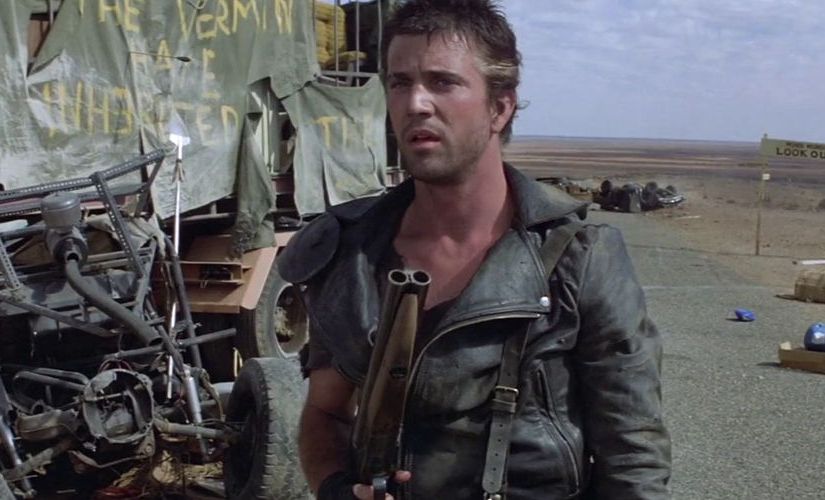
Mel Gibson returns as Mad Max, the leather wearing drifter driver who patrols the endless roads.  A brief narrative at the beginning recaps some of the events of Miller’s first film in this series, Mad Max, explaining that the governments worked against one another, riots ensued, and a nuclear holocaust left little of the population to survive with a shortage on the most precious commodity, fuel.  Max was a policeman whose wife and child were slaughtered by the way, but that’s not relevant here.

The center of the film focuses on a small community of people dwelling in maybe the last known functioning oil refinery.  However, barbarians led by The Humungous (Kjell Nillson) who wears a hockey mask and S & M straps over his bare body are intent on taking over the precious area.  The Humungous’ second in command is a red mohawked freak named Wez (Vernon Wells).  Everyone else in the gang is dressed in the same thematic sex play costume wear with their ass cheeks on display. 

Following some episodes of havoc, Max, along with his dog named Dog, form a contract with the oil refinery dwellers to get the big rig, fuel it up and attach it to a tanker for a journey across the wasteland towards a paradise of ocean blue oasis.

Max has sixteen lines in the whole film.  I’ve expounded on this movie more than he ever could.  In fact, Dog has more dialogue. George Miller knew he wasn’t writing anything of multi dimension or fleshed out characterizations.  You can hardly understand anything that The Humongous has to say or bellow.  It doesn’t matter.

What’s important is the demolition derby footage contained in The Road Warrior.  It’s thrilling.  Bodies get bashed by metal and caught in barbed wire.  Explosions go off in huge fireballs against a scorching sun.  Max fires his sawed-off shotgun at these gonzo gangsters.  They fire crossbow arrows in return.  Some of them use inventive gladiator kinds of weapons with sharp blades and spikes. 

Miller’s frames per second accelerate the various chases.  Multiple collisions end up in a sand dune or turning someone’s ugly sunburned face into hamburger.  The editing of these scenes is magnificent.  Every crash is pieced together cohesively.  Zoom in close ups are spectacularly orchestrated and the cinematography holds up for welcome daylight action where you can easily make out who is who and what is where. 

The inventions of these junk machine jalopies are quite fun too.  Syd from Toy Story must have taken inspiration from this movie when he assembled his freakazoid toys that tormented poor Woody.  Other than Max’s black muscle car and some motorbikes, everything else looks drilled and fused together for relentless mayhem.  Sedans, SUVs, and station wagons would never survive.

George Miller’s world may seem a little prophetic these days.  It’s not that there’s such a rarity of gas, but the need among the masses to hoard fuel is there considering the inevitable price hikes spread around the globe.  Oil will always be a precious dependent.  Environmentalists, I feel for your crusade but be damned. Oil powers so much in and out of this planet.  Electric cars and the few power-up stations are not the dominant alternative yet and won’t be for a while.  Their longevity has not been proven.  Even the disposal of their expired parts has not yet been considered.  So don’t hate me Elon Musk.  I’ll happily eat my words one day, though, I’m sure.

As thin as the storyline may be, George Miller created this dystopian era for Mad Max to drift through and I commend the imagination of the MacGuffin.  Oil is what we rely on, and the setting of The Road Warrior may not be so far-fetched if it ever came to be that we were short on it.  However, I’m not running out to get my masochistic leather body armor just yet.

Wez, The Humungous and their bandit barbarian warlords may be fearless nut jobs, but I get their motivation.  You never know when rush hour may rear its ugly head in a post-apocalyptic age.  So, you better fuel up your Harley, BMW and Toyota because the boss is still gonna want you sitting at your desk by nine.

HACKSAW RIDGE

By Marc S. Sanders

“Please Lord. Help me get one more.”

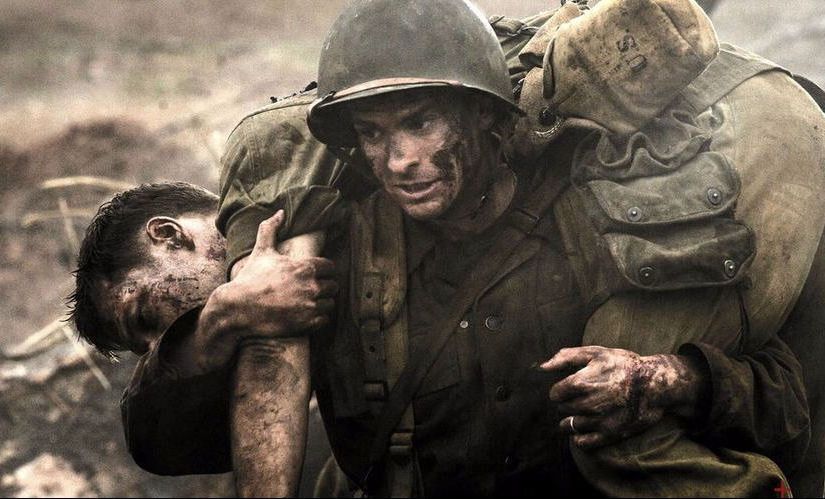
Desmond Dawes rescued 75 American soldiers during the assault on Hacksaw Ridge in Okinawa, Japan following the United States’ entry into World War II, and he did it without ever lifting a weapon.

War pictures have become somewhat boring to me lately. The battle scenes all blend together. The main characters seem to be the same each time. They all have a different heritage (Polish, Jewish, Italian). There’s the soldier who is the bully. The one who’s brother died in battle so he enlisted. The platoon leader has to bark orders to such a degree that audience must hate him, only to love him later on when he makes the ultimate sacrifice. It’s become all the same.

Mel Gibson’s Hacksaw Ridge overcomes those tropes for most of the picture but at times it still suffers from that curse of sameness. It’s only when he returns to focus on his lead actor, Andrew Garfield, who plays Dawes, that we see something special. Dawes’ reasons for not lifting a weapon are vastly explored and they are convincingly justifiable when his domestic life is depicted under the tyranny of an abusive, alcoholic father suffering from his own demons of war. Hugo Weaving is Desmond’s father. Why isn’t he getting any accolades for his performance? He’s fantastic.

Garfield is very good in the role even if he really doesn’t have to shape a character arc for himself. His performance is all about maintaining his character’s convictions. He doesn’t change. Rather, the men he serves with do.

Teresa Palmer plays his wife, Dorothy, and she’s good as well. She’s not wasted in the script (like I found Michelle Williams in Manchester By The Sea or Rooney Mara to be in Lion.). I only wish Gibson showed one last scene between the characters before the film closed out.

Vince Vaughn was an issue for me, miscast as the platoon’s drill sergeant. He’s been pigeonholed in too many comedic roles I guess that he failed to convince me of his authority here. Maybe that’s my problem. I dunno.

Hacksaw Ridge is another very good picture from 2016, but it is weighted down by graphic battle scenes, all well played out, mind you, but all done before. It’s not until late in the film that Garfield steps up to show why Dawes was so special to this particular moment in history. That’s when the emotion of the film kicks in and the interest heightens itself.

LETHAL WEAPON 2

By Marc S. Sanders

Richard Donner, Mel Gibson and Danny Glover successfully triumphed in 1989’s summer of sequels with Lethal Weapon 2. It was a big box office smash thanks to the pairing of the two leading men making a memorable team with Donner expounding on the beloved humor that the first film provided.

The story is ho hum; South African drug dealers with diplomatic immunity. The top henchman, nick named “Adolf,” has a mysterious connection to kamikaze cop Martin Riggs (Gibson). Nothing so shocking though, and somewhat contrived.

The big star addition here is Joe Pesci as Leo Getz, the sleazy accountant who has embezzled half a billion dollars from the South Africans. Pesci is such a rare talent and he comes up with his own routine of comedy. He is as unique as any of the great comics like Milton Berle or Jackie Gleason or Jerry Lewis. Mind you this film was released before Home Alone and Goodfellas, and after Raging Bull. So, his addition to the franchise was a great surprise.

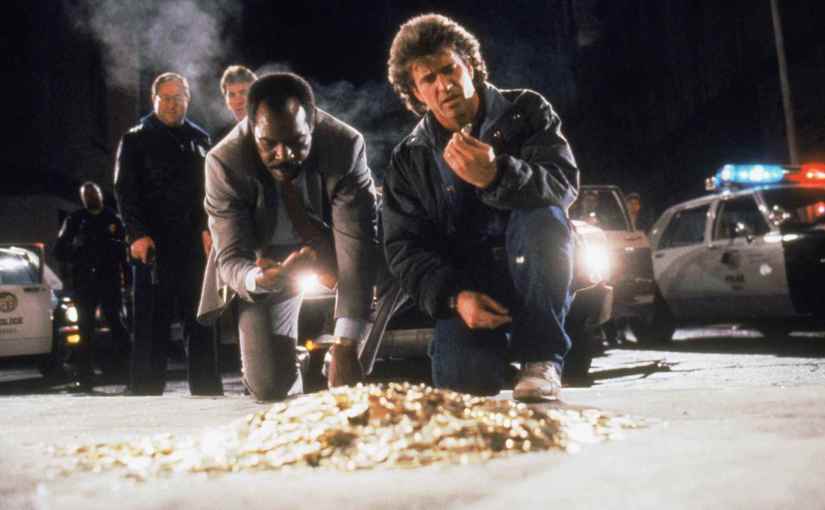
Getz is a fast talking material witness that Riggs with his partner Roger Murtaugh (Glover) are assigned to protect. However, with the cops’ nose for constant action, it’s not easy protecting the little guy when he won’t shut up or sit still.

“Lethal Weapon 2” is more an assemblage of fun set ups with run on gags. There’s Murtaugh’s daughter appearing in a condom commercial, much to his chagrin. There’s his wife’s new station wagon that is progressively getting wrecked thanks in part to Riggs’ crazy ways. Then there is Roger stuck on a bomb rigged toilet as another reason to damage his family’s home. The Three Stooges would be proud of this material.

There’s nothing new here really, but what makes it entertaining is the ongoing chemistry between Gibson and Glover, with Pesci. It’s apparent that these guys had to go off script at times from a screenplay by Jeffrey Boam, based on the characters created by Shane Black.

Donner does as expected with some great action scenes like a car chase to open the film and a careening tow truck that has Riggs hanging from the fender. There’s shootouts galore, as well.

The beautiful Patsy Kensit has a small romantic storyline with Gibson. It wouldn’t have been missed if it didn’t make the final cut, but it’s here and it’s serviceable.

Yeah, there are some contrived elements to Lethal Weapon 2 and the villains are not the greatest, but the heroes hold the film together, like a fun party on a Saturday night at your best pal’s place.

LETHAL WEAPON

By Marc S. Sanders

The opening scene to Richard Donner’s 1987 film, Lethal Weapon, always intrigues me. Following an opening credit flyover of Los Angeles at night played to the tune of “Jingle Bell Rock,” a beautiful young, topless woman snorts some cocaine, steps out on a balcony and leaps to her death. It was a great hook for the beginning of a script written by Shane Black. How does a random suicide jump connect to heavily armed mercenaries with an interest in heroin shipments? Two cops at odds with one another will find out.

Mel Gibson and Danny Glover hit the payload of a new and long lasting cinematic franchise playing suicidal cop Martin Riggs and by the book family man Roger Murtaugh; one of the very best on screen pairings since Neil Simon’s “The Odd Couple.” Riggs is ready to die at any given moment following the loss of his loving wife. There’s an effective dramatic moment where Gibson plays a very drunk Riggs, and loads a bullet into the chamber of his Baretta. Donner gets one unsettling take of a man in despair biting down on the weapon, holding it to his forehead and under his chin. It’s pretty frightening. Gibson is great in this moment, red faced and uncontrollably tearful.

The first of the four films remains the best as Black’s story is continuously pealing back layer after layer. There’s something new to the main plot in nearly every scene. A banker is involved. A nightclub as well, and a prostitute’s house is detonated and of course there’s the girl who dove off her balcony. Shane Black seamlessly connects all the dots.

More so, there’s something to the cops relationship in nearly every scene. We see Riggs & Murtaugh begin with a major divide in working together. Riggs has a cavalier attitude of nothing to lose. Murtaugh is content with turning 50, but might not get to enjoy his new year at the expense of his new partner’s reckless behavior. How does Riggs rescue a suicide jumper? Not the way you’d expect I imagine. Efficiently, a trust is built among the two men with Donner doing a fine job of escaping the main storyline for a nice family meal. It’s humorous and charming but necessary to really appreciate these characters. Then the ribbing among the two guys happens. Jokes about Roger’s wife’s cooking and a contest of target practice at the shooting range allow the audience to feel like they just made two new best friends.

On the other side are two worthy villains played by Mitchell Ryan, and more prominently Gary Busey. They play ruthless shadow company soldiers from the Vietnam era ready to eliminate anyone who interferes with their drug dealing venture. Busey is especially good and ruthless. It’s a shame that gossip magazines and a crazy lifestyle have mostly dominated his public life over the years. He’s so good in this role. He had already been an Oscar nominee by the time this film was released. You have to wonder why did it all go so wrong for him. Gary Busey might have been a top billing movie star.

Richard Donner had already been a well established director with Superman The Movie, The Goonies, and The Omen. His action film was even more a testament to his skills. Action scenes are so well filmed in “Lethal Weapon” whether they take place in a Christmas tree lot, a desert outskirt, a nightclub or on Hollywood Boulevard. Credit should also go to Michael Kamen’s music, adventurously dramatic with an air of mystery at times. He works in accompaniment with Eric Clapton too.

I take one issue with Lethal Weapon. The final scene, a jiu jitsu fight between Gibson and Busey in front of the entire police force abandons the story. Nothing new is left to happen. Ever since I saw the film in theaters I asked myself why is this here. Two tough guys just punching the hell out of each other. There’s no development here. There’s no way a moment like this would ever occur. In addition, the editing is choppy at times and I can’t tell who is hitting who. It’s not a terrible violation, but it’s not all that interesting either.

Barring this ending scene, Lethal Weapon is just a well assembled film of action, humor, drama, suspense, and story. At the time, Shane Black was paid a record sum for his script. I still believe it was worth every penny.

BRAVEHEART

By Marc S. Sanders

Mel Gibson’s Braveheart is a barbaric film. It’s barbaric in its nature, its violence and its characters. It’s also a magnificent piece of moviemaking.

It’s incredible how Gibson can depict himself in violent battle sequences swinging his sword and tumbling over enemy extras while directing the film. Braveheart is truly one of the best films to be directed and produced by its lead actor.

In the 13th century, King Edward Longshanks keeps a firm rule of British monarchy over Scotland. He finds the Scottish to be unruly and out of order. Taxes alone will not keep them at bay. So he declares it noble to have any Englishman bed a newly Scottish bride before her husband has the opportunity. Therefore, to avoid this experience, William Wallace (Gibson) marries his true love Murron (Catherine McCormick) in secret from the British Empire.

Following the escape from rape by an English captain, Murron is taken, with her throat slit to draw out Wallace. From that point on, Wallace never puts down his sword as he begins the Scottish uprising for freedom from British rule.

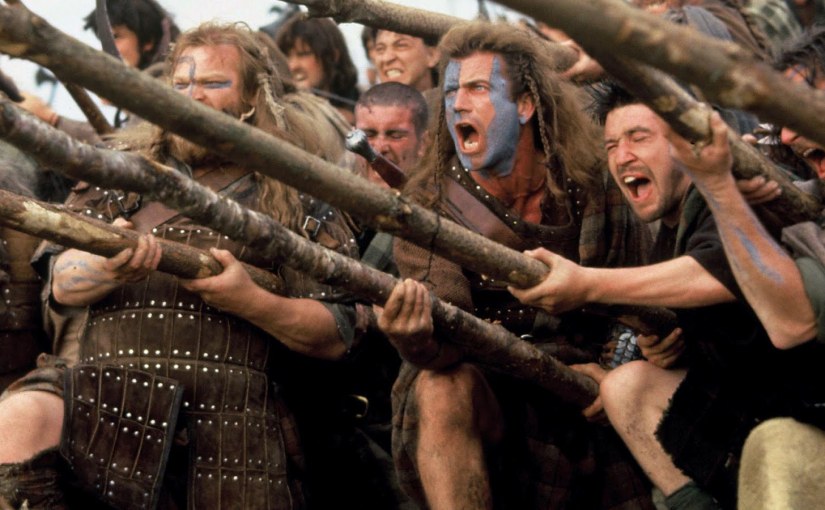
Braveheart is not a complex film and we’ve seen films like this before with swords and shields over wide open battlegrounds. However, the construction of Gibson’s film is outstanding. The extras that make up the British and Scottish armies are dense with breadth. The battle scenes are bloody and fierce with axes, swords, bows & arrows and burning tar.

It’s also a moving piece as Wallace remains steadfast with drive to deliver freedom for his people. It’s not so much a character arc for Wallace. He only changes once Murron is killed from wanting to remain peaceful to war torn and strategic in his attacks.

Instead, a good arc comes from Angus McFayden as Robert The Bruce, a confused Scottish nobleman who allies with William but whose judgement is clouded by his aging father. McFayden gives some brief voiceover narration. His character delivers a few surprises as Wallace continues to do damage to Longshanks’ territorial control.

Patrick McGoohan plays Longshanks and he’s another good villain in a long line of English antagonists. He’s determined to keep his rule and bloodline intact despite his gay, weakling for a son whom he forces into wedlock with the princess of France, Isabella (Sophie Marceau).

There’s a lot of dynamics to Braveheart. Battle scenes of blood and gore with burning flames and garish makeup are the main attraction. However, Gibson’s film offers up conflicts of interest found in Randall Wallace’s script. Romance between William and Marron as well as the rich history that led to Scotland’s independence and the almighty power of England and its conceit that would lead to the country’s defeat against a man’s will to lead his brute army to something greater which they never envisioned.

Braveheart is good entertainment.

PAYBACK

By Marc S. Sanders

Mel Gibson is Porter. No first name given. He’s just recovered from three bullet holes in the back and all he wants is the $70,000 that he was ripped off after pulling off a heist. Nothing more. Just his seventy grand.

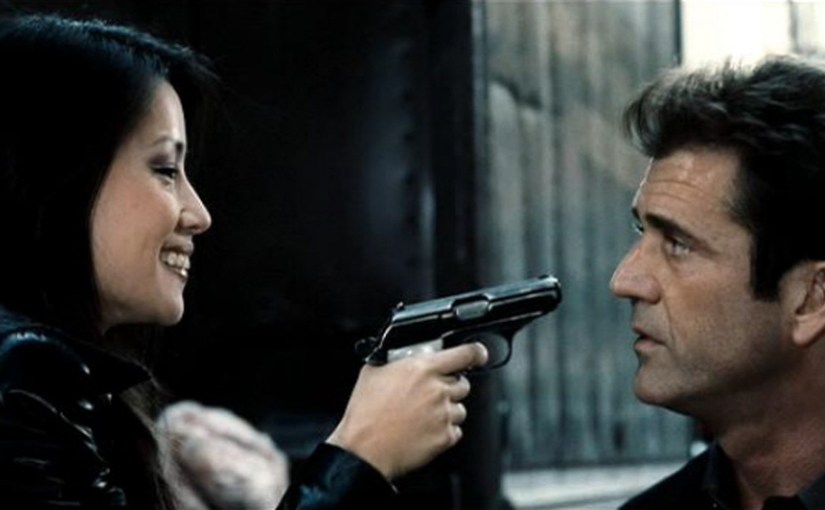
In Brian Helgeland’s film Payback, the idea is to root for the bad guy. Then again in this film, they’re all bad guys. So you are cheering for the best of the best bad guys, I guess. Porter catches up to Val (Gregg Henry), the partner who double crossed him which then leads to Val’s well established crime syndicate that he’s a member of headed by William Devane, James Coburn and Kris Kristofferson. Great surprise character actors for a picture like this. Porter also crosses paths with a professional dominatrix played Lucy Liu (credited here as Lucy Alexis Liu and primed for Quentin Tarantino material). She’s worth every penny you pay for her services.

Helgeland salutes the gritty, urban crime dramas of the seventies featuring the likes of Charles Bronson and Clint Eastwood. The language was more raw during that period. The city was filthy. The violence was even more unforgiving. The film feels quite modern but the cars don’t and the phones are all rotary dials. There’s a washed out grey hue to the cinematography of Payback, and its all very welcome. It’s a well made thriller only deliberately not as glossy.

The run on joke is that Porter is only interested in his seventy thousand dollar stake. The thugs he encounters might insist on not giving him a higher amount but as much as Porter gets tormented, he insists it’s all about just the seventy thousand. So, great responses come from that motif, especially Coburn as the fashionista gangster with the alligator skin luggage.

A film like Payback is simple in its story. The scenes are all about set up. How does Porter evade a drive by shooting? How does Porter handle a couple of dirty cops looking for a piece? How does Porter outwit a bomb in his apartment? The variety of characters that give Porter a rough time each come off like bad guys of the week in a Quinn-Martin television series. It’s just entertaining to watch Gibson as Porter get out of one situation after another.

Payback is a great Charles Bronson film, without Charles Bronson.

MAD MAX

By Marc S. Sanders

What is the fascination with George Miller’s original 1979 film, Mad Max?  I don’t get it.  I know this film shot in the Australian outback was made a on budget less valuable than even a shoestring.  The fast-paced camera shots of cars careening down long stretches of highway are high octane (pun, most certainly intended) and the crashes are completely in your face.  Yet, I need more than this. 

When the film pauses for albeit very brief moments of storytelling such as a motorcycle gang apparently out for revenge against dystopian future cop Max (Mel Gibson’s breakout role), how is this ever even learned among the characters?  When Max opts to resign from the police force and take his wife and young son on holiday, how does this motorcycle gang led by a savage named The Toecutter (great name) catch up with them, and then after a narrow escape, how do they catch up yet again with one another, while making a sudden appearance on the back of these noisy motorcycles?  Miller’s film never goes from A to B to C.  Rather it goes from W to S to Q and then Z.  It’s a mixed up mess.

I’m all for throwing logic out the window when watching a thrilling action piece…if it’s thrilling.  When it’s not, well then, I’m asking for the logic.  Miller’s film feels like a bunch of want ads cut out of old newspapers, and then scotch taped together into a film reel.  I’d be curious to see an original script.  I can only imagine it being no more than three pages long. 

The appeal in 1979 and the years thereafter when the Max character blossomed into a franchise must have come from Gibson on film.  Yes, the stunts in this film with quick edit action pieces are daring.  I still think so forty years later.  This wasn’t CGI after all.  This was all the crunched up metal, rubber tires and flames that Miller could muster.  Still, the one artistic achievement had to be Mel Gibson’s image.  He wears the costume well.  A blue t-shirt enhancing his blue eyes under all black leather with a sawed off shotgun in his right hand while driving a souped up black Pursuit Special automobile with the engine sticking out of the hood.  Just writing that out reminds me of how iconic that image is, and this is before the similar looking Terminator that came along a few years later. Still, that’s where George Miller’s inventiveness stops. 

There is nary a character to consider.  The villains are nothing more than leather clad with bleached hair and dark mascara under the eyes riding Kawasaki bikes.  I know this was made with next to no money.  These guys don’t have to look like Darth Vader, but could they at least offer up something interesting to say?  Max has a couple of partners in the police squad.  They have no camaraderie.  One of them gets burned to a crisp.  Max takes a look at him in the hospital.  Why should I care though?  It’s not like I saw these guys share a Coke together.  Max is married.  They lie side by side each other in bed and their toddler sits on the floor nearby.  So?  Anything else?  Could one of them start a pillow fight or kiss or something, please?  A shoestring budget can still allow relationships to happen.  Miller doesn’t care about that though.  John Woo may show a nonstop bloodbath in any of his films with next to no story.  His films can work however, because he won’t get sidetracked with showing two people in their bedroom doing nothing.  He’ll remain focused on the mayhem.  Miller is not doing that here.  He shows a house with a bedroom.  Yet he doesn’t show the story in that bedroom that’s in that house.  That’s the difference.

I know the subsequent films in the franchise vastly improve upon the original Mad Max.  I’m just amazed they ever saw the light of day.  I’m more amazed that this became one of the most profitable films in worldwide history.  How did 1979’s Mad Max have the legs…no…the wheels…to maintain this ongoing velocity of interest?  What do I know?  I guess I’m a Debbie Downer for wanting people to talk to one another before handcuffing them to a gas guzzling fiery wreckage.  Is it too much to ask for a little sensitivity?