WALTZING WITH BRANDO

By Marc S. Sanders

You think you know someone, but then you learn a whole other side about the person.

I only know Marlon Brando from his achievements in The Godfather, Superman, A Streetcar Named Desire and On The Waterfront.  There’s also his final picture, The Score, with his Vito Corleone counterpart, Robert DeNiro.  I’ve seen him spoofed on Saturday Night Live and know that he’s even poked fun at himself in a film like The Freshman.  He was notoriously and proudly quirky.  I guess Brando was so content to appear odd to everyone else beyond the island of Tahiti, which became his escape to paradise, away from autograph hounds, environmental abuse and Hollywood barbarianism.  Brando simply endured his greatness as one of the most incredible movie actors ever to subsidize how he really wanted to live in utopian isolation.

Billy Zane seamlessly inhabits the persona and physical appearance of Marlon Brando in Waltzing With Brando.  The film presents a slice of the actor’s uncompromised efforts to build an ecological home, and maybe a hotel, on an uninhabited island next to Tahiti.  To bring this idea to fruition, Brando recruits a young, undaring Los Angeles architect named Bernie Judge (Jon Heder) to helm the project.  This will be an undertaking that Bernie could never expect and can hardly circumvent around impossible challenges in the face of proven scientific engineering, chemistry, and physics.  Brando seems to have an answer for everything though.

By breaking the fourth wall to speak to the viewer along with voiceover narration, Heder is charming about his unexpected adventures.  The white-collar shirt and necktie of city life is abandoned for shorts and conch shell necklaces.  Actually, as Brando demonstrates its better and less inhibited to just be nude like the rest of the cheerful islanders.  Despite his reservations, Bernie gets more and more accustomed to Brando’s perceptions but still he has to find ways to be practical to complete this unconscionable project.

Drinking water is needed.  Marlon’s answer is to filter it from his own urine.  Electricity needs to be installed on the island.  Though, is Marlon truly serious when he suggests that energy stem from a power source like electric eels?  Bernie soon learns that there will never be a client as unpredictable as Marlon Brando.  Money is not an obstacle he cares about.  Oscar trophies serve a menial, floor level purpose that is only a little more useful than resting on a mantle.  An upcoming gangster movie is not really his thing.  A paradise devoid of man-made contamination and pesky societal intrusions is where his focus lies.

Watching Bernie Judge struggle with being away from his wife and daughter, while working with islanders to start at the basics like building an airplane landing strip first, I was reminded of The Brutalist, the fictional period piece that centered on building a grand, outrageously expensive structure within a mountaintop.  That film watched its architect wither away into haunting madness.  The Mosquito Coast with Harrison Ford also came to mind.  Thankfully, Waltzing With Brando does not take these directions.  I know nothing about architecture or engineering or practically any kind of science.  Yet, I know that whatever Marlon Brando conjures up seems unheard of and impossible.  Brando’s friend, Bernie Judge, did not allow these considerations to stop him though.  Why shouldn’t we explore our ideal paradise no matter how exuberant it seems? (Mosquitos are also a problem to deal with and Brando frowns on using pesticides.  Hmm. What can be done?)

Still, we have to be realistic.  Richard Dreyfuss plays Brando’s money manager and represents the challenge of making resources obtainable.  Brando has to go back to work.  Judge needs more and more funds for material and labor.  He takes daring personal risks.  Even the banker does.  Utopia is expensive and never merciful. 

Director Bill Fishman wrote and adapted Bernard Judge’s biographical tales of his encounters with Marlon Brando.  His film is lighthearted, hardly stressful in any kind of dramatic weight.  Perhaps that is because Bernie Judge did not respond to Brando’s ideas with frustration like The Brutalist would have you believe.  While I was not entirely fond of the voiceover narration because I did not recognize its necessity, Jon Heder is magnetically likable.  He’s a cheerful friend telling a bedtime story that took place in a small corner of the world.  Most people never explored these crystal waters and white sands traversed only by Marlon Brando and the native islanders.  This is a civilization unaware of the burden of conflict and pressure. 

Billy Zane does not go over the top with his portrayal of Marlon Brando.  The more subtle and aloof he is in each scene, the more convinced and accustomed I became to his peculiarities.  With Fishman’s script, Zane delivers a handful of dynamics to Brando.  Early in the film, Brando tells Judge that his desire is to live in this Tahitian paradise forever.  He knows however that he must continue to make movies to eventually fund this lifestyle permanently.  Later in the film, it is easy to surmise why Brando feels that way.  While filming The Last Tango In Paradise, he is trapped in a phone booth where his fan base recognizes him.  It’s one of the few times when Billy Zane performs on Marlon Brando’s genuine discomfort, and it is terribly unsettling.  It’s awkwardly ironic that the most famous actor in the world is out of his element among a worldwide community of followers and devotees begging for pictures and autographs.

Like Marlon Brando and an eventual Bernie Judge, Waltzing With Brando wants you to leave the theater with a smirk on your face.  An attempt at achieving the impossible with absolute content does not have to be a miserable journey.  An effort to find ways to overcome challenges can deliver lifelong friendships and personal experiences that belong only to you.  Bernie Judge learned this through his friendship with Marlon Brando.

Waltzing With Brando is a thankfully rewarding experience, a brush with perfect happiness.

NOTE: Stay through the end credits because this “Marlon Brando” has a few treats in store for you.

ON THE WATERFRONT

By Marc S. Sanders

Terry Malloy innocently calls up to his friend Joe’s window and tells him to go to the roof of his apartment building to check on the pigeons.  Only what happens to Joe when he gets there is not what Terry expected setting off a complex dilemma of morality and preservation of life.

In one of Marlon Brando’s most famous roles, Terry Malloy is an ex-prize fighter who now carries out menial tasks for the New Jersey mob bosses that have a foothold over the longshoremen and their union contracts.  Terry listens to what his mobster brother Charley (Rod Steiger) tells him to do.  As long as he keeps his mouth shut, he’ll be selected each day on the dock for work and he’ll never have to lift a finger.  Just let things be and keep quiet.

Charley’s boss is Johnny Friendly (Lee J Cobb), who is ruthless with his control over the area. The guys have to surrender to the demands of Johnny and his toughies because it is no secret what really happened to Joe and who was responsible.  The cops can investigate and ask questions, but they’ll get nowhere.  It’s up to Father Barry (Karl Malden) to talk some sense into the fellas, and considering Terry was one of the last guys to see Joe alive, he’s the best option to overthrow Johnny’s reign.  If Terry shows up for a subpoena, it could put Johnny and his goons out of business.

Another conflict of interest for Terry is that he has taken to Joe’s sister Edie (Eva Marie Saint) who also knows of Johnny’s corruption.  She just has not realized that Terry might have been indirectly responsible.

Marlon Brando looks everything like a movie star should.  His slicked back hair and dark eyes shadowed by his thin eyebrows and the way he carries himself in a plaid winter coat is held in a permanent memory just as James Dean and later pop culture figures like Fonzie, or Tom Cruise and Brad Pitt evolved.  It sounds silly but there’s a reason Madonna lends recognition to the classic actor in her club song Vogue, and this is one of many films in his early career to reference for the honor. 

Eva Marie Saint is wonderful as the young woman in pain and confusion following the death of her brother.  Edie is as least as conflicted as Terry due to her immediate attraction to the tough guy’s charms while still bent on discovering who had her kind brother killed and why.  Brando and Saint have a magnificent scene together when the truth comes out and Leonard Bernstein’s music comes to a halt of silence.

On The Waterfront has an irony of life imitating art.  Mind you, I’m not here to provide a history lesson and wallow in political divisions.  I find it interesting that Terry Malloy’s dilemma is whistle blowing the corruption that occurs, while also being intimidated to keep quiet.  Patterned similarly is what director Elia Kazan infamously became known for when he testified during the Joseph McCarthy hearings against people in Hollywood suspected of having communist ties.  A Union community is designed to protect its members, but sometimes the dynamics lead to just one who is singled out to expose what is not cooperating legally and accordingly.  (Some of the actors were against working on this film because of what Kazan committed but they were bound by studio contracts.)

I am aware of how much On The Waterfront is hailed as a perennial classic.  The cast is an outstanding collection of actors beginning of course with Brando, Malden, Steiger and Cobb.  Following television appearances, this was Eva Marie Saint’s first film, and there are other uncredited actors who had not made their mark yet including Martin Balsam, Michael V Gazzo, and Fred Gwynne.  The film boasts Oscar nominations for five actors (two wins, for Brando and Saint respectively) as well as wins for Best Picture, Director and Screenplay.  All that being said and yet I cannot say I felt invested in the film. 

The characters’ plights and pains simply did not connect with me.  Actually, while I believe I’m expected to yearn for Terry Malloy’s pain and regret where he declares he “…coulda been a contender…,” I felt sorrier for his brother Charley. 

In that well-known scene between the two brothers in the back of the cab, it is Charley who is really torn.  Charley is tied to his mob boss, Johnny Friendly, but he has to convince his brother to do what is best to protect the mob he’s committed to, or it could get both of them killed.  That famous scene is owned more by Steiger than Brando.  An interesting fact is that Rod Steiger had to perform most of that scene without Marlon Brando there.  The lead actor would leave the set at 4pm sharp each day, leaving Steiger to do his half of the scene with a stand in reading Brando’s lines.  It caused a bitter rift between the two actors.  Yet, the next time you catch the film, have a look at who is really doing the heavy lifting.

I might have gotten trapped trying to understand the way the union operates and how the mob manipulates everything to their advantage.  I’m lost in some of the early dialogue and how people go about doing what they do.  Maybe what I should have done is relax my train of thought and take in how the protagonist is pulled in many different ways, none of which seem like a winning solution. 

Out of context there is a selection of great scenes on display.  Karl Malden is magnificent when he urges the longshoremen to stand up to the brutality and intimidation they are under.  His concentration is amazing as he is pelted with trash while holding his composure.  This scene won him his Oscar nomination.

Lee J Cobb is a memorable antagonist. The concluding scene between his Johnny Friendly and Terry stands as a final battle between hero and villain and the residual effects of what was shot of that bout have been honorably repeated in many films thereafter. 

There’s an obvious influence that stemmed from On The Waterfront.  Clearly, much of the material had an enormous influence on future filmmakers like Lumet, Scorsese and Coppola.  Perhaps that’s the reason it did not grab me.  Those future directors turned the motifs that Kazan provided into flashier segments of color and trick camera work.  Even the inclusion of harsh language in those grittier, later films left me with a more convincing authenticity.  Then again, I was shocked to see Terry Malloy tell Father Barry to go to hell.  Pretty bold for 1954, and still somewhat shocking within the context of the piece.

On The Waterfront is actually based on fact from happenings at the docks off of Hoboken, NJ where most of the film was shot.  To watch it today is to look back at what high stakes dramatization and dilemmas of ethics surrounded by death and crime must have looked like.  It does feel outdated to me, showing a period that is long past, but it paints its truth very, very well. 

THE SCORE

By Marc S. Sanders

Nothing like a good heist thriller.  Am I right? 

It is hard to believe that Marlon Brando’s final performance was with Robert DeNiro and yet the two were never part of the same cast before.  Finally, though, the Oscar winning actors, who were both recognized for portraying Vito Corleone, teamed up for a little film that contained some daring thrills while also welcoming some crackling good acting scenes together.  Edward Norton joined them, and it worked sensationally.  The Score, directed by Frank Oz, is a forgotten gem, or in this case as priceless as the gold and jeweled scepter the three set their sights upon stealing.

Filmed on location in Montreal, DeNiro portrays Nick, a professional thief who is very disciplined in his work and would never dare commit a heist in his own town where he publicly operates as a jazz nightclub owner.  As the opening scene suggests, he only practices outside of his city and usually outside of Canada.  Yet, a brash cocky kid named Jack (Norton) enters his private life with a proposition too good to pass up.  DeNiro’s handler/investor, Max (Brando), urges Nick to overcome his reluctance and team up with Jack for one last score that’ll rake in thirty million dollars. Once the job is done, six million is earmarked for Nick.  Finally, Nick can get out of this business and move on with his nightclub mortgage paid off.  He can also get more serious with his stewardess girlfriend Diane (Angela Bassett). 

The MacGuffin?  A scepter from the 1600s that was crafted for French royalty.  It is currently locked in a state of the art safe located within the basement of the Montreal Customs Building.  This fortress is equipped with cameras, security guards, sensors, you name it.  Jack is working on the inside, posing as a mentally challenged maintenance man.  He supplies all the intel to Nick with ways to get inside showing him who is doing what, where and how.  Nick then prepares the strategy around what information is collected.

The shakedown of The Score is nothing unfamiliar.  The enjoyment comes from the acting scenes between the actors, especially when it is DeNiro and Brando.  It is as thankful to see these two legends perform on screen as it was to see DeNiro team up with Al Pacino in Michael Mann’s Heat.  This older interpretation of Brando is so entertaining.  He has a lot of fun with Max’ sarcasm and when he curses it just comes so naturally.  Just a huge departure from what the actor did in classics like Streetcar and On The Waterfront.  DeNiro is great at chastising Brando’s character with the risks he’s taking at getting them in trouble.  Their dialogue works beautifully with their performances.

Same goes for DeNiro and Norton.  It’s not so much a mentor/student relationship.  Right from the start, there is friction. Nick is overly cautious while Jack is anything but.  Yet, the film primarily focuses on the thieves’ preparation for the big job and the characters speak as if there is a trust or honor among them, but the skepticism remains.  Often Jack is defiant of Nick’s specific instructions.  Norton is great going at odds with DeNiro.

Once the wheels are set in motion, the pattern of the script is to introduce one unexpected obstacle after another.  At one point the men realize they need a particular access code.  So, an exchange in a public park has to take place. Against Nick’s wishes, Jack plays a potentially dangerous game.  Later, it is learned that the scepter might be moving on from Montreal.  So, the job has to be completed much sooner than planned.  Max seems to be hiding some details as well that leave Nick uneasy.  By the time all these bridges are crossed you have a solid foundation for the first two acts of the film before the heist gets going.  It’s all good stuff.  The epilogue to the picture is very satisfying as well with a couple of unexpected twists thrown in.  When a bag gets unzipped, you’ll likely be nodding your head and applauding.

Edward Norton is a fantastic character actor (when he’s not being a straight lead in other films).  Just like in films such as The Incredible Hulk, Fight Club and especially his debut Oscar nominated performance, Primal Fear, he dons a dual personality for this role.  Norton easily contorts his physicality to portray “Brian” the guy who’s working on the inside of the Customs Building.  When the persona is shed though, Jack is a guy that most need to be careful to trust or go up against.  Edward Norton demonstrates such ease with the transitions from one personality to the other. 

Angela Bassett is terrific actor, but her character belongs in another movie.  The one shortcoming is that Bassett feels more like a prop for DeNiro’s motivation rather than a fully-fledged love interest.  Out of context, the scenes they share are really impressive, but within the framework of the picture, Bassett comes off as an inconvenient detour.  It’s not her fault.  The relationship between Nick and Diane just does not seem to belong here.  I never had any urge for their happily ever after wrap up.  I was only concerned with Nick, Jack and Max pulling off the score.

Another minor shortcoming is Howard Shore’s soundtrack for the film.  It plays with loud horns that scream official action.  Yet, when the scenes are absent of music or only accompanied by soft jazz performances from Mose Allison and Cassandra Wilson does The Score feel like it is in its quiet mood comfort zone.  Howard Shore’s louder pitch just feels a little too intrusive here because these guys operate in whispers and clandestine actions.  I especially get a kick out of how Nick and Jack use their special tools that quietly click and turn and thump with no other sound in the area.  Their hardware work like musical instruments. 

Overall, this is a delicious, sophisticated thriller with an outstanding cast and Frank Oz’ direction thankfully does not get too inventive because he knows he’s assembled an A plus collection of actors.  Oz also has the art design and scenic details within Montreal working to his advantage. The locales are peppered in with a welcome French culture along the cobblestone streets.  DeNiro and Brando seem very comfortable and absorbed in this city that’s rarely used as a backdrop in film. Lastly, the procedure of the actual theft at play is a lot of fun to watch as it all seems plausible but still impressively crafty.

It’s worth your risk to check out The Score on a Friday or Saturday night when you need to get away from the chaos of everyday life.  It’s a quiet, relaxed suspense yarn that’s so very pleasing.

NOTE: If you have not seen the film yet, I encourage you to stay away from the trailer which can be found online.  I believe too many of the twists and surprises contained within the movie are revealed simply to bait an audience.  The less you know about what happens, the more satisfying the picture is.

APOCALYPSE NOW

By Marc S. Sanders

Francis Ford Coppola’s Vietnam War masterpiece, Apocalypse Now from 1979, focuses on a madman assigned to find another madman and assassinate him.  I look at the film as a spiral into a dark, demented psychosis.  Each section of Coppola’s film appears like some variation of insanity within an environment and period of time where there was no end in sight for a war that was going out of control.

Captain Benjamin Willard (Martin Sheen) is first shown in a hotel room that he has ransacked during a drunken rage, going so far as to smash his fist into a mirror.  His voiceover explains the horrifying experiences he has already endured.  Now he is at a point where killing is all he is capable of performing. He is summoned to a General’s lunch where he is assigned to seek out a highly decorated Special Forces soldier named Colonel Walter Kurtz (Marlon Brando).  Kurtz has taken his squad over to Cambodia without authorization.  It is believed that he has gone insane with his will to harbor people over there into a cult that he controls while engaging in his own actions against the Vietcong.  The army needs this problem contained and Willard has been selected to terminate Kurtz.

Apocalypse Now is primarily about the journey, rather than its destination.  Willard is to be escorted by patrol boat up the Nang River to find Kurtz and complete his mission.  Along the way he will encounter a variety of scenarios and characters. 

The standout character is Lt Colonel Kilgore (Robert Duvall) the commander of a helicopter calvary battalion.  Willard meets up with Kilgore early on as he will provide an opening on the river for the long journey to begin.  This is the most memorable section of Coppola’s film.  Robert Duvall is truly maddening as he relishes in the destruction he commands.  Kilgore is amused to blare Wagner’s The Ride Of The Valkyries as his choppers blast the shore line where Vietnamese villagers and farmers reside.  Duvall almost seems god like during this sequence because he does not even flinch as explosions and armory are set off mere inches away from him.  He’s crazed enough to even send his troops out into the ocean to surf while the mayhem is still occurring.  When he takes off his shirt while proudly wearing his calvary hat, sunglasses and yellow scarf around his neck, he utters the famous line “I love the smell of Napalm in the morning.”  There is no hint of sarcasm in that line.  Kilgore truly means it.  The commands of war are his absolute pleasure.  The only human feeling that Kilgore shows is when his personalized surfboard turns up missing.  Otherwise, the carnage he leaves behind is a job well done.

Why do I focus on this sequence so much?  First, it is a perfect construction of filmmaking and acting combined.  Coppola’s clear daylight shots of the choppers advancing on the surf are an amazing sight to behold.  To have that much control of so many vehicles in the air so that a select number of cameras can take in the sequence amazes me.  It is feats like these that show why I love movies so much.  The moment is more enhanced with Wagner’s piece accompanying it.  This could all be appreciated as simple documentary style filmmaking.  However, when you combine the mayhem Coppola stages with the proud march of The Ride Of The Valkyries, and Duvall’s crazed glee of commanding this episode of mass destruction, you start to see a pretense.  The hypocrisy of all the elements contained in this sequence tells the story. This country and its people are being obliterated by a crazed individual arriving from the heavens above.  As the scene progresses, my mind returned to the overall plot of the film; the mission of the protagonist which is to kill a lunatic.  At this point in the picture, I have yet to meet Colonel Kurtz.  So, how much of a madman must Kurtz be when compared to a maniac like Kilgore?

Later sequences carry on the insanity theme.  A trio of Playboy playmates are brought in to entertain the troops during one of Willard’s stop overs.  Yet, the crowd of soldiers gets out of control and the entertainers are forced to flee by helicopter with some of the men grasping on to the chopper as it takes flight.  My thoughts were you must be insane to continue hanging on while it gets higher into the air.  Let go for heaven’s sake before you plummet to your death.  Nevertheless, these half naked women are the purest, most angelic thing that these boys have ever seen since being recruited into this hellish nightmare. 

Willard’s crewmen on the patrol boat seem too green with the impacts of war.  They are not as battle weary as Willard.  There’s a guy named Lance (Sam Bottoms) who seems happy go lucky to play the Rolling Stones.  There’s a chef by trade (Frederic Forrest) and a young kid who goes by the name of “Clean” (Laurence Fishburne).  Chief Phillips (Albert Hall) drives the boat.  Willard must keep his mission classified.  These men are only supposed to get him to his destination no matter how far up the river it takes them.  These soldiers are riding into the unknown, escorting a crazed fellow who knows that a positive outcome is not likely.  Coppola provides moments where the men lose control of their senses.  These boys don’t come as informed about what is right and wrong within the parameters of war.  Innocent lives are taken as the patrol boat continues its horrifying tour.  Their lives might be taken as well.  The question is what is the worse cost?  Death, or the horrors they encounter, act upon, and live with thereafter?

It’s notable to watch Frederic Forrest’s performance as he transitions into a mindset with no other option but to slaughter as he dons camouflage makeup later in the film.  Albert Hall’s performance lends some sensibility to the picture.  However, how does Chief Phillips’ receptivity measure up to the crazed obsession that Willard has for completing his assignment?  It’s all quite tragic as the film moves from one moment to the next.

As expected, the third act of the film focuses on Willard’s encounter with Kurtz.  Before all of this, we follow along as Willard reads through the extensive files of Kurtz’ history and career.  This man seems like a giant among giants and in 1979 it seems only befitting that a giant of an actor portrays the mysterious Colonel.  So, that actor had to be none other than Marlon Brando.  Oddly enough, this portion of the film is where the film starts to wear out for me.  Kurtz is insane in a quiet and dark way.  Coppola shoots much of Brando’s performance in darkness.  I’m aware of the purpose with that kind of filmmaking, but it is a long section of film to watch an actor move in and out of the light.  Brando comes off mysterious with lines of dialogue that make little sense at times.  Some allegories work as he describes Willard’s purpose as that of a clerk delivering groceries.  Yet, Kurtz seems the least crazed of all the crazies provided within Coppola’s film. 

A babbling, hippie photographic journalist (Dennis Hopper) greets Willard upon his arrival.  He’s talking in circles with envy for Kurtz, his leader, who resides within the tomb like structure along the banks of the river.  The natives also seem to heed towards Kurtz’ influence.  Willard is taken captive and tormented.  Still, when Kurtz speaks he doesn’t come off so kamikaze like the others we’ve seen before.  I can only presume there are levels to insanity.  Madness is not a well-defined ailment.  I find it ironic that Kurtz, the great soldier and decorated war hero, is deemed the greatest threat to the armed forces’ image within this conflict.  Kilgore, on the other hand, has free reign to slaughter helpless women, children, and farming communities all in the name of victory while commanding his underlings to surf along the coastline. 

What is so mystifying about Apocalypse Now is how thematic the movie seems to be.  It follows this common pattern demonstrating how crazed the effects of war can have on people.  The killing and bloodshed are the most apparent of course.  However, the military declares early on that there is a loose cannon within their ranks that must be contained.  The only option is to kill this man, who has done his bidding for the progress of its army for so long.  This man, Colonel Kurtz, has sacrificed promotions in ranking and a return to a quiet life with his wife and children, so that he can continue with carrying out the agendas administered by his government.  Yet somehow, he crosses a border, and he no longer kills the way his superiors want him to, and now he must be terminated.  The hypocrisy is to send a madman to do a madman’s bidding, as if that will preserve some sort of sanity within this out-of-control conflict.

I could not get away from that impression during the whole three-hour running time of the film.  Practically every caption, scene, expression, or scenario is rooted in madness.  Francis Ford Coppola wrote the script with John Milius and it’s been said that much of the filmmaking was done on the fly.  Still, with Coppola’s direction along with a strong cast, particularly from the quietly, reserved Martin Sheen, the message comes through clearly.  War begins with a difference in politics and a need for further control.  Pawns are the collateral damage used at will to settle the argument.  Rules of engagement may appear formally on paper.  However, is anyone with a gun in his hand or facing the end of a loaded barrel going to pause and consider what’s just and appropriate before taking action? 

Apocalypse Now speaks to an end of days where the soldiers sent to do the bidding of others respond by doing what they ask of themselves.  Therefore, I’ll end this piece on a vague note. 

There is no organized effort when it comes to war.

NOTE: This article is based on my viewing of Coppola’s third iteration of his film, entitled Apocalypse Now: The Final Cut.

SUPERMAN: THE MOVIE

By Marc S. Sanders

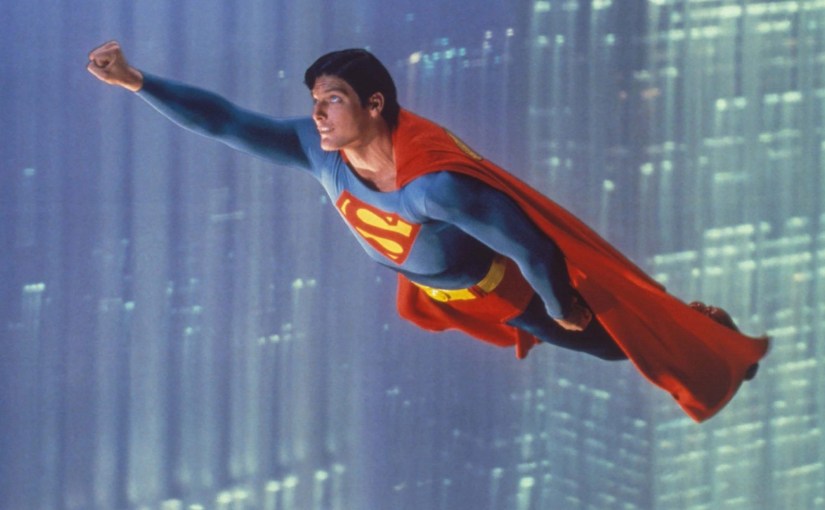
Richard Donner’s Superman: The Movie is one of the best biographical films of a fictional character ever made.  Yes.  It absolutely is a biography.  How can you call it anything but?  The visitor from the planet Krypton is embedded so deeply within the lexicon of worldwide pop culture and historical significance that he rests within all of our subconsciousness.   When we think of ongoing problems in the world from natural disasters to destructive wars or famines and disease, or to even kittens stuck in trees, for a split second we all consider how simple we could go on with our lives if only Superman were here to rescue us. 

By 1978, forty years after Joel Siegel and Joe Shuster created the character, visual effects were at a more than adequate level to convince us that a man could fly. Thus, the man with the red cape was ready to appear on the big screen.  With creative input from writer Mario Puzo, Donner’s film goes through various stages of life from when the extra terrestrial is a new born baby, to a toddler, then a teenager and on to a thirty something adult.  While living on the planet Earth, his powers may make him virtually invincible, but he’s far from godlike.  He cannot prevent the unforgiving nature of death.  He can’t be everywhere all at once.  He can’t even perform on the same level as his colleagues or friends, who are skillfully beneath him.  It would be unfair to have Clark Kent on your football team.

To watch Superman is to see a mini-series over a span of nearly two and a half hours.  We begin on the white crystal planet of Krypton featuring one of the greatest actors of the twentieth century, Marlon Brando, cast as the father of the superhero to be.  Brando is Jor-El.  He serves the planet as a prosecutor and a political leader with an expertise in science.  He’s championed for his knowledge, but he’s also challenged by his peers when he is certain of his planet’s demise. Thus, he must release his newborn son, known as Kal-El, into the far reaches of space to survive.  The script here takes an almost Shakespearian approach in debates of facing inevitability.  Brando’s authoritative screen presence is perfect here. 

Kal-El moves on to Earth, particularly Smallville, Kansas, and the nature of the film changes personality.  1950s Americana becomes our main character’s environment with endless plains of crop fields and farm land as Kal-El becomes identified as Clark Kent, the teenager who develops a crush on the high school cheerleader and gets bullied in the process while he must deliberately withhold all that he’s capable of by influence from his adoptive parents (Glenn Ford and Phyllis Thaxter).  Life for any of us is never complete until we experience the death of a loved one and Donner showcases that here to demonstrate that Kal-El/Clark can not prevent what’s meant to happen when biologically our bodies shut down.  Not even a super man can save us. 

Clark reaches age 18, usually perceived by most as a turning point into adulthood and through a means of Krytonian process he’s educated until his thirtieth birthday upon the rules and boundaries he must function within while on Earth.  He learns of his ancestry and then Donner changes the setting of his film once again into the furthest extreme from quaint Smallville. 

We have transitioned to sprawling Metropolis where Clark works as a mild-mannered reporter at The Daily Planet.  Christopher Reeve plays Clark/Superman and there was no one who could have filled the role better.  Physically, Reeve is the example by which all super human character portrayals still look towards.  Yet, the Julliard trained actor performs the dual personality so well.  When he dons Clark’s glasses you feel as if you are looking at another actor from when he’s dressed in the blue and red costume of Superman.  His posture and voice inflections are so distant from each character he’s playing.  Christopher Reeve was a stellar actor of versatility. 

In Metropolis, we are also introduced to an impure villain, Lex Luthor (Gene Hackman, who never got enough praise for this role) focused on greed and individual power for him to consume at the expense of everyone else on Earth. 

As well, just as life must bring us towards the experience of loss, it also must introduce us to love in the form of Lois Lane. Margot Kidder does a magnificent job of the hustle and bustle career woman with a sense of romance and need for ongoing adventure.  A reporter’s life will only give you that some of the time.  Superman will let you live that every day.  In life, we all start with valuing one person in our lives beyond our immediate family, and Lois serves that purpose to Clark’s perspective. 

Donner takes advantage of comedy and slapstick when Metropolis comes into play.  It’s not as polished as Krypton.  Nor is it as calm and reserved as Smallville.  Again, the personality changes.  Reeve plays Clark as a persona of the inept and gullible newcomer nerd to hide his powerful alter ego.  Hackman’s Lex is accompanied by Ned Beatty as a bumbling sidekick to play off of. (This same actor was a frighteningly powerful and intimidating corporate CEO in Network just a few years prior!) Valerie Perrine holds her own against Hackman as Lex’ alluring dame to have a tete a tete of sarcasm with. Kidder is the leader of Metropolis’ populace always on the go so much that she’s not even aware of her insensitivity to poor Clark.  A great gag is that as a good as a reporter as she is, Lois has terrible skills in spelling.  (There’s only one p in ‘rapist’.)

Maybe you’ve never seen Superman from 1978, or maybe it’s been too long since you last took it in.  It remains a watch that’s worthwhile.  Donner’s film covers so much of this one individual’s life that also includes two separate ancestries.  I get hot and cold on biographical films, sometimes.  It’s a tough scale to measure.  Sometimes filmmakers don’t show you enough.  I thought the film Ray, ended too suddenly on its depiction of Ray Charles.  Sometimes, it’s an overabundance of material.  The Last Emperor and Chariots Of Fire seemed to never end, and became mired in long, drawn-out, sleep-inducing pieces of dialogue.  Superman allows just the right amount of time to live within these different parts of Kal-El/Clark Kent/Superman’s life that you get familiar with who the main character encounters and how he responds to those around him. You also witness how these environments respond back to him.  You get a sense of what he stands for and where he feels insufficient and where feels strong and secure, as well as valued by others. 

It might be crazy to believe, but biographical writers and filmmakers should turn towards Richard Donner’s film for an outline that perfectly establishes every scene and moment that’s cut into its mold.  Superman: The Movie?  When I want to tell the life story of Golda Meir, or Barack Obama or Joseph Stalin or Jesus Christ?  Yes, Superman.  If we are crazy enough to follow the exploits of a man who wears a cape and flies through the sky, then why can’t we believe he can provide the answers to the great mysteries of life better than any of us?

THE GODFATHER

By Marc S. Sanders

Probably the greatest character story arc in all of film is of Al Pacino’s portrayal of Michael Corleone in Francis Ford Coppola’s The Godfather based upon Mario Puzo’s best-selling novel. (The film is a thousand times better than the book.)

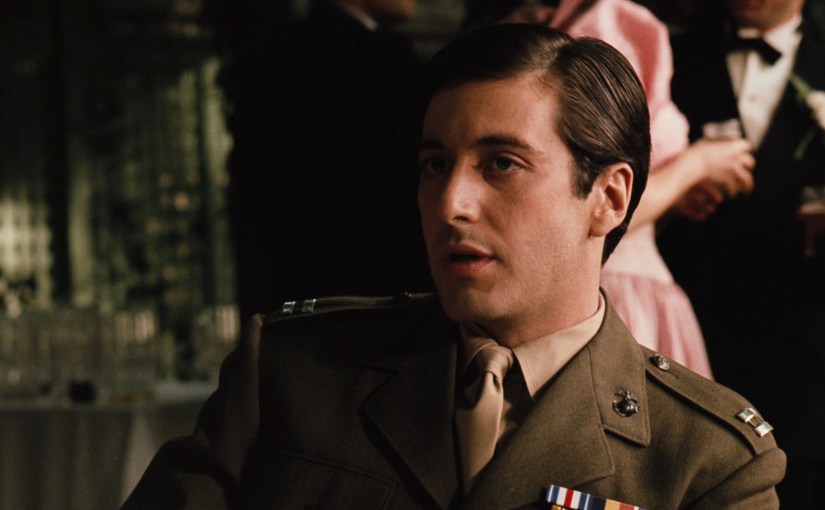
Michael is the youngest of three sons intended for a legitimate life separate from his Mafia family. The masterful opening sequence of his sister’s lavish wedding show him courting his eventual wife, Kay (Diane Keaton), and never feeling proud of the actions of his notorious father, Vito (Marlon Brando), nor his brother Sonny (James Caan) or their consigliere, Tom (Robert Duvall). He’s an innocent war hero in uniform with an open mind of an untarnished future. It is only when bad blood circumstances are tested that he feels forced to strike with the same intent that the Corleone family is infamous for.

Coppola presents quiet, subtle moments of expression in Pacino on camera. You see the change in Michael sneak up on you and you see a character develop into something else entirely. What starts as a false impression to appear as if he’s carrying a gun in his pocket, soon after leads to murder, by means of nothing personal but “strictly business.” From there, he retreats and hides until he is blessed with carrying on an evil legacy.

Yes, the first chapter in the operatic trilogy of crime, is mostly known for a grandstanding performance by Marlon Brando but the story relies on Pacino as Michael. Michael Corleone at least must be one of Al Pacino’s greatest roles. He arguably has one of the most impressive resumes in all of film. Here is where it jump started.

The direction by Coppola is a film student’s required studying. With Puzo’s script, the best idea was to open the film with a wedding. As the film offers so many characters and much back story among all of the guests, the interaction and workings of the family are efficiently condensed into this 25 minute opening sequence. Don Vito meets with people needing favors while outside the home, the crew is dancing, doing their jobs and minding who is watching. By the end of this opening you have a full grasp of the family tree and who works for who and what their characters are like. Sonny is the hot head. Michael is the innocent. Fredo (the middle son played by John Cazale) is not doing much but being a cut up, Momma Corleone is the valued matriarch and Tom is the well managed advisor. You even get a glimpse of some “very scary guys,” some competing hoods, who’s cheating on who, and some people who need help with citizenship and film casting.

Art direction from Alex & Dean Tavoularis is magnificent, depicting a post WWII New York, and a historical Sicily stagnant in open plains, romance and murderous pasts.

The cinematography is better today than it was originally. Gordon Willis returned decades later to (for lack of better word) lighten up the picture. The interiors remain dark in secret and comfort, but the characters are more illuminated. The Blu Ray restoration is a fantastic return to the classic film and its two sequels.

The Godfather is endlessly quotable and never dull no matter how many times you watch it. Puzo’s screenplay plays like the biography of a real person and family, much like his adaptation for the screen of 1978’s Superman: The Movie. It is an American classic rich in a history we believe has been told and carrying on the tradition over the course of a 10-12 year period.

I return to praise Pacino to remind you how his appearance even changes as he gradually builds his strength and accepts his title of Don. I feel like I’m looking at two physically different people from the beginning in his Marine uniform with boyish looks, to his independent walkabout way during his Sicily retreat, to a more broad shouldered, slicked back hair, dark suit tailored appearance during the film’s third act. It’s an uncanny transformation that is built on performance and expert direction and writing from Coppola and Puzo. I still get chills as Michael in his college boy sports jacket volunteers himself to satisfy a family vengeance. Coppola zooms in on him slowly as he sits in a leather arm chair, arms at his side, legs folded. We are seeing a new man in charge for the first time. It’s chilling.

The Godfather is one of the greatest pictures that will ever be made. It’s a perfect chemistry of technical achievement, attentive storytelling and sensitive, yet powerful performances from probably the best cast ever assembled.

I’m amazed that I know of some friends who still have yet to see it.

The Godfather is the film that everyone should see before they die.