
SUPERMAN II

By Marc S. Sanders

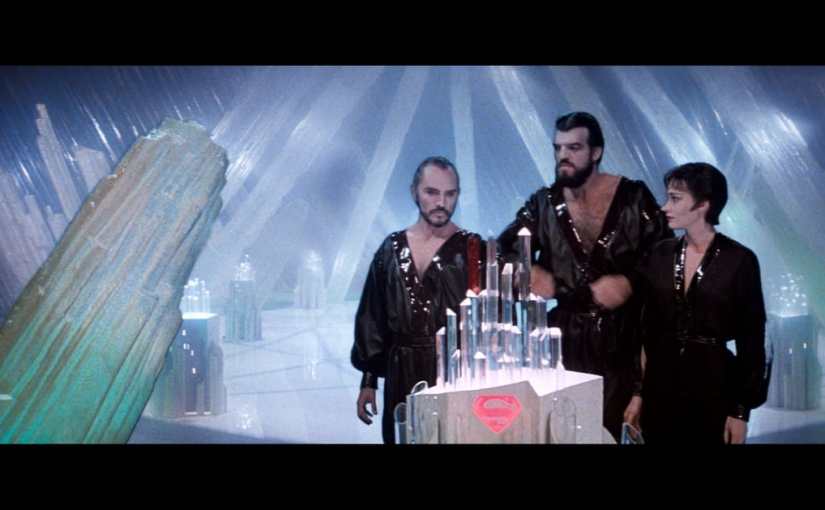
It’s time for the man in the red cape and blue tights to fall in love with Lois Lane, but wouldn’t you know it?  Three Krytonian criminals possessing the same powers as our hero have arrived on Earth with a means to dominate the planet and exact revenge on the son of their jailer.  Superman II picks up where Richard Donner’s original 1978 smash left off.  It remains a fantastically fun and breathless sequel.

Richard Lester (A Hard Day’s Night) gets the directing credit on this film following one of Hollywood’s most infamous behind-the-scenes stories.  While I’m a big admirer of Donner’s body of work, I think it was a blessing that Lester finished the job.  I’ve seen what Donner was intending to do on a special Blu Ray cut, and it just does not work. The characters make odd choices that seem inconsistent with how they were perceived in the first film.  That’s all I need to say about that comparison right now, though. 

In the original theatrical release, the story expands on the relationship between Superman & Lois (Christopher Reeve, Margot Kidder) as well as Clark Kent and Lois.  Eventually, both relationships intersect with one another, and Lois realizes the man she’s been admiring and the one she hardly takes notice of are one and the same.  The problem for Superman, known by his krypton name Kal-El, son of Jor-El, is if it is acceptable to be intimate with an earthling. 

Meanwhile, Lex Luthor (Gene Hackman) has escaped prison to entice three villains from Krypton into a partnership that will allow them to take over the Earth and destroy Superman.  The trio is led by General Zod (Terence Stamp) with the wicked Ursa (Sarah Douglas) and the mindless and mute Non (Jack O’Halloran).  Following their attack on Houston, or as they call it the “Planet Huuston,” and the White House, it is on to Metropolis in search of Kal-El.

I’ve offered up quite a bit of what Superman II provides and I am not even close to sharing all it’s adventurous features and character dynamics.  This is a solid picture all the way through, and it begins with the casting.

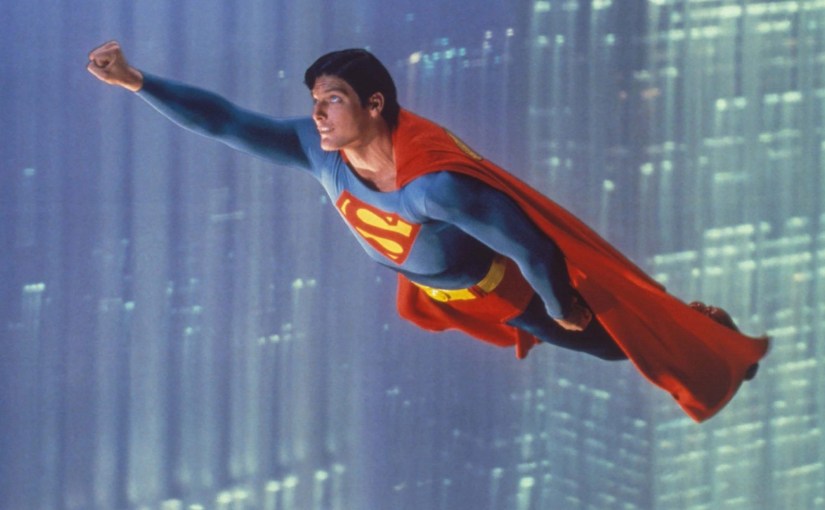
I’ll be bold by declaring that Christopher Reeve as Clark Kent/Superman is one of the best casting decisions in film history.  Think about this for a moment.  As good as Henry Cavill was in Zach Snyder’s films, thirty years later, and how well some of the WB iterations have been, the contrary point that most people make is that none of them are Christopher Reeve.  From the smile, his handsome face, clear voice with perfect enunciation and even the signature hair curl over the forehead, no one has looked as good as a superhero come to life better than Mr. Reeve.  When he’s flying, even with outdated visual effect backgrounds, you are still convinced that Christopher Reeve knows exactly how to fly.

Following the director shake up on this picture, it is said Gene Hackman refused to shoot some scenes or do follow up edits.  You can tell when there is a double in place for him and you can hear the different vocal sound bites from Lex Luthor.  Nevertheless, what survived from Hackman’s participation is silly and twisted like you would expect from a modern-day, dastardly villain or as he declares himself to be “the greatest criminal mind of our age.” Some of these lines look hokey on paper, but Hackman invests his showmanship once again in the character.  I love it.  On all of those top ten lists, Gene Hackman as Lex Luthor is the one that everyone is regrettably forgetting about.

Margot Kidder is just as committed.  Lois Lane is best when she is the go-getter and Kidder is thoroughly convincing at not just being seen in the stunts and action but actually performing through Lois’ fears, sense of daring, and adoration for the love of her life.  Near the beginning of the film, there’s a great close up of Kidder looking up into the heights of the Eiffel Tower as Superman flies a hydrogen bomb out of danger.  No dialogue, but you can read it all over Margot Kidder’s face.  There goes my hero.  Watch him as he goes.  Few love interests in superhero films have ever matched what Margot Kidder accomplished in these pictures.

The action scenes are great set ups.  I get a chill down my spine every time I watch the showdown in Metropolis between the three baddies against the man in blue and red.  However, Richard Lester never neglects the acting throughout the whole two hours, particularly by the leads, as well as the Shakespearean maniacal performances from Stamp and Douglas.  Furthermore, the extras throughout Metropolis, Houston and even in Niagara Falls are performing very well and therefore turning the various settings into characters themselves.  Just as the fight over Metropolis is to begin, a cabbie declares “Man, this is gonna be good!”  Isn’t that guy speaking for the audience?  I remember the room applauding in the theater at that line.  When Superman rescues a child in Niagara Falls, a woman utters “What a nice man!” Clifton James, from a couple of James Bond movies, resurrects that redneck persona and it works better here as the guy who clashes with the imposing new visitors.  All of these walk on characters further shape the purpose of the visitors from space.  None of it depends on B-movie tripe like declaring “Peace!”  The personality of the folks meet the strangers from a strange land.  Sometimes it is done for means of slapstick, but it is always very entertaining.

Superman II is a perfect complement to the original film thanks especially to the cast.  Reeve gives multiple performances of Clark and Kal-El that could not be more different.  Kidder takes her character in new directions upon learning the surprises the script has in store for Lois.  Hackman is doing the same routine, but fortunately it’s welcome because I can not get enough of his antics.

This sequel really set the bar high and the next installments for Reeve came nowhere close. Though I actually have an affection for Superman III with that internal struggle depicted in the junk yard scene; one for the ages. 

The first two movies are legendary and Warner Bros/DC films realize they still have not superseded what was done over forty years ago.  The studios are not trying hard enough. However, more to the point, the filmmakers back then got it absolutely perfect, and you cannot beat Superman, nor can you beat perfection.

APOLLO 13

By Marc S. Sanders

What’s fascinating about Ron Howard’s film Apollo 13 is that I can hardly understand what anyone is talking about.  I don’t know how they identify the problems of the doomed spacecraft.  I don’t know how any of the folks at NASA resolved the issue to get the three astronauts, Jim Lovell, Fred Haise or Jack Swigert (Tom Hanks, Bill Paxton, and Kevin Bacon), back to Earth.  What I do know is that William Broyles’ script, based upon the novel from Lovell with Jeffrey Kluger, allows for an ease of comprehension to know where one thing has started, where it leaves off and where it needs to go with each passing scene.

Forgive me, but when I watch NASA documentaries, I honestly get bored.  It’s amazing what has been accomplished during the history of our space program.  So much has been discovered but it’s only a fraction of what’s still left to be uncovered beyond our planet.  The films and literature that account for the engineering of space craft and what is required to travel in space lose me though.  Ron Howard puts everything in place with Apollo 13, however.  It’s the emotions that stem from the actors.  All I need to understand are the efforts each character serves to the ending that we all know.  It’s not about telling us what these guys are educated with or what science mandates.  Rather, it is about how these people respond to an unexpected and unfamiliar crisis.

On the ground in Houston, Texas Ed Harris portrays Gene Krantz.  He’s a pretty quiet kind of character, but upon his entry into the film, just ahead of the anticipated launch of Apollo 13, he is gifted a pure white vest.  Krantz wears this as his armor, prepared to take on any challenge including navigating a crew of three astronauts towards the moon.  He is surrounded by a school of nerdy looking engineers and scientists, in their short sleeve shirts, skinny ties and black rimmed eyeglasses.  They are all disbursed among an assortment of different departments.  I think one specified simply in human waste disposal aboard the ship.  Yeah, there’s a guy there making sure the urine is dispensed properly.  Again, I couldn’t tell what specialty each man is designed for, but they’re the experts.  Harris simply tells his men what needs to be done by drawing two circles on a chalkboard; one is the moon, the other is Earth.  When a frightening malfunction occurs aboard the rocket, Harris explains that his men now need to get the ship back to Earth by drawing a line between the solar locales.  He doesn’t know how it can be done, but like a football coach he demands his team find a way.

On board Apollo 13, the three astronauts are crammed in what is left of their ship, marooned to float through space. The interior gets extremely cold, exhaustion gradually overtakes them, and they are left with no choice but to power down whatever sources they have left as a means of preservation. 

A third angle comes from the wives and families of the three men.  More precisely, focus is drawn towards Marilyn Lovell (Kathleen Quinlan) with her family, including the children and Jim’s elderly mother watching the television with anticipation for ongoing developments while the media waits outside their doorstep.  The first act of the picture offers the anxiety that Jim’s wife has with this upcoming mission.  There is the standard nightmare scene.  Acknowledgement of the unlucky number thirteen.  Marilyn loses her wedding ring down the shower drain (something that actually happened). Ironically, the Lovells’ eldest daughter seems to carry the same kind of apathy for her dad’s upcoming trip like the rest of the country.  Jim may finally be having his dreams come true, to walk on the moon.  However, the rest of the world is more concerned with the possibility of the Beatles breaking up or what else is on TV.

A side story is delivered by Ken Mattingly (Gary Sinise).  The poor guy was originally a part of Lovell’s three man crew, only to be sidelined at the last minute because of a suspected case of measles.  When things go wrong for Apollo 13, he enters the flight simulator to diagnose the issue and find a resolution.  He’s offered a flashlight but rejects it because the guys in space don’t have that tool.  He specifically tells his men not to give him anything that they don’t have up there, and he refuses to take a break either.  If they don’t get a chance to rest, then neither does he.  This mantra carries over to the other guys working diligently to keep the astronauts alive and get them home. 

Apollo 13 is not a how to picture.  Rather, it is a film that focuses on response. 

Ron Howard offers amazing shots of the rocket and footage in space.  The launch is extremely exciting as shrapnel sheds off the craft during its fiery liftoff. Then other parts disengage after it leaves the Earth’s atmosphere.  The interior looks extremely claustrophobic, but the actors look comfortable within the floating zero gravity confines. Hanks, Paxton and Bacon have great chemistry together whether they are kidding one another about vomiting in space or bickering with each other while caught up in the problem at hand. 

The base of NASA is alive with hustle and bustle.  Not one extra looks like they are sitting around.  They all know what monitor to look at or which teammate to lean over as they desperately discuss what needs to be accounted for.  There’s a great moment that is explained to the audience as if they are a four year old.  A man in charge throws a pile of junk onto a boardroom table and says they need to build something with nothing but what’s on this table to absolve the problem the astronauts are having with carbon dioxide poisoning.  A few scenes later, we see the junky device that’s been rudimentarily assembled.  Who knows what it does?  All I need to know is that it works. 

I did take one issue with Apollo 13.  To heighten the dramatics, sound is provided as the ship comes apart. Even I know that sound does not travel through space.  I forgive it when I’m watching fantasies like Star Wars or Superman.  However, this film recaps a real-life event and during those moments, as startling as they may be, I could not help but think about the dramatic clanging and crashing penetrating my sound system.  Apollo 13 draws from a well-known case, but it still resorts to cinematic tropes to hold my attention.  I wonder if the picture would have worked had it remained faithful to basic scientific fact through and through.  It’s not a terrible offense.  It’s forgivable.  Though it got me thinking. Heck, it obviously never bothered the masses because the film was awarded the Oscar for Best Sound Design.

Ron Howard’s film is a magnificent experience, full of outstanding footage.  It relies on actors who depend on the emotions of the scenario to narrate the story.  Recently, I watched the film Tár with Cate Blanchett.  In that film, the mechanics of orchestral music and conducting are endlessly discussed.  It’s like listening to a foreign language at times while trying to keep up.  Howard’s film could have taken that approach and bored me to tears with a lot of technical jargon from engineers and scientists.  Instead, Apollo 13 succeeds by only presenting the basics of the issues at hand.  I couldn’t name one specific part on the engine of my car, but I know it powers the vehicle, allowing it to go from point A to point B.  The army of NASA folks declare this thing has never done that before or it must be crazy to consider because that has never been attempted.  I can count on the players of Apollo 13 to know what they’re doing.  They are aware of the risks that need to be taken and know what’s at stake.  I don’t need to see their diplomas to trust their concern or computations.

Like other films where known historical events are depicted, Apollo 13 maintains its suspense even if you already know the ending.  The aborted mission to the moon became known as “The Successful Failure.”  It’s refreshing to see how this proud moment all played out. For fleeting window in time America, actually most of the world, seemed to hold a unified care for three men trying to outlast a doomed, desperate and impossible situation. 

Apollo 13 is a triumph.

SUPERMAN: THE MOVIE

By Marc S. Sanders

Richard Donner’s Superman: The Movie is one of the best biographical films of a fictional character ever made.  Yes.  It absolutely is a biography.  How can you call it anything but?  The visitor from the planet Krypton is embedded so deeply within the lexicon of worldwide pop culture and historical significance that he rests within all of our subconsciousness.   When we think of ongoing problems in the world from natural disasters to destructive wars or famines and disease, or to even kittens stuck in trees, for a split second we all consider how simple we could go on with our lives if only Superman were here to rescue us. 

By 1978, forty years after Joel Siegel and Joe Shuster created the character, visual effects were at a more than adequate level to convince us that a man could fly. Thus, the man with the red cape was ready to appear on the big screen.  With creative input from writer Mario Puzo, Donner’s film goes through various stages of life from when the extra terrestrial is a new born baby, to a toddler, then a teenager and on to a thirty something adult.  While living on the planet Earth, his powers may make him virtually invincible, but he’s far from godlike.  He cannot prevent the unforgiving nature of death.  He can’t be everywhere all at once.  He can’t even perform on the same level as his colleagues or friends, who are skillfully beneath him.  It would be unfair to have Clark Kent on your football team.

To watch Superman is to see a mini-series over a span of nearly two and a half hours.  We begin on the white crystal planet of Krypton featuring one of the greatest actors of the twentieth century, Marlon Brando, cast as the father of the superhero to be.  Brando is Jor-El.  He serves the planet as a prosecutor and a political leader with an expertise in science.  He’s championed for his knowledge, but he’s also challenged by his peers when he is certain of his planet’s demise. Thus, he must release his newborn son, known as Kal-El, into the far reaches of space to survive.  The script here takes an almost Shakespearian approach in debates of facing inevitability.  Brando’s authoritative screen presence is perfect here. 

Kal-El moves on to Earth, particularly Smallville, Kansas, and the nature of the film changes personality.  1950s Americana becomes our main character’s environment with endless plains of crop fields and farm land as Kal-El becomes identified as Clark Kent, the teenager who develops a crush on the high school cheerleader and gets bullied in the process while he must deliberately withhold all that he’s capable of by influence from his adoptive parents (Glenn Ford and Phyllis Thaxter).  Life for any of us is never complete until we experience the death of a loved one and Donner showcases that here to demonstrate that Kal-El/Clark can not prevent what’s meant to happen when biologically our bodies shut down.  Not even a super man can save us. 

Clark reaches age 18, usually perceived by most as a turning point into adulthood and through a means of Krytonian process he’s educated until his thirtieth birthday upon the rules and boundaries he must function within while on Earth.  He learns of his ancestry and then Donner changes the setting of his film once again into the furthest extreme from quaint Smallville. 

We have transitioned to sprawling Metropolis where Clark works as a mild-mannered reporter at The Daily Planet.  Christopher Reeve plays Clark/Superman and there was no one who could have filled the role better.  Physically, Reeve is the example by which all super human character portrayals still look towards.  Yet, the Julliard trained actor performs the dual personality so well.  When he dons Clark’s glasses you feel as if you are looking at another actor from when he’s dressed in the blue and red costume of Superman.  His posture and voice inflections are so distant from each character he’s playing.  Christopher Reeve was a stellar actor of versatility. 

In Metropolis, we are also introduced to an impure villain, Lex Luthor (Gene Hackman, who never got enough praise for this role) focused on greed and individual power for him to consume at the expense of everyone else on Earth. 

As well, just as life must bring us towards the experience of loss, it also must introduce us to love in the form of Lois Lane. Margot Kidder does a magnificent job of the hustle and bustle career woman with a sense of romance and need for ongoing adventure.  A reporter’s life will only give you that some of the time.  Superman will let you live that every day.  In life, we all start with valuing one person in our lives beyond our immediate family, and Lois serves that purpose to Clark’s perspective. 

Donner takes advantage of comedy and slapstick when Metropolis comes into play.  It’s not as polished as Krypton.  Nor is it as calm and reserved as Smallville.  Again, the personality changes.  Reeve plays Clark as a persona of the inept and gullible newcomer nerd to hide his powerful alter ego.  Hackman’s Lex is accompanied by Ned Beatty as a bumbling sidekick to play off of. (This same actor was a frighteningly powerful and intimidating corporate CEO in Network just a few years prior!) Valerie Perrine holds her own against Hackman as Lex’ alluring dame to have a tete a tete of sarcasm with. Kidder is the leader of Metropolis’ populace always on the go so much that she’s not even aware of her insensitivity to poor Clark.  A great gag is that as a good as a reporter as she is, Lois has terrible skills in spelling.  (There’s only one p in ‘rapist’.)

Maybe you’ve never seen Superman from 1978, or maybe it’s been too long since you last took it in.  It remains a watch that’s worthwhile.  Donner’s film covers so much of this one individual’s life that also includes two separate ancestries.  I get hot and cold on biographical films, sometimes.  It’s a tough scale to measure.  Sometimes filmmakers don’t show you enough.  I thought the film Ray, ended too suddenly on its depiction of Ray Charles.  Sometimes, it’s an overabundance of material.  The Last Emperor and Chariots Of Fire seemed to never end, and became mired in long, drawn-out, sleep-inducing pieces of dialogue.  Superman allows just the right amount of time to live within these different parts of Kal-El/Clark Kent/Superman’s life that you get familiar with who the main character encounters and how he responds to those around him. You also witness how these environments respond back to him.  You get a sense of what he stands for and where he feels insufficient and where feels strong and secure, as well as valued by others. 

It might be crazy to believe, but biographical writers and filmmakers should turn towards Richard Donner’s film for an outline that perfectly establishes every scene and moment that’s cut into its mold.  Superman: The Movie?  When I want to tell the life story of Golda Meir, or Barack Obama or Joseph Stalin or Jesus Christ?  Yes, Superman.  If we are crazy enough to follow the exploits of a man who wears a cape and flies through the sky, then why can’t we believe he can provide the answers to the great mysteries of life better than any of us?