TOM JONES

By Marc S. Sanders

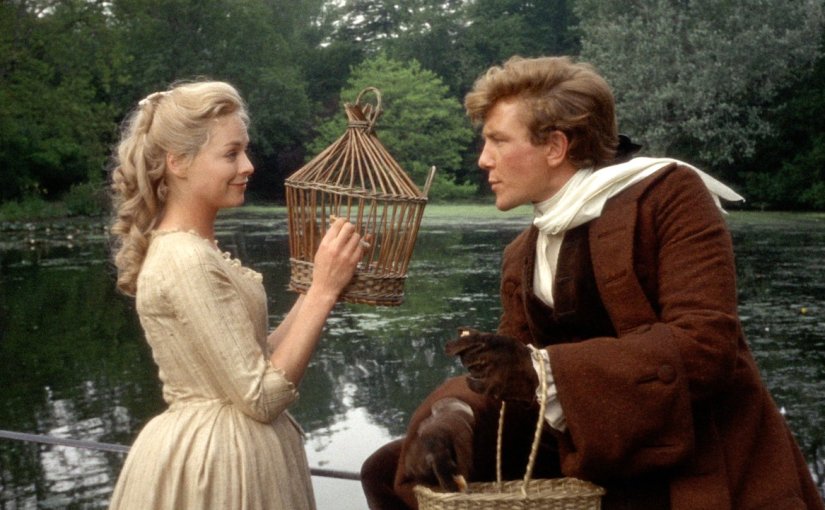
Watching Tom Jones I wondered if the Monty Python troupe took inspiration from producer/director Tony Richardson’s film.  It’s all quite madcap.  With Albert Finney as the lead title character, there’s a zany quality to this eighteenth century piece adapted from Henry Fielding’s novel The History Of Tom Jones, A Foundling.

The film opens like a silent movie with title cards being used to emote dialogue.  The Squire Allworthy (George Devine) returns to his estate and upon retiring for bed, he discovers newborn Tom beneath the blankets.  Allworthy decides to raise the child. 

The film transitions to a talkie picture and Tom grows up to be portrayed by Albert Finney.  The orphan man gets himself into all kinds of predicaments, notably with an assortment of women but his true affections are directed towards Sophie (Susannah York), the daughter of the neighbor Squire Western. The cad known as Blifil (David Warner, in his very first film role) convinces Allworthy that Tom is a villain and thus he’s excised from the estate with cash to seek out his own fortune.  Interactions lead to unexpected circumstances for Tom, including being robbed penniless, crossing paths with the butler who was presumed to be his father, and being sentenced to death for murder after he rescues an endangered maiden from the assault of a British red coat (Julian Glover).

Tom Jones takes unexpected turns in its narrative, and it leads to big laughs.  Upon discovering that his wallet is stolen, Albert Finney breaks the fourth wall seeking the viewers assurance that he is not making it up.  Other characters are depicted in freeze frame silliness as they eavesdrop on Allworthy.  There’s lots of running around escapades as Tom flees from being caught with a couple of mistresses.  I was waiting for the Benny Hill music to cue in, though John Addison’s score suffices well to keep it all lighthearted during such times when the film speeds up with a Keystone Kops kind of pace.

A film like Tom Jones is not what I normally gravitate towards.  Going back and forth, there’s lots of screaming banter and deep English dialects that swallow the words being uttered.  Drunken debauchery is relied upon for Hugh Griffith as Squire Western; he was one of five actors nominated for the film.  At one point, Griffith falls off his horse and the animal lands on top of him.  Apparently, this was not stunt work as Griffith notoriously showed up drunk each day on set and the horse easily overtook him.

Albert Finney, though, is a comedy gem as he innocently portrays Tom with no ill intent.  Watching him here in his youth, he’s adorable with an occasional prince and pauper romantic interpretation of his performance. A memorably hilarious scene involves Tom and a lady mistress seducing one another from both sides of the table as they gorge themselves with a bevy of food including pheasant, pears, potatoes and so on. Without Finney’s fearlessness in leading this sloppy, drooling scene, I’m not sure it would have worked as well. Richardson elongates the moment between the two to build the laughter.

I’m impressed with much of the filmmaking from Tony Richardson.  Cameras must have been mounted on horseback to get up close pursuit during a sporting hunt of a deer that also included a large number of rabid dogs.  Still, I was a little queasy in the follow up scene when the deer is slaughtered amid the canines barking for a portion. Technically speaking though, the film works on many levels.

As well, I could not help but consider that a modern filmmaker like Yorgos Lanthimos (Poor Things, The Favorite) adopted some of Richardson’s comedic approach.  Tom Jones is proudly weird and obscure just like Lanthimos’ storytelling.

Yet, I cannot comprehend the praise awarded to this movie, including Best Picture and Director as well as the nominations in cast performances by critics, Oscars and BAFTAS.  I’m convinced of the period timing and what the script and actors lend to the film, but I’ll never say any of it left me enraptured in the novelty.  It’s a cute story, but that’s all.  Kind of like Arthur with Dudley Moore, where the innocent man child happily lives within his sophomoric mentality while uncovering who he truly loves.  There is likely more to take away from Tom Jones, but I didn’t recognize it.

If anything, as I continue my trek towards watching and reviewing every Best Picture winner in Oscar history, I’m at least glad I got Tom Jones checked off my list.  At times, it’s delightful and it’s also proudly oddball in its execution.  What constitutes it as the best film of 1963? Reader, I’m just not sure.  Yet, it is at least entertaining with much praise for Albert Finney and cast.
INDIANA JONES AND THE LAST CRUSADE

By Marc S. Sanders

Steven Spielberg is great when he takes advantage of a silhouette. His best example of this is with Indiana Jones. He’ll hide the character in deep sun so you only make out the recognizable shadow of his famous fedora hat and bullwhip by his side. I treasure a moment like this as Indiana Jones And The Last Crusade approaches it’s closing credits and he rides off into the sunset along with his father and their trusty companions. (Other great silhouettes happen in Raiders Of The Lost Ark – when he first meets Marion, or when he’s traversing through the South American jungle or when he’s digging towards the Well Of The Souls. I love it every time I see it.)

The Last Crusade no longer offers the mystery of the famed archeologist. Unlike Raiders where Indy only says what is necessary and his past experiences remain unknown, this story offers a background. How does Indy first dabble into the world of rare antiquities and what did he miss out on as a child followed by an adventurous transition into adulthood? How about that scar on his chin? There are some answers here.

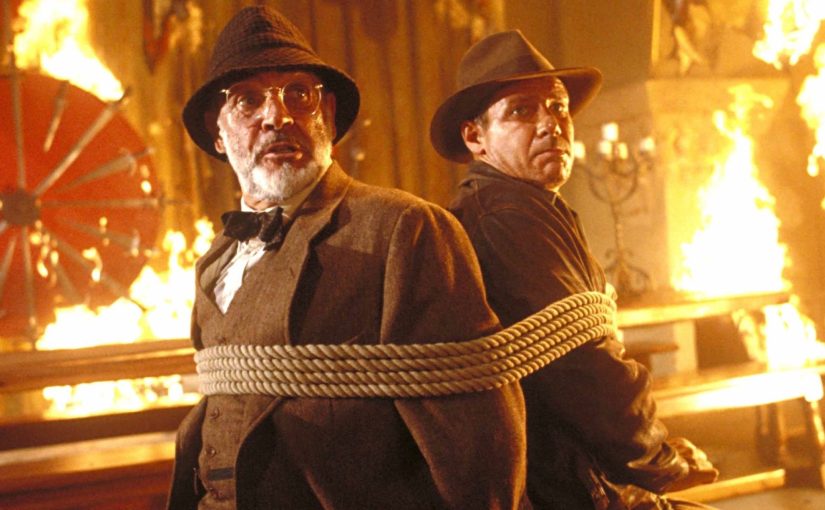
Harrison Ford keeps Indy stoic and only amusingly frustrated when interfered with by pesky Nazis and a wonderfully naive and innocent Sean Connery as his father, Henry Jones. Their pursuit of the Holy Grail, the cup that belonged to Christ at The Last Supper, is a similar narrative sequence of events to Indy’s first adventure. However, what sets it apart here is the relationship between father and son. I imagine it’s a similar connection between a lot of dads and their sons, and therefore I have a nice affection for the film.

Spielberg continues to be great with his action moments by keeping it light and fun. River Phoenix echoes a young Indy as Ford would have played it as a pre teen. It’s a convenient short story to show how the character earns the hat, the jacket, the whip and even his infamous fear of snakes.

Boat chases, underground relics, rats and fist fights atop a tank are well edited and clearly shot.

The 3rd of four wonderful adventures (soon to be five) is still fun to watch and offers enjoyment that many of today’s blockbusters have simply forgotten.

It’s always exciting to ride alongside Indiana Jones.

FOR YOUR EYES ONLY

By Marc S. Sanders

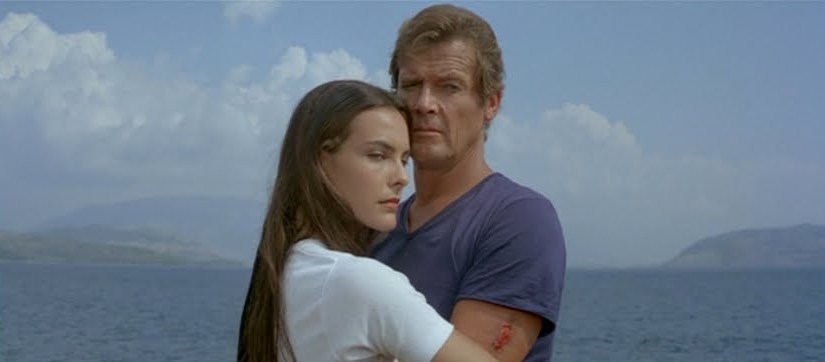
The 12th James Bond film in the EON Productions series, For Your Eyes Only, opens with 007 visiting the grave of his late wife, Teresa, followed by a priest offering a blessing before the super spy departs in a doomed helicopter hijacked by Blofeld with remote control. The pre credit sequence sends multiple messages. Albert R. Broccoli is ready to get a little more serious (at least with this one film), and say goodbye for good to his franchise’s past adventures. There are other villains besides Blofeld and SPECTRE. In actuality, copyright lawsuits would force this decision. Broccoli, though, happily dropped his bald, cat loving nemesis down a smokestack anyway.

This time Bond is on the trail of recovering Britain’s ATAC system after it sunk with its crew somewhere on the Greek ocean floor. ATAC, in the wrong hands, like the Russians, could order Britain’s submarines to fire upon their own country.

Bond encounters two potential suspects behind the plot, Kristatos (Julian Glover) and Columbo (no…not Peter Falk and his wrinkled trench coat; I’m talking about the one and only Fiddler on the Roof, Topol). The daughter of the designer of the ATAC, Melina Havolock (Carole Bouquet) makes things complicated with her crossbow as she is on a mission of vengeance for the death of her parents.

Lots of action and grounded Cold War politics make this a solid entry in the series. A ski chase in Cortina, Italy is fantastic. Director John Glen (formerly an editor of prior films) manages to maintain realistic speed keeping up with motorcycles in pursuit of Bond. One of my favorite scenes during the Moore era of films.

Greece is beautiful too. Both on land and underwater where some footage occurred, even if some camerawork was manufactured at the legendary Pinewood Studios in London.

It’s funny to watch one recover the identity of a bad guy known as “The Dove” on an “Identigraph” a big, clunky machine in Q’s lab. Today’s Bond would need only use his iPhone or wristwatch.

The once revealed villain is no one exciting or unusual, but Glen in the director’s chair offers up a grittier story apart from the sci fi silliness of Moonraker. The opening scene high above London is really great stuff, along with the already mentioned ski chase, a hockey brawl, a shootout along a Greek sea port and a pretty suspenseful mountain climb for Bond to covertly sneak upon a hidden hideout.

A minor, uninteresting distraction comes from young and immature Lynn Holly Johnson pining for Bond’s affection. She’s as useful as Sheriff JW Pepper from prior films.

Oddly enough, as serious as this one gets at times (Bond tosses a bad a helpless bad guy off a cliff) it closes out by mocking a Margaret Thatcher lookalike mistaking a parrot for 007. I liked it, but rumor had it that Roger Moore hated this bit.

All in all, For Your Eyes Only is Moore’s second best film behind The Spy Who Loved Me.