
By Marc S. Sanders
“blood simple” is a term coined to describe the addled, fearful mindset people are in after a prolonged immersion in violent situations.
IMDb – originally located in the book Red Harvest by Dashiell Hammett
The Coen Brothers’ first of several legendary and unique films is a seedy noir thriller called Blood Simple. Joel Coen is the director. Ethan Coen is the producer. They wrote the script together and collected whatever pennies they could find door to door from anyone willing to invest in the picture. You see how shoestring the budget was for this small film, but that’s exactly why it works so effectively. The lowlifes of their script are not the sophisticated type like Hannibal Lecter or Harry Lyme.
This is a condensed piece, just over ninety minutes, with four principal players who inadvertently cause themselves to get tangled in a bloody web of gory crime. The fun part is that none of the four know the whole picture of what’s occurring, or how, or why. I’m satisfied the audience is in on the whole thing, though.
Without giving too much away, Dan Hedaya is Marty, the owner of a sleazy Texas saloon. A private investigator provides evidence of Marty’s wife, Abby (Frances McDormand, in her debut performance), having an affair with one of his bartenders, Ray (John Getz). Marty hires the P.I. to murder the two lovers.
Simple enough, right? Wrong, because the Coen Brothers wisely have their players color outside the lines and soon there’s blood all over the floor, as well as in the back seat, and maybe something important was mistakenly left at a crime scene. Perhaps someone who was thought to be dead is not, and maybe what you thought occurred is something else entirely.
Blood Simple. works because it operates beyond convention. The characters are so unaware of what to do next or what precisely has happened that it introduces one layer of confusion and misunderstanding after another. This is nowhere near a common episode of Three’s Company. What’s even more appreciative is that once the end credits roll, those that survive this lurid tale will still never have a complete grasp of what’s happened or when or where the convolutedness began. It’s satisfying that all of the answers are at my disposal. It gives me a sense of omnipotence.
M Emmet Walsh is the scuzzy private investigator. You’ve seen this celebrated character actor countless times before. It is this performance that might be the one where you would no longer recognize him as “What’s that guy from?” because now you’ll never forget his name. He’s a villain who pounces on a genius opportunity, covering all bases, until there’s one minor oversight. The Coen Brothers inventively have this guy circling the waters of the whole film, and yet only one other character is aware of his existence. Still, this guy is vital to the assorted conflicts uncovered in this sort of graphic novel pulp fiction.
Blood Simple. sets up scenes that can be bridged together by what if scenarios. How can two windows mere inches away from each other lend to a painfully agonizing, thrillingly welcome moment of terror and suspense? When this scene arrives, does it make sense for how the characters play it out? You bet it does.
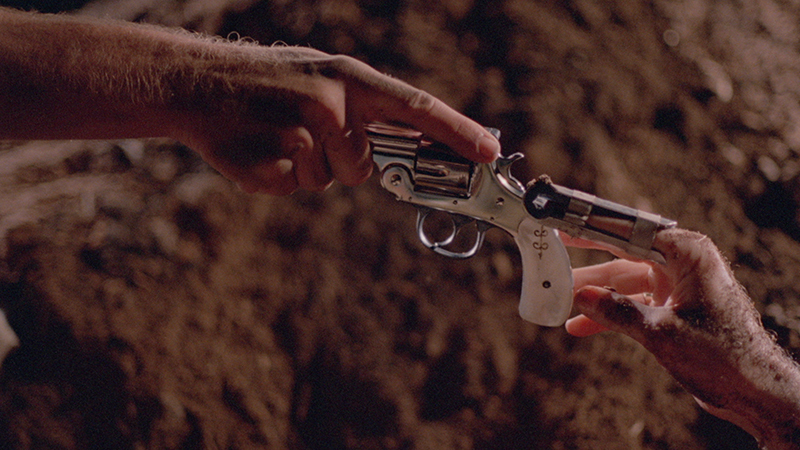
The film is strong due to its lack of dialogue too. We watch what these characters do much more than we listen to anything they have to say. Important props and locations seem to tell us more than any of the actors, and that’ll allow you to think like the character. You read their minds rather than feeling a need to have everything explained to you.
Blood Simple. is an inspired nod to some of Hitchcock’s bewildering best like Dial M For Murder and Strangers On A Train. It succeeds because of the twists it offers as nothing ever goes according to plan. You’ll watch it once and then you’ll want to see it again to follow the breadcrumbs that trail off the path.

 2 UNPAID MOVIE CRITICS!!!!