
ROGUE ONE: A STAR WARS STORY

By Marc S. Sanders

On my 4th viewing of this film, I second guessed myself over and over. I know I’m a Star Wars junkie, but can I truly give an objective opinion about Rogue One? I think I can.

Rogue One: A Star Wars Story is of one of the best films of the last ten years. Now there are conditions that accompany that observation. It’s difficult to follow its trajectory if you haven’t seen A New Hope (the intended follow up story; the original Star Wars film). Frankly, reader if you are watching this film without ever watching A New Hope, I’d imagine you’ve been on a deserted island with a volleyball for a friend, unaware of this pop culture geek-oriented phenomenon from a galaxy far, far away, and upon your return to civilization you were just randomly flipping the channels. So, let’s just go ahead and dismiss that parameter right now.

Disney is the only studio with enough resources and scrutiny to ensure a good product is developed in the franchise. Rogue One proves that theory. From the Rebel uniforms to the Stormtroopers, to the Yavin 4 set recreation, and even a harkening back to Darth Vader’s original 1977 appearance (red eyes in the helmet), director Gareth Edwards, Lucasfilm and Disney ensure consistency in its side chapter apart from the 9-part saga. You relish the familiarity of it all, and what’s new you welcome with appreciated enthusiasm. It all works within the long-established universe.

The cast is superb with major highlights from Felicity Jones as Jyn Erso (great name) as a brash no nonsense rogue in and of herself. Jones comes off with tough bravado reminiscent of Susan Sarandon and Geena Davis, as well as Jodie Foster. Nothing will intimidate her, though she will show her heart and soul for her father, the reluctant architect of the Empire’s Death Star played by Mads Mikkelson, an important character to the story but not much material for him to capitalize on.

Alan Tudyk is a marvelous voice actor here as the tall droid K2SO, with a personality combination of Chewbacca & C3PO. He’s honest, maybe a little to honest, but he’s also physically strong and a smart aleck. His tone is Anthony Daniels, but his delivery is snide and arrogant. He’s just so entertaining.

Ben Mendohlson plays Imperial Director Krennic as a frightening antagonist who embraces the terror of this super weapon he oversees. “Oh it’s beautiful,” he sighs and really believes he sees beauty as a planet gradually combusts under the laser blast emanating from the Death Star. He expects greatness from his accomplishments and Mendohlson is also good at surrendering to what he’s not permitted to celebrate thanks to a strong Darth Vader and welcome return of Grand Moff Tarkin, a beautifully recreated CGI of deceased actor Peter Cushing. Tarkin is important to the Krennic storyline and his insertion in the film is flawless.

The cast also boasts Donnie Yen. He’s a real crowd pleasing blind martial artist. Not a Jedi, yet arguably even more fun.

The planets are crowded and different. Scarif where the final battle takes place is draped in palm trees and ocean blue. Great because it’s daylight setting allows all the action to be seen. Nothing is blurred.

The story structure is phenomenal as it centers on a race to make contact with an Imperial pilot who has just defected and then on to Jyn’s father in order to prevent this new Death Star from going into operation. I especially salute its honest, uncompromising, but still necessary ending. You’ll get a lump in your throat, followed by an adrenaline shot of excitement in the last five minutes. The end is pure genius. One of the great cinematic endings. Absolutely absorbing.

I really appreciate the various demographics in the film as well. For a story about an unending and lived in galaxy everyone should look and sound different. So, we are treated to Caucasian, African American, Hispanic, Asian, and English, and then you have the droids and fictional alien species.

If anything is shortchanged, it might stem from some of the actors’ dialects. Forrest Whitaker, Diego Luna and Riz Amed play primarily roles that at times are hard to comprehend, even in a fourth viewing. This is forgivable though. The story lends value to all of the players on screen.

So yes. Rogue One: A Star Wars Story is sensational; the best of the 4 Disney produced films thus far. There’s weight to its story, and its characters on both sides. It moves at a fast pace of action, dialogue and runaway suspense. It will go down as one of the best installments in the vast franchise that’s thrived for over 40 years so far.
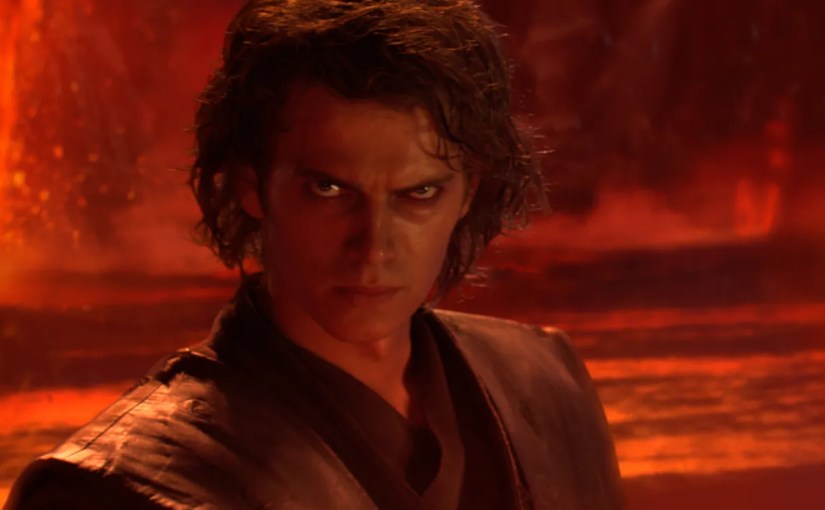
STAR WARS EPISODE III: REVENGE OF THE SITH

By Marc S. Sanders

Star Wars Episode III: Revenge Of The Sith is the best installment in George Lucas’ prequel trilogy of his epic space opera saga. However, that is where the line is drawn.

It carries a heightened drama thanks primarily to Ian McDiarmid as the eventual Emperor Palpatine. Shakespeare might have been proud of the character and performer. Much like Alec Guinness received an Oscar nomination for his portrayal of Ben Kenobi, so should McDiarmid have been honored playing an antithetical influence (of Kenobi) on the student and Jedi in Training, Anakin Skywalker (Hayden Christensen in a much more improved performance).

War within the galaxy is rampant and there’s no end in sight. The Jedi Order is overwhelmed. Anakin is used as a pawn to spy on his new mentor Palpatine who in turn insists that the young Jedi occupy a chair in the Jedi Council to spy on them. In addition, it’s hard for Anakin to come to grips with his secret wife Padme (Natalie Portman) dying from childbirth as his nightmares continue to remind him. A deal with the devil himself in Palpatine is offered as an option. Can a manipulation in the Force rescue Padme from death?

There’s a lot of weight on Anakin here. Sith departs from the politics discussed in the prior entries as it focuses primarily on Anakin’s personal struggles. The film really needed to take this direction. After all, it’s time to witness Anakin’s transformation into Darth Vader. Everyone has been dying to see that.

George Lucas’ scene set ups work on occasion. A great performance of dialogue occurs in an alien opera box between Palpatine and Anakin. This is where McDiarmid really comes through. He’s subtle and deliberate in his influence. Fortunately, Christensen just needs to listen mostly.

Later however, a scene works only so much when Samuel L Jackson as Jedi Master Mace Windu duels with Palpatine, having just revealed his secretly evil Sith side. Through all three of these films, Mace Windu has been one of Jackson’s least exciting roles. He’s bland and never doing much. Christensen comes upon this scene and doesn’t give me the genuine anguish I was hoping for. McDiarmid, again, is hitting home runs in surprise and development. This turning point scene is not as strong as it should have been thanks to Lucas’ stilted direction and writing, along with Jackson and Christensen lacking any true depth.

Episode III also has a handful of so what moments that continually frustrate me in this trilogy. We have to watch Yoda and Obi Wan watch a video of what Anakin has done. Why? We’ve seen this already. Bail Organa (Jimmy Smits; I wish he had a larger role) needs to be informed of an upcoming meeting. Honestly, I don’t need an update on a character’s calendar. Just make sure he arrives on time. Moments like these don’t drive towards anything.

Natalie Portman is not served well as a pregnant Padme. Her dialogue is worse than ever, and it hinders her performance. Padme is torn between her affection for Anakin and her passions for democracy. We see next to none of the latter. How does an intelligent woman like Padme suddenly become so unaware? Ironically, opportunity for her political nature was filmed but remains only as deleted DVD features. These scenes would have enhanced the movie as they imply the foreshadowing of the upcoming Rebellion, while a petition attempt is mounted to usurp the Emperor’s administration. Here, Padme is trying to be instrumental in Luke & Leia’s (her own children) future. Really good material here. Nevertheless, George Lucas opted to leave it all on the cutting room floor. Oh well! I’m still holding out hope for a “special edition” cut one day, inclusive of this storyline.

Lucas’ lava planet, Mustafar, is quite grand as the arena for the much-anticipated dual between evil Anakin and noble Obi Wan. Still, again, it could have been better. There’s too much CGI and flashing lightsabers that hide the acting among the swordsmen. Compare this to the duals in Empire and Jedi and you see what I mean.

I know my commentary on the prequels is quite pessimistic, but I do have an (maybe a biased diehard fan) appreciation for the films. The stories work. The execution falls short however in dialogue, performances and visual artificialness.

George Lucas had all the right make up for a trilogy as epic as his original films that began in 1977. Maybe because he didn’t have the monies and technology at that time, his imagination had to work overtime back then. In these later films, however, his hubris got in the way of his craft. So, we have to settle for his next great technological discovery in CGI efficiency. Therefore, we get cartoons with no depth like Jar Jar Binks, General Grievous, and lame, clicking battle droids.

Lucas always defended the position of his writing by insisting these films are aimed for kids. No. I don’t accept that. Star Wars was aimed for kids and the kids that remain in all of us as we continue to grow into adulthood. George Lucas needed to write with that in mind.