HACKSAW RIDGE

By Marc S. Sanders

“Please Lord. Help me get one more.”

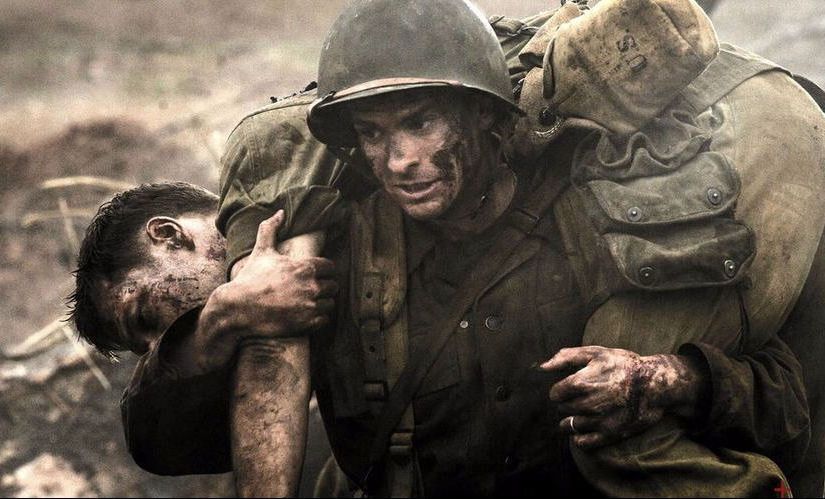
Desmond Dawes rescued 75 American soldiers during the assault on Hacksaw Ridge in Okinawa, Japan following the United States’ entry into World War II, and he did it without ever lifting a weapon.

War pictures have become somewhat boring to me lately. The battle scenes all blend together. The main characters seem to be the same each time. They all have a different heritage (Polish, Jewish, Italian). There’s the soldier who is the bully. The one who’s brother died in battle so he enlisted. The platoon leader has to bark orders to such a degree that audience must hate him, only to love him later on when he makes the ultimate sacrifice. It’s become all the same.

Mel Gibson’s Hacksaw Ridge overcomes those tropes for most of the picture but at times it still suffers from that curse of sameness. It’s only when he returns to focus on his lead actor, Andrew Garfield, who plays Dawes, that we see something special. Dawes’ reasons for not lifting a weapon are vastly explored and they are convincingly justifiable when his domestic life is depicted under the tyranny of an abusive, alcoholic father suffering from his own demons of war. Hugo Weaving is Desmond’s father. Why isn’t he getting any accolades for his performance? He’s fantastic.

Garfield is very good in the role even if he really doesn’t have to shape a character arc for himself. His performance is all about maintaining his character’s convictions. He doesn’t change. Rather, the men he serves with do.

Teresa Palmer plays his wife, Dorothy, and she’s good as well. She’s not wasted in the script (like I found Michelle Williams in Manchester By The Sea or Rooney Mara to be in Lion.). I only wish Gibson showed one last scene between the characters before the film closed out.

Vince Vaughn was an issue for me, miscast as the platoon’s drill sergeant. He’s been pigeonholed in too many comedic roles I guess that he failed to convince me of his authority here. Maybe that’s my problem. I dunno.

Hacksaw Ridge is another very good picture from 2016, but it is weighted down by graphic battle scenes, all well played out, mind you, but all done before. It’s not until late in the film that Garfield steps up to show why Dawes was so special to this particular moment in history. That’s when the emotion of the film kicks in and the interest heightens itself.

CAPTAIN AMERICA: THE FIRST AVENGER

By Marc S. Sanders

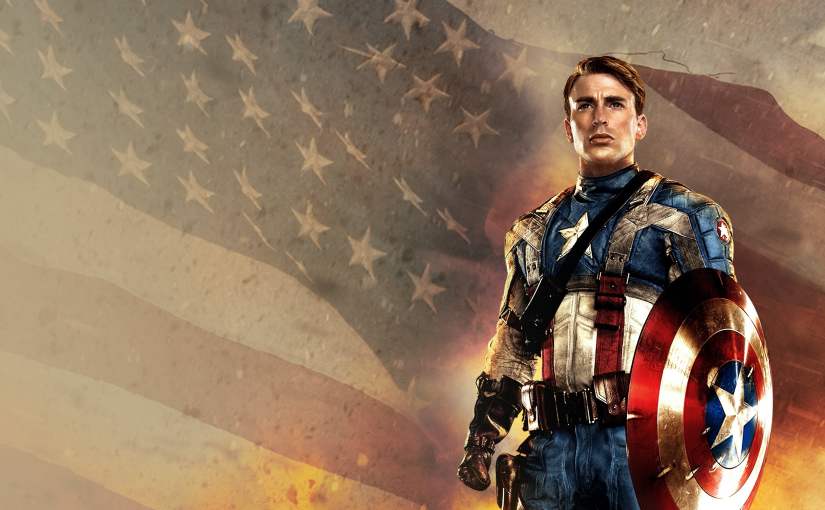
Admittedly, as a kid I read about the star-spangled hero, Captain America, on a frequent basis. In the ‘80s, to me he was nothing special; a guy with a shield, dressed like the flag who was very agile. Not many surprises were left for him to discover on the page. However, in his first MCU installment, Chris Evans, as Steve Rogers the weakling yearning to join the US Army during World War II and kill Nazis, is inspiring.

Director Joe Johnston ably introduces a character before revealing all the goodies. A fantastic special effect of downsizing Evans to a gaunt 95 pounds allows the motivation to become a hero all the more convincing. Following a series of being bullied and being rejected for service, Rogers is given the opportunity to become a lab rat for a “Super Soldier” experiment that will award him with instant fighting skills and strength. Stanley Tucci plays the doctor looking for the right candidate. Why Rogers? Because he sees he has the heart of a man only wishing to do well unto others. The experiment is a success before it becomes sabotaged, but Tommy Lee Jones, representative of the Army, is not entirely convinced. So, Cap only elevates himself to the role of a character logo, forced to sell the idea of buying war bonds across the country and entertaining the troops overseas. A rescue mission finally comes calling, and the boy in blue dons the shield and shows the world who he is and what he stands for.

Chris Evans is great in this part as a guy always on a path of “do good.” Never emoting cockiness, never in service for himself and never one to surrender to illogical and immoral mindsets. This is how Captain America should always be portrayed, a man who stands for the good of country and as the MCU films continue on, the good of the world and, well heck, lets just say the good of the galaxy. With his perfect haircut and clean shaven face, Evans never shies away from that platform.

Tucci is so good in a role that will never define his career. His brief appearance shows no hint of him being in a comic book movie. That’s a huge compliment. He takes the role of a German doctor seriously. He’s the scientist, but the film allows a nice scene for him with Evans showing that he is more so a friend. When his part exits the film, you miss him.

Finally, the MCU gets the female role right following the dismissive nature of characters like Pepper Potts (Iron Man), Betty Ross (The Incredible Hulk) and Jane Foster (Thor). Special Agent Peggy Carter played by the awesome discovery of Hayley Atwell makes the role her own. She plays the part like it is written, never relying on the title character for her cues. Atwell shows determination to stand out as a woman among a sea of men and never regarding herself as any different from those said men. She has some great scenes with Tommy Lee Jones debating the purpose and importance of Rogers. By the end of the film, you are not just paying attention to the fate of Evans’ character, but Atwell’s as well. Peggy Carter is written so well, you could write a TV series about her. Wait….hold on…. anyway I digress. Hayley Atwell remains the best female character of the MCU above those we’ve seen already at this point, as well as ahead of those to come in future installments.

The villain is really just a villain with Hugo Weaving as the Red Skull. The character looks great; looks just like the source material. He’s one bad dude, but not much to him. He stands to be more powerful than Hitler, yada yada yada.

Joe Johnston directs a film with a salute towards director Steven Spielberg. Try to convince me that the opening scene is not reminiscent of the opening to Close Encounters of the Third Kind. Indiana Jones seems to sprinkled about as well. Johnston doesn’t try to get cute with experimental camera shots and blurry CGI action. I think because he follows a paint by numbers approach to this film, it is all the better. He offers lots of good back story to Steve Rogers role, he gives a large cast of characters their own moments to stand out (like Bucky Barnes and the Howling Commandos) and he keeps Captain America likable and a guy to cheer for; a guy to be thankful for.

So, let’s give it up for Captain America!!!!

THE MATRIX FRANCHISE

By Marc S. Sanders

Miguel and I went to see the The Matrix Resurrections last night and honestly, when I woke up this morning, I had forgotten I’d even seen it.  That’s because, other than the original Matrix film, the subsequent chapters are about as special as cheap food court Chinese food.  When you get home from the mall, you recall what you may have window shopped, but you never reflect on what you had for lunch; well maybe your gut does later on, and that’s certainly not doing you any favors. 

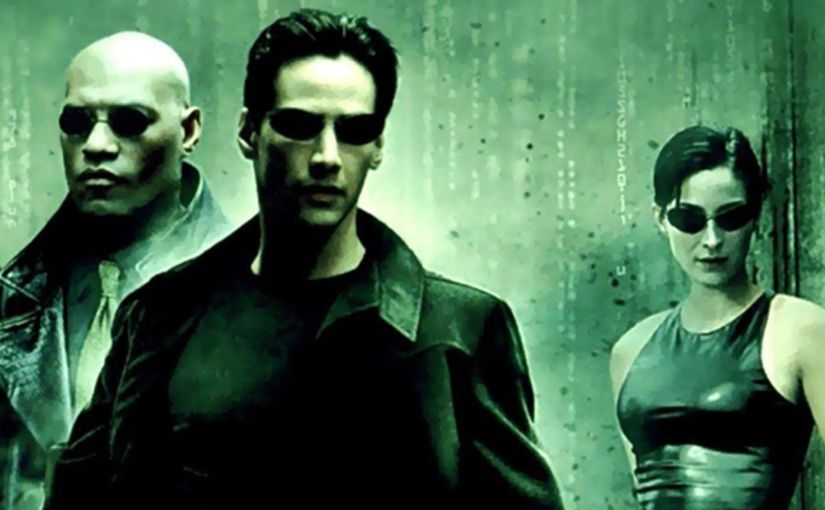
When The Wachowskis introduced the world to The Matrix way back in 1999, it was one of the biggest surprises in films.  No one saw its uniqueness coming.  Everyone was focused on the over hyped resurgence of Star Wars, or a kid who desecrated a pie, or a hand held video film that was seemingly terrorizing audiences.  Yet The Matrix arguably may have had the best longevity that year.  It seemed like a combo sci fi/super hero picture with the players looking ultra-cool in designer sunglasses and leather night club outfits.  Guns and jiu jitsu flew off the screen, but it was done in a new visual kind of way.  Bruce Lee would have likely been a part of this picture had he been alive.  When someone took a kick to the face, it was edited super cool looking sloooooowwww motion.  Bullet time became a thing with projectiles warping through the space between characters and these players, especially Keanu Reeves as the messianic Neo and Carrie Anne Moss as Trinity, would bend and twist and twirl acrobatically (again in slow motion style) to dodge machine gun fire and endless shrapnel.  The look of the film remains absolutely superb.  Nothing (other than maybe the film’s sequels) has duplicated what was accomplished here. 

As well, the original Matrix stands apart from the other three because it actually told a story and developed its protagonist and his mentor (Laurence Fishburne as Morpheus) into fleshed out characters.  It also went so far as to describe what the Matrix is, and what the world outside of that realm represents.  Like all humans, Neo, also known as Thomas Anderson, was actually under the control of a machine-like community designed to sustain a world known as the Matrix, and…well…that’s just bad!  There was solid storytelling here with setting and character development that was later accompanied by well-choregraphed action and pulse pounding club music.  When the film ended, audiences couldn’t wait for more and Warner Bros happily greenlit two more films that were shot back-to-back.  Only the train derailed from there.

Gearing up for the 2021 installment, directed by Lana Wachowski, I watched the first three films again.  Other than the first film, I had forgotten much of what occurred in the 2nd (The Matrix Reloaded) and 3rd (The Matrix Revolutions) pictures.  I realize now that I only forgot what really wasn’t there.  Substance!  Of the two films, Reloaded is likely better, thanks especially to an outstanding highway car chase involving sci fi effects of the characters bouncing off of big rig trucks, motorcycles and car roofs.  A pair of characters dressed in evil white leather with dreadlocks morph in and out of the vehicles and concrete streets as well.  The scene comes late in the film and only wakes you up from the meandering ahead of it.  Truly, it’s hard to comprehend what the hell is being explained in this second film.  The Wachowskis almost would prefer you be impressed with the monosyllabic vocabulary that’s exchanged with each character.  Dialogue doesn’t advance the story any further from where the first film left off.  All that I gathered was our band of rebels who successfully broke free from the slave-controlled Matrix are regrouping at the promised land of Zion, and the machines (squid like metal robots with countless red light bulbs) are advancing for an attack.  Morpheus, Trinity and Neo take it upon themselves to reenter the Matrix (because they look so much cooler there) and do who knows what.  Near the end of the film, Neo walks down a long hallway, opens a number of doorways and encounters the one supposedly responsible for the Matrix, an older gentleman known as The Architect.  This moment was intended to be a highlight of the film and yet it was anything but.  This architect spews out word diarrhea at an alarming rate that only clouds your mind further and further.  The guy has a great radio voice and has an antithetic appearance against the heroic looking Neo, but what in the hell are we supposed to do with any of this?  What’s the point?

On to Revolutions which begins exactly where Reloaded left off.  This is a picture that could have had a running time of thirty minutes at best.  The robots are finally attacking Zion.  One character who seems like he should be important or necessary to the Matrix storyline saddles up in a robot suit equipped with massive machine guns and The Wachowskis make the poor choice of feeding their audience a good seven or eight minutes of this guy spraying endless amounts of bullets in an upwards direction towards the infinite swarm of octopi robotic armies.  His guns never run out of ammo.  He just bellows as he continues to fire.  Where’s the story here?  Where’s the innovation that the first film offered?  Also, what goes up, must come down.  Shouldn’t some of that ammunition have dropped down in a hail storm eventually?  Reader, if I have to ask that last question then you know there’s not much to pay attention to in this film.

The wisest character of the Matrix films, Morpheus, is given very little to say or do in either film.  Fishburne stands in the background and let’s everything happen around him.  He’s not utilized to explain anything like he was in the first picture.  His skill for teaching the audience has been completely diminished.  Whatever he had to offer was exhausted following the first picture.  With Revolutions, especially, the filmmakers rely on B characters that we’ve never really gotten a chance to know or remember or adore like Yoda or Jabba or even Boba Fett in the films that followed the original Star Wars. In fact, Revolutions seems more concerned with its extras than any other film I can recall.  So much so that when a major character from the first film has a death scene, you hardly care for the loss.  There wasn’t much to expound on the character after the original film.  Revolutions only relies on the war nature of the human armies against the monochrome metallic squid race.  Beyond shooting at one another, where’s the conflict?  Ms. Pac Man and Frogger have more depth than any of this.

That’s the problem with these films.  A discovery was made with the 1999 installment and the filmmakers opted to capitalize on the effects and not the challenge of story. 

Furthermore, and this goes back to the original film when I first saw it in theatres, I was always of the mindset that I’d rather live in the Matrix.  After all that Morpheus has revealed to me, the Matrix still seems like the better place to reside.  The real world consists of living on a dirty, dreary ship and eating slop for food while wearing torn sweaters and having electrical plug orifices running down my spine.  Who wants that?  A Judas character from the first film turns on his crew by telling the evil Agent Smith that he will bring them Neo as long as in return he doesn’t know that he’s under the control of the Matrix and he can savor the taste of a juicy steak again.  Now I’m with this guy.  Aren’t The Wachowskis as well, though?  More footage and highlights take place in the computer mainframe of the Matrix than outside of it.  Thereby, more cool looking action sequences can happen and the cast appears more glamourized.  The films want us to fear the horrors of the Matrix on the humans by showing them plugged into wires while drowning in a pod like puddle of KY jelly embryonic ectoplasm.  You know what?  What I don’t know won’t kill me.  So, leave me be.  Perhaps the argument would have been more convincing had the environments been reversed.  Put the rebels as slave dilemma in the real-world areas and the utopian setting within the Matrix.  Then I might buy the problem here.

The newest film, Resurrections, is nothing special and nothing new.  It’s rather boring actually.  Revolutions was boring too.  It only kept me awake because it was two hours of headache inducing noise.  With the new 2021 film, apparently a new Matrix has been developed and thus a new Neo and Trinity have been conceived.  The antagonist is represented by Neil Patrick Harris and that’s about it.  Miguel pondered much, following the picture as to what was going on.  That’s not a good sign for a popcorn action flick, and it’s consistent with what was done with the 2nd and 3rd films.  What the hell is anyone talking about. Once again, dialogue moves to a beat of answering questions with questions. Even the allies speak to one another that way, and if it is not a question, then it is a cliché of some sort.  Don’t these people want to help one another?  If so, then speak to each other like your four years old and get to the point.  The action scenes drone on and on.  A goal of the picture is to keep Neo from finding Trinity because if they do, then the Matrix crashes.  Okay.  That’s simple enough.  Yet (spoiler alert), when they do find each other, somehow this new Matrix continues on.  Huh??????  The movie just betrayed me, and I don’t like that. 

Miguel attempted to conjure up the idea that Lana Wachowski was trying to demonstrate her transition from a man to a woman and this new picture was a representation of that.  Could that be true?  Maybe, but it never occurs to me while I’m watching the picture.  Am I watching The Matrix Resurrections because it’s the newest Wachowski film?  No.  This isn’t a Quentin Tarantino or Christopher Nolan piece.  This is leather and gunfire and sunglasses and noise, all depicted in a green DOS computer hue lens.

The Matrix was always worthy of a sequel; a subsequent follow up that explored imagination and perhaps more background.  What has Neo not yet uncovered.  Yet, the series as a whole continues to deny those opportunities and simply settles for cool looking visuals that get overly exhausted and tired.  No new skills are featured with each passing film.  Over the course of the series, the big bang, so to speak, of the first Matrix never reveals itself.  Instead, we are mind controlled viewers relegated to depend on overlong dialogue with no point and no where left to explore.  We are simply gifted with Neo punching Agent Smith and/or infinite duplicates of Agent Smith with no one getting weakened or wounded or defeated.  Look no further than an early fight scene in Reloaded.  The scene goes on forever.  The editing is amazing.  So is the choreography but after four minutes of this, it’s time to show some progress.  The Wachowskis limit their imagination to just having Neo fly away.  Scenes like this only allow me ample time to exit the theatre for a bathroom break and return having not lost out on any storytelling.  My friends, you can find plenty of bathroom breaks in this series of films.

The Matrix Reloaded, The Matrix Revolutions, and The Matrix Resurrections should never have been made.  Producer Joel Silver and Warner Bros would argue otherwise though.  Their wallets continue to get fatter, but at the cost of controlling moviegoers’ appetite for something more when all they really got was dry rice and overcooked orange chicken from the food court.

CLOUD ATLAS (2012)

by Miguel E. Rodriguez

Directors: Lana Wachowski, Lilly Wachowski, Tom Tykwer
Cast: Tom Hanks, Halle Berry, Jim Broadbent, Hugo Weaving, Jim Sturgess, Doona Bae, Ben Whishaw, Keith David, Susan Sarandon, Hugh Grant
My Rating: 10/10
Rotten Tomatometer: 66%

PLOT: An exploration of how individual lives impact one another in the past, present, and future, as one soul is shaped from a killer into a hero, and an act of kindness ripples across centuries to inspire a revolution.


Okay, faithful readers, I hope you’re comfortable.

Cloud Atlas is one of those movies like Baraka that leaves me with the urgent need to tell people how amazing it is.  It’s visually spectacular, thought-provoking, and hopelessly optimistic about love and the good side of human nature, even in the face of the worst humanity has to offer.

Based on a critically acclaimed novel by David Mitchell, the movie tells six separate stories, linked by the fact that a core group of actors plays all the principal roles in each story, and by the fact that at least one actor in each story carries a curious birthmark shaped a bit like a comet or a shooting star.  Each story is separated from the others by decades or centuries, taking place in the years 1849, 1936, 1973, 2012, 2144, and an apparently post-apocalyptic 2321.

I cannot imagine the lengths to which the filmmakers, and the film editor in particular, went to make this movie work.  The film jumps freely from one story to another, forward, back, forward, and back again, somehow maintaining a clean flow and keeping each storyline absolutely clear.  Although the stories are unique, the editing keeps the idea of connection alive for nearly three hours.  Just based on the editing alone, that makes Cloud Atlas kind of exhilarating to watch, especially when things heat up in the 2144 segment.

Let me see if I can quickly summarize each story, without giving too much away:

  • 1849 – An American lawyer visits property holdings overseas and witnesses the brutal whipping of a slave, who stows away on the lawyer’s ship returning to San Francisco; meanwhile, an unscrupulous doctor has plans to steal the lawyer’s gold en route.
  • 1936 – A struggling composer, Robert Frobisher, is hired as an amanuensis (a fancy word for a music stenographer) to another aging composer, which allows Frobisher to compose his own masterpiece, The Cloud Atlas Sextet. The aging composer demands credit for the piece and threatens to expose Frobisher’s bisexuality, including his deep, unconditional love for a gentleman named Rufus Sixsmith.
  • 1973 – An investigative reporter stumbles onto a conspiracy at a nuclear power plant, thanks to a whistle-blowing report written by none other than Rufus Sixsmith, now in his sixties.
  • 2012 – An author on the run from hooligan creditors takes refuge in what he thinks is a hotel, but is in fact a nursing home, to which he has inadvertently committed himself.  He and three other residents plan a daring jailbreak.
  • 2144 – Set in a vastly futuristic New Seoul, a renegade “fabricant” is brought in for questioning by the ruling government known as Unanimity.  The fabricant, known only as Sonmi-451, spins a tale of oppression, liberation, and horrific realization as she becomes the voice of a revolution that will ripple across centuries.
  • 2321 – In a post-apocalyptic Hawaii, peaceful Valleysmen live in constant fear of attacks from vicious cannibals, the Kona tribe.  They also receive periodic visits from Prescients, a highly advanced society that apparently lives offshore.  One day, a Prescient, Meronym, asks a Valleysmen leader to guide her to a remote mountain peak where she hopes to send an SOS signal to off-world colonies.

Confused yet?  Don’t be.  The editing keeps everything crystal clear.

But that’s just the clinical description of the movie.  What catapults Cloud Atlas into the stratosphere is how the fancy editing and visual effects occasionally take a back seat to a really deep philosophical question that leaves me with a sense of awe.  It’s really a what-if question, one of the greatest what-if questions of human existence.

What if…death isn’t the end?

I know that countless other movies have asked this question. We all have our own answers and beliefs.  I am not suggesting that Cloud Atlas has somehow figured out THE answer to this question, or that the answer it provides somehow trumps your own beliefs. But of all the movies I’ve seen on this topic, Cloud Atlas is the only one that really, genuinely, truly left me in awe of the possibilities it proposes.

I mentioned earlier that key roles are played by the same actors over and over again in each of the stories.  While that was initially distracting, I realized that the filmmakers were actually making a genius move.  It was nothing more than a simple way of illustrating the concept that a life in one era is echoed in another, decades or centuries later.  Heavy makeup is used to indicate how one person’s life as an Asian woman could, in theory, be echoed in the life of a Mexican woman in another era.  Or perhaps the life of a British man might be echoed later as a British woman.

And then there’s the question of that recurring birthmark.  One key character from each storyline bears a birthmark that resembles a shooting star.  So many people (including me the first time around) wanted to attach some kind of conventional story-based meaning to that birthmark.  Did it mean these characters were all somehow blood-related?  Was it a prophecy of some kind?  Something mentioned in the book, perhaps, that had to be left out of the film for pacing reasons, or some such thing?  No.  It’s just another visual reinforcement of the idea of recurrence, or reincarnation.

And that’s where I get awestruck by the movie.  Reincarnation is not a new concept in films, but Cloud Atlas really got under my skin.  Imagine.  What if…the person you love, your soulmate, the one you’ll love until the day of your death…what if, centuries hence, you’ll meet each other again?  Maybe you’ve walked down the street, or been eating in a restaurant, and for a fleeting second you lock eyes with a total stranger across the room, and you think, “I KNOW that person,” but the moment passes and life goes on.  What if that happened because you have met in some past life?

Or maybe you go on a date, and it goes phenomenally well, as if you’ve known each other for ages?  Well…maybe you have.  It’s your destiny to meet and love this person because you’ve already done it before.

I know I’m getting a little woo-woo/touchy-feely here.  It’s not a new idea.  It’s just that Cloud Atlas presents the idea so well that my breath gets taken away when I think about its implications.

I just have to bring up the stunning visuals again.  There’s a scene where the composer, Frobisher, is writing to his lover, Rufus Sixsmith, and there’s a passage where, in his mind, he meets Sixsmith in a china shop.  In a wonderfully poetic moment, they start smashing the china in slow motion as Frobisher’s composition plays in the background.  Then, just as the music reaches a crescendo, the two of them stop in place, and hundreds of china vases and plates rain down from the ceiling in slow motion, hanging in space, descending slowly to the ground like gigantic snowflakes.

I’m at a loss.  I’ve come to the end of whatever I can discuss about this movie without repeating myself endlessly.  I want to reiterate that I don’t believe this movie has THE answer to what lies beyond death.  But it has a truly lovely hypothesis, one that leaves me awestruck with its implications.

So let me just end with a line from the movie that makes my heart swell every time I hear it.

“I believe there is another world waiting for us, Sixsmith. A better world…and I’ll be waiting for you there. I believe we do not stay dead long. Find me beneath the Corsican stars, where we first kissed.”

V FOR VENDETTA (2005)

By Miguel E. Rodriguez

Director: James McTeigue
Cast: Natalie Portman, Hugo Weaving, Stephen Rea, John Hurt
My Rating: 7/10
Rotten Tomatometer: 73%

PLOT: In a dystopian future Britain, a shadowy freedom fighter, known only as “V” (Weaving), plots to overthrow the totalitarian government with the help of a young woman (Portman).


V for Vendetta is based on the single greatest graphic novel I’ve ever read, bar none.  It breaks free of the narrow term “comic book” and becomes a leaping, soaring work of fiction that should be on every serious reader’s Must-Read list.  When I heard a movie version was coming, and that it was being produced by the visionary minds behind the Matrix trilogy, reader, I will not lie…I flipped out a little.  At last, the mass market would have a chance to see what I’d been talking about all these years.

To say the movie does not exactly match up to the graphic novel seems a little unfair.  After all, I’m a chief proponent of the notion that movie adaptations of books, TV shows, et. al., deserve the chance to stand apart from their source materials.  On those merits alone, V for Vendetta works, albeit a little unevenly.

Hugo Weaving was a great choice for the title role of a masked revolutionary whose face is never fully seen, whose voice and gestures alone must carry the character for the duration of the film.  At first, one is reminded of Willem Dafoe playing the Green Goblin in the first Sam Raimi Spider-Man film.  It’s unsettling, but it works better here, due to the ambiguous nature of the mask itself, which is the traditional Guy Fawkes mask.  It’s a smiling visage, but the light-hearted nature of the face presented to the public makes it infinitely more creepy and untrustworthy.

The central story of the movie works well enough.  It’s a trope that I, for one, have always thoroughly enjoyed: the story of a man, or of people, rebelling against the dystopian forces governing their lives.  There are echoes of countless other films in this story: Equilibrium, 1984, The Matrix, Gladiator, etcetera.  In fact, although it’s set in Britain, I’d go as far as saying it’s a distinctly American story, given the history of our country’s origins.  It’s always deeply gratifying to see corrupt powers-that-be get their comeuppance by the final reel.

My reservations with the movie lie primarily with certain long stretches of expository dialogue providing vital information, particularly with the chief inspector, Finch (played by Stephen Rea), re-telling a gruesome episode involving the deaths of tens of thousands of children due to disease, and of their government’s possible role in the epidemic.  While the information is needed as backdrop for what comes later, it brings the movie to a screeching halt.  And it happens more than once.  This is the movie’s greatest flaw: the need for tons of information that is more easily conveyed in the written word than it is on film.

However, for the viewer that is not deterred by these long stretches, the movie is immensely satisfying.  It sets up a loathsome Supreme Chancellor (played with spittle-spraying gusto by John Hurt) whose primary message to his cabinet is to instill fear in the people, to “remind them why they NEED US!”  The various action scenes are expertly done, reminding me of the best fight scenes from the Bourne movies, with a little extra flair provided by V’s weapons of choice, lethal throwing knives.  And the finale is suitably spectacular…make sure your volume is turned up to eleven.

The movie contains one speech that is NOT in the graphic novel, and which troubled me greatly the first time I heard it, and is still problematic for me today.  At the opening of the film, “V” has blown up a building in London as a sign of protest, which of course parallels the face of the mask he has chosen.  Evey, a young woman who has come into his care (long story), questions him about his future plans to blow up the Parliament building:

V: “People should not be afraid of their governments.  Governments should be afraid of their people.”
EVEY: “And you’ll make that happen by blowing up a building?”
V: “The building is a symbol, as is the act of destroying it.  Symbols are given power by people.  Alone, a symbol is meaningless, but with enough people…blowing up a building can change the world.”

This was startling to hear four short years after 9/11.  Other movies had already referenced it as a historical event, but this was approaching the act itself in a deeper sense.  Here is the hero of our story talking casually, even heroically, about doing exactly what the terrorists of 9/11 were hoping to do.  In the context of the movie, he makes sense: the totalitarian villains must be sent a message that the people will be sheep no longer.  But…I couldn’t help thinking that this is the philosophy that drove Timothy McVeigh, and the 9/11 perpetrators, and the Weathermen, and Ted Kaczynski, and countless others.  Is it possible to look at this idea of “symbol-killing” in a positive light?  In this day and age, do we even WANT to find a positive spin to the idea of blowing up a building as a symbolic act?

As I said, for me it was problematic, and it cast a faint shadow over everything that came after it.  Yes, “V” is definitely the hero here, but is this line of thinking dangerous?  I dunno.  Perhaps I’m overthinking it, but there you go.