BOBBY (2006)

By Marc S. Sanders

There’s the distinguished doorman who is retired now but returns each day to play chess with a colleague in the hotel lobby.  There’s the open-minded girl who is inspired to prevent a young man from getting drafted into the Vietnam War by marrying him.  Her hairdresser is married to the hotel manager, who happens to be having an affair with the beautiful switchboard operator.  As well, the dining manager is a bigot who will deny his Mexican employees enough time to leave work and exercise their right to vote.  A busboy will have no choice but to miss what will likely be Don Drysdale record breaking sixth shut out game in a row.  A drunken night club performer can hardly stand up straight while she is completely dismissive of her caring husband.  A wealthy man is ready to introduce his trophy wife to an eventful evening in modern politics.  Two young campaign workers sneak away to drop acid for the first time.  A black man is at a loss following the recent assassination of Dr. King. Though he has hope that at least Bobby Kennedy will uphold his faith for a promising future in America for African Americans to carry equal rights. 

So, what does any of this have to do with Robert F Kennedy?  Not much I’m afraid.  Writer/Director and star Emilio Estevez tells us that all of these stories occur in the Ambassador Hotel on the fateful night when the Senator was assassinated in the hotel kitchen by Sirhan Sirhan.  In Bobby, the only character that is not a character is Bobby Kennedy and that is unfortunate.  More to the point, all of these short stories and other characters are precisely boring.

Estevez committed himself to grinding out stories that occur in the Ambassador that would lead up to Kennedy’s tragic death.  He’s admitted that they are all fictional. Based on his research and photographs, these characters are very loosely inspired by those that were there that night.  Before gathering in the ballroom to hear Kennedy’s victory speech after winning the California primary, these people were going through own personal ordeals.  If Emilio Estevez was not so personally inspired and researched in Robert Kennedy’s purpose to American history and politics, then perhaps Arthur Hailey (Hotel, Airport) would have pieced together this script of anecdotes and vignettes.

I commend Estevez’ efforts here.  The film looks great and even though the Ambassador was being demolished at literally the same time as this film was being shot, the scenic designs are very authentic.  The cast is even more impressive as the director reunites with many co-stars that he’s worked with before including Demi Moore, Anthony Hopkins, Christian Slater and his real-life father Martin Sheen, a lifelong loyalist to the Kennedy family.  The “importance” of this movie seems to sell itself.  Yet, everything is incredibly mundane and of little interest.  When your cast and your characters are just items on a grocery list to check off, there’s not much that’s interesting beyond the coupons.

The juicy gossip that surrounds the real-life actors is more captivating. Estevez cast Ashton Kutcher (Demi Moore’s real-life husband at the time) to play the drug dealer who provides acid to the campaign workers (Shia LeBeouf, Brian Geraghty).  Moore is also Estevez’ ex-girlfriend.  Yet, to watch Kutcher, LeBeouf and Geraghty experience an acid trip with weird visions they see when they open a bedroom closet is unfunny and not captivating.  Emilio Estevez is not living up to the Coen Brothers (The Big Lebowski).

A tryst with the boss (William H Macy) and his young, attractive and naïve switchboard operator (Heather Graham) is nauseatingly hokey.  The aged wife who works in the hotel salon (Sharon Stone) turns it all into squeamish soap opera tripe.

Bobby has an alarming opening.  A false alarm fire call is wrapping up at the Ambassador Hotel and you may feel like you are entering the middle of a panic storm, but things quickly calm down and the film resorts to cookie cutter editing to introduce its all-star cast.  None of what they say matters.  This is a game of who you can recognize.  Joshua Jackson, Nick Cannon, Harry Belafonte, and eventually the guy with the most significant role, Laurence Fishburne, is given his moment, the best scene of the whole film.  Fishburne is the kitchen chef who allegorically uses his creations in cuisine to compare the black man’s experience to the brown man’s, or Mexican. 

Having finished a trip to Martha’s Vineyard, I wanted to show my wife the under-the-radar and captivating film, Chappaquiddick, which covers Ted Kennedy’s personal story of controversy.  (My review of that film is on this site.) To continue on the Kennedy parade, we were motivated to follow up with Bobby.  Yet, this picture offers very little to the significance of Senator Robert F Kennedy.  There are samples of news reports complete with Cronkite.  Plus, the Senator’s own words ring through the epilogue of the picture.  Yet, I felt cheated of learning nothing new about the historical figure. 

Reader, you may tell me to kick dirt and go find another movie or read a book.  Fair!  However, this is film is called Bobby, and if I’m not going to learn about Bobby Kennedy from the man himself, then allow me to get to know the man through the eyes of these individuals.  Who hates him?  Who loves him? Who has a crush on him?  Who is inspired by him?  Who wants him dead and why? 

Estevez’ script does not allow enough material to describe what Kennedy meant to these campaign workers or hotel workers or guests.  They are primarily self-absorbed in their own personal battles to think enough about the fact that Bobby Kennedy is expected to make an appearance later this evening.  Again, their personal concerns for each other is very dull.  I don’t want to be around a drunk and obnoxious Demi Moore.  I don’t want to drop acid with some guys who hide behind a façade for caring about the candidate they are supposed to be serving.  I feel sorry for the busboy who will miss that big game, but that’s not enough to get me engaged in the entirety of the picture.

Bobby lends very little to the confusing times of the late sixties when an unwinnable war was persisting and championed leaders were being killed for others’ agendas.  Any of these stories could have been yanked from this script and slotted into a disaster flick like The Poseidon Adventure or The Towering Inferno

Bobby only picks up momentum when it arrives at its end that many of us learned about in school or witnessed firsthand in documentaries or directly from that very sad and unfortunate evening, June 4, 1968.  This day in history is so much more important than a Helen Hunt character trying to convince her Martin Sheen husband to let her buy a new pair of black shoes.  Bobby Kennedy deserves more recognition than what Emilio Estevez offered.
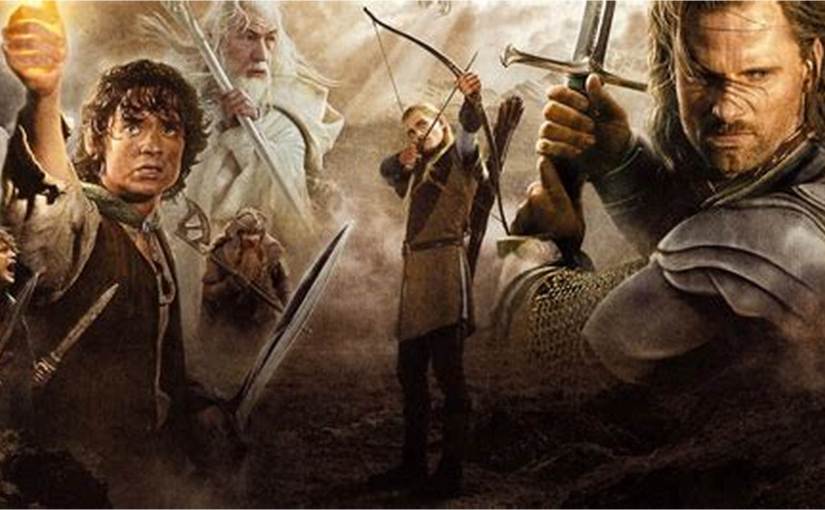
THE LORD OF THE RINGS: THE RETURN OF THE KING

By Marc S. Sanders

I remember film critic Gene Siskel once said that to take issue with the length of a film is not entirely fair. After all, you are getting more movie for your buck. Would Siskel have felt that way about The Lord Of The Rings: The Return Of The King? Peter Jackson closes out the film adaptation of JRR Tolkien’s sweeping fantasy with an epic that allows you to marvel at everything you see, but does that mean we want to feel as overly exhausted as its main protagonist, Frodo Baggins, feels? Trust me. Poor Frodo looks wiped.

More battles are enacted in the third film. Jackson just changes the dynamics up a little bit. Now armies don elephants with a number of enormous, curved tusks. Another army has a different looking giant troll. Haven’t seen elephants before. Haven’t seen that kind of troll yet either. As well, there is another King who is apprehensive to cooperate in the fight against Sauran and his Orc minions. There’s also a green glowing ghost army. Meanwhile, Frodo and Sam (Elijah Wood and Sean Astin) continue their journey to Mount Doom where the almighty Ring must be destroyed. Gollum (Andy Serkis) remains as their untrustworthy guide.

Jackson seemingly covers every page written by Tolkien. I’m talking about depicting every dream each character has or line they utter or slow motion expression they offer, or walk that they take. Peter Jackson is a completist.

The Return Of The King won Best Picture along with a bevy of other Oscars. Seemingly it should have won anyway. The first two films were recognized with Best Picture nominations as well. For the third film to win was to honor the entire trilogy and its achievements in filmmaking. The Lord Of The Rings trilogy reinvented movie making as a whole. The bar was set so much higher following its release and huge reception of these films.

That being said, it takes endurance to stay with the picture. Most especially with The Return Of The King as the film has multiple endings. Just when you think it’s over, it’s not, and it’s tedious and a little frustrating. Jackson seemed to have too hard a time saying farewell to his digital Middle Earth with its endearing characters.

The length is a problem I have with the film, but none of it seems wasteful either. Every caption and scene carry an importance to it. At least that’s how Jackson wants you to feel. The question is, if a number of momentary scenes had not been woven into the final edit, would I miss it, and my answer would be likely not.

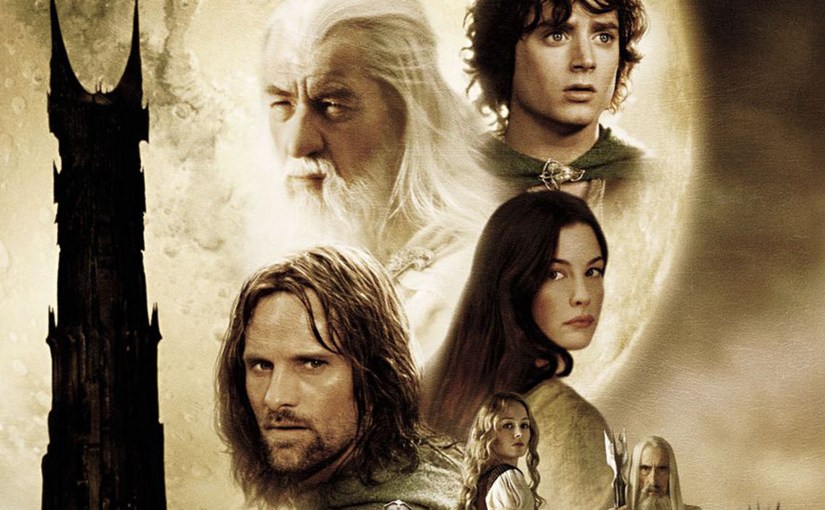
THE LORD OF THE RINGS: THE TWO TOWERS

By Marc S. Sanders

Peter Jackson’s second installment film adaptation of JRR Tolkien’s The Lord Of The Rings trilogy is The Two Towers. The captivating fantasy themes that audiences discovered in the first film continues.

Battle scenes with Orc armies are well edited and staged perfectly in digital settings. The film’s ending with a long, drawn-out battle located at the stone castle Helms Deep is stunning, full of heroic actions executed by favorite characters like Legolas the Elf (Orlando Bloom), Gimli the Dwarf (John Rhys-Davis) and especially Aragorn, destined to be King (Viggo Mortensen).

The Two Towers is almost marvelous with the exception of an overstayed welcome of the Ents – life size talking trees. Treebeard is the main Ent character, where the Hobbits Merry and Pippin take shelter by sitting on his branches. The effects of the Ents work. When the film returns to this storyline however, the narrative drags and the audience suffers. Treebeard converses in his own speak with the other Ents, the Hobbits ask “well?” and it’s supposed to be amusing that all they said was good morning. It’s not amusing. It’s boring.

The big centerpiece of the film belongs to Andy Serkis doing his full body animated effect to bring the untrustworthy, dual personality Gollum/Sméagol to life. Serkis should have received an Oscar nomination as he piggy backs on the continuous journey that Samwise Gamgee (Sean Astin) takes with the ring bearer Frodo (Elijah Wood). Gollum can’t resist what he once owned for himself-the “precious” Ring. Frodo’s good instincts insist upon not harming Gollum or Sméagol while Sam has strong reservations.

Jackson’s second film offers up a heightened urgency on all fronts. He’s good at showing the weight of the ring upon the psyche of Frodo and Gollum and he leaves time for other stories where Saruman’s (Christopher Lee) army conquers more lands-allegorical to the period of time when Tolkien wrote his novels following Nazi occupation within Europe.

Jackson is a completist and no stone is left unturned. A large portion of the film is appreciated even when you consider that you can take a bathroom break anytime Treebeard shows up.

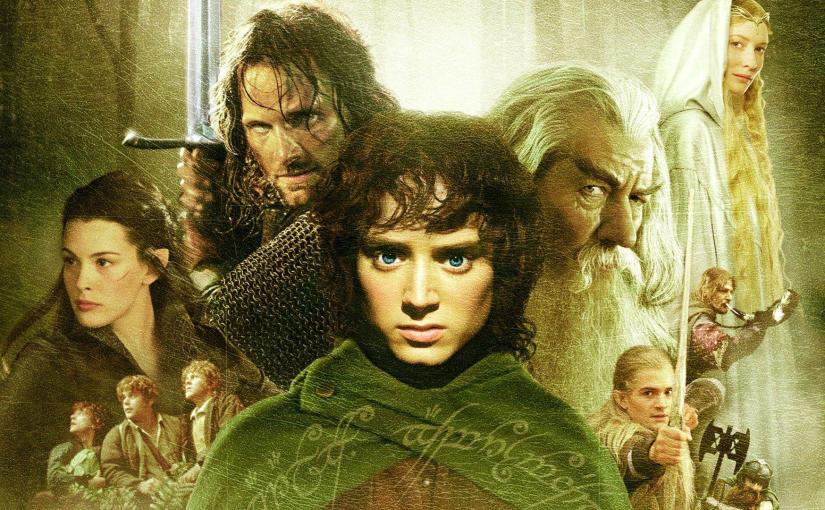
THE LORD OF THE RINGS: THE FELLOWHSHIP OF THE RING

By Marc S. Sanders

JRR Tolkien was one of the 20th Century’s greatest fantasy writers. The Lord Of The Rings series was a dense, sweeping epic inspired by the torn European climate during World War II and its conflict with the Axis nations, particularly Hitler and his organized Nazi Germany.

Peter Jackson found the opportunity to adapt Tolkien’s works. In 2001, The Fellowship Of The Ring amazed audiences with its epic landscape of Middle Earth, Isengard and Mordor where the fiery Mount Doom is located and the evil eye of Sauron waits for a resurgence of overthrow.

Much happens in each three hours plus Rings films. Tolkien’s story is not so much plot, but moreover a journey from one adventure to another. What’s special is that the main hero is a small, kind Hobbit named Frodo Baggins (Elijah Wood) who has been tasked with carrying the dangerously powerful “One Ring To Rule Them All” back to Mount Doom and destroy it. He is aided by eight fellows, three other Hobbits and four representatives of various nations and backgrounds to protect and escort him. The most significant member is the wise wizard Gandalf The Grey played by Ian McKellen in an Oscar nominated performance. The other characters’ significance become more established in later films.

This first installment is my favorite of the series because it is the most absorbing. I believe in the all but sinister and deadly value of Tolkien and Jackson’s MacGuffin, the Ring. Jackson does well of posing the threat of danger each time Frodo dons the Ring for the sake of invisibility while the Orc army of Saruman, Sauron’s Wizard henchman played by Christopher Lee, bears down on the Fellowship. The film shows one battle after another but the suspense is heightened each time as we become more familiar with Jackson’s digital world. It’s also quite dramatic to see Frodo become consumed in fear and a kind of sickness as the possession of the Ring weighs upon him. To precisely show that transition requires a three hour film, and Elijah Wood is up to the task, always appearing quite angelic and unsure of his assignment. Wood is quite the underrated actor.

There are a multitude of character descriptions in The Fellowship Of The Ring and a number of them come into play when centered around the viewpoint of the Ring. Backstories for others are really not necessary but Jackson attempts to cram as much of Tolkien’s narrative as possible. Beyond Frodo, and maybe Gandalf, the other most interesting character here is that of Boromir played by Sean Bean, often playing a variation of a hero in his films, but quite good at not being worthy of endless accolades. Boromir is a great character to show how the temptation of the Ring can cloud and poison the mind. Bean evokes that of one who might be a weak addict, needing a quick fix of the Ring’s power. There’s a complexity to his performance. Boromir is likable but Sean Bean makes the character quite shocking as well. He’s not a villain but his internal weakness presents a conflict for Frodo and his band. Sean Bean never got enough recognition for his role here.

Peter Jackson is the real hero though. This series is a massive cinematic accomplishment. Everything feels gratefully familiar. Perhaps that is from reading Tolkien’s visually descriptive books, or maybe even the animated film from the seventies. There’s something to see in every corner of the screen. It’s a world come alive in leaves, creatures on land or in the sky, sorcery and swords, flames and even saloons of overflowing drink and large platters of food. The Shire where Frodo lives with his uncle Bilbo (an excellent and jovial Ian Holm) comes off as a happy utopian village of farming and Hobbit celebrations of laziness and relaxation from any outside elements. Jackson contrasts this beautifully against the majesty of Rivendell and the hell of Mordor. It’s a nuanced universe.

Again, for me this first installment remains the best as it is cinched up tightly in its exposition and narrative. Later films are just as grand but maybe sidestep away from themselves a little.

I never got that impression with The Fellowship Of The Ring. Everything I see belongs in the film.