OCTOPUSSY

By Marc S. Sanders

By the time Octopussy was released in 1983, I think part of the joke was that Roger Moore, on the latter half of middle age, can survive and triumph over insurmountable odds. The crow’s feet show around the eyes. The hair color looks faded. He doesn’t necessarily look physically fit anymore. Yet, 007 can still outrun a pack of hunters riding elephants and shooting at him with sniper rifles. If you just accept this standard and laugh at the absurdity, you’ll likely have enjoyed Octopussy.

Director John Glen’s movie is a mixed bag of really good action material and a regrettably choppy storyline involving jewel thievery and a Russian nuclear bomb. Only it’s not made clear how these two connect until very late in the picture. By that point I didn’t care much.

There’s some amazing footage in Octopussy. Particularly, a spectacular scene where Bond manages to get on top of an airplane and stay there. With the exception of close ups for Roger Moore, this is all stunt work and my jaw drops no matter how many times I see it. Bond is trying to prevent villain Kamal Khan (Louis Jordan) from escaping with his henchman. Khan tries to shake Bond off the plane by doing aerial maneuvers including flying upside down. Glen’s camera captures his stuntman doing it all at 30,000 feet. Then the henchman goes outside of the plane! It’s a sequence that must be seen. Another all time great stunt in the series.

Oh yeah, the story! Bond travels to New Delhi, India to uncover why Khan has spent an enormous fortune on a Russian Faberge Egg at a Sotheby’s auction. Following a backgammon match where 007 outwits his opponent’s cheating with loaded dice, Bond finds himself outrunning bad guys in a street market complete with sword swallowing, a bed of nails and running on hot coals. I was waiting for him to break into song like Disney’s Aladdin. (Ironically, Tim Rice wrote the lyrics to the film’s song “All Time High,” performed by Rita Coolidge.)

Eventually, he catches up with Maud Adams, making her second appearance in the series; this time as the title character. She’s a jewel smuggler working with Khan, only she’s got scruples that Khan does not possess. Consider the fact that once she realizes Khan is working with a renegade Russian general (Stephen Berkoff) to detonate a nuclear bomb during a circus located on an American military base in East Berlin, Octopussy has an epiphany that she has been double crossed. This really does not seem so surprising to anyone except Octopussy.

Bond has to endure a lot in this film. Besides contending with Khan’s turban wearing henchman, he also has to fight against deadly identical twins who are experts at knife throwing. Worse yet is when he has to don a clown outfit complete with rubber nose, floppy shoes and makeup.

The action of Bond making efforts to get to the doomed circus is great as he has to leap on to a train and follow after the locomotive with a Mercedes Benz on railroad tracks. Good automobile stunt work further in this extended scene also works well.

What leaves me feeling ho hum, though, is Octopussy and her lady soldiers in red jumpsuits, all skillful in fighting techniques and weaponry ready to take on Khan’s bandoliers. Looks like an old Batman tv episode really. It’s a little eye rolling to say the least.

Octopussy is watchable but it’s nothing special. This film and Roger Moore’s next and final adventure as 007 are certainly two of the weakest in the series. I must persist though.
FOR YOUR EYES ONLY

By Marc S. Sanders

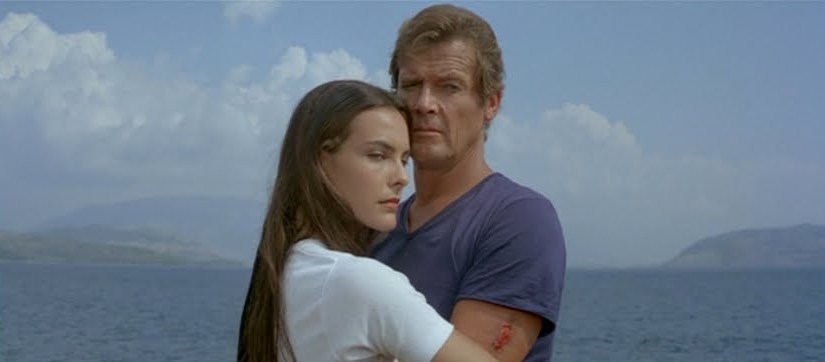
The 12th James Bond film in the EON Productions series, For Your Eyes Only, opens with 007 visiting the grave of his late wife, Teresa, followed by a priest offering a blessing before the super spy departs in a doomed helicopter hijacked by Blofeld with remote control. The pre credit sequence sends multiple messages. Albert R. Broccoli is ready to get a little more serious (at least with this one film), and say goodbye for good to his franchise’s past adventures. There are other villains besides Blofeld and SPECTRE. In actuality, copyright lawsuits would force this decision. Broccoli, though, happily dropped his bald, cat loving nemesis down a smokestack anyway.

This time Bond is on the trail of recovering Britain’s ATAC system after it sunk with its crew somewhere on the Greek ocean floor. ATAC, in the wrong hands, like the Russians, could order Britain’s submarines to fire upon their own country.

Bond encounters two potential suspects behind the plot, Kristatos (Julian Glover) and Columbo (no…not Peter Falk and his wrinkled trench coat; I’m talking about the one and only Fiddler on the Roof, Topol). The daughter of the designer of the ATAC, Melina Havolock (Carole Bouquet) makes things complicated with her crossbow as she is on a mission of vengeance for the death of her parents.

Lots of action and grounded Cold War politics make this a solid entry in the series. A ski chase in Cortina, Italy is fantastic. Director John Glen (formerly an editor of prior films) manages to maintain realistic speed keeping up with motorcycles in pursuit of Bond. One of my favorite scenes during the Moore era of films.

Greece is beautiful too. Both on land and underwater where some footage occurred, even if some camerawork was manufactured at the legendary Pinewood Studios in London.

It’s funny to watch one recover the identity of a bad guy known as “The Dove” on an “Identigraph” a big, clunky machine in Q’s lab. Today’s Bond would need only use his iPhone or wristwatch.

The once revealed villain is no one exciting or unusual, but Glen in the director’s chair offers up a grittier story apart from the sci fi silliness of Moonraker. The opening scene high above London is really great stuff, along with the already mentioned ski chase, a hockey brawl, a shootout along a Greek sea port and a pretty suspenseful mountain climb for Bond to covertly sneak upon a hidden hideout.

A minor, uninteresting distraction comes from young and immature Lynn Holly Johnson pining for Bond’s affection. She’s as useful as Sheriff JW Pepper from prior films.

Oddly enough, as serious as this one gets at times (Bond tosses a bad a helpless bad guy off a cliff) it closes out by mocking a Margaret Thatcher lookalike mistaking a parrot for 007. I liked it, but rumor had it that Roger Moore hated this bit.

All in all, For Your Eyes Only is Moore’s second best film behind The Spy Who Loved Me.

PHILADELPHIA

By Marc S. Sanders

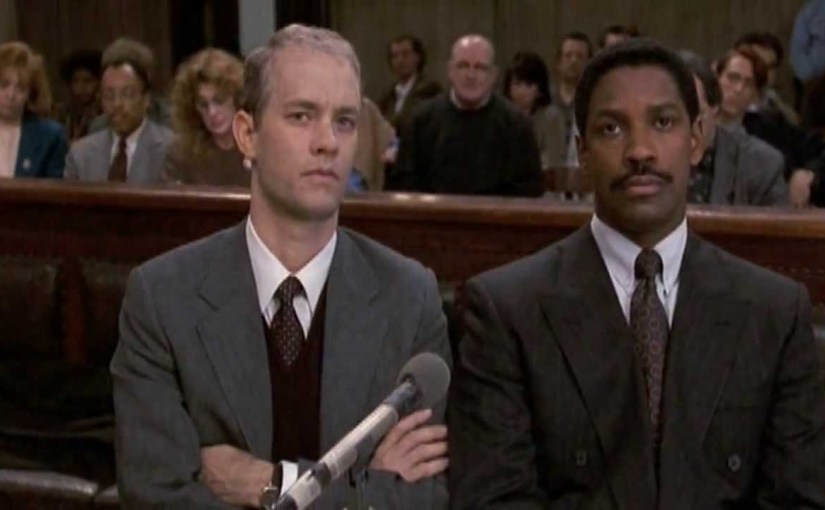
Tom Hanks most certainly deserved the first of his two Oscars for his portrayal of Andrew Beckett, one of the first protagonists to be an AIDS victim on screen in Jonathan Demme’s 1993 film, Philadelphia. Its a good film but not a great film.

I recall seeing Philadelphia when it was originally released. Seeing it today, my opinion hasn’t changed. I don’t believe the film takes enough risks and the script from Ron Nyswaner is too cookie cutter and simple. Beckett hires Joe Miller (Denzel Washington) to represent him when he proceeds to sue the law firm who wrongfully fired him for having AIDS, and most likely being gay as well. The argument hinges on proving that having AIDS is a handicap that never interfered with Andrew’s work performance. Andrew is clearly made out to be the firm’s best of the young attorneys when he’s assigned their biggest client. Nine days later he’s sabotaged, and soon after he’s fired for an attitude problem and carelessness. Eventually, Andrew and Joe assemble, despite Joe’s prejudices against homosexuals.

The trial, Andrew’s struggle of living with AIDS, and Joe’s own inner debate with associating and defending a homosexual, AIDS victim are the three main storylines.

The first storyline is the best. Demme does a masterful job of showing the evolution of the disease. Andrew could be looking at papers on a desk and when he turns his head, a lesion appears on his neck. Makeup artists Carl Fullerton and Alan D’Angerio deservedly were Oscar nominated as Hanks’ appearance seems to change from one scene to another and another. He’s thinner in one moment with very fine ash gray hair. In another scene, he’s got a full head of hair with an energetic way about him. I cried for Andrew’s deterioration. Hanks and Demme carry that aspect very, very well. The actor does great work of changing his voice when he’s fighting a cold with a terrible cough or evoking massive weakness. As the film progresses and Andrew gets sicker, he’s incredibly pale with a droopy eye. The makeup artists tell the story with Hanks’ performance and Demme’s direction.

The 2nd and 3rd storylines don’t offer much of a challenge. The law firm primarily represented by head partner Jason Robards is too easily “evil.” There’s no subtlety here. Robards gets right in the face of the film – “Andrew brought AIDS into our office.” A better script would wait for the bad guys’ momentous third act Freudian Slip. This case was unchallenging really. It was too easy to win. Especially true considering this great and powerful law firm hires Mary Steenburgen as defense counsel. Steenburgen plays her part very mousy and unaggressive though. This case is too lopsided and uneven and I just couldn’t get past that.

Joe’s own reservations are too apparent as well. He’s meant to represent those that simply never understood the mentality of gay love, nor the scientific evidence of the AIDS virus. He rushes to his doctor following an initial meeting with Andrew. Demme does an extreme close up of this doctor to teach the audience the basics of AIDS. This guy is right in your face with his dialogue. I didn’t care for moments like this. Too patronizing.

A side story attempts to show the intimate relationship of Andrew with his boyfriend Miguel (Antonio Banderas). I still feel the same about this part. The script holds back. Hanks and Banderas give each other “bro hugs” and kisses are done on the bottom cheek. Back in’93, filmmakers were not prepared to go all the way with depicting the true nature of homosexuality. I found it insulting. You finally want to make a film that shows AIDS and homosexuals at the forefront but you stop short at the finish line.

Ironically, Joe has a repetitive line “Explain this to me like I’m a 4 year old…” Demme adopts that method throughout the film with major “in your face” close ups to glaringly make the beliefs of what any character values or has to say as obvious as possible. I felt as an audience member that Demme didn’t have to take it this far. I get it. You don’t have to be THAT FORTHRIGHT.

Washington is a great actor as always. He’s likable even if he’s tripped by the fault of misunderstanding. His “TV GUY” ambulance chasing lawyer is comic relief at times within a film of very heavy subject matter.

Demme’s filmmaking does make some wise choices despite some of my issues. The opening credits offers a lot of footage of the city with people carrying on their daily lives while waving to the camera, selling fish at the market, street dancing, etc, all accompanied by Bruce Springsteen’s sweet, yet haunting theme “Streets Of Philadelphia.” I like this opening as it shows what we see on the surface of the people we live with does not necessarily reveal the struggle any one of us might be enduring. This is a moment where the script is not so easy to grasp. There’s a challenge to accepting Demme’s footage blended with Springsteen’s overture.

Jonathan Demme is a good director, who is sadly no longer with us. I appreciate Philadelphia for showing the illness but not much else. It’s a film that should be seen. I’d argue most would embrace more of the movie than I did. I just felt the envelope could have been, actually should’ve been, pushed further. It was too careful with its subject matter.

A great observation though was recognizing the many faces that appear in the film from Demme’s other film, The Silence Of The Lambs. As well as naming Joe’s baby daughter “Clarice.” I also recognized an identical tracking shot that Demme offers. When Joe goes to visit Andrew in the hospital, it is a shot for shot remake of the tracking movement when Clarice goes to visit Jack Crawford in his office, at the beginning of Lambs. This might not be original, but I had fun recognizing it, nonetheless.

FORREST GUMP

By Marc S. Sanders

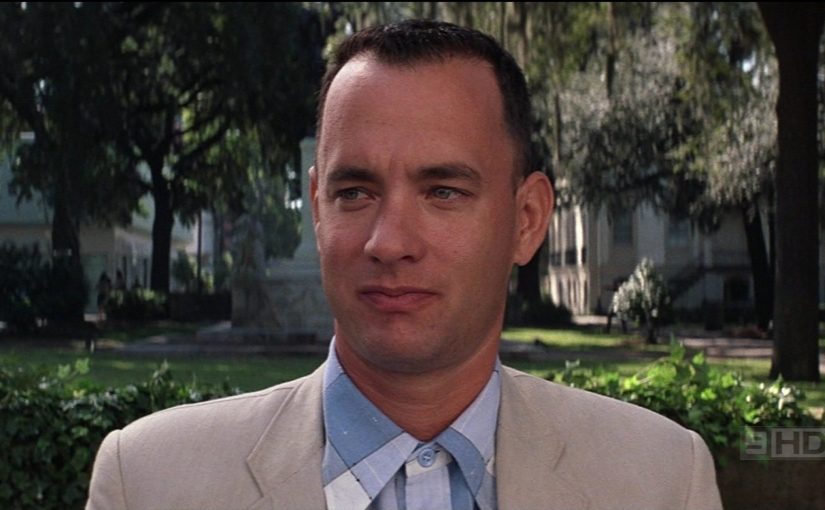
There’s not much that I can say to further praise the merits of Robert Zemekis’ Forrest Gump. It’s a film of legend though it’s a sore spot for die-hard fans of Pulp Fiction, which competed for Best Picture in 1994. Guess which film won. Tom Hanks won the Oscar for the second year in a row, following his outstanding turn in Jonathan Demme’s Philadelphia. Zemekis won Best Director. Eric Roth’s screenplay won as well.

What holds a lasting impression for me about Forrest Gump is the sweeping travel through time of a man with limited intelligence but unlimited willingness to explore and participate, whether it be as a Ping Pong Champion, a Medal of Honor recipient for heroism during the Vietnam War, a millionaire entrepreneur of a shrimping boat business, or a man who just felt like running from one corner to the next of the North American continent. Forrest Gump never knew to compromise a belief he had, probably because he was never aware of the capability to compromise in the first place.

An interesting theme occurs throughout Roth’s screenplay (adapted from the novel by Winston Groom). The people that Forrest encounters are always shouting their ideals and agendas. Yet no one seems to listen. Not just Forrest though. No one at all listens to each other. Lieutenant Dan (Oscar nominee, Gary Sinese) shouts for an immediate evacuation of a hostile territory under attack and no one on the other end of the line, appears to be listening to him. He orders Gump to leave him there, but Forrest does not listen. Forrest only focuses on rescuing his friends, Lt. Dan and Bubba (Mykelti Williamson). What exactly were Americans like the Hippie movements, the War Veterans, the Black Panther party, even the men in the burlesque nightclubs, as well as the various assassinations attempting to accomplish really? Did they accomplish anything? Did any of these parties make an impactful change, or did they just like to hear themselves talk? Did they just want the recognition for only themselves and no one else? When Forrest meets up with his love Jenny (Robin Wright), in a gorgeous caption in front of the Washington Monument (often shown during Oscar film compilations), he has just shared his thoughts over a loudspeaker, unaware that not one of the thousands of war protestors could hear him because the microphone had been unplugged. Later that day, a Black Panther participant only cares to wave his finger and shout his agenda in Forrest’s face. Is Forrest interested? Is he even listening? Is the Jenny, the hippie and her protestor boyfriend listening? Like many Americans, Forrest was only concerned with what was most important to him; Jenny. When Forrest develops a following during his cross country run, everyone is looking for his purpose and his message, and Forrest is unaware that he needed to offer one. Americans are always looking for the next best following. When Forrest passes the Grand Canyon and stops running, the parade of lost souls behind him shouts, “Now what are we supposed to do?” Forrest doesn’t listen. He just walks away and declares he’s tired. America during the mid twentieth century was lost. Forrest was not. Forrest just went in the direction in front of him.

Zemekis pulls an interesting trick of contrasting Forrest against other regulars. The nurse who sits on the bench next to Forrest is more interested in reading a mundane two dimensional issue of “People Magazine.” A man listening to Forrest’s tale of rescue in Vietnam was only concerned with the bullet that struck Forrest in the butt, not the men he saved or the loss of his dear friend Bubba. The old codgers who hang around the local barber shop in Greenbough, Alabama just watch the exploits of Forrest as the years go by. Their hair gets grayer and their skin gets more wrinkled, and life just passes them by while Forrest passes life by. It’s a subtle, yet effective, device that I appreciate on repeat viewings.

Sally Field contributes to the disregard Forrest has for menial issues. If Forrest is going to be denied going to a regular school because his intelligence level falls a few points below average, she will make certain that does not interfere even if it means pleasuring the principal. Mama Gump has the wit and intelligence. Forrest does not. However, their commonality shows in their disregard for what keeps us from living life to the fullest. Without Mama as his influence, Forrest would never have met the President again, and again, and again.

Mama reminds Forrest that “Life is like a box of chocolates…” You know the rest! It doesn’t matter what we get, as long as we get what we pursue.

MOONRAKER

By Marc S. Sanders

Roger Moore’s fourth outing as James Bond was supposed to be For Your Eyes Only. However, producer Albert R. Broccoli made a last minute switch before production was to take place. Two little known films called Star Wars and Close Encounters Of The Third Kind broke box office records and Broccoli went with “Moonraker” to piggy back on the science fiction trend. James Bond needed to launch into outer space. The effort proved profitable even if the story mostly fails.

A Moonraker shuttle is mysteriously hijacked from the Americans. After Bond survives being thrown out of an airplane with no parachute by the hulking assassin Jaws, he is assigned to determine what happened to the ship, and what purpose it is being used for.

Bond travels to California to introduce himself to Hugo Drax (Michael Lonsdale) with his samurai henchman Chang, and to Dr. Holly Goodhead (yes you read that right) played by Lois Chiles.

The issue with Moonraker is it suffers from a number of boring elements including Lonsdale, Chiles and even Jaws is watered down as he falls in love with a nerdy, pigtailed, blonde. Eventually, Jaws becomes a good guy and that’s when your eyes roll. Lonsdale is hardly any fun in his villainy. Chiles is not any more interesting than her character’s last name. Action scenes are bland beyond the airplane drop in the title sequence which has outstanding camerawork accompanied by the staple Bond theme.

Broccoli and returning director Lewis Gilbert (The Spy Who Loved Me) focused more on the science fiction cinematic trend with laser guns and laughable lack of effective zero gravity.

Broccoli became guilty of going with what was trendy with Moore’s 007. Blaxploitation with Live And Let Die, martial arts with The Man With The Golden Gun, Steven Spielberg’s Jaws, in The Spy Who Loved Me, and now science fiction in Moonraker. The sci fi doesn’t work so well for Bond or Drax’ diabolical scheme to destroy all human civilization and begin a new life in space.

Q provides Bond with a cool wrist band that shoots darts. That’s pretty fun.

As well, travel sites still hold up with destinations along the California coast, Italy with a gadget filled gondola and a glass shop fight, and Rio De Janeiro where Bond faces off against Jaws along the tops of two cable cars and engages in a boat chase. Then of course Bond eventually reaches Drax’ satellite base in space. None of it is unwatchable. It’s fun. It’s just not comparatively as exciting as prior Bond adventures before, and still to come.

Moonraker is just a little too weightless.

It should be noted as well that sadly, we also say goodbye to Bernard Lee as M, head of the Double O section for the last eleven films. He’s here to remind 007 that the British government can’t afford any slip ups. The whole series thus far was only better because of Lee to emit humorous aggravation in response to Bond’s relaxed and sarcastic response to the government risks at hand. Bernard Lee deserves recognition.

BABY DRIVER

By Marc S. Sanders

The first chords of the alt rock number “Bellbottoms” by The John Spencer Blues Explosion kick in and we see four people donning sunglasses in a parked car. Three of the people get out to rob the bank across the street. The driver known as Baby stays behind to rock on to the beats playing on his iPod. When the other 3 return, the car chase through the streets of urban Atlanta is on.

Edgar Wright’s quirky imagination delivers a balletic symphony of action, cars, guns, romance and music. His title character played with cool swagger by Ansel Elgort suffers from tinnitus and can only operate with a select tune that maintains the best his character needs to function.

With Lily Collins playing Elgort’s love interest you get moments as sweet as strawberry ice cream as they envision a life together driving down I-85 with music as their companion. But Baby is committed to underboss Doc played by Kevin Spacey and is forced to chauffeur ruthless criminals played by Jon Hamm, Jaime Foxx and Jon Bernthal. They are great in their respective parts by the way.

Music is Wright’s main device here. The dialogue, the gunshots, the screech of tires and the close ups for romance all travel to the beat of the film’s lengthy soundtrack including renditions of “Harlem Shuffle” and “Easy” by The Commodores, which I’ve developed a new fresh affection for.

The editing is quick, never relying on CGI. Car chases are actual car chases here. The cameras are held steady and close ups of Baby and other drivers blend perfectly with the action scenes.

Baby Driver is one the best films of 2017. It presents what it promises by introducing a new way for action delivery. Elgort makes a great character who provides casual dance both behind the wheel and outside of the car. I always like to see a character dance or lip sync. It reminds me of what any of us are capable of without any special effect to enhance the moment. Dancing can be as natural for any of us, much like it is for Baby.

QUIZ SHOW

By Marc S. Sanders

Robert Redford’s 1994 masterpiece deserves much more recognition than it ever got.

Here, he produced and directed a stellar cast that showed how America was always in it for the competition and for the glory and for the fame and naturally for the money.

Redford opens his film with a car salesman describing the regal elegance and perfection of a 1957 Chrysler convertible. It’s a gorgeous car. Then the potential buyer turns on the radio. The car isn’t so fascinating anymore as a news announcement reveals that Russia beat the United States into space with its launch of Sputnik. All America has now is just a car.

Opening credits roll and the next American sensation is presented, “21,” the most popular show displayed on the greatest invention, a home television set. However, the show is all a lie, and yet by the end it’ll survive along with its network, NBC, and its wealthy sponsors.

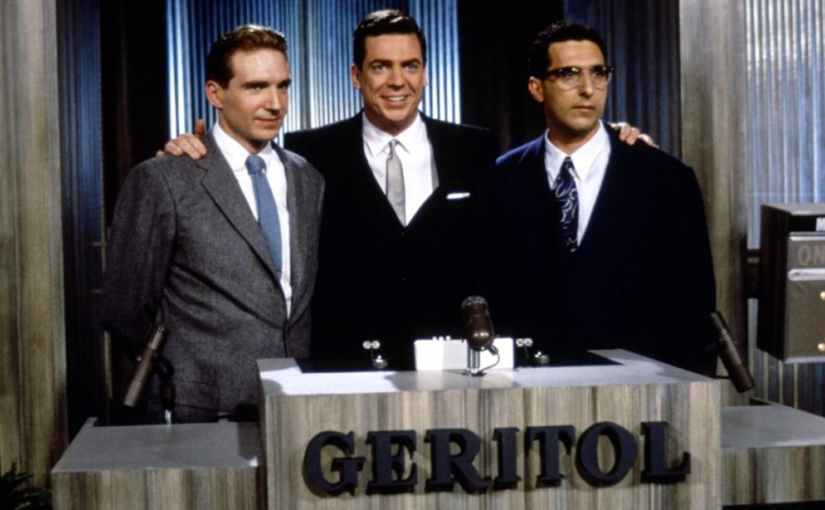
Quiz Show foreshadows the cost of fame and attention. It’s a wonderful sensation until it’s stripped away in personal disgrace. John Turturro (how did he not get an Oscar nomination?) is Herb Stemple, the champion, nerdy schlub who is growing tiresome among producers and audiences. He is forced to take a dive and be replaced by the handsome Charles Van Doren played Ralph Fiennes, a member of one of the country’s most intellectually gifted families. The difference in appearance is obvious. So is the desire for a change in programming. What’s obvious is how the two men are exploited as pawns for gain in corporate America. Cheat, but if you call it television, what harm is there really?

The harm falls in public perception. Disgrace comes to these men, and worse, to their families. It mirrors modern stories like Harvey Weinstein, Joe Paterno, Bill Cosby, Kevin Spacey and Matt Lauer.

It’s a very calm film that debates the ethics of these men and necessities to uncover the truths and reveal the falsehoods.

Redford only gets aggressive in his period settings and I’m thankful for it. Nothing looks out of place, including the large enthusiastic grins of a 1950s American viewing audience dressed elegantly and innocent. Even nuns and pajama clad children are invested in “21.” This clean cut appearance will soon fade , however, after the quiz show scandal dies down.

Ugly lies and denials were committed against Redford’s beautiful backdrops. Therein lies the necessary conflict of another fascinating story.

Was this country ever innocent?

her

By Marc S. Sanders

Director/Screenwriter Spike Jones is a master at adding multiple dimensions to what we always know exists. It’s been evident in his prior films, Adaptation, Where The Wild Things Are, (which I did not care for personally), and most especially in Being John Malkovich. He plants the seeds of fantasy in what we can normally touch, hear and see. Then his elements of fantasy receive a supportive crutch from what his viewers have always been familiar with.

her is another masterwork; a film that takes place in the not too distant future that expounds on our current digital age. If we can already talk to “Siri” or “Alexa” and trick–umm, excuse me, “her” (I mean “Siri”) into making sophomoric dirty jokes, then of course we are bound to approach the stage where we can literally, truly fall in love with her and then she can reciprocate.

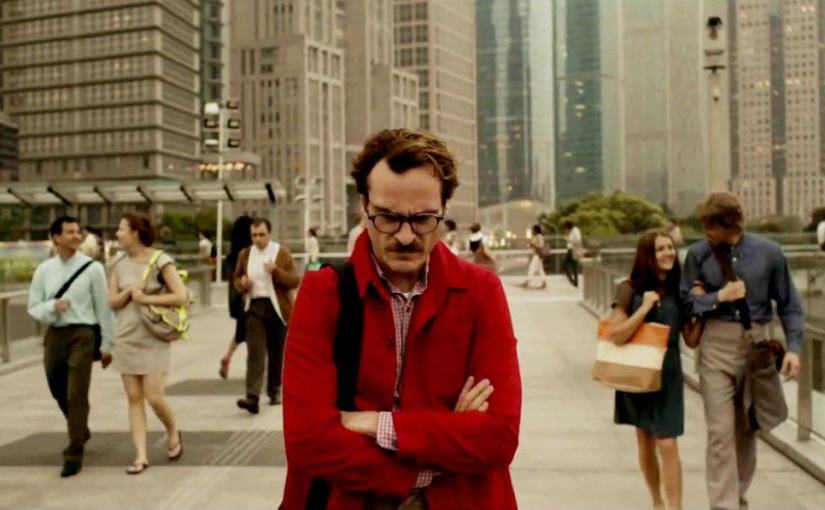
With her raspy yet silky vocals, Scarlett Johansson is inspired casting as the voice of “Samantha.” Had she actually had a physical presence in the film I would have totally fallen for her affections. The film hinges on the performance of Joaquin Phoenix as Theodore. If we can’t believe that he loves “Samantha” more than he loves himself (a surefire test of true love as far I’m concerned) then “her” falls apart. Phoenix passes abundantly. He deserved his Oscar nomination.

From the start, you become very accustomed to the banter between Theodore and his electronic device voiced by “Samantha.” Both have personal feelings. Both have personal longings (more especially “Samantha” the computer, of all things!!!).

Spike Jonze explores all the diameters and dimensions of a loving relationship. The ups, downs, and in betweens. What’s different is how all of these layers of a relationship are received in this currently fictional (bound to come true, one day) dynamic of a relationship. Theodore and “Samantha” are affectionate. They argue, they laugh, they even make love. Watch the movie to understand that last point. It happens, and it is perfectly executed with the residual effects of their lovemaking bringing the film into its next act brilliantly.

Jones won the Oscar for original screenplay simply for how innovative this picture is. I’m not sure it’s the most exciting two hours of film, however. Personally, I think other films in this category back in 2013 had sharper and more interesting scripts. her is practically all talk and when it ended, I was ready for it to be over, and it concluded as I expected.

Still, Jones is fortunate that his cast (Johannsson, Phoenix, Amy Adams and Rooney Mara and Chris Pratt) trusts him. If they hadn’t, this movie would have lost its magic by probably how absurd this script must have originally been perceived on paper. Well done work by all involved but credit has to begin with Jones, the screenwriter.

THE BIG SHORT

By Marc S. Sanders

Ever since Adam McKay’s The Big Short was released in 2015, it has remained a favorite film of mine. I watch it at least once every year. McKay’s script with Charles Randolph, adapted from the book by Michael Lewis, is enormously funny but also realistically frightening.

The film shows how America’s housing market crashed in the first decade of the 21st Century. Mortgage backed securities never failed in history until now, and no one anywhere, especially the banks, ever believed a crash would occur, but it did. Only a select few people like Dr. Michael Burry (Christian Bale) and Jared Vennet (Ryan Gosling) foresaw what no one else could imagine, and thus they took advantage of it by making enormous betting transactions against the housing market. To say you need a strong stomach for this kind of investment is a serious understatement.

Burry is the first one to realize that the country as a whole will default on their mortgages once their interest rates go up in 2007. He represents Scion Capital and invests billions of dollars against the mortgage backed investments. Now he watches for the next two years while the capital at Scion declines into negative digits and drowns out the frustration with death metal music. Bale is fascinating as Burry who has a brilliant mind, but he lacks social skills.

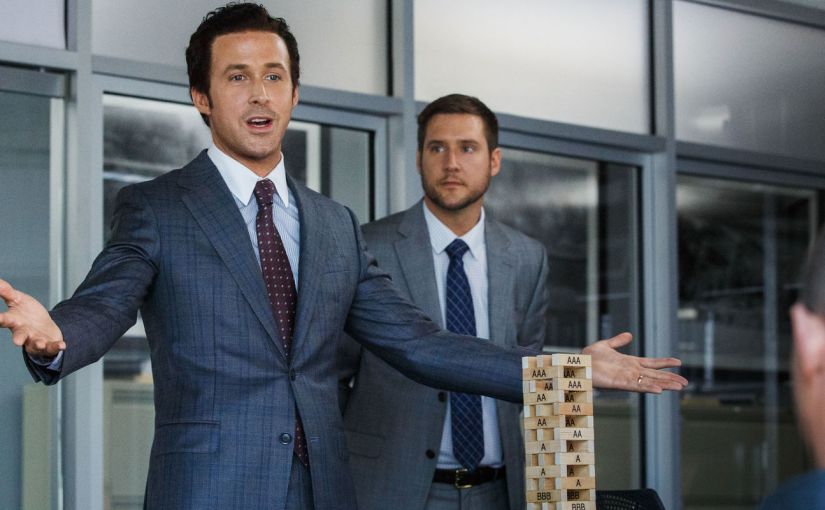
Vennet gets wind of Burry’s discovery and sells the idea to Mark Baum (Steve Carell) and his team of representatives. Vennett narrates how it all played out in the market; how ratings agencies gave triple A rankings to bonds made up of worthless backed securities. McKay wisely has Vennett introduce celebrities like Margot Robbie, Anthony Bourdain and Selena Gomez to break down the vast complexities of everything. Robbie in a bathtub. Gomez playing black jack. It’s hilarious and relatable. Gosling is great. A great scene is his selling presentation which includes a metaphoric prop of a Jenga tower. Vennet has no qualms about collecting premiums as the rest of the country is going down. He’s profiting, and why not? Big banks have been doing it for years.

Carell is spectacular as well as Mark Baum. He has a heart, but he’s an angry individual. It sickens him to make money off this short buy, but it’s the responsible action to take for the benefit of his own clients. Mark also suffers from his brother’s suicide. McKay allows just enough time for this to draw out the misery of this character. Carell should have gotten an Oscar nomination at least. Baum is a guy with no filter as he confronts authoritarian parties throughout the film. He’s a hero really, but he’s not a guy I’d ever want to be left in a room with either.

An additional story arc comes from two young guys (Finn Wittrock & John Magaro) who also uncover this opportunity. They enlist Brad Pitt as a recluse who get them into the arena of big traders. These kids who started their investment company in a garage are great as well. Another party who came out of nowhere to uncover what no one else saw.

McKay assembled a magnificent blend of actors for these unusual characters who always hid behind their computer monitors. He directs with a lighthearted approach having his characters breaking the 4th wall at times to explain what all of this means in the simplest terms.

As simple as McKay makes it with his humor, this was a terrible, terrible tragedy putting millions of people out of work and owners losing their homes. Even renters lost their homes. Pay your rent but it means nothing if your landlord isn’t paying his mortgage. McKay tragically shows this outcome.

It’s terrible to imagine, but it’s a major downfall of the American economy. When the country, is doing well, while paying short term low interest rates, no one concerns themselves with what could all go away in an instant. It’s a vicious cycle, and the only funny thing about it all is that the supposedly most brilliant investors will naively allow this to happen over and over again.

The Big Short is one of the best films made in the last 20 years.

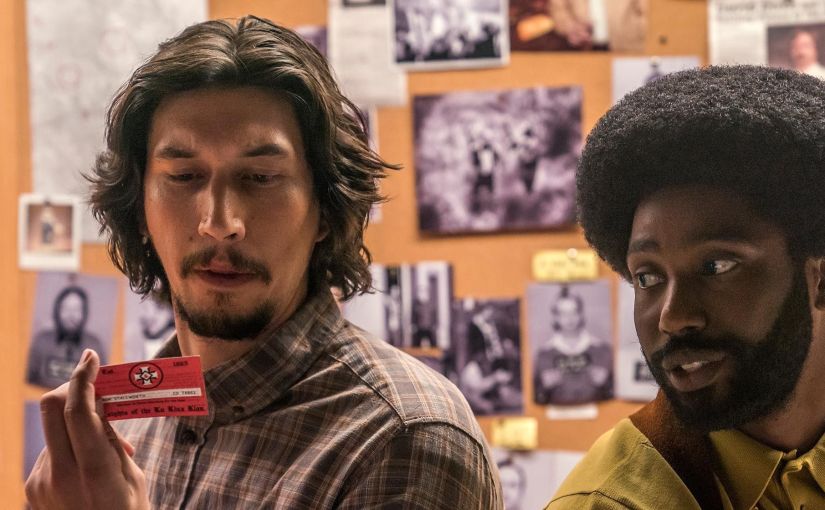
BLACKKKLANSMAN

By Marc S. Sanders

Spike Lee has finally received a Best Director Oscar nomination for his film BlacKkKlansman. It is based on the book by Ron Stallworth. In the 1970s, Stallworth was the only black police officer in the Colorado Springs police department. He was always ready to face the backlash and criticism for his afro and skin color. He also orchestrated an infiltration of the Ku Klux Klan while developing a trust with their Grand Wizard and eventual Presidential candidate David Duke.

John David Washington (son of Denzel) portrays Stallworth with high intelligence, instinct and even tolerance to stay focused on the end goal of incriminating Klan members out to do more than just march. Stallworth partners up with Flipp Zimmerman, a Jewish cop who will make his presence as Stallworth among the ranks of the Klan. Call it a Cyrano set up. Stallworth does the talking over the phone. Flipp stands in their presence.

I’ve usually been hot and cold on Spike Lee. Forgive me but when a “Spike Lee Joint” debuts in theatres, my subconscious immediately expects a very biased and unfair viewpoint of racial tensions in America. I don’t care for Lee’s outspoken statements in the media at times and I shake my head at some of his misguided actions. That’s another conversation that I welcome to have with anyone at another time. However, Lee takes a very aware and balanced approach here. The film opens with Alec Baldwin as an evil messenger of hate attempting to record a sermon for his disciples. Lee films Baldwin very disturbingly among different color hues and jittery close ups and wide angles. It’s nauseating and it should be.

Then Stallworth’s story begins and he is assigned to go undercover at a former Black Panther member’s (played by Corey Hawkins, who I loved in the revival of 24) speaking event on a college campus. The police expect this will be an orchestration of violence among the black community but Stallworth sees it is anything but that. Lee commits a beautiful filmmaking effort as he shows the faces of black people listening to the speech in spotlights as Hawkins continues on. These are college students simply looking for a way to never succumb to anyone who considers them inferior. The speaker does hold the white man accountable, yes, and I don’t care for that as I’m a white man with no instinct of superiority. Therefore, don’t lump me in with a small sect of misguided people, please. Still, the scene is effective and relatable. America has its ugly histories and America is not settling for insensible and uncaring treatment of its people either.

From here, the film takes on a more linear story as Stallworth and Zimmerman build their case.

Lee offers good debates among his cast of characters. Stallworth becomes attracted to an activist named Patrice, played very well by Laura Harrier. Here’s hoping to a long, successful career for her. Patrice believes the police are the enemy and even questions if Stallworth will remain a police officer following this case. Stallworth takes pride in being a cop. Black Life vs Law Enforcement.

Stallworth and Zimmerman bear witness to the mentality of the Klan. Over and over the Klan members suspect Zimmerman of his Judaism. He denies it and goes to great lengths to disprove his heritage and yet the Klan continues to question him, despite some high level members truly believing his guise of white supreme devotion. White Supremicists vs. Judaica & Black Life.

Lee has offered a powerful film that left my wife and I up until two in the morning discussing its dynamics; discussing how many things have changed for the good since the 50s; discussing how many have gotten better, have gotten worse and how some things have sadly resurfaced in recent years.

BlacKkKlansman reminds me that Lee is truly an accomplished filmmaker. Beyond his messages and viewpoints, Lee knows how to edit a scene and offer inventive camera angles and direction. He’s a prize student of film, now a teacher. This latest effort is a reminder of how Lee’s production of Malcolm X in 1991 was robbed of recognition at the Academy Awards, a true injustice.

BlacKkKlansman is Spike Lee’s best film since Malcolm X and one of the best films of 2018.